
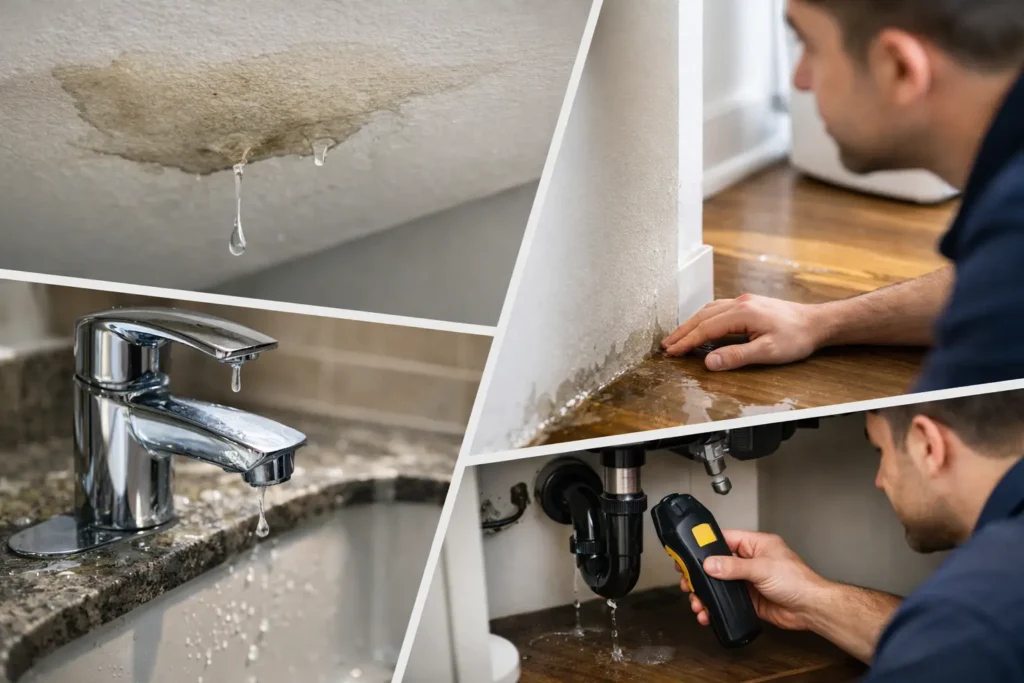
A water stain that seems a little darker this week. A floor that feels warm for no clear reason. A spike in your water bill when your routine has not changed. Leak detection usually starts with small details like these, and catching them early can save you from drywall damage, mold growth, warped flooring, and expensive repairs.
Not every plumbing leak announces itself with a burst pipe or a puddle under the sink. Some stay hidden behind walls, under slabs, above ceilings, or inside mechanical rooms for weeks. By the time the damage is easy to see, the repair is often larger than it needed to be. That is why knowing what to watch for matters.
Why leak detection matters more than most people think
A hidden leak is rarely just a leak. Water moves. It spreads into framing, insulation, flooring, cabinets, and nearby finishes. In homes, that can mean damaged paint, swelling baseboards, musty smells, and weakened materials. In apartment buildings and commercial spaces, one leak can affect multiple units, tenants, or work areas.
There is also the cost you do not always notice right away. Even a small pressurized pipe leak can waste a surprising amount of water over time. If the leak is tied to a hot water line, you may also be paying to heat water you never use. For landlords and property managers, that can turn into a higher utility bill, tenant complaints, and a repair timeline that gets more disruptive the longer the problem sits.
In some cases, leak detection is also about safety. Water near electrical systems is never a small issue. A leak around a water heater, boiler area, or mechanical space can create risks beyond property damage. If the source is near gas or HVAC equipment, it takes careful inspection to sort out what is happening and protect the building.
Common signs that point to a hidden leak
Some warning signs are obvious, but others are easy to brush off. The trick is noticing patterns.
An unexplained increase in your water bill is one of the biggest clues. If usage goes up but your household or building activity has stayed about the same, there may be water escaping somewhere in the system. Low water pressure can also point to a leak, although it depends on the pipe layout and the size of the problem.
Stains on walls or ceilings are another common sign. So are bubbling paint, peeling drywall tape, or soft spots underfoot. If you smell a musty odor in a bathroom, laundry room, utility space, or near a wall with plumbing behind it, there is a reason to investigate. Mold does not need a flood to grow. Ongoing moisture is enough.
Some leaks make themselves known through sound. If you hear water running when fixtures are off, or you notice a faint hissing behind a wall, that should not be ignored. A constantly running toilet can also waste a large amount of water and may be mistaken for a more complex issue if no one checks it early.
Outside, leak signs can look different. You may see a patch of grass that stays greener than the rest, standing water that does not make sense, or soil that feels unusually soft. In colder or wet seasons, it can be harder to spot outdoor plumbing issues, which is one reason professional testing can be valuable.
Where plumbing leaks tend to happen
Leaks often show up in predictable places, even if the exact source is hidden.
Supply lines under sinks and behind toilets are common trouble spots, especially when fittings loosen over time or aging materials start to fail. Water heaters can leak from valves, connections, or the tank itself. Washing machine hoses are another frequent culprit, particularly if they are older rubber lines rather than upgraded braided ones.
In older properties, pipe deterioration becomes a bigger factor. Corrosion, worn joints, and shifting materials can all contribute to leaks inside walls or below floors. Slab leaks are especially tricky because the piping runs under the foundation, and the first signs may be warm spots on the floor, hairline cracks, or the sound of water with no visible source.
Drain lines can leak too, although they behave differently from pressurized supply lines. Drain leaks may only show up when a fixture is used, which can make them harder to track. Ceiling stains below an upstairs bathroom or kitchen are a classic example.
For commercial buildings, leak locations can be more complex. Mechanical rooms, multi-unit risers, washrooms, kitchens, and utility lines all deserve attention. In larger properties, finding the exact source quickly matters because downtime and building disruption can add up fast.
How professional leak detection works
Professional leak detection is not guesswork. A skilled plumber starts by narrowing down the likely area based on symptoms, building layout, and the type of plumbing involved. The goal is to find the leak with as little unnecessary opening of walls or floors as possible.
That process may include pressure testing, visual inspection of exposed lines, moisture readings, and listening equipment that helps identify leaks behind surfaces or under concrete. In some situations, thermal imaging can help show temperature differences caused by moisture or hot water movement. For drain-related issues, camera inspection may be the better fit.
The right method depends on the property and the symptoms. A small condo unit with a bathroom leak is different from a detached home with a suspected slab issue, and both are different from a commercial building where multiple fixtures and zones are involved. Good leak detection means choosing the testing approach that makes sense for the problem, not using the same method every time.
This is also where experience matters. The technology helps, but interpretation matters just as much. Moisture can travel away from the actual source, and the visible damage is not always where the leak began. An experienced plumber looks at the full system before recommending a repair.
When to call for leak detection right away
Sometimes waiting a day or two is reasonable. Sometimes it is not.
If water is actively dripping through a ceiling, pooling on the floor, or affecting electrical areas, you need help right away. The same goes for a sudden drop in pressure, signs of a burst or frozen pipe, or a leak near a water heater or main line. In these situations, shutting off the local fixture valve or the home’s main water supply can reduce damage while you wait for service.
You should also call sooner rather than later if you have repeated symptoms with no clear source. A stain that keeps coming back after repainting, a persistent musty smell, or a utility bill that climbs month after month usually means the problem has not gone away. It has just stayed hidden.
For landlords and property managers, a fast response is especially important when a leak may affect neighboring units or shared building systems. Small delays can turn a contained repair into a much larger coordination issue.
Why early action usually costs less
Many people put off leak investigation because they are worried the process will lead to a major repair. That can happen, but delay usually makes the outcome worse, not better.
A small leak caught early may only need a localized pipe repair, fixture replacement, or connection fix. Left alone, that same issue can damage drywall, insulation, cabinets, flooring, and trim. If mold remediation becomes part of the project, costs rise again. The same logic applies in commercial spaces, where water damage may interrupt tenants, staff, or public access.
Early leak detection also gives you more options. You can plan the repair, protect surrounding materials, and avoid the pressure of an emergency call after hours. In a busy household or managed property, that makes a real difference.
What to do if you suspect a leak
Start with the basics. Check visible fixtures, supply lines, and shutoff valves for drips or corrosion. Look under sinks, around toilet bases, and near the water heater. If it is safe to do so, monitor your water meter when no water is being used. If the meter keeps moving, there is a good chance water is escaping somewhere.
Still, home checks only go so far. If the signs point to a hidden issue, professional leak detection is the smart next step. A careful inspection can confirm whether there is a plumbing leak, narrow down the source, and help you avoid opening walls or floors blindly.
At Encano Plumbing & Drainage Ltd., we see firsthand how often a “small” leak turns out to be the thing that was quietly damaging a home or building for weeks. The good news is that most leak problems are much easier to deal with when someone investigates them early.
If something in your home or property feels off, trust that instinct. Plumbing problems rarely improve by waiting, but they are usually far more manageable when caught before the damage spreads.