A gas line is not the place for guesswork. When you are adding a new stove, replacing a water heater, converting to a gas dryer, or updating piping in an older building, licensed gas line installation protects more than the appliance – it protects the people inside the property.
For homeowners and property managers, the challenge is usually not deciding whether the job matters. It is figuring out what the work actually involves, why licensing makes such a difference, and how to avoid delays, leaks, failed inspections, or expensive rework. A proper gas line job should feel straightforward from your side because the contractor handles the technical details, code requirements, and safety checks correctly from the start.
What licensed gas line installation actually means
Licensed gas line installation means the work is performed by a qualified professional who is legally authorized to install, modify, test, and in many cases permit gas piping according to local code. That includes understanding pipe sizing, appliance demand, shutoff placement, pressure testing, ventilation requirements, and the safe connection of gas-burning equipment.
That matters because gas systems are not forgiving. A water line leak can cause damage over time. A gas leak can create an immediate safety issue. Even small mistakes – the wrong connector, poor joint sealing, undersized piping, or improper pressure – can affect appliance performance and create risk.
A licensed professional is also working within a system of accountability. The work is expected to meet code, inspections may apply, and the installer is responsible for completing the job in a way that is safe, durable, and documented when needed. For a homeowner, landlord, or facility operator, that accountability is a big part of the value.
When you may need licensed gas line installation
Some jobs are obvious, like installing a new gas range where no line existed before. Others come up during renovations or equipment replacement. You may need gas line work if you are switching from electric to gas, relocating an appliance, adding an outdoor BBQ connection, replacing aging black iron piping, or upgrading service to handle additional gas demand.
In multifamily and commercial settings, gas line changes often happen during tenant improvements, mechanical upgrades, and code-driven repairs. A line that was acceptable years ago may not meet current requirements for a new appliance or layout. That is one reason these jobs should be assessed based on current conditions, not assumptions.
It also depends on the age of the building. In older properties, installers often find hidden issues once the work begins, such as corrosion, outdated fittings, unsupported runs, or poor access. That does not always turn into a major repair, but it does mean the job should be approached carefully.
Why licensing matters beyond the permit
People often think licensing is only about paperwork. In reality, it is about competence under pressure. A licensed gas fitter or qualified licensed technician is trained to evaluate the whole system, not just connect one appliance and leave.
For example, if you are installing a larger gas range, the issue may not be the final hookup. The real issue may be whether the existing piping can carry enough gas volume while the furnace and water heater are running. If the line is undersized, the appliances may perform poorly or operate unsafely. A licensed installer knows how to calculate load and size the piping correctly.
Licensing also matters when something is not standard. Tight utility rooms, mixed old and new piping, condo restrictions, commercial occupancy rules, or shared mechanical spaces all require judgment. The safest job is not always the fastest one, and the cheapest quote is not always based on the full scope.
The process: what a proper gas line job should include
A well-managed installation starts with an on-site assessment. The contractor should identify the appliance type, BTU demand, pipe route, shutoff locations, venting considerations, and whether permits or inspections apply. This is also the stage where access issues, wall openings, and scheduling can be discussed clearly so there are fewer surprises later.
Next comes planning and material selection. Depending on the building and code requirements, the installer may use black iron pipe, corrugated stainless steel tubing, or other approved materials. The right choice depends on the application, local rules, accessibility, and long-term durability.
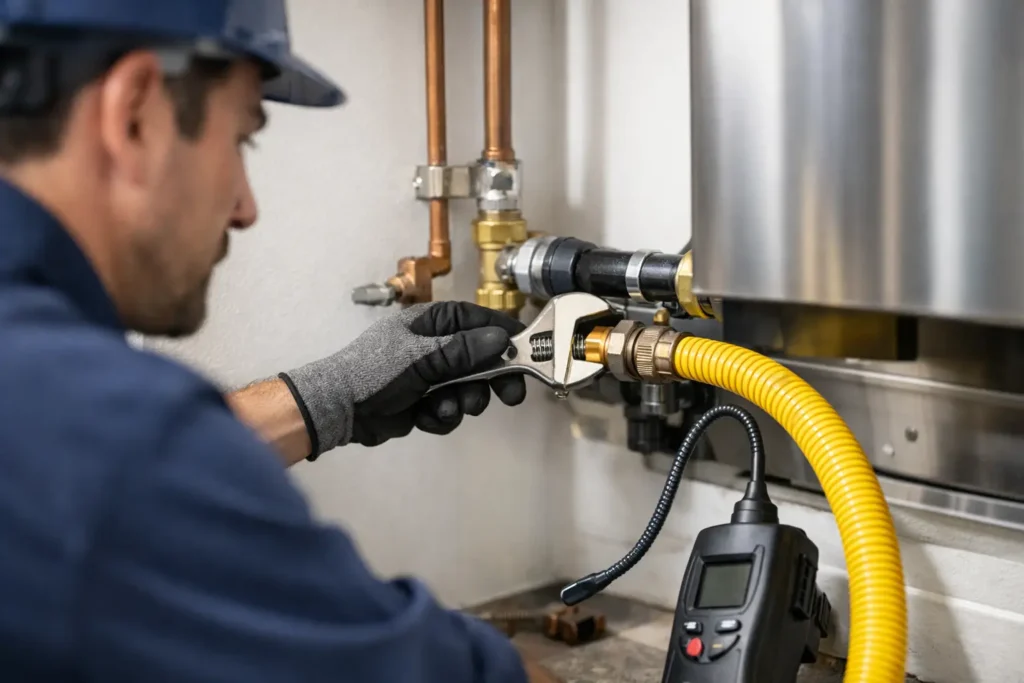
Installation is only one part of the job. Testing is just as important. After the piping is installed or modified, the system should be pressure tested and checked for leaks before the appliance is placed into service. Connections must be verified, shutoffs confirmed, and the appliance itself checked for proper operation.
If permits are required, the inspection process needs to be coordinated as well. This part can feel slow to a property owner who just wants the appliance running, but it protects everyone involved. A legitimate contractor will not treat inspection as an optional extra.
Common problems caused by unqualified gas work
The most obvious risk is a gas leak, but poor workmanship can show up in less dramatic ways too. Homeowners sometimes notice weak burner performance, pilot issues, delayed ignition, soot, or appliances that keep shutting off. These symptoms may point to pressure problems, sizing mistakes, or unsafe combustion conditions.
Another common issue is failed inspection. Unpermitted or improperly installed gas piping can delay a renovation, interfere with insurance claims, and complicate a property sale. For landlords and facility managers, it can also create liability if a system is altered without proper approval.
Then there is the repair cost. A bad gas line installation often costs more to fix than it would have cost to do properly in the first place, especially if walls or ceilings must be reopened. That is why experienced companies focus on doing the work right the first time, even if it means slowing down long enough to test and document everything properly.
Questions to ask before hiring a gas line contractor
You do not need to know code to ask good questions. Start with licensing and ask whether the company is qualified to perform gas line work for your type of property. Then ask how they will determine pipe size, whether permits are needed, and what testing will be completed before the system is put back into use.
It is also fair to ask how the pricing works. Some gas line jobs are simple and easy to quote upfront. Others depend on what is found behind walls, above ceilings, or in older mechanical areas. A trustworthy contractor will explain what is included, what could change the price, and what steps will be taken if hidden issues are discovered.
Communication matters too. If the answers are vague, rushed, or focused only on getting a fast yes, that is a red flag. Gas work should be explained in a calm, clear way. You should understand the plan before the work starts.
Licensed gas line installation for homes and commercial properties
Residential and commercial jobs share the same safety principles, but the planning can be very different. In a home, the focus is usually on safe appliance connection, minimal disruption, and making sure the existing system can support the upgrade. In commercial spaces, the work may involve higher demand, stricter operating requirements, and more coordination with building managers, inspectors, or other trades.
Restaurants, mixed-use buildings, and government facilities also face uptime concerns. If a kitchen, boiler room, or tenant space is affected, scheduling becomes part of the technical solution. A reliable contractor should account for that, especially in busy buildings where downtime has real costs.
That local experience can make a difference in places like Vancouver and nearby communities, where older housing stock, condo rules, and renovation activity often add complexity. A team that regularly works in these properties is less likely to be surprised by access constraints or building-specific requirements.
What to expect from a quality installer
A good gas line contractor shows up prepared, explains the scope in plain language, protects the work area, and does not cut corners on testing. They are honest about trade-offs. For example, the shortest pipe route is not always the best if it creates access problems later. Reusing existing piping may save money in some cases, but not if the material or sizing is questionable.
You should also expect professionalism after the installation, not just during it. That includes answering questions, confirming the appliance is operating correctly, and making sure the property owner understands what was done. Companies like Encano Plumbing & Drainage Ltd. build trust by pairing technical skill with that kind of straightforward service.
If you are planning a gas appliance upgrade or dealing with outdated piping, the best next step is not to wait for a problem. Get the system assessed, ask clear questions, and make sure the work is done by someone licensed to protect your safety and your property from the start.