
If you smell rotten eggs near any gas appliance or meter, leave the building first, then call FortisBC at 1-800-663-9911 or 911 from outside. British Columbia recorded 69 gas incidents in 2024 and 79 in 2025, so a suspected leak deserves an emergency response, not an indoor inspection.
You may be standing in a Richmond garage beside a tankless water heater, or in a Burnaby kitchen wondering whether that faint sulphur smell is the stove, a drain, or something outside. The safest answer is simple: treat the odour as gas until qualified responders say otherwise. Gas-leak planning depends on separating two situations, a leak on the utility side of the meter and a leak from an appliance, fitting, or gas pipe inside your property.
That distinction determines who acts next. FortisBC handles the utility-side emergency, while a licensed gas fitter addresses downstream equipment after the gas supply has been made safe.
Table of Contents
- A Smell That Changes Your Evening
- What Plumbing Gas Leaks Actually Are
- How to Spot a Gas Leak Before It Gets Worse
- What to Do in the First Ten Minutes
- When Excavation Strikes a Buried Line
- Prevention and Maintenance That Actually Works
- Who to Call and When to Call Them
- Putting It All Together at Home
A Smell That Changes Your Evening
A Richmond homeowner walks into the garage on a Tuesday evening and notices a sharp rotten-egg smell near the tankless water heater. There's a half-second pause. The natural impulse is to grab a flashlight, crouch beside the unit, and find the fitting that's leaking.
That instinct needs to be overridden.
Natural gas has no natural odour, so suppliers add an odorant that makes a possible leak recognisable. FortisBC identifies the rotten-egg smell as a warning sign requiring immediate evacuation and reporting through its natural gas safety guidance. Propane safety guidance from the Province of British Columbia also identifies a sudden rotten-egg smell or hissing sound as a possible leak signal and says people should remain outside until officials confirm it's safe to return through its propane safety brochure.
Leave the building with everyone inside, including pets. Don't switch on a light, use a phone, start an appliance, smoke, strike a match, or operate equipment while you're still indoors. Leave doors open as you exit if you can do so without stopping or touching unnecessary controls, then move away from the building and call FortisBC at 1-800-663-9911 or 911 from outside.
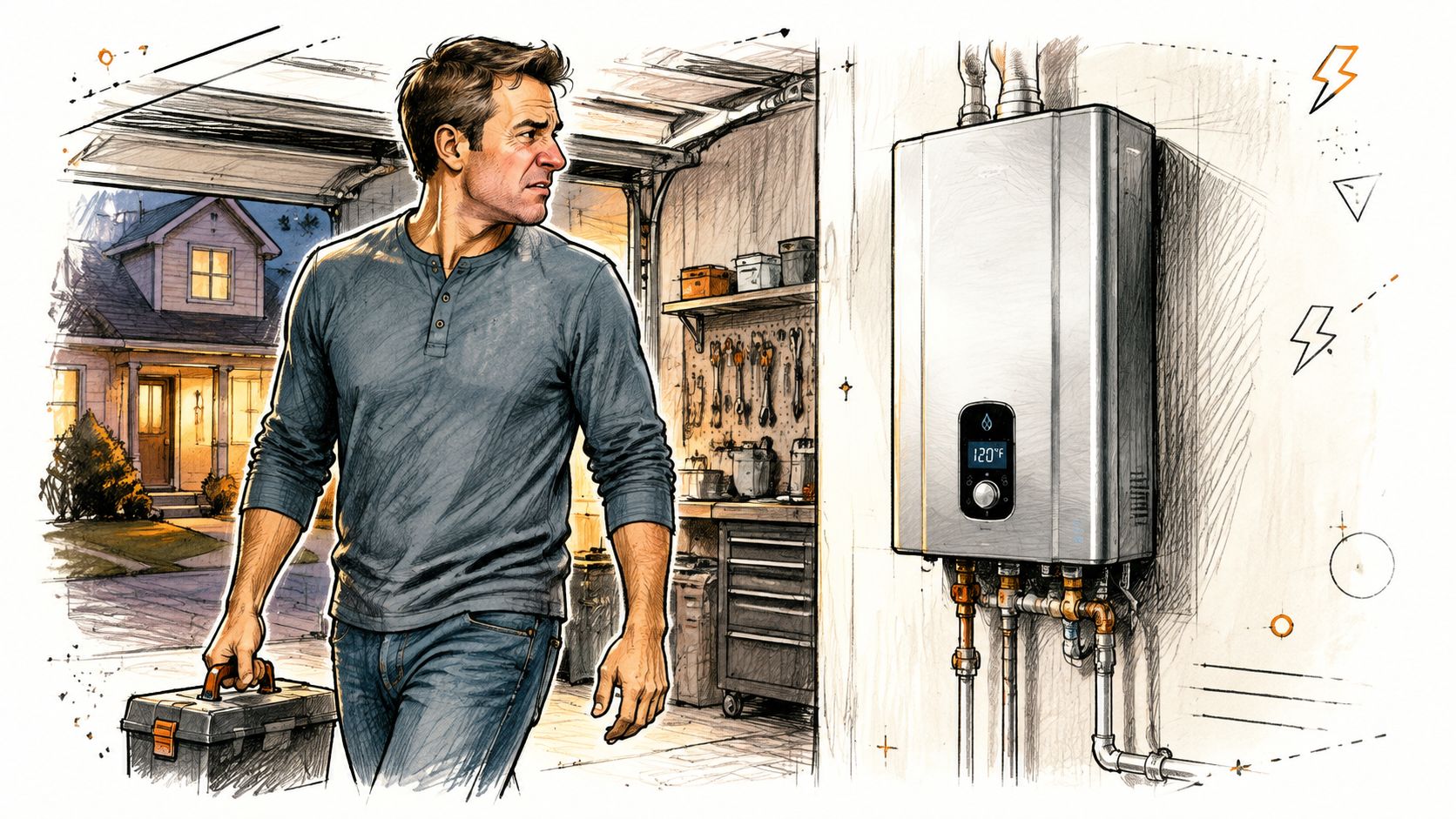
Practical rule: The first job isn't finding the fitting. It's getting people out of the structure without creating an ignition source.
British Columbia's gas-safety rules treat escaping gas as an emergency sequence. The responsible person must warn affected occupants, notify relevant emergency contacts, extinguish flames and ignition sources, and arrange emergency response, as set out in the Gas Safety Regulation. That behaviour is the baseline for every plumbing gas leak decision that follows.
What Plumbing Gas Leaks Actually Are
A plumbing-related gas leak is an unintended escape of natural gas or propane from a component connected to a building's fuel-gas system. The source may be obvious, such as a loose appliance connection, or hidden inside a wall, under a floor, or in a buried service line.
For a homeowner, three categories make the situation easier to place.
Appliance-side leaks
These occur at water heaters, furnaces, ranges, fireplaces, and dryers. Common source points include flex connectors, shut-off valves, threaded fittings, burner assemblies, and heat exchangers. A smell beside a tankless water heater doesn't prove that the heater itself is defective. The leak may be at the valve, the connector, or the pipe entering the appliance.
Interior piping failures
The exposed gas piping in a basement, utility room, crawlspace, or wall cavity can fail at threaded joints, unions, sediment traps, or older black-iron sections. Corrosion, movement, poor installation, and accidental impact can all create a problem. You usually can't identify the failed section safely by following the smell.
Buried service-line or meter leaks
The service line runs from the street-side supply toward the building and meter. Excavation, ground movement, or damage near the meter can create an outdoor release. Technical Safety BC notes that British Columbia sees hundreds of incidents each year involving buried gas lines and utilities damaged during excavation, even when people have called before digging, according to its gas incident data and trends.
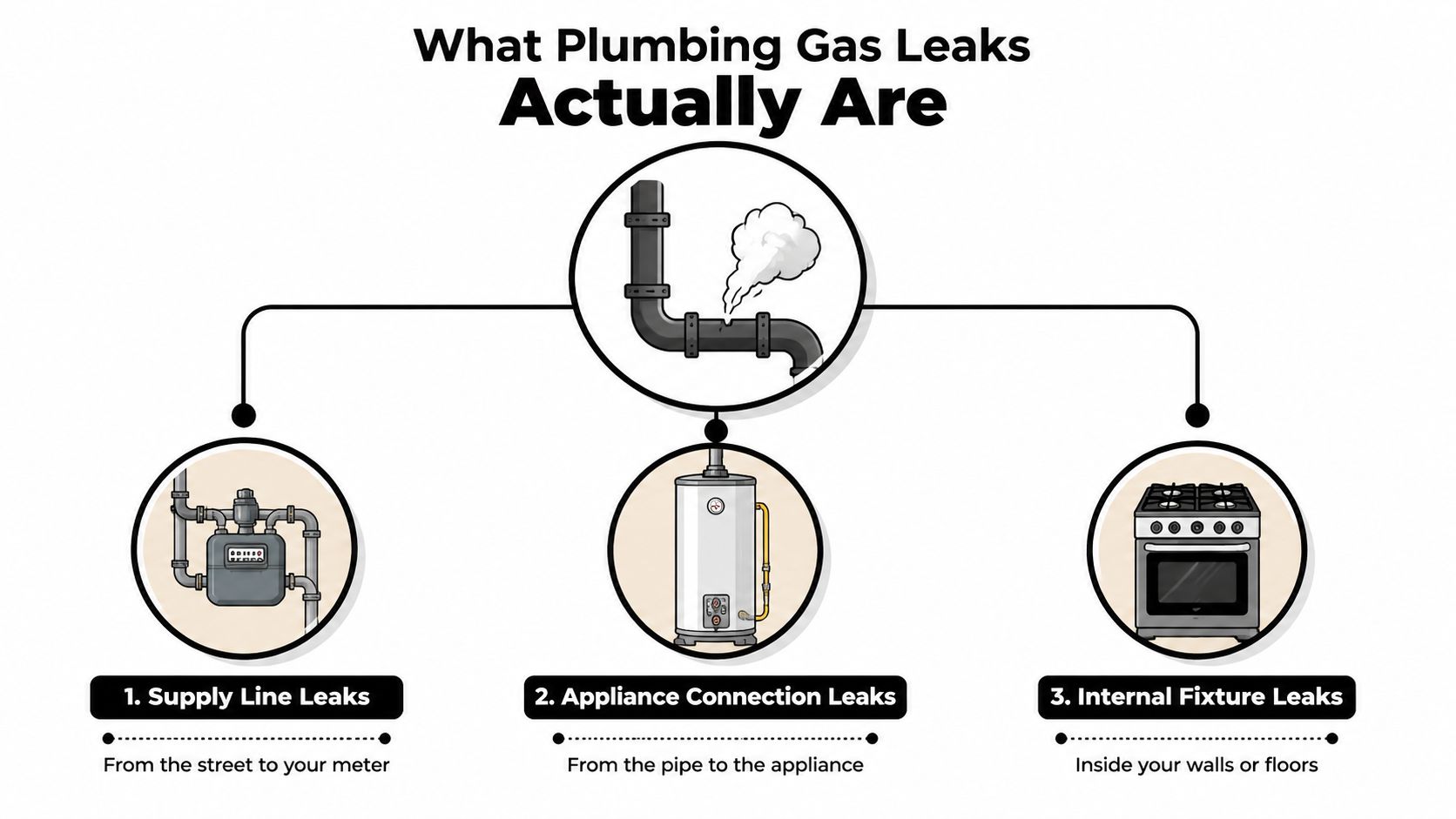
The ownership boundary matters. FortisBC is responsible for utility infrastructure up to and including the meter, while the homeowner's gas piping and connected appliances downstream of the meter require a licensed gas fitter. If the smell is at the meter, a buried line has been struck, or gas is escaping outdoors, contact FortisBC first. If the utility has cleared the supply and an appliance or interior connection still needs diagnosis, arrange licensed gas-fitting work.
Don't assume a general plumbing licence automatically authorises gas work. Ask whether the contractor is licensed and qualified for the specific gas installation involved.
How to Spot a Gas Leak Before It Gets Worse
A quiet room does not confirm a safe gas system. Warning signs usually fall into three groups: odour, sound, or an electronic alert. Treat any one of them as a reason to act, not as a complete diagnosis.
The rotten-egg smell is often the first clue because odorized gas can draw attention to a small release before it becomes visible or audible. People can miss it, though. Cooking smells, blocked sinuses, sleep, and gas venting outside can all reduce the chance of detection.
A hiss or whistle suggests a more active release near a fitting, valve, or meter set. Drywall, insulation, ceiling tiles, and mechanical-room equipment can mask the sound. Silence does not clear the system.
Electronic combustible-gas detectors and professional acoustic equipment can identify conditions that human senses miss. A household detector is useful only when it is installed in the right location, maintained, and tested according to the manufacturer's instructions. Acoustic listening equipment is generally used by technicians with other tests. It is not a substitute for evacuation.
| Signal | What it catches | What it misses | Responsible DIY check |
|---|---|---|---|
| Rotten-egg odour | An odorized gas release that reaches your nose | Odour masked by cooking, congestion, sleep, or outdoor venting | Evacuate. Don't investigate inside |
| Hissing or whistling | A stronger release near accessible pipework, a valve, or meter | Leaks behind walls, under insulation, or above ceilings | Listen only while leaving. Don't linger |
| Electronic or acoustic detection | Gas or sound conditions that human senses may miss | Poor placement, untested devices, concealed or changing conditions | Use detectors as warning devices, not clearance tools |
Bubble-soap testing has a limited use. If there is no strong odour or immediate danger, and the appliance has been isolated, a qualified person may apply leak-detection solution to an accessible fitting and watch for growing bubbles. Never use an open flame. Never test the meter yourself. If you smell gas, leave rather than staying inside to test.
A yellow burner flame, repeated pilot failure, corrosion, or unexplained appliance behaviour warrants a licensed inspection even without a strong odour. These signs cannot identify the leak location. Avoid improvised tightening, and arrange qualified gas-fitting work so the appliance and its connections are tested together.
What to Do in the First Ten Minutes
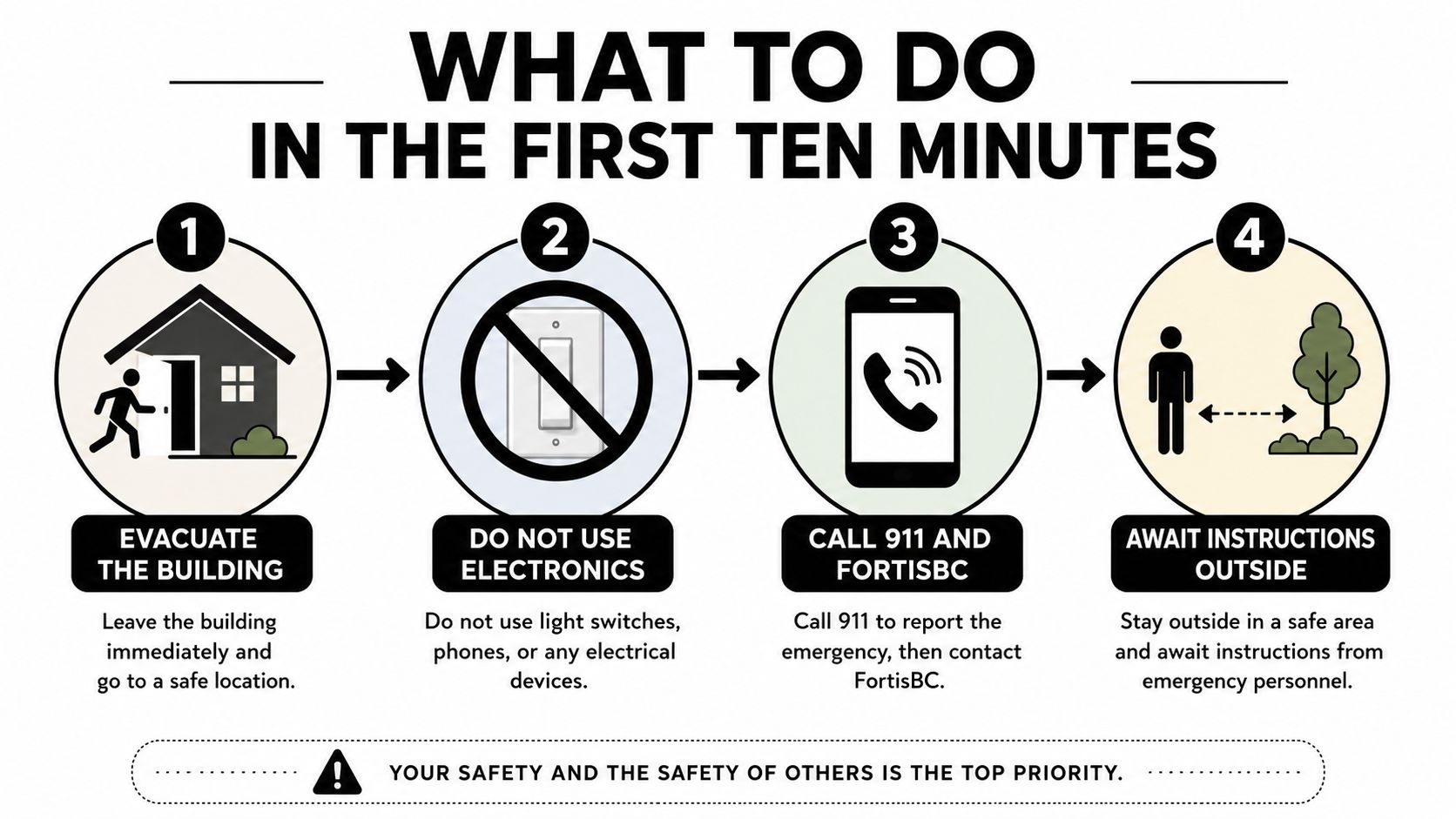
The first ten minutes should be organised around evacuation, notification, and distance. British Columbia's emergency framework requires immediate reasonable action when damage to a gas installation causes gas to escape, including warning occupants and contacting emergency services through the provincial Gas Safety Regulation.
Leave before you diagnose
Take everyone outside immediately. Don't stay to search for the source, open windows, fan the air, relight a pilot light, or collect belongings. Avoid switches, lights, phones, smoking materials, matches, and appliance controls while leaving.
If a door is directly on your exit path, leaving it open can help gas disperse, but don't stop to create ventilation. The priority is a quick exit without operating anything that could create an ignition source.
Call from a safe location
Once you're outside and away from the building, call FortisBC at 1-800-663-9911. Call 911 if someone is dizzy, nauseated, unconscious, seriously unwell, trapped, or if the situation involves a fire, a damaged line, or an immediate threat to people.
FortisBC's gas leak and odour instructions specifically direct people who smell gas to stop, avoid phones and ignition sources indoors, go outside, and then call the emergency line or 911.
Keep people clear
Tell neighbours to stay away from the structure without sending anyone back inside. Don't re-enter until FortisBC, firefighters, or another authorised official says it's safe.
Do not shut off the meter unless you're trained and can do it without entering or approaching a dangerous area. Don't attempt to clamp, cap, tighten, or repair a gas line. You'll only bring in a licensed gas fitter after utility clearance, when the remaining fault is on the homeowner's side.
For broader preparation around urgent household plumbing problems, keep these emergency plumbing response steps available, but a suspected gas leak always takes priority over ordinary leak-control advice.
Here's a short visual reminder of the sequence:
When Excavation Strikes a Buried Line
A Richmond crew repairing a sewer catches a buried gas service line with the excavator bucket. A sharp whoosh, shifting soil, and a concentrated rotten-egg odour outdoors indicate a utility emergency, not a routine plumbing repair.
Stop the excavation immediately. Move workers, residents, and bystanders away from the trench, eliminate ignition sources only from a safe position, and call FortisBC and emergency services from outside the danger area. Do not backfill the trench, clamp the pipe, or attempt to cap it. Whether the line is polyethylene or steel, a damaged service requires controlled isolation, repair, and testing by the utility or qualified personnel.
The first decision is whether the release is outside or inside. An excavation strike usually starts outdoors, while an appliance leak begins at household equipment or piping. Outdoor gas can still enter through doors, drains, cracks, or ventilation openings. If reaching the building would bring anyone closer to the release, stay away, keep people out, and follow instructions from FortisBC or 911 rather than trying to ventilate the building yourself.
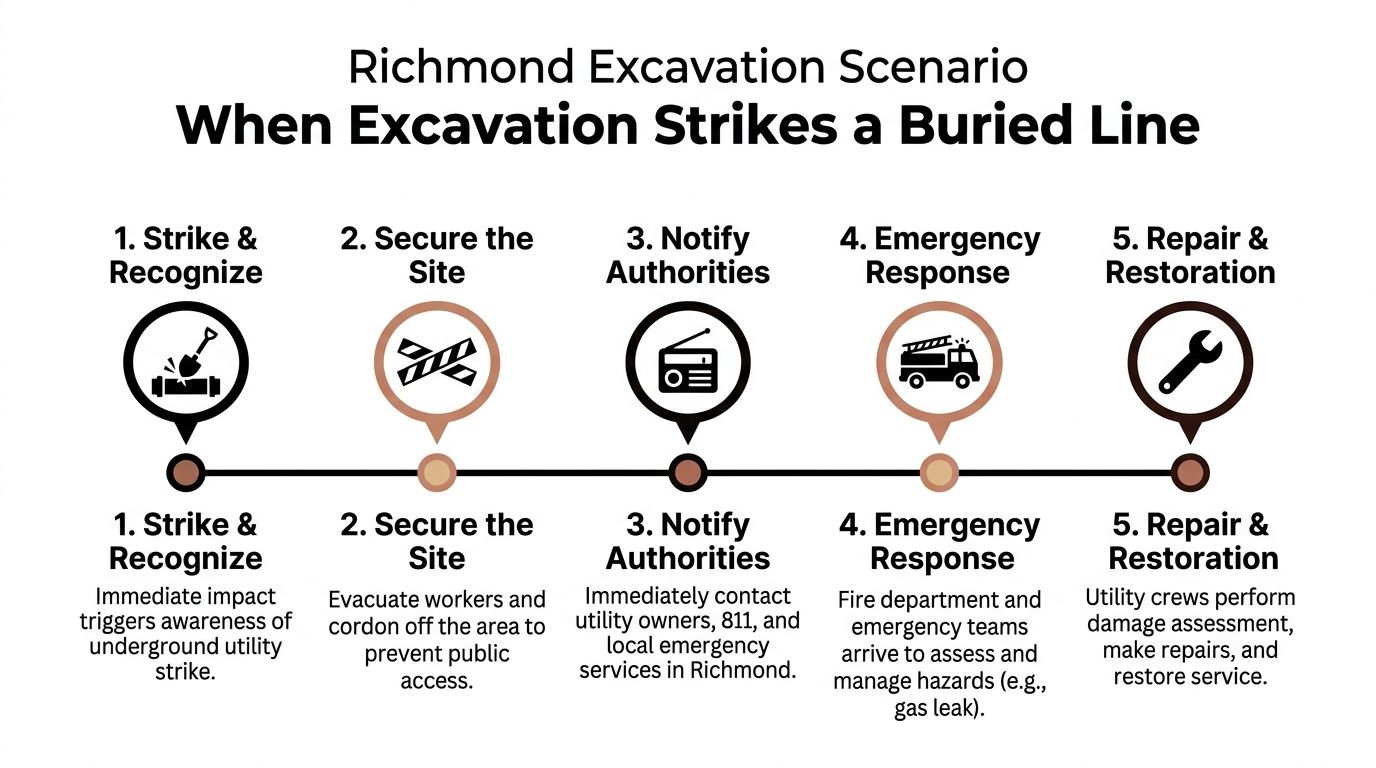
Before digging, arrange utility locates through BC One Call. A locate shows where services are expected, but it does not remove excavation risk. Contractors and homeowners still need careful hand exposure near markings, site controls, and a firm rule against digging through a marked service. The gas safety trend reporting identifies excavation damage as a recurring safety concern in British Columbia.
After the utility isolates the line, the responsible utility or qualified contractor repairs or replaces the damaged section. The service must be pressure-tested and restored under controlled conditions. Resume the original excavation only after the gas emergency is cleared and the site is released.
For new or altered gas piping, gas-line installation guidance should be coordinated among the property owner, qualified trades, required permits, and the utility before excavation begins.
Prevention and Maintenance That Actually Works
Emergency response is the expensive and disruptive way to discover a weak connection. Scheduled maintenance gives a licensed gas technician time to inspect the entire appliance system, identify corrosion, test combustion, and document defects before a smell sends everyone outdoors.
The inspection should match the appliance, not follow a generic glance-over.
Water heaters
For a natural gas tank or tankless water heater, the technician should inspect the combustion chamber, flue, draft hood where applicable, thermocouple, burner condition, venting, and required clearances. The technician also checks accessible gas fittings and confirms that the appliance is operating as designed.
Tankless units deserve particular attention around service valves, flex connectors, vent joints, and the gas-control assembly. A clean cabinet doesn't prove that the connection behind it is sound.
Furnaces and forced-air systems
A furnace assessment should include the heat exchanger, burners, manifold gas pressure, venting, and carbon monoxide testing at registers. Cleaning the burner alone isn't enough if the heat exchanger is compromised or the venting is restricted.
A technician should explain what was tested and identify any condition that requires repair, monitoring, or replacement. Keep that record with the appliance manual and service history.
Visible pipework and household protection
In basement utility rooms, inspect unions, flexible connectors, shut-off valves, sediment traps, and exposed black-iron pipe for corrosion or impact. Accessible connections can be checked with an approved leak-detection solution by a qualified technician.
A UL-listed combination combustible-gas and carbon-monoxide detector near sleeping areas adds an important warning layer, but it isn't a substitute for evacuation or appliance servicing. Keep detectors maintained and test them according to the manufacturer's instructions.
A whole-home gas pressure test every few years can help identify system problems that a visual inspection won't reveal. California's fuel-gas rules illustrate why formal testing matters: after new or altered piping, many low-pressure systems require a pressure test at not less than 10 psi gauge, followed by leak checks after gas is turned on and appliance connections are examined, according to the California fuel-gas piping testing requirements.
The practical trade-off is straightforward. Preventive service costs time and planning, but an emergency leaves you with fewer choices, no indoor investigation, and a system that may remain off until repairs and testing are complete.
Who to Call and When to Call Them
Use the symptom to choose the first call. Don't spend critical minutes deciding whether a smell is “strong enough.”
Call 911 first
Call 911 from outside if anyone is dizzy, nauseated, unconscious, trapped, or in immediate danger. Do the same for a fire, explosion risk, or a serious excavation strike. Once you're safely outside, contact FortisBC at 1-800-663-9911 as directed by its emergency gas-leak guidance.
Call FortisBC for a suspected supply-side leak
A rotten-egg odour inside the home, a hissing meter, dead vegetation near a buried service line, or a line damaged during excavation calls for FortisBC's emergency line. Don't backfill, cap, clamp, or repair the line yourself.
If the smell is near a water heater, stove, or furnace, leave first and notify FortisBC from outside. A utility technician can assess the supply and determine whether the issue is on the utility side or whether a downstream licensed gas fitter is needed.
Book a licensed gas fitter for appliance-side work
Visible corrosion on a black-iron fitting, a pilot that won't relight, a yellow burner flame, or a suspected connection problem after the utility has cleared the supply calls for a non-urgent licensed service visit. The gas fitter can isolate the appliance, test the piping, repair or replace the failed component, and complete required verification before restoring operation.
In Richmond and Burnaby, Encano Plumbing & Drainage Ltd. handles gas-line inspection and appliance-side service as part of its plumbing and gas offering. You can review the considerations involved in a gas-line inspection before booking work.
Never assume the utility will repair everything you can see. The meter and upstream infrastructure belong to FortisBC. The pipework and appliances after that boundary are the property owner's responsibility.
Putting It All Together at Home
Gas safety becomes manageable when every adult knows the same three habits.
Leave first. Rotten eggs, hissing, or a detector alert means get everyone outside and call from there. Nobody stays behind to locate the leak.
Know the controls. Keep the meter shut-off area and appliance valves clear of storage. Learn their locations before an emergency, but don't operate them during a suspected leak unless an authorised responder tells you to or you can do so safely without approaching the hazard.
Maintain the appliances. Arrange a licensed inspection of the water heater, furnace, fireplace, and range, and keep the service record with the manuals and insurance documents.
British Columbia recorded 36 gas-related injuries in 2025, up 15% year over year, according to Technical Safety BC's gas safety reporting. The point isn't to make you fearful of every appliance. It's to remove hesitation when a real warning appears.
In a Greater Vancouver home, the safest plan is uncomplicated: evacuate, call FortisBC or 911 from outside, wait for clearance, then bring in a licensed gas fitter for downstream repairs.
If you need appliance-side gas-line inspection, leak diagnosis, or repair after FortisBC has made the area safe, visit Encano Plumbing & Drainage Ltd. to arrange service in Richmond, Burnaby, Vancouver, and nearby communities. Ask for a licensed technician to assess the appliance, fittings, and connected piping before gas service is restored.