

You usually don't think much about the septic system until something changes, a toilet starts gurgling, the yard smells off after rain, or a patch of grass stays damp when the rest of the property dries out. That's when homeowners across Greater Vancouver start asking the same hard question, whether this is a repair, or the beginning of a much bigger replacement project.
The answer depends on what failed, how long it's been failing, and whether the system can still move wastewater safely through the tank, drainfield, and soil. In a region where older homes, site constraints, and regulatory requirements all affect the work, septic system repair is rarely just a quick patch. It's a diagnosis, a risk assessment, and a decision about how much life the existing system really has left.
Table of Contents
- Understanding Septic System Repair Basics
- Warning Signs Your Septic System Needs Attention
- Professional Diagnostic Process and Video Inspections
- Common Repair Types and Cost Considerations
- Preventive Maintenance That Extends System Life
- Hiring Qualified Contractors and Understanding BC Regulations
- Making the Repair Versus Replace Decision
Understanding Septic System Repair Basics
A homeowner calls after noticing a soft patch near the drainfield and a sink that's started to empty slowly. The instinct is to blame the tank, but the system may be telling a more complicated story. A septic system is a chain of parts that all have to work together, and a failure in one place often shows up somewhere else.

What's actually in the system
At a practical level, the system has four jobs. The home plumbing sends wastewater out, the tank separates solids from liquid, the drain field disperses effluent, and the soil finishes treatment before water moves deeper underground. If any one of those stages is overloaded or damaged, the whole path suffers.
For Greater Vancouver homeowners, that matters because local conditions can shorten the margin for error. Coastal rain, saturated soils, tree roots, and older installations all put pressure on the system, and BC repair work has to be judged against local rules, site conditions, and whether the field can still recover. On the maintenance side, the EPA advises routine inspections and pumping to reduce failure risk, which matches what I see in the field, a tank that has not been opened and measured recently is the one people most often misdiagnose EPA septic maintenance guidance.
Practical rule: if the tank hasn't been opened, measured, and cleaned recently, don't guess at the problem from the symptom alone.
The repair question also has a cost dimension. U.S. consumer cost surveys show that septic repair spending can vary widely, and local Vancouver-area pricing can differ based on access, soil conditions, permits, and whether the work stays in the tank or extends to the drainfield. That is why the repair-versus-replace decision should start with a proper diagnosis instead of a quick estimate.
A septic system repair might be a baffle, a lid, a pump, or a line issue. It might also be a soil or drainfield failure that no tank repair can solve. The first step is always the same, identify where the system is breaking down, not just where the symptoms are showing up.
Warning Signs Your Septic System Needs Attention
A homeowner usually notices the problem in the house first. A sink drains slowly, a toilet gurgles, or a shower starts backing up after a normal day of use. Those small changes matter because they often show that wastewater is not moving through the tank and drainfield the way it should, and in coastal BC that margin can shrink fast when the ground stays wet and the field has less room to recover.
The signs that matter most
Failed septic systems can show slow drains, odors, wet spots, or backups, and tanks should generally be inspected every 1 to 3 years and pumped every 3 to 5 years EPA malfunction guidance. I tell homeowners to treat those signs as real warning points, not minor annoyances, because they usually point to a restriction, a loading problem, or a drainfield that is starting to fail.
A wet area over the drainfield after a dry stretch usually points to a problem on the soil dispersal side of the system. Odours near the tank or yard can point to venting issues, lid problems, or effluent surfacing where it should stay buried. Backups inside tubs, toilets, or floor drains are the urgent end of the spectrum, and once sewage is coming back indoors, the system needs immediate diagnosis.
A slow tub after laundry day is a useful example. That can mean the tank is overdue for service, a line is restricted, or the house is pushing more water than the system can handle at once. A wet patch that appears only after several days of heavy use can point to overload rather than a collapsed field, but you do not know which until the system is tested properly. For that kind of check, many homeowners start with a drain camera inspection to see whether the issue is in the piping, the tank, or farther out in the field.
Sewage that is surfacing or backing up is not a maintenance annoyance, it is a system failure that needs diagnosis before it spreads.
The repair-versus-replace question starts here. A smell, a wet patch, or a slow fixture does not automatically mean the whole system is done, and it does not mean a cheap tank fix will solve a drainfield problem. In BC, that distinction matters because the right answer depends on site conditions, local permit requirements, and whether the field still has enough life left to recover after the cause is corrected.
Professional Diagnostic Process and Video Inspections
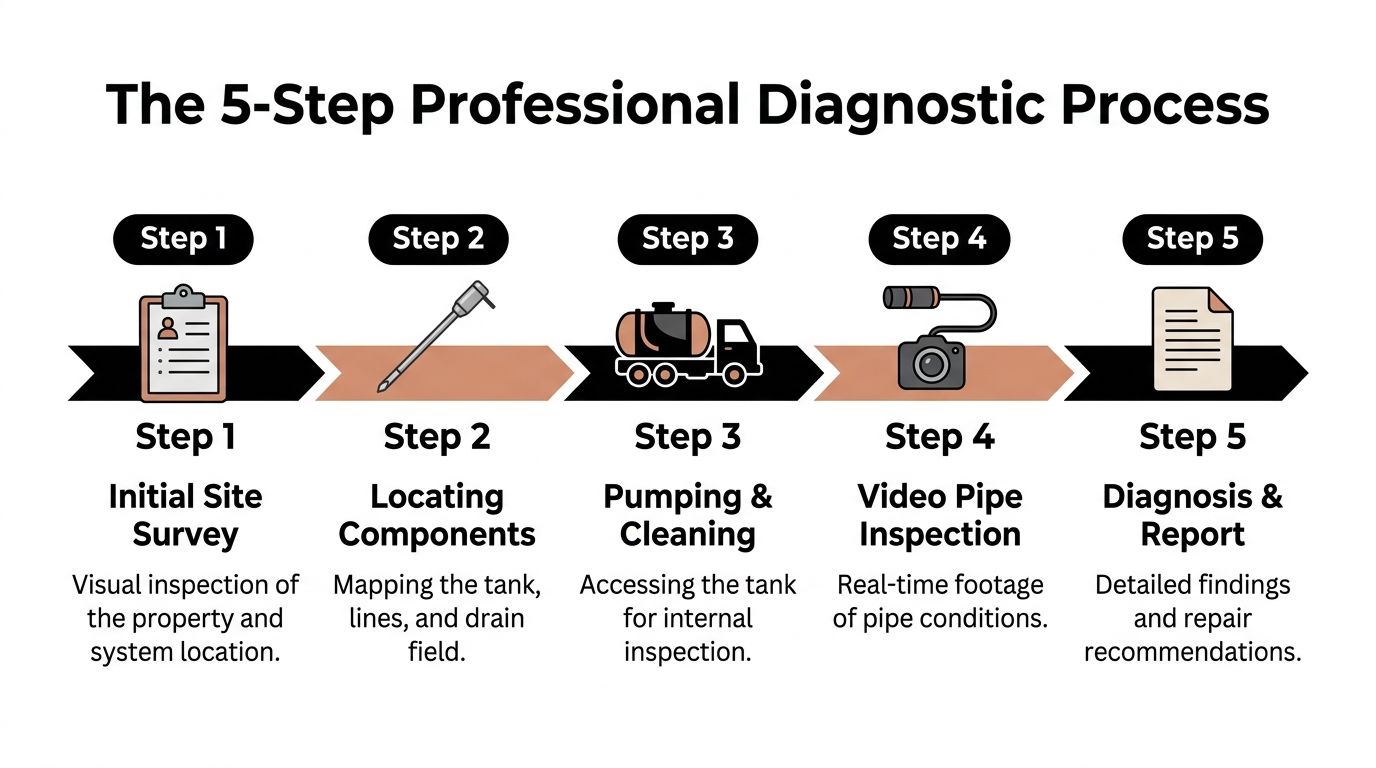
A proper diagnosis starts outside, not with a replacement quote. The technician should locate the system, confirm access points, and look at how the property has been using the system over time. In the field, that often means checking the original permit, the loading history, and any signs that the system was never sized well for the house in the first place.
How a real inspection is done
The sequence is straightforward but important. The tank is exposed, the lid comes off, the tank is pumped and cleaned, it dries, and then the technician inspects for cracks or structural defects before patching anything with cement or crack filler and allowing it to cure repair sequence guidance. That order matters because you can't judge a wet, full tank accurately.
EPA guidance says to pump when scum reaches within 6 inches of the outlet or sludge within 12 inches, and a rule of thumb is to pump when solids are about two-thirds of the tank volume EPA care guidance. A practical example is a 1,000-gallon tank with four occupants, where sludge measurements near that threshold should push pumping sooner rather than waiting for the calendar.
Why camera work changes the result
A camera inspection gives a view of the pipe path that surface inspection can't provide. It helps confirm whether the problem sits in the building sewer, the distribution line, or farther out in the drainfield. That's the difference between replacing a damaged component and spending money on the wrong part of the system.
If you want a closer look at how that part of the job works, see Encano's drain camera inspection service. It's the kind of tool that saves homeowners from guessing, especially when a system has hidden line damage that looks like a tank problem from the surface.
A backed-up septic system should be treated as a hydraulic problem first, then a repair problem. If the flow path isn't known, the fix won't hold.
The best inspections combine sludge measurements, mechanical checks, camera footage, and a review of system history. That gives you a repair map instead of a sales pitch.
Common Repair Types and Cost Considerations
A septic repair quote only makes sense when it matches the failure. A cracked lid is one job, a failed drainfield is another, and the price gap between them is wide. For homeowners in British Columbia, the bigger question is often whether the system can still be repaired within local permit and site constraints, or whether the money is better spent on replacement. In coastal areas, wet soils, high groundwater, and heavy rain can shorten the life of a field and change the repair decision fast.
The cost picture varies by region and by what is broken. U.S. repair guides often cite broad ranges for context, but those figures do not translate cleanly to BC because access, soil conditions, permit work, and disposal requirements can change the quote quickly. A contractor should be able to explain whether the job is a minor component repair, a line fix, or a larger system overhaul before any number is treated as real.
Repair types side by side
| Repair Type | Cost Range | Timeline | Complexity |
|---|---|---|---|
| Pumping and tank cleaning | $250–$600 | Usually short | Low to moderate |
| Baffle, lid, or filter repair | $300–$1,500 | Usually same day to short job | Moderate |
| Pipe or line repair | $500–$4,000 | Short to multi-day | Moderate to high |
| Drainfield remediation | $2,000–$10,000+ | Often multi-day | High |
| Full system replacement | $10,000+ | Longer than a component repair | Highest |
These are practical planning ranges, not quotes. Local access, tank size, excavation difficulty, and whether permits are required can push a job higher or lower. In BC, a repair that looks simple on paper can become a bigger job if the site is tight, the soil drains poorly, or the existing layout no longer meets current requirements.
A routine component repair is very different from a full-system job. North Carolina State Extension and EPA guidance both separate simple fixes, like pump, baffle, and filter issues, from failures that may require replacement owners guide. That distinction matters because replacing a part that failed is not the same as rebuilding a drainfield that no longer treats wastewater properly.
Where the money usually goes
One cracked baffle can be a contained fix if the tank itself is sound. A damaged line can often be repaired if the rest of the path is intact and the break is accessible. When the drainfield has failed, the job stops being a normal repair and becomes a larger capital expense, sometimes with regulatory review and site work that homeowners do not expect at the outset.
If the issue sits in the line work rather than the tank, a targeted liner or replacement approach may make sense. For readers comparing options, Encano's sewer lining repair service is one example of a solution that fits certain pipe failures better than excavation-heavy work.
A homeowner with a tank that holds pressure but a line that has collapsed under a driveway has a repairable problem if the failure is isolated. A different case is sewage surfacing in the yard after heavy use or prolonged wet weather. That usually points to broader system failure, and the quote should reflect the scope, not just the cheapest visible symptom.
Bottom line: the cheapest repair is not always the least expensive outcome if it leaves a failed drain path in place.
Preventive Maintenance That Extends System Life
A septic system usually gives warning before it fails, but only if the owner keeps up with it. The biggest mistake I see is waiting for a backup to force action. By then, the tank may be overloaded, the drainfield may already be stressed, and the repair bill is no longer about maintenance.
Habits that protect the system
Excess water use is one of the fastest ways to shorten septic life. The EPA advises spreading laundry through the week instead of stacking several full loads into one day, because the system reacts to sudden hydraulic loading as much as it does to total weekly volume EPA water-use guidance. That matters on busy households, rental properties, and small strata buildings where water use can spike hard and then fall off.
A home that dumps all of its laundry into a single morning puts pressure on the tank and drainfield at the same time. In coastal BC, that extra load can be harder on older systems because wet ground, high water tables, and saturated soils leave less room for the field to recover. A property that spaces out washing gives the system a better chance to settle between uses. It will not rescue a failing field, but it can slow the slide from manageable wear to a larger repair.
Provincial guidance also points homeowners toward conserving water at the source, which is one of the few maintenance steps that helps every system type. EPA water-use guidance is not the right place to rely on for that advice, but the practical point still stands. Lower demand means less stress on the tank, less chance of surfacing problems after heavy use, and less risk of needing premature work on a system that might otherwise have lasted longer.
Simple maintenance that pays off
- Pump on schedule: use the inspection and sludge check to decide timing, not guesswork.
- Spread water use: distribute laundry and avoid big one-day spikes.
- Keep the drainfield clear: don't park, build, or dump soil over it.
- Inspect regularly: catch baffles, lids, and loading issues before they turn into larger repairs.
- Watch what enters the tank: grease, fibrous food waste, and other heavy solids build up faster than many owners expect.
In British Columbia, pumping timing should be based on the actual condition of the tank, the household size, and how hard the system is being used. A vacation property that sits empty most of the year may not need the same schedule as a full-time family home, while a coastal property with a shallow, damp site can benefit from tighter oversight because the field has less margin when the weather turns wet. I have seen homeowners spend money on repeated clog clearing when a proper inspection and pump-out would have been cheaper over time.
If you want the system to last, keep solids and grease out of it from the start. That is simpler than repairing a field that has been overloaded by years of poor habits, and it is far cheaper than replacing a tank or drain path that failed early. A property owner who tracks pump-outs, watches water use, and keeps the field protected usually gets more years out of the same system before the next major repair is even on the table.
Practical rule: if a habit adds solids, oil, or sudden water surges to the system, it shortens the life of the repair you already paid for.
A practical example is a house where one family member likes to do all the laundry on Saturday morning. If that home starts seeing slow drains, the first fix may be changing the washing pattern before spending money on excavation. Good maintenance does not eliminate repairs, but it can push them further out and keep them smaller.
Hiring Qualified Contractors and Understanding BC Regulations
In British Columbia, septic work is not a casual trade. A septic system repair that is more than routine maintenance typically falls under the Onsite Sewerage System Regulation under the Environmental Management Act, which requires that a sewage system be designed, installed, repaired, altered, operated, and maintained only by a qualified person BC regulation guidance. That's the legal frame homeowners need to respect before anyone touches a failed system.
What to ask before you sign
Start with credentials. Ask who will inspect the system, who will design any repair, and whether the person doing the work is qualified for the scope being proposed. Then ask for a clear explanation of whether the issue is confined to a component or involves the full hydraulic path.
A good contractor should be able to tell you what they checked, what failed, and why the recommended fix matches the failure. If you're getting vague language, a rushed quote, or a promise that the problem is “probably just the tank,” that's not enough. Septic work depends on site conditions, and BC's permit process exists because guesswork creates expensive mistakes.
What compliance looks like in practice
A homeowner in Richmond with a failed drainfield cannot just add soil or reroute wastewater. The proper path is to have a qualified person assess the failure and move the repair through the local health authority process BC regulation guidance. That process protects the owner as much as the watershed.
When comparing contractors, look for these basics:
- Clear scope: the quote should specify what's being repaired and what isn't.
- System access plan: the contractor should explain how the tank and lines will be opened or inspected.
- Permit awareness: if the work requires local approval, that should be part of the process.
- Repair logic: the recommendation should match the failure, not the most expensive option.
If the contractor can't explain the failure path, they probably can't explain the right fix.
Encano Plumbing & Drainage Ltd. is one option in the Greater Vancouver market for plumbing and drainage work that can include inspection-driven repair decisions. Homeowners should still compare scope, compliance, and diagnostic detail before moving ahead, because the right contractor is the one who can prove the problem, not just name a price.
Making the Repair Versus Replace Decision
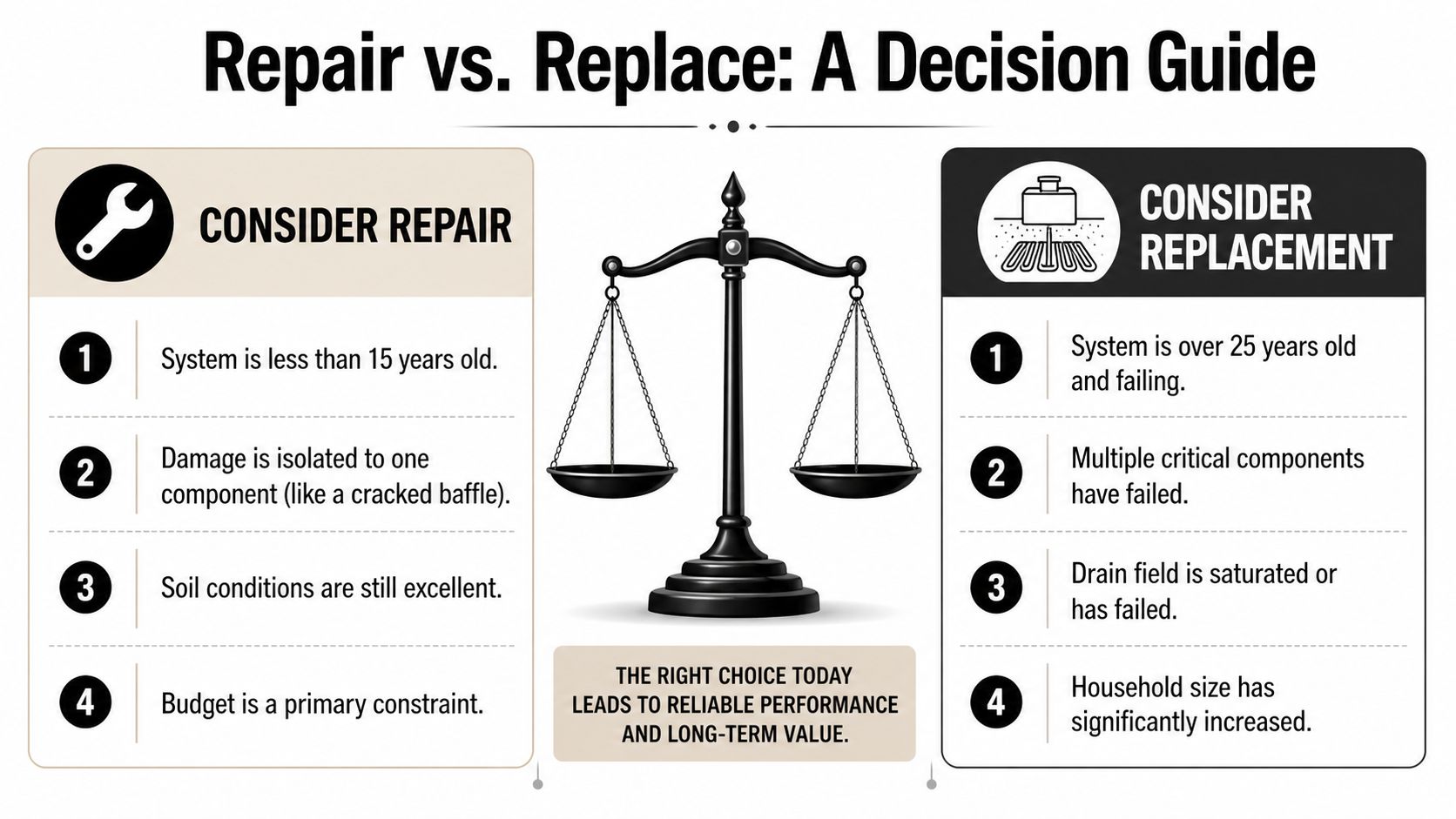
A homeowner can get a straight answer on paper and still make the wrong call in the field. The question is whether the tank is structurally sound, whether the drainfield has failed, and whether the system still matches how the property is used today. Routine fixes like pump, baffle, and filter problems belong in a different category from failures that point to full replacement, as outlined in our repair-vs-replace decision guide and the owners guide.
When repair still makes sense
Repair is usually the better move when the failure is isolated and the rest of the system still works. A cracked lid, a damaged baffle, or a faulty pump can often be handled without rebuilding the entire site. That tends to hold true when the soil is still accepting effluent and the problem was caught before it spread into the drainfield.
When replacement starts to win
Replacement gets harder to avoid when the drainfield is saturated, the tank has major structural damage, or several critical parts have failed together. Climate stress matters here too. Recent underserved-sanitation research notes that rising groundwater and flood exposure are making more septic systems unusable, while policy changes can push older systems out of code and create financial strain for homeowners NEHA research. In Greater Vancouver's high water table areas and other low-lying parts of the Fraser Valley, that pressure becomes part of the repair calculation, not a side issue.
A system can still look repairable on the surface and be headed for replacement once the field stops absorbing wastewater. I see that with homes that have a sound tank but a drainfield that has lost capacity, and with older systems that no longer match the home's current use. I also see the opposite, a single failed mechanical component, a clean permit record, and no sign that the soil side has broken down. Those cases usually stay in the repair column.
The smartest decision is the one that fixes the hydraulic path, not just the visible symptom.
For Greater Vancouver homeowners, the best approach is to treat repair vs. replace as a technical question, not an emotional one. Get the tank measured, the lines inspected, the permit history reviewed, and the soil and groundwater conditions weighed before you commit.