
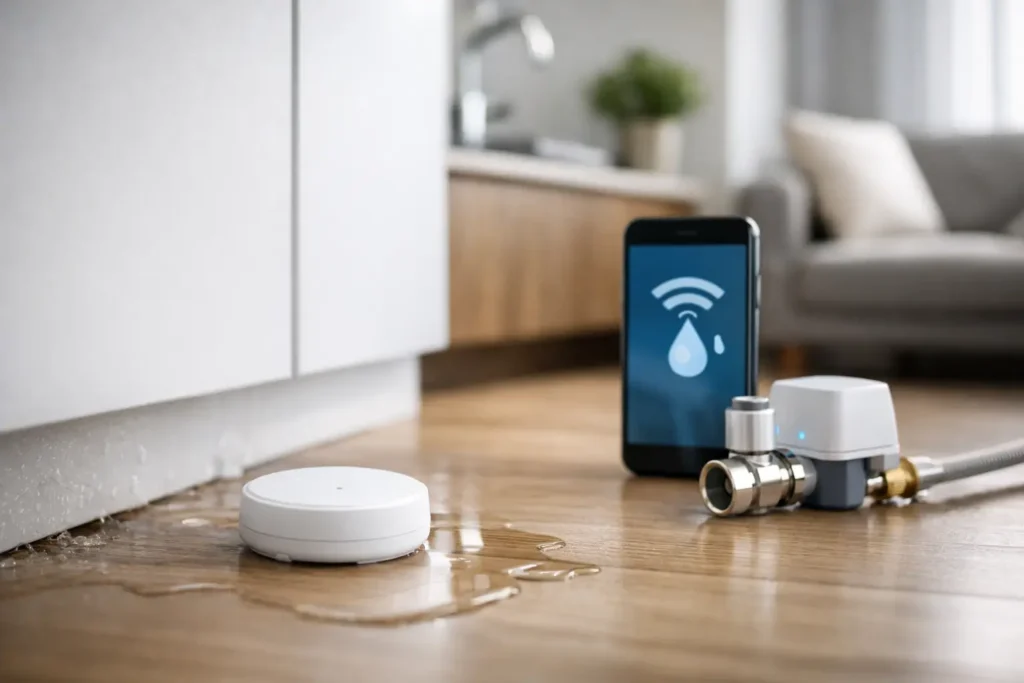
A slow leak under a bathroom vanity can damage flooring, baseboards, and the ceiling below long before anyone sees a puddle. That is why a smart leak detector review should focus less on flashy app features and more on one practical question: will it alert you early enough to prevent expensive damage?
For homeowners, landlords, and property managers, smart water sensors can be a useful extra layer of protection. They do not replace good plumbing, regular inspections, or a prompt repair when something goes wrong. But placed in the right locations, they can turn an unnoticed leak into a quick response.
Smart Leak Detector Review: What These Devices Do
Most smart leak detectors are small, battery-powered sensors placed on the floor or inside an appliance pan. When water reaches the metal contacts on the bottom of the device, it sounds an alarm and sends a notification to a phone through Wi-Fi, a hub, or a home-security system.
The basic models detect standing water. More advanced systems may track temperature and humidity, use a remote sensing cable, or connect to an automatic shutoff valve at the main water line. The right choice depends on the property and the risk you are trying to manage.
A simple sensor is often enough for a homeowner who wants an alert if a washing machine hose leaks or a water heater pan fills. An automatic shutoff system can make more sense for a vacant home, a rental property, or a building where water damage could affect several units. The trade-off is cost, installation complexity, and the need to make sure the valve works with your plumbing system.
The Features That Matter Most
A detector is only helpful if it notices water reliably and gets the warning to the right person. In our view, the best devices get the basics right before adding extra features.
Reliable alerts and a local alarm
Choose a sensor with a loud built-in alarm as well as mobile notifications. Phone alerts are valuable when you are at work, traveling, or managing a rental from another neighborhood. Still, Wi-Fi can go down, a phone can be on silent, or an app can lose its connection. A local alarm gives someone in the building a chance to act immediately.
Check whether the device needs a separate hub. Hub-based systems can be dependable in larger homes, but they add another component that needs power and placement. Direct Wi-Fi sensors are simpler, although a weak signal in a basement utility room can cause problems.
Battery life and low-battery warnings
Most standalone leak sensors run on batteries for one to several years. Long battery life is useful, but a clear low-battery alert matters more. A dead sensor beneath a water heater offers no protection.
For properties with multiple sensors, keep a simple maintenance reminder on the calendar. Test every alarm periodically and replace batteries before they fail. Property managers should also confirm that alerts are routed to more than one responsible person.
Probe cables for tight spaces
The bottom contacts on a standard sensor only detect water where the device sits. That works well under a sink, beside a toilet, or in a laundry pan. It is less useful behind a dishwasher, along a long mechanical room wall, or beneath piping where the first drips may not land in one spot.
A sensing cable extends the coverage area and is worth considering in these locations. It can detect moisture along its length, helping protect awkward or larger spaces without buying several separate sensors. Make sure the cable can be positioned without blocking access for repairs or routine cleaning.
Temperature monitoring
Some detectors warn when temperatures fall low enough to create a freezing-pipe risk. This feature is most useful in unheated garages, crawl spaces, seasonal homes, and poorly insulated exterior-wall areas. It will not prevent a freeze by itself, but an early alert gives you time to restore heat, open cabinet doors, or arrange a plumbing inspection.
Humidity readings can be helpful too, especially around a bathroom or mechanical room. However, humidity is not proof of a plumbing leak. Showers, drying clothes, and poor ventilation can raise readings. Treat humidity alerts as a reason to investigate, not a diagnosis.
Where a Smart Water Sensor Belongs
Placement determines whether a detector catches a problem in time. Start with areas where a small supply-line leak can run unnoticed: beneath kitchen and bathroom sinks, behind or beside toilets, under dishwashers, near refrigerators with water lines, and inside laundry rooms.
A water heater deserves special attention. Put a sensor on the floor near the tank or in the drain pan if there is room and the sensor will not interfere with drainage. Water heaters can leak slowly from fittings, temperature-and-pressure relief piping, or the tank itself. A detector may alert you to the first water, but it cannot make an aging tank safe or extend its service life.
For condos and multi-unit properties, consider the laundry area, water heater closet, utility room, and plumbing fixtures above finished spaces. The most damaging leaks are often the ones that start in an upper unit and travel into walls or ceilings below. A few well-placed sensors can provide valuable early warning, particularly in vacant suites between tenants.
Do not place a sensor where routine splashing will trigger false alarms. It should sit flat on a clean, dry surface and remain easy to reach for testing. If the floor slopes toward a drain, position it where water is likely to collect first.
When an Automatic Shutoff Valve Is Worth It
An automatic shutoff valve is the step up from detection to action. Depending on the system, it may close the main water supply after a sensor detects water or after it identifies unusual continuous flow. That can limit damage when no one is home.
This option is especially worth considering if you travel frequently, own a rental property, manage a commercial space after hours, or have had previous water-loss claims. It can also be useful for homes with older plumbing or appliances in finished areas.
But shutoff valves are not a set-it-and-forget-it purchase. They need correct installation, periodic testing, and a plan for what happens after the water is turned off. Some systems can mistakenly react to normal high water use, while others only respond after water reaches a floor sensor. A licensed plumber can help confirm valve size, pipe material, access, and whether the installation will comply with the building’s requirements.
What Smart Leak Detectors Cannot Catch
A sensor cannot see every leak. Water may travel inside a wall, under flooring, or along a pipe before reaching the detector. A pinhole leak in a concealed line may show up first as peeling paint, a musty smell, warped flooring, a higher water bill, or a water meter that continues moving when all fixtures are off.
Smart sensors also do not fix deteriorated caulking, failed toilet wax rings, corroded piping, sewer backups, or drainage problems. They are an alert system, not a repair. If an alarm sounds, shut off water if it is safe to do so, protect nearby electrical equipment, and find the source. Do not ignore repeated alarms simply because the amount of water looks small.
For a suspected hidden leak, professional leak detection is the better next step. The goal is to locate the problem accurately, repair it with minimal disruption, and check for related damage before it becomes a larger restoration project.
A Practical Buying Decision
For most occupied homes, two or three basic Wi-Fi sensors in high-risk areas provide good value. Prioritize a loud alarm, dependable notifications, a usable app, and simple battery maintenance. Add sensing cables where appliances or plumbing lines are hard to monitor.
For vacant homes, rentals, and properties with significant water-damage exposure, consider a monitored system or automatic shutoff valve. The higher initial cost may be reasonable if it prevents one major leak from spreading through finished rooms or neighboring units.
Before buying, walk through the property and identify where water would cause the most damage if it ran for several hours. That exercise usually makes the right setup clear. And if a detector alerts you to a leak, acting quickly matters more than the brand of sensor. Encano Plumbing & Drainage can help homeowners and property managers in Vancouver and nearby communities find the source, stop the leak, and make the repair with clear, professional guidance.