
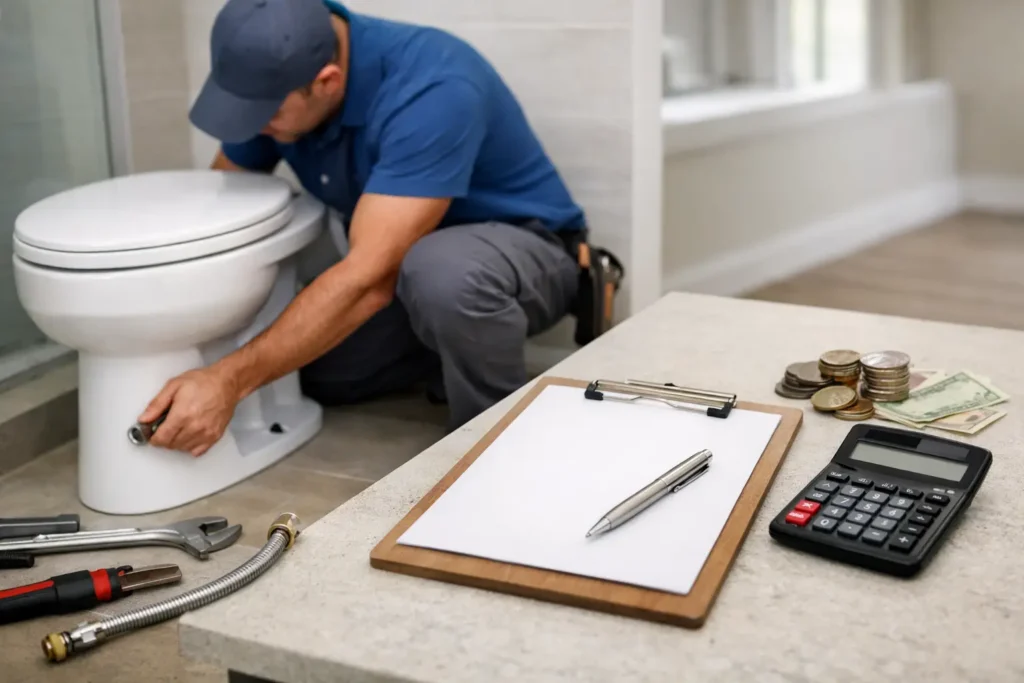
A toilet that rocks, leaks at the base, or keeps clogging is not just annoying – it can turn into water damage, wasted water, and a bigger repair bill than most people expect. That is why a toilet installation cost guide is useful before you buy a fixture or book a plumber. The total price can be fairly simple in one home and more involved in another, depending on the toilet itself, the bathroom setup, and whether hidden plumbing issues show up once the old unit comes out.
For most homeowners, the cost breaks down into two parts: the toilet and the labor to install it. A basic replacement where the plumbing is in good shape usually costs much less than a job that needs flange repair, shutoff valve replacement, or drain work. Knowing what affects the price helps you plan your budget and avoid surprises.
Toilet installation cost guide: what most people pay
In many homes, a straightforward toilet replacement lands somewhere between a few hundred dollars and over a thousand once materials and labor are included. If you are supplying a standard toilet and the existing connections are in good condition, labor is often the more predictable part of the bill. The price climbs when you choose a higher-end fixture or when the plumber has to correct issues behind or beneath the toilet.
A basic gravity-flush toilet is usually the most budget-friendly option. Two-piece models tend to cost less than one-piece models, and standard-height bowls usually cost less than comfort-height or designer styles. If you are looking at pressure-assisted toilets, wall-hung systems, or smart toilets with electrical features, your fixture cost can rise quickly.
On the labor side, a simple swap is usually the most affordable scenario. The old toilet is removed, the flange is checked, a new wax ring or seal is installed, the toilet is set, bolted, connected, tested, and sealed if appropriate. If everything lines up and there is no damage, this is the kind of project most homeowners have in mind when they ask for a quote.
What changes the cost the most
The biggest pricing factor is whether this is a true replacement or a more complex installation. Replacing an existing toilet in the same location is one thing. Installing a toilet where none existed before, moving the drain, or changing the rough-in size is a much larger plumbing project.
The toilet model matters too. A builder-grade toilet can be relatively inexpensive, while premium models can cost several times more. Some homeowners choose higher-efficiency toilets to lower water use, and that can be a smart long-term move, but the upfront purchase price may be higher.
Bathroom access also affects labor. A ground-floor bathroom with easy entry is simpler than carrying a heavy one-piece toilet up tight stairs into a condo with elevator restrictions or limited parking. In older homes, corroded bolts, worn shutoff valves, uneven floors, or damaged flanges are common reasons a simple install turns into a longer service call.
If the subfloor under the toilet has been exposed to a slow leak, repairs may be needed before a new toilet can be installed securely. That extra work is worth doing. Setting a new toilet on a weak or damaged base only hides the problem for a short time.
Typical cost ranges by job type
A like-for-like toilet replacement is usually the most affordable route. This is the best-case job: same location, standard toilet, no hidden damage, and existing plumbing in good condition. In that situation, you are mainly paying for the new toilet, small install materials, and labor.
A mid-range installation often includes a better-quality toilet, disposal of the old one, and one or two minor updates such as a new supply line or shutoff valve. This is a common scenario in homes where the toilet has been in place for years and a few supporting parts are due for replacement at the same time.
The higher end of the range usually involves repairs or specialty fixtures. Flange replacement, leveling issues, drain adjustments, or installing a premium one-piece or smart toilet can all raise the total. If electrical work is needed for advanced bidet or heated-seat features, that is typically separate from standard plumbing labor.
The hidden items homeowners often miss
Many people compare toilet prices at the store and assume that is most of the project cost. In reality, installation materials and condition-related repairs are what often change the final number.
A wax ring or upgraded seal is standard, but the flange underneath the toilet may need repair or replacement if it is cracked, rusted, too low, or no longer secure. Supply lines are inexpensive, yet many plumbers recommend replacing them during installation rather than reconnecting an old line that could fail later. The same goes for aging shutoff valves. If the valve does not fully close or starts leaking when touched, replacing it during the install is usually the better call.
Disposal can be another line item. Some companies include old toilet removal in the quoted price, while others list it separately. If you live in an apartment or multi-unit building, building rules can also affect access, scheduling, and disposal logistics.
Should you buy the toilet yourself?
It depends on what matters most to you. Buying your own toilet gives you control over style, brand, and budget. If you already know the bowl height, flushing type, and rough-in size you need, this can work well.
The downside is that people sometimes buy the wrong toilet for the space. Rough-in measurements, bowl shape, tank clearance, and seat height all matter. A toilet that looks right online can still be a poor fit once it arrives. If there is a mismatch, the installation may be delayed or cost more to adjust.
Having a plumber supply the toilet can simplify the process. You get a fixture that fits the bathroom and matches the plumbing setup, and there is clearer accountability if something is defective or incompatible. For many homeowners and property managers, that convenience is worth it.
When repair makes more sense than replacement
Not every toilet problem means you need a new unit. If the issue is a worn fill valve, flapper, handle, or leaking supply line, a repair may be more cost-effective. Minor internal tank parts are often inexpensive to replace.
Replacement makes more sense when the bowl or tank is cracked, the toilet clogs repeatedly despite proper use, the base leaks, or the fixture is old enough that multiple parts are starting to fail. Older toilets can also use much more water per flush than newer efficient models, so replacing them can lower water use over time.
For landlords and property managers, replacement is often the better long-term decision if the toilet has become a recurring maintenance issue. One solid installation is usually less disruptive than repeated service calls.
How to keep the installation from costing more than it should
Start with a clear estimate. Ask what is included, whether removal and disposal are part of the price, and what conditions could add to the total. Good plumbers are upfront about the difference between a standard installation and repair work that can only be confirmed after the toilet is removed.
It also helps to choose the right toilet for the room. Measure the rough-in, consider bowl shape for smaller bathrooms, and think about who uses the space. Comfort-height toilets are popular, but they are not ideal for every household. Water-saving models can be a good investment, but performance matters as much as efficiency.
If your home is older, be prepared for the possibility of a few supporting upgrades. Replacing a worn valve or damaged flange during the install usually saves money compared with waiting for the part to fail later.
Choosing a plumber for toilet installation cost guide questions
Price matters, but so does the quality of the install. A toilet should sit solidly, flush properly, seal tightly, and connect to the supply without leaks. Poor installation can lead to rocking, sewer gas odors, hidden moisture, and floor damage.
Look for a licensed plumbing company that explains the scope clearly and gives realistic pricing instead of a vague low number. In Vancouver and nearby areas, older homes, condo access, and aging shutoff valves are common factors that can affect toilet replacement work. A plumber with local experience is more likely to spot those issues early and handle them properly.
At Encano Plumbing & Drainage Ltd., that practical approach matters. Homeowners and property managers usually do not need a sales pitch – they need a clear answer on cost, a professional installation, and confidence that the bathroom will be back in service without unnecessary delays.
A new toilet is one of those upgrades that seems simple until hidden problems show up. When the pricing is explained clearly and the work is done right the first time, it becomes a straightforward project instead of a frustrating one.