Email: emergency@encanovan.com | Phone: (604) 764-2031
Toilets Draining Slowly? A DIY Fix Guide for Vancouver
You flush, the bowl fills higher than it should, then the water just sits there for a beat before drifting away. That slow swirl is one of the most common toilet problems we see in Vancouver homes, condos, and older multi-unit buildings. It's annoying, but it also tells you something useful. The toilet is still moving water, just not the way it's supposed to.
Around Greater Vancouver, the cause often isn't just “a clog.” It can be a partial blockage in the trap, weak flush power from the tank, mineral buildup in the rim holes, or a larger drain or vent issue somewhere beyond the toilet. The trick is not guessing. A few simple checks will usually tell you whether you're dealing with a DIY repair or a job that needs proper drain equipment.
Table of Contents
- Why Your Toilet Is Suddenly So Slow
- First-Look Diagnostics to Pinpoint the Problem
- Your Guide to Plunging and Augering Like a Pro
- Identifying Deeper Issues Vent Stacks and Sewer Lines
- Prevention Tips and When to Call Encano Plumbing
- Frequently Asked Questions About Slow Toilets
Why Your Toilet Is Suddenly So Slow
A toilet that flushes slowly usually gives the same early warning signs. The bowl water rises a bit too high, the swirl looks weak, and waste doesn't clear cleanly on the first flush. Sometimes it happens all at once. More often, it gets worse gradually over a few weeks.
The usual causes in Vancouver homes
The first possibility is a partial clog. That means the toilet isn't fully blocked, but something is restricting flow inside the built-in trap or just past the toilet. Too much toilet paper, wipes, and small foreign objects are typical causes.
The second is poor flush delivery. If the tank doesn't send enough water fast enough, the toilet won't create a strong siphon. The bowl may drain slowly even when the drain line itself isn't badly blocked.
The third is mineral buildup. That one gets missed a lot in generic online guides. In Greater Vancouver, local water conditions can leave deposits in the rim holes and siphon jet, which weakens the flush and makes a toilet act clogged when it's really starved for water flow.
A fourth possibility is a venting or sewer problem. If the toilet is slow and you also hear gurgling, smell sewer gas, or notice another fixture acting up, the trouble may be farther down the system.
Why older toilets struggle more
Many slow toilets in Vancouver are older fixtures that don't flush as cleanly as they used to. General surveys found that 57% of plumbing fixtures are over 10 years old, and older toilets are more prone to inefficient flushing, paper hangups, and mineral-related restriction, as noted in this Kohler survey coverage from Plumbing & Mechanical.
A practical example. In an older East Vancouver house, a toilet may seem “randomly slow” after years of working fine. What's often happened is simple wear plus gradual scale buildup under the rim. The homeowner keeps plunging it, but the main issue is that the bowl never gets a strong flush to begin with.
Practical rule: If the toilet is draining slowly, don't start with force. Start with diagnosis. A wrong fix wastes time and can turn a simple job into a mess.
First-Look Diagnostics to Pinpoint the Problem
Before you reach for a plunger, take two minutes to look at the toilet like a plumber would. A slow toilet usually tells you whether the problem is in the tank, the bowl, or farther down the drain.
Check the tank first
Lift the lid off the tank and watch a flush. You're looking for three things:
- Water level: The water should sit at the proper fill line or roughly 1 to 1.5 inches below the overflow tube based on the local diagnostic method described in the verified data.
- Flapper movement: The flapper should lift fully and stay open long enough to dump a full tank into the bowl.
- Refill behaviour: The tank should refill properly after the flush, without stopping early.
If the tank water is low, the toilet may have a weak flush even when the drain is clear. That's a much easier fix than attacking the toilet with an auger.
Use the bucket test
This is one of the simplest and most useful checks you can do.
Pour a gallon bucket of water into the bowl in one steady motion. If the water rises and then drains slowly, that points to a clog with 85% accuracy, based on the verified diagnostic data provided for this article. If it flushes normally during the bucket test, the problem is likely in the tank or the flush delivery, not the drain line.
The outcome dictates your next step. If the bucket test says “clog,” use clog-clearing tools. If it says “tank issue,” focus on water level, flapper action, or blocked rim jets.
Look under the rim
In Greater Vancouver, hard water can imitate a clog. The bowl looks slow, but the underlying problem is restricted flush water coming through the tiny jet holes under the rim and at the siphon jet opening.
A quick inspection helps:
- Flush and watch how evenly water comes out under the rim.
- If the flow looks uneven or weak, use a torch and mirror to inspect for chalky deposits.
- Check whether one side of the bowl gets more water than the other.
The verified local data for this topic notes that Greater Vancouver water is moderately hard at 3.6 to 5.5 grains per gallon, and a 2024 BC Plumbing Association survey found 42% of Lower Mainland homeowners reported slow toilets linked to scale, with professional hydro-jetting clearing 95% of buildup cases in service logs discussed in the verified material and summarised alongside Drano's slow-running toilet overview.
If the toilet works better after dumping water into the bowl than after using the handle, stop blaming the drain. The toilet isn't delivering enough water to flush properly.
A quick example
A condo owner in Burnaby flushes and gets a lazy swirl every time, but there's no overflow and no obvious clog. The bucket test sends water through normally. Under the rim, several jet holes are crusted over. That's not a snaking job. It's a flush-power problem caused by buildup.
Your Guide to Plunging and Augering Like a Pro
If your checks point to a clog, use the right tool in the right order. Don't start with random force. Most toilet DIY jobs go wrong because the wrong plunger is used, or the auger is shoved in too aggressively.
Start with a flange plunger
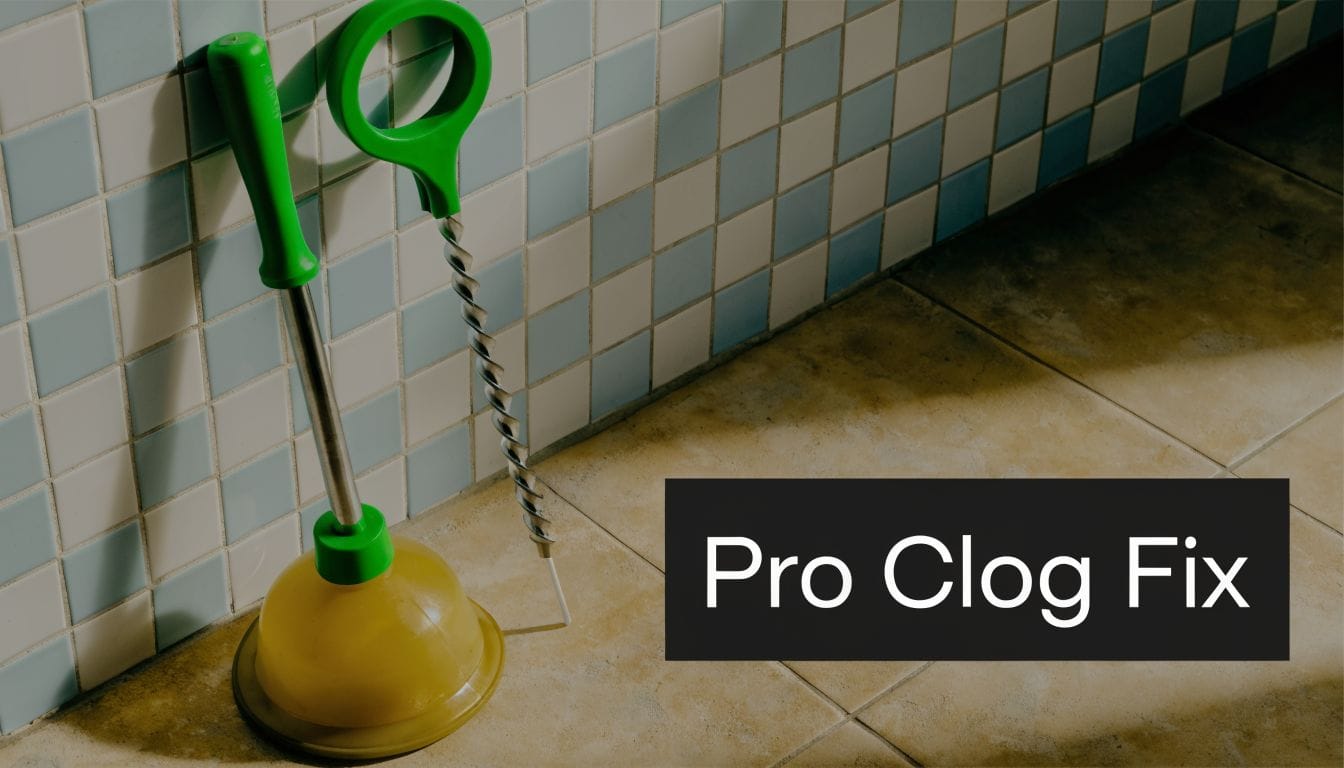
A flange plunger is the toilet plunger with the soft extra collar that fits into the drain opening. A flat sink plunger usually won't seal well enough in a toilet bowl.
In BC Lower Mainland homes, verified data for this topic says partial clogs in the toilet's S-trap account for 60% of slow drains, and a flange plunger used correctly can dislodge up to 65% of these surface-level clogs.
Use it like this:
- Shut off the water supply if the bowl is already high.
- Add or remove water so the cup is covered but the bowl isn't near overflow.
- Seat the flange into the outlet and press gently first to push air out.
- Make firm, controlled strokes while keeping the seal.
- Finish with a strong pull to help shift the blockage.
The goal isn't violent splashing. It's pressure and suction.
What works in a real bathroom
A common example is a clog from too much toilet paper after the toilet has already been flushing a bit weakly. The paper catches in the trap, the next flush packs it tighter, and now the toilet drains slowly every time. In that situation, a proper flange plunger is often enough if the clog is still near the bowl.
Common mistakes include:
- Using a sink plunger: Poor seal, weak pressure.
- Jabbing too fast: You break the seal and move more air than water.
- Flushing too early: If the clog hasn't moved, you risk an overflow.
Move to a toilet auger for deeper blockages
If plunging doesn't change anything, use a toilet auger, also called a closet snake. Verified local data says a toilet auger has an 88% success rate when used properly for deeper blockages in the trap.
Feed the auger slowly through the bowl outlet. Let the curved guide protect the porcelain. When you feel resistance, crank steadily and gently. You're either breaking up the blockage or hooking it.
A few trade-offs matter here:
- An auger is better than repeated plunging for a lodged object.
- It can scratch porcelain if you rush or force it.
- It won't fix a blocked branch drain or main line.
For homeowners comparing methods, this breakdown of drain cleaning vs drain snaking helps explain when a simple mechanical cable is enough and when a more thorough cleaning method makes more sense.
A short visual walkthrough can help if you've never used one before:
When to stop
If the plunger gives no improvement and the auger either hits something solid or only helps briefly, don't keep attacking the toilet. At that point, the clog may be beyond the fixture, or the issue may not be a clog at all.
A toilet auger is a precise tool. If you have to muscle it, something's wrong.
Identifying Deeper Issues Vent Stacks and Sewer Lines
When toilets draining slowly don't respond to normal fixture-level fixes, the problem often sits elsewhere in the plumbing system. That's when the symptoms around the house matter more than the toilet itself.
Vent stack clues
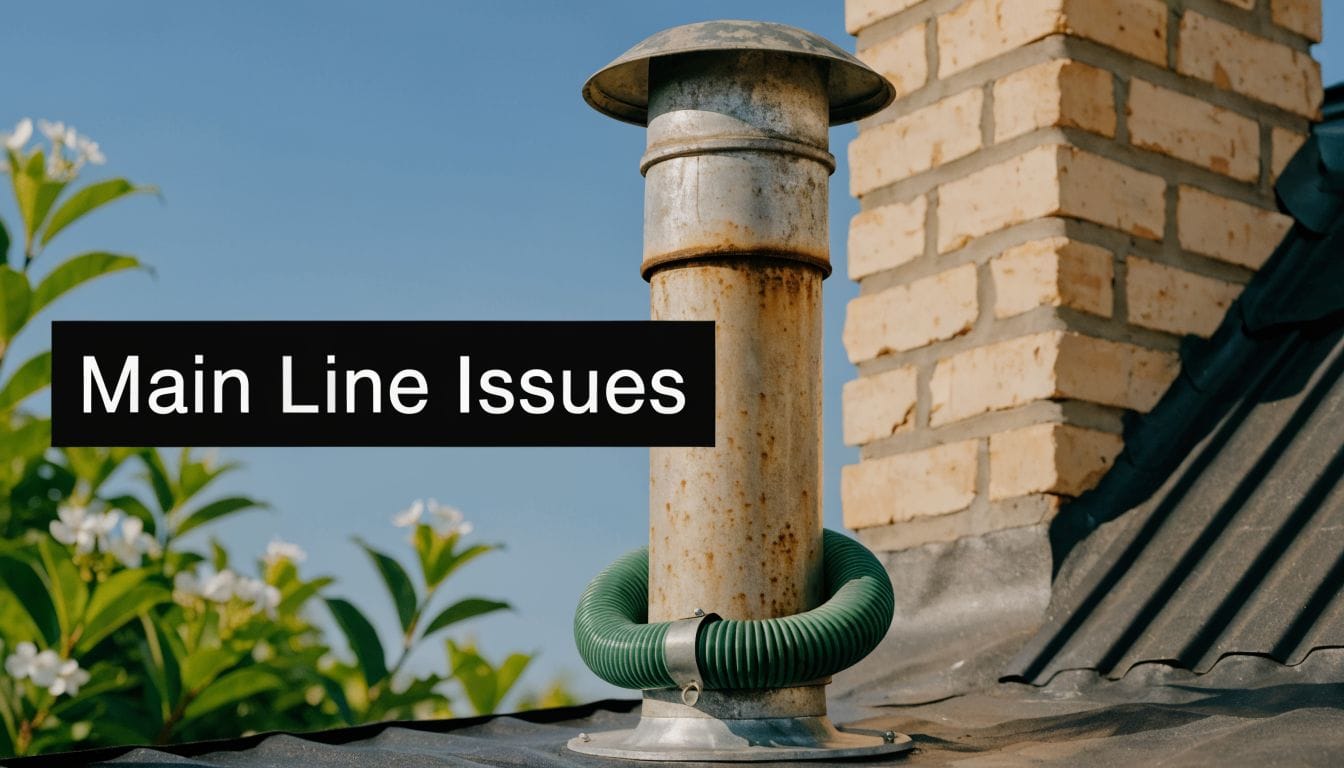
Your plumbing vent lets air move through the drainage system so water can drain properly. If that vent is blocked by leaves, debris, or nesting material, the toilet can flush slowly because the system can't balance pressure.
The symptom homeowners notice most often is this: the toilet gurgles when a nearby sink or tub drains. Sometimes the bowl water moves slightly even when nobody flushed it.
Roof work isn't a casual DIY job in Metro Vancouver weather. If you suspect a blocked vent, the safe move is inspection, not climbing up with a garden hose unless you're fully equipped and comfortable working on a roof.
Main line warning signs
A bigger concern is a blockage in the branch drain or sewer line. That's when the toilet is only the first place you notice the problem.
Watch for these combinations:
- More than one fixture slowing down: Toilet, tub, and sink all act up.
- Water movement in the wrong place: You flush the toilet and water shows up in the shower.
- Recurring trouble: You clear the toilet, but the problem returns soon after.
- Sewer odour: A persistent smell suggests drainage or venting trouble, not just a bowl-level clog.
A practical example. In a Vancouver basement suite, the tenant reports a slow toilet. Then the upstairs owner mentions a shower drain that's bubbling. That's no longer a toilet repair. That's a system problem.
Why DIY stops working
Plungers and augers work inside the fixture and a short distance beyond it. They do not tell you whether there's a wipe mass farther down the line, root intrusion, or a sagging section of drain.
That's where camera inspection changes the job. Instead of guessing, a technician can see what's blocking the line and choose the right remedy, whether that's snaking, jetting, or a repair approach such as the methods outlined in this guide to trenchless sewer line repairs.
If one toilet is slow, think local. If the bathroom starts talking back with gurgles, odours, or backup in another fixture, think system-wide.
Prevention Tips and When to Call Encano Plumbing
The cheapest toilet repair is the one you never need. Most slow toilets repeat for predictable reasons. People flush things that shouldn't go down the drain, mineral deposits narrow the water passages, or a small blockage gets ignored until it becomes a bigger one.
What to stop flushing
Some clogs are bad luck. Most are habits.
Keep these out of the toilet:
- Wipes of any kind: Even “flushable” wipes are a frequent cause of partial clogs.
- Paper towels and tissues: They don't break down like toilet paper.
- Feminine hygiene products: These expand and catch easily.
- Cotton products and dental floss: They snag and bundle with other debris.
- Grease, food waste, and cat litter: None of it belongs in a toilet.
If you manage a strata unit or a rental, a small bin beside the toilet prevents a surprising number of service calls.
Stay ahead of mineral buildup
This is the local angle many national articles skip. Greater Vancouver water is moderately hard at 3.6 to 5.5 grains per gallon, and scale in rim holes and jets is a real factor in weak toilet flushes. The same verified local material notes that 42% of Lower Mainland homeowners reported slow toilets linked to scale, which is why periodic descaling matters.
For maintenance, use practical low-risk steps:
- Inspect under the rim: Look for white or chalky buildup.
- Use vinegar or a suitable descaler: Let it dwell long enough to soften deposits.
- Work the openings gently: A small piece of wire can clear holes without forcing them.
- Pay attention to older toilets: They tend to scale up faster and flush less efficiently.
If buildup keeps returning or the toilet is slow despite cleaning, that's when a more thorough drain cleaning method may be worth it. For broader prevention around the house, this guide on how to prevent frequent drain clogs in your home covers the habits that stop repeat problems before they spread from one fixture to others.
DIY fix or call a pro
| Try This DIY Fix If… | Call Encano Plumbing Immediately If… |
|---|---|
| The problem affects one toilet only | More than one fixture is slow or backing up |
| The bowl drains slowly but doesn't overflow | Water shows up in a tub or shower when you flush |
| The bucket test points to a simple clog | You hear gurgling in nearby drains or smell sewer odour |
| You can see weak rim flow or mineral buildup | Plunging and augering don't change anything |
| The issue started after excess toilet paper use | The problem keeps coming back after temporary clearing |
What professional service changes
At the point where DIY stops making progress, the value of a professional call is simple. Better tools answer the right question faster.
A proper service visit may include:
- Video inspection: Shows whether the blockage is in the toilet, branch line, or main drain.
- Mechanical augering: Useful for fixture-level and near-line obstructions.
- High-pressure hydro-jetting: Especially effective for heavy scale and stubborn buildup.
- Repair planning: If the drain line itself is damaged or poorly sloped, cleaning alone won't hold.
A company like Encano Plumbing & Drainage Ltd. can be one option for Greater Vancouver homeowners who need inspection, drain cleaning, hydro-jetting, or sewer-line diagnosis rather than repeated trial-and-error.
Frequently Asked Questions About Slow Toilets
Should I use chemical drain cleaner in a slow toilet
Usually, no. Chemical drain cleaners are a poor match for toilets. They often sit in the bowl instead of reaching the blockage effectively, and they can create a hazard if you later plunge or auger and get splashback on your skin or eyes.
A mechanical fix is safer. Start with diagnosis, then use a flange plunger or toilet auger if the test points to a clog.
What if the toilet is slow but not clogged
That happens often. A toilet can drain slowly because it isn't getting enough flush water from the tank, or because the rim holes and siphon jet are restricted by mineral buildup. Venting problems can also cause a slow, weak flush even when there isn't a simple blockage in the bowl trap.
If the bucket test flushes well but the handle flush does not, the issue is usually with the toilet's flush delivery rather than the drain.
Why does my toilet gurgle when another fixture drains
That usually points to a venting issue or a larger drain problem. The plumbing system needs air movement to drain properly. When air can't move where it should, the toilet may bubble, burp, or drain slowly while another fixture is in use.
That's the point where a toilet-only DIY approach usually stops being useful.
Is a slow toilet ever a sign that I should replace it
Yes. Older toilets often develop repeated performance issues from wear, scale, and dated flush design. If you've cleaned the jets, confirmed the tank is working properly, and ruled out downstream drainage trouble, replacement may be more sensible than continuing to repair a weak performer.
What should I have ready before calling a plumber
A few details help speed things up:
- Which fixtures are affected: One toilet or more than one drain
- What you already tried: Bucket test, plunging, auger, cleaning under rim
- What symptoms you noticed: Gurgling, odour, backup, repeated slow flush
- When it started: Sudden change or gradual worsening
That gives the plumber a better starting point and helps avoid wasted time on the wrong fix.
If your toilet is draining slowly and you want a clear answer instead of more guesswork, contact Encano Plumbing & Drainage Ltd.. We handle toilet diagnostics, drain cleaning, camera inspections, and sewer-line troubleshooting across Vancouver and the surrounding area, with practical advice and transparent service options.