
A weak shower can ruin an otherwise ordinary morning. You turn the handle, wait for the water to warm, and find a thin stream that barely rinses shampoo. Then the kitchen tap sputters while the washing machine fills slowly. The immediate temptation is to blame clogged pipes, but that can send you towards an expensive repair before you know where the problem begins.
The most useful first question is where the pressure is weak. Is one tap affected, is the problem limited to hot water, or does every fixture in the home perform poorly? That scope separates a dirty aerator from a pressure-reducing valve, a water-heater restriction, a leaking service line, or a temporary supply issue.
For Greater Vancouver homeowners, the distinction matters. A property can have low pressure while nearby homes have normal service, particularly in a shared-meter building or during periods of heavy use. Start with observation, test the simplest causes safely, and call a licensed plumber when the evidence points beyond the fixture.
Table of Contents
- Understanding Low Water Pressure Scenarios
- The Diagnostic Flow for Homeowners
- External Supply and Municipal Factors
- Internal Plumbing Failures and Valves
- Fixture-Specific Issues and Maintenance
- When to Call a Professional Plumber
Understanding Low Water Pressure Scenarios
A Richmond homeowner may notice the change during a shower. The kitchen faucet still seems usable, yet the upstairs shower weakens whenever someone runs water elsewhere. In a detached Vancouver home, every cold tap may feel underpowered, the toilet tank may refill slowly, and the outdoor spigot may produce only a modest stream.
The symptoms sound alike, but the likely repairs differ. One weak fixture usually indicates a local restriction. Weak flow across the property points toward a valve, regulator, meter connection, service line, or internal piping. If several fixtures have strong cold water but weak hot water, investigate the water heater and hot-water branch instead of starting with the municipal supply.
That scope decision should come before removing parts or buying equipment. It tells you whether to inspect a fixture, one temperature, or the property's incoming water path.
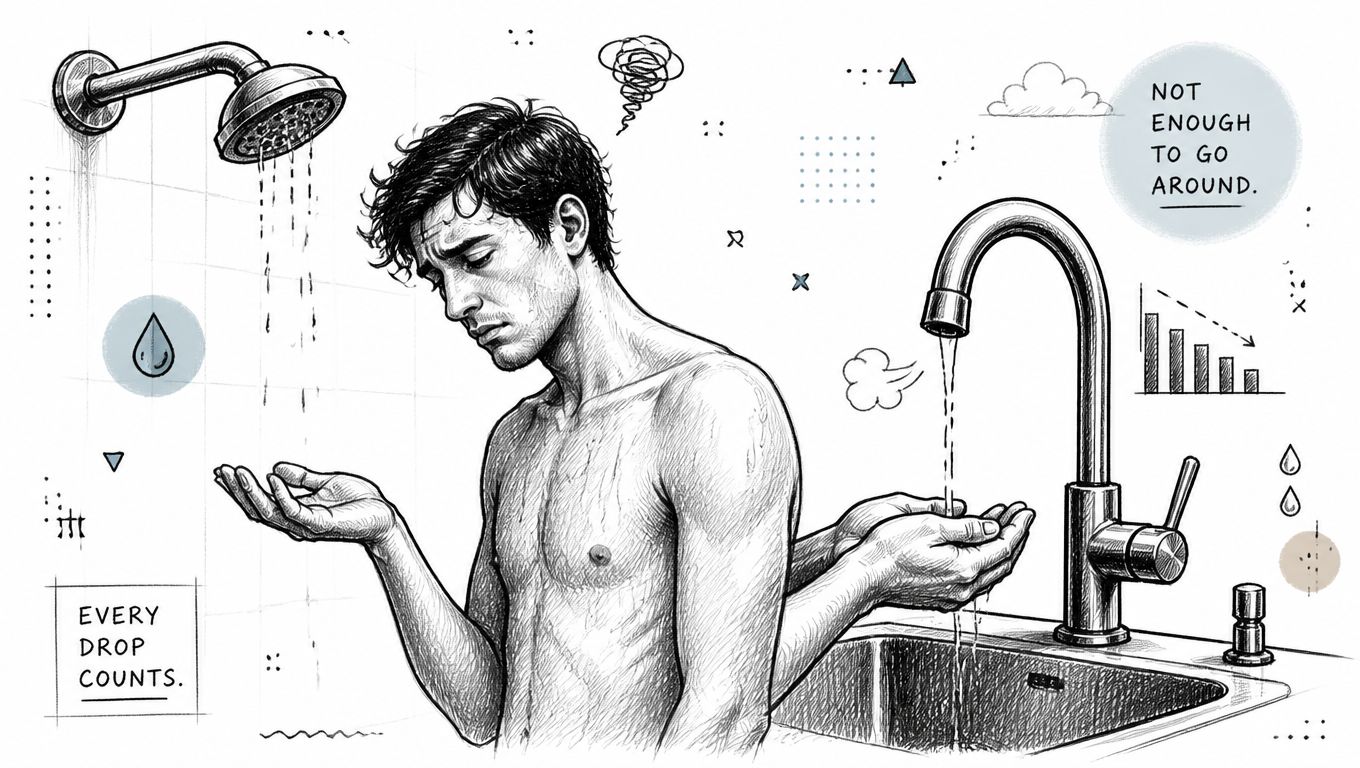
Scope comes before repair
Run a controlled comparison before spending money:
- Test one bathroom tap, one kitchen tap, a shower, and an outdoor tap. Note whether the weak flow stays with one fixture or appears in separate rooms.
- Test hot and cold water separately. A hot-only problem can involve the water-heater outlet, a restrictive valve, sediment, or the hot-water branch.
- Open fixtures one at a time, then together. A drop that appears only when several people use water may reflect shared supply demand rather than a failed part inside one fixture.
- Ask whether the change was sudden or progressive. A gradual decline fits restriction, scale, corrosion, or a regulator that is deteriorating. A sudden change warrants checking valves, leaks, recent service work, and nearby utility activity.
In Greater Vancouver homes, this comparison also helps separate a property-side issue from a broader supply problem. A building with shared service or metering can behave differently from a detached home, so nearby normal pressure does not identify the fault by itself.
California utility guidance distinguishes localized fixture faults from broader service-side problems. It identifies a failed or misadjusted pressure-reducing valve, a partly closed house or meter valve, a leaking service line, a malfunctioning water softener, and a main shutoff left partly closed after service as possible causes of reduced property pressure according to this utility guidance on water pressure and plumbing systems.
Practical rule: Do not buy a booster pump or replace piping until you know whether the loss affects one outlet, one temperature, or the whole building.
A practical morning example
Suppose the shower is weak while the kitchen cold tap and outdoor spigot remain normal. Remove the showerhead and briefly test the bare shower arm, using a cloth to protect the finish. Improved flow points to a restricted showerhead. No improvement shifts attention to the shower valve, cartridge, or local shutoff.
Those observations are more useful than saying, “the water pressure is low.” A clear comparison lets a plumber focus the visit and prevents a whole-house investigation when the actual fault is a blocked outlet screen.
The Diagnostic Flow for Homeowners
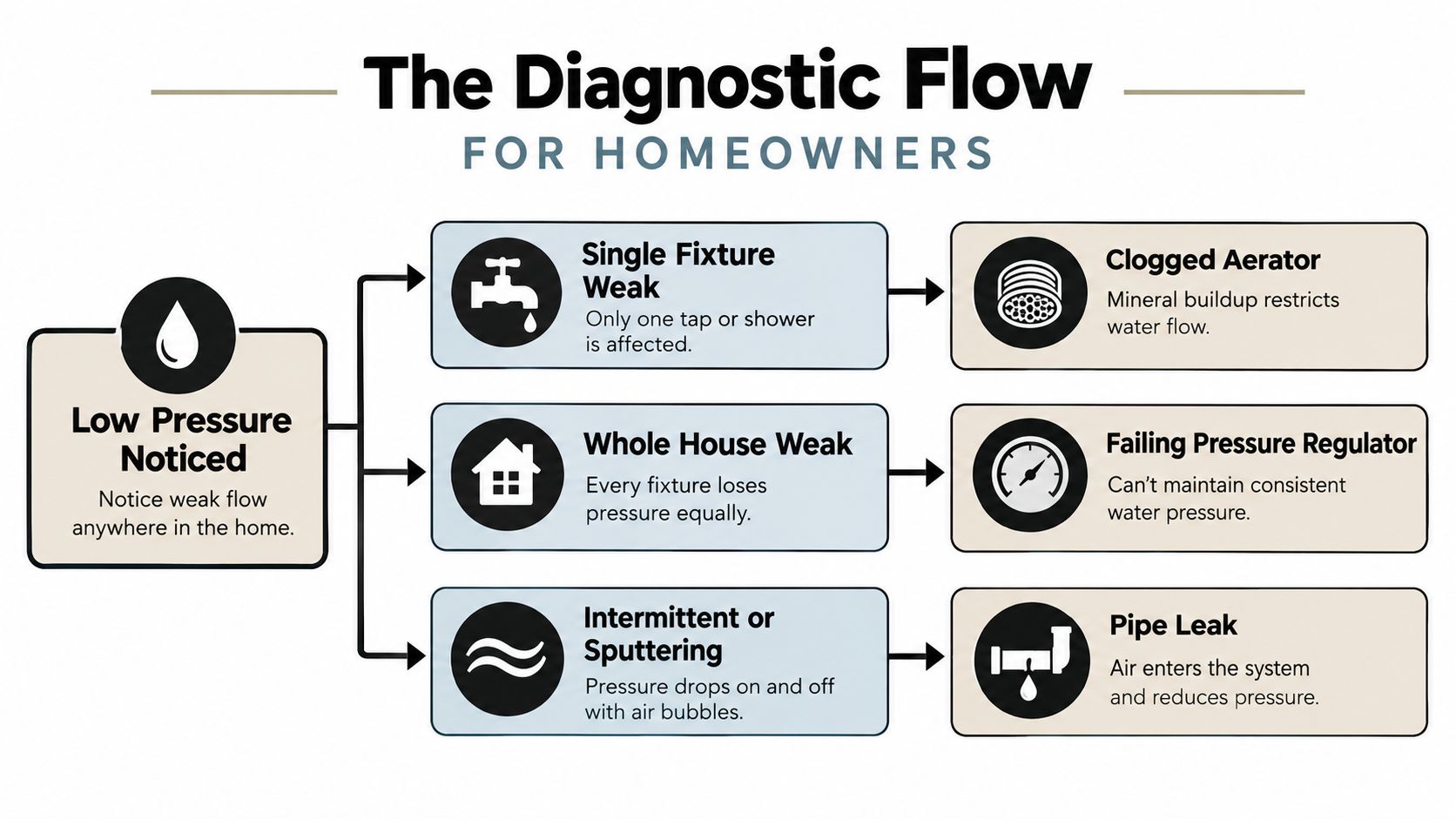
The most efficient diagnosis follows the water path from the fixture back towards the property connection. Start at the outlet, then check local valves, the main shutoff, the meter area, the regulator, and finally the incoming supply. This order keeps a small, inexpensive problem from being confused with a major plumbing failure.
Branch one, a single fixture is weak
A single affected faucet or shower points first to the outlet itself. Aerators collect sediment and mineral deposits, while showerheads can develop blocked spray holes. A faucet cartridge can also restrict flow if debris enters the valve body.
Remove the aerator or showerhead, rinse it, and test the fixture without that component. If the stream returns, clean or replace the part. If the bare outlet remains weak while nearby fixtures work normally, the restriction may sit inside the faucet cartridge or local valve.
Branch two, the whole house is weak
When several cold and hot fixtures lose flow, check the main shutoff and any accessible meter-side valve. A handle can look open while the valve remains partly closed, especially after plumbing work or utility service. Don't force a stiff, corroded valve. A broken stem can create a leak or leave you unable to stop the water.
Next, look for signs of a service-line leak. Damp soil, unexplained water movement, sound near the incoming line, staining, or a water bill that rises without a change in use all justify professional testing. A leak can divert water before it reaches the fixtures, and an underground leak may not be visible inside the home. Homeowners who want to understand the warning signs can review this guide to spotting hidden plumbing leaks in your home.
Branch three, hot water only is weak
Strong cold flow with poor hot flow narrows the search. Check the hot-water shutoff, the water-heater outlet, and the affected fixtures. Sediment or a deteriorated valve can restrict the hot side, while a faucet cartridge may limit hot flow at one location.
Intermittent flow or sputtering adds another clue. Air in the line, an active leak, a supply interruption, or a restriction that shifts with demand can produce an on-and-off pattern. If several fixtures sputter, stop treating the issue as a dirty aerator and investigate the supply path.
The decision tree looks like this:
- One outlet only: Remove and rinse the aerator or showerhead, then test the bare outlet.
- Several outlets, cold and hot: Check accessible shutoffs, the main valve, leaks, and the pressure regulator.
- Hot water only: Check the hot-water side, water heater connections, local cartridges, and valves.
- Pressure changes with neighbours' use: Consider a shared supply, multi-unit demand, elevation, or a temporary utility event.
- Persistent weakness with no obvious cause: Arrange pressure testing and leak detection instead of guessing.
External Supply and Municipal Factors
A pressure complaint can begin outside the property. Before opening walls or replacing fixtures, establish whether the weakness affects one home, several nearby properties, or a shared building system. Water pressure can change during utility maintenance, peak demand, distribution work, or other temporary events. Elevation also matters. Homes higher than a reservoir or storage point may receive less pressure than homes at a lower elevation, as described in this guidance on elevation, demand, and water pressure.
A hillside home may therefore have weaker flow as its normal operating condition. The useful comparison is not with a neighbour. Compare the current performance with the home's usual pressure, and check whether cold and hot water are affected in the same way.
Separate a neighbourhood event from a house problem
Start with timing. If the drop began during roadwork, utility maintenance, nearby construction, or a building connection, check the water provider's interruption notices. Ask neighbours whether they noticed the same change, then account for differences in elevation, service connections, and pressure-control equipment. One neighbour's result is evidence, not a diagnosis.
A temporary fluctuation should improve after the outside work ends. A persistent loss limited to your property points toward the service line, meter-side equipment, regulator, shutoff, or another property-specific restriction. A leak on the buried service line can also reduce available flow before water reaches the house, sometimes without an obvious indoor symptom.
Record the pattern before calling for replacement work: time of day, affected fixtures, hot versus cold flow, and whether pressure changes when nearby demand rises. That record helps distinguish a utility event from a house-side fault.
Shared meters and multi-unit buildings
Strata buildings add another layer. Several suites may draw through a common service, so showers, laundry, irrigation, or other simultaneous use can reduce flow during busy periods. Pressure that returns during quieter hours suggests a capacity or pressure-control issue rather than a blocked faucet.
The strata manager should compare affected suites, floors, times, and water temperatures before approving building-wide work. One suite with weak flow warrants inspection of its local supply and controls. A change reported across several units directs attention to the shared meter, booster equipment, pressure-control system, or incoming service.
When replacement becomes a consideration
A persistent service-side fault may require repair or replacement after the restriction or leak has been located. The choice depends on pipe material, access, ground conditions, connection points, and the effect of excavation on paving or landscaping. Owners can review practical considerations for water-line replacement for a residential or shared property.
Do not raise a regulator setting to overpower an unknown restriction. Higher pressure will not repair a leaking line, clear internal corrosion, or correct an undersized shared service. It can also stress fixtures and connections. Confirm the source first, then adjust or replace the affected equipment.
Internal Plumbing Failures and Valves
For whole-house low pressure, the pressure-reducing valve is one of the first components a plumber considers. A PRV sits where the service enters the property and reduces street pressure to a safer residential range. Inside the valve, a diaphragm, spring, and seat respond to downstream demand. When the mechanism becomes fouled or worn, it may no longer maintain steady flow.
Debris and mineral scale can clog the valve passage. A failing spring or diaphragm can leave the valve partially restricted, and a valve that fails closed can cause a progressive reduction in whole-house pressure. That progression is important. A fixture clogged by sediment often changes suddenly or affects one outlet, while a deteriorating PRV can make several fixtures feel weaker over time.
A pressure gauge attached to a suitable outdoor spigot can help compare the incoming performance under consistent conditions. The reading is only useful when interpreted with the fixture pattern, valve position, elevation, and time of day. A gauge cannot tell you by itself whether the restriction is in the PRV, the service line, the meter valve, or the municipal network.
What the common failures look like
A partly closed main shutoff often appears after renovation, meter work, or emergency isolation. The handle may be close to its open position but not fully restored. Open it only if it turns freely and you can identify the correct valve. If it is seized, leaking around the stem, or difficult to distinguish from the utility's equipment, leave it alone.
Corroded or heavily scaled pipe is a different kind of restriction. Deposits reduce the usable opening inside the pipe, so the system may still deliver water but fail when demand increases. Older galvanized steel is particularly vulnerable to internal corrosion, though a plumber must identify the actual material and condition rather than assume the pipe type from the home's age.
A leaking service line creates both a water-loss risk and a pressure problem. Underground leaks may leave no obvious puddle, especially where water travels through soil or follows the line away from the house. Acoustic leak detection, pressure testing, and targeted excavation can locate the problem with less disruption than opening the entire route.
| Common Internal Causes Comparison | Symptom Pattern | Typical Repair Complexity |
|---|---|---|
| Pressure-reducing valve restriction or failure | Weak flow at multiple fixtures, often with a gradual change or unstable performance | Moderate to high. Testing and valve replacement require system isolation and correct adjustment |
| Partly closed main shutoff or meter-side valve | Whole-house weakness after service, renovation, or valve operation | Low if accessible and operable, higher if the valve is seized, damaged, or utility-owned |
| Leaking service line | Whole-house loss, damp areas, unexplained water movement, or persistent pressure decline | High. Location, access, repair method, and surface restoration all affect the work |
| Internal corrosion or scale | Progressive restriction, weak flow at several outlets, possible discolouration | Moderate to high. Local repair may work, but widespread restriction can require pipe replacement |
| Water softener or treatment equipment fault | Pressure loss after the treatment unit, sometimes affecting the whole property | Variable. Bypass testing and equipment service can isolate the restriction |
The trade-off is straightforward. Adjusting a valve is less disruptive than replacing it, but adjustment only works when the mechanism remains serviceable. Flushing a line may help when loose debris is the cause, but it won't restore the internal diameter of severely corroded pipe. Replacing a PRV can restore control, but it won't solve a leak upstream or a supply limitation outside the property.
A check valve can also influence flow when it sticks or becomes obstructed, depending on where it is installed. It shouldn't be added or replaced just because pressure is low. The device has a specific purpose, and installation must match the plumbing layout. Review the considerations involved in check valve installation before treating it as a general pressure fix.
A pressure problem is a flow-path problem until testing proves otherwise. Find the restriction, leak, or control point before choosing the repair.
Exact repair pricing and timing depend on access, pipe material, building type, permits, restoration, and whether the water must remain available to other occupants. A visual inspection can identify a likely cause, but a pressure test or leak-location procedure may be needed before a responsible replacement recommendation.
Fixture-Specific Issues and Maintenance
A faucet aerator is a small screen at the end of the spout. It mixes air with water and catches particles, but the same screen can become packed with sediment or mineral deposits. If only one faucet has weak flow, this is a sensible first repair because it involves little risk and doesn't disturb the home's main water service.
Cleaning an aerator safely
- Protect the finish. Wrap the aerator with a cloth before using pliers. Many fittings loosen by hand, and excessive force can scratch chrome or damage a plastic insert.
- Unscrew the aerator carefully. Keep the small screen, washer, and housing together. If the fitting is cross-threaded or seized, stop rather than twisting the faucet spout.
- Rinse loose debris away. Run clean water through the screen from the opposite direction. A soft toothbrush can remove deposits without enlarging the openings.
- Soak stubborn scale. Place removable parts in white vinegar, then rinse them thoroughly. Don't use a harsh chemical that could damage the finish or leave residue in drinking-water components.
- Reassemble by hand first. Make sure the washer sits flat and the threads engage smoothly. Tighten gently with the cloth and tool only after the fitting is properly seated.
If pressure improves with the aerator removed, clean or replace the aerator. If the bare spout remains weak, the restriction may be in the faucet cartridge, flexible supply hose, or shutoff valve beneath the sink. A cartridge can fail without affecting other fixtures, so the scope test still matters.
Showerheads and cartridges
Showerheads collect deposits around their spray openings. Remove the head if the connection is accessible, rinse the inlet screen, and inspect the spray plate. Test the shower arm briefly without the head, keeping the flow directed into the tub or shower base. A strong stream from the arm confirms that the head is the restriction.
A weak stream from the arm points towards the shower valve, cartridge, local shutoff, or branch piping. Cartridge replacement requires the correct part, and forcing a retaining clip or trim plate can damage the valve body behind the wall. Use the faucet manufacturer's model information where available rather than buying a visually similar cartridge.
Don't confuse low pressure with a water-saving fixture's designed flow. Compare the affected outlet with a similar fixture in the home and assess whether the change is new. Cleaning restores blocked openings, but it won't turn a deliberately lower-flow fitting into a high-flow fixture.
When to Call a Professional Plumber
A weak tap is usually safe to investigate. Pressure that drops across the home, changes suddenly, or comes with moisture needs a different response. Start by identifying the scope: one fixture, several fixtures, the whole property, or hot water only. That pattern helps you avoid buying parts before the fault is located.
DIY checks are reasonable when the affected fixture is accessible. You can compare hot and cold flow, confirm an operable shutoff is fully open, and inspect for visible moisture. Stop before working on the main service, a seized valve, concealed piping, gas equipment, an active leak, or any situation where escaping water could damage the building.
Call a licensed plumber when:
- Low pressure affects the entire property. The fault may involve the PRV, service line, main valve, meter connection, or internal pipe network.
- You find signs of a leak. Damp walls, wet soil, water sounds, staining, mould, or a rising bill warrant prompt investigation.
- Water is discoloured or rusty. This can point to pipe deterioration or disturbed sediment, not only a pressure setting.
- A valve is stuck or damaged. Forcing it can cause a larger leak or leave the home without a dependable shutoff.
- The issue affects multiple strata units. Building systems require coordinated testing so a shared problem is not mistaken for a private fixture fault.
- A regulator needs replacement. The incoming-pressure component must be correctly selected, installed, and adjusted.
A plumber may use a pressure gauge, acoustic leak detection, thermal imaging, video inspection, or targeted pressure testing. Report when the problem started, which fixtures are affected, whether hot and cold flow differ, and what safe checks changed. That information makes testing more focused.
Encano Plumbing & Drainage Ltd. provides leak detection and repair, pressure-related pipe diagnosis, valve work, water-line services, and emergency plumbing support across Vancouver, Richmond, Burnaby, New Westminster, Delta, Surrey, and nearby Greater Vancouver communities. If pressure is weak throughout the property, a leak is active, or the regulator or service line is involved, arrange diagnostic help before committing to a larger repair.