
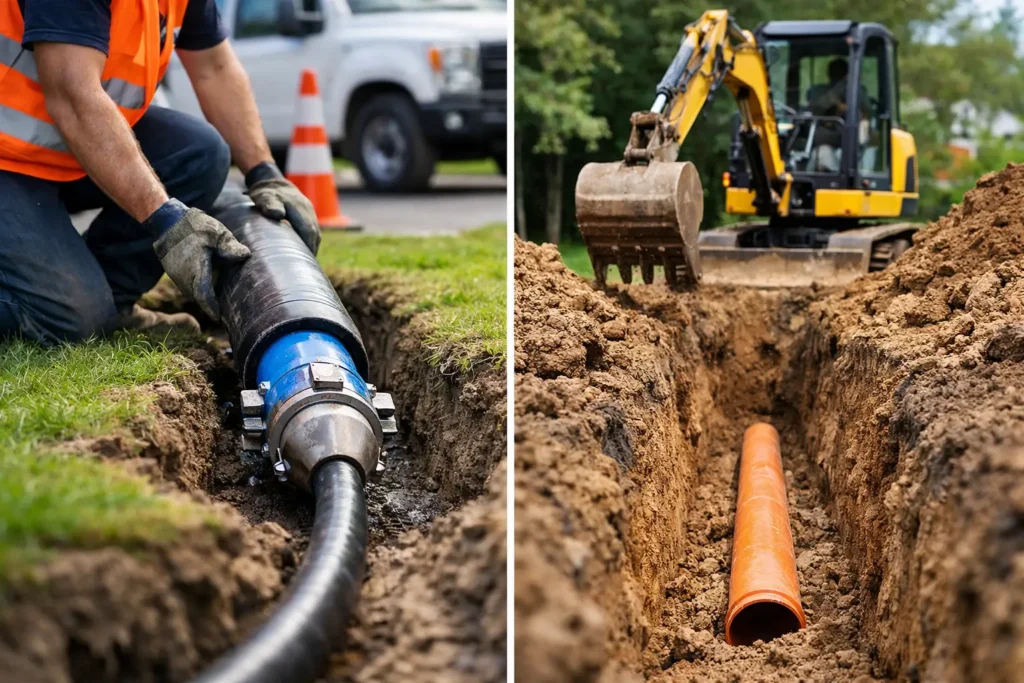
A sewer line problem usually becomes real the moment you picture the fix. For many property owners, the first worry is not just the pipe – it is the lawn, driveway, parking area, landscaping, or business access above it. That is why trenchless sewer replacement vs digging is one of the first questions people ask when they are facing a failed sewer line.
The short answer is that both methods can solve the problem, but they solve different kinds of problems in different ways. One is less invasive and often faster. The other gives full access and is sometimes the only responsible option. The right choice depends on pipe condition, location, depth, access, and what is happening around the damaged line.
What trenchless sewer replacement vs digging really means
Traditional digging means excavating along the sewer line so the old pipe can be fully exposed and replaced. If the pipe runs under a yard, patio, driveway, sidewalk, or slab, those surfaces may need to be opened up to reach it. This method has been used for decades because it gives plumbers direct visibility and room to work.
Trenchless replacement is different. Instead of opening a long trench across the full pipe path, the plumber usually works from one or two access points. Depending on the job, this can involve pipe bursting, where a new pipe replaces the old one while breaking the existing line apart, or other trenchless methods selected for the condition of the system.
For homeowners and property managers, the practical difference is disruption. Trenchless work usually protects more of the property above ground. Digging usually creates a bigger work zone, but it can be the better option when the damage is severe or access conditions are complicated.
When trenchless sewer replacement makes sense
Trenchless sewer replacement is often a strong choice when the existing line can still serve as a path for the new installation. If the pipe is cracked, leaking, root-damaged, or deteriorated but still traceable, trenchless methods may work very well.
This approach is especially attractive when the sewer line runs beneath expensive landscaping, mature trees, concrete, pavers, parking lots, or areas that are hard to restore. For a homeowner, that may mean saving a front yard or driveway. For a commercial property, it may mean reducing interruption to tenants, customers, or daily operations.
Another advantage is speed. In many cases, trenchless projects can be completed faster than full excavation because there is less demolition and restoration involved. That does not mean every trenchless job is quick or simple, but it often reduces the overall timeline.
There is also the cleanup factor. Less digging usually means less soil displacement, less mess, and less post-project restoration. If keeping the property usable matters as much as fixing the sewer itself, trenchless can be a very practical solution.
When digging is the better option
There are situations where digging is not the old-fashioned choice – it is simply the correct one. If the sewer line has collapsed badly, shifted significantly, or lost too much structural integrity, trenchless replacement may not be possible or advisable.
Digging is also often necessary when the line’s exact path is unclear, when there are multiple problem sections, or when the grade needs to be corrected. Sewer lines rely on proper slope to drain well. If the existing installation has bellies, poor alignment, or installation defects, opening the trench may be the best way to rebuild the line properly.
This is also true when the pipe is very shallow in some areas and very deep in others, or when nearby utilities create safety and access concerns. In those cases, direct excavation gives the crew more control over the repair.
For older properties, especially where previous repairs were done inconsistently, digging can reveal hidden problems that a less invasive method would not fully address. It is not always the cheapest-looking option at first glance, but it can prevent repeat failures when the whole system needs a more complete reset.
Cost: the answer is not as simple as cheaper vs more expensive
Many people assume trenchless always costs more because it uses specialized equipment. Others assume digging is always more expensive because of labor and restoration. In reality, both assumptions can be wrong.
Trenchless work can carry a higher technical price for the pipe replacement itself, but if it avoids tearing up a driveway, removing hardscape, disturbing tree roots, or shutting down a busy property area, the total cost can be very competitive. Restoration is where traditional excavation often grows more expensive.
On the other hand, if the sewer line is easy to access in open ground with minimal obstacles, digging may be the more straightforward and cost-effective route. There is no fancy answer here. The price depends on what is above the pipe, how deep it is, what shape it is in, and how much repair to the surrounding property would be needed afterward.
That is why a camera inspection and site evaluation matter so much. A fair estimate should look beyond the pipe itself and account for the real total job.
Property disruption and daily inconvenience
For most people, disruption matters almost as much as price. A sewer replacement can affect parking, yard access, building entry, tenant routines, and normal water use. This is where trenchless methods often stand out.
With fewer excavation areas, trenchless jobs typically create a smaller footprint on the property. That can be a major benefit for tight urban lots, multi-unit buildings, or homes where every bit of driveway space matters. In parts of Vancouver and nearby communities where lots can be narrow and access can be tight, minimizing surface disruption can make a real difference.
Digging, however, may still be worth the inconvenience if it leads to a more complete correction of the line. Temporary disruption is frustrating, but repeat sewer failures are worse. A good contractor should be honest about that trade-off instead of pushing one method for every project.
How plumbers decide between trenchless sewer replacement vs digging
The best decision starts with diagnosis, not sales. A sewer camera inspection helps identify cracks, root intrusion, offsets, scale buildup, collapse points, and whether the pipe path is usable for trenchless replacement. Pipe locating also helps map where the line runs and what sits above it.
After that, the decision usually comes down to a few practical questions. Is the line still open enough and stable enough for trenchless work? Is the slope correct, or does the line need to be rebuilt? Are there structures, hard surfaces, or landscape features that would be costly to disturb? Is there enough access for equipment? Will excavation create safety concerns or major operational issues for the property?
For landlords and facility managers, the answer may also depend on occupancy and downtime. For homeowners, it may come down to balancing upfront cost with long-term value and preserving the property.
The biggest mistake to avoid
The biggest mistake is choosing a method before understanding the actual condition of the sewer line. Trenchless sounds appealing because it is cleaner and less invasive. Digging can sound more thorough because the whole pipe is exposed. Neither label tells you what your line really needs.
A good sewer replacement plan should match the problem, not the trend. If a contractor recommends trenchless without confirming the pipe is a good candidate, that is a red flag. If someone pushes excavation without considering what can be preserved, that deserves a second look too.
At Encano Plumbing & Drainage Ltd., that is why the process starts with clear information, practical recommendations, and upfront pricing. Property owners need a repair that solves the problem properly, not just the one that sounds easiest in the moment.
Which option is right for you?
If your sewer line is damaged but still structurally workable as a replacement path, trenchless may save time, reduce property damage, and lower restoration costs. If the pipe has collapsed, the slope is wrong, or the installation needs a full correction, digging may be the smarter long-term fix.
The best choice is not about picking the newer method or the older one. It is about getting a reliable sewer line with the least unnecessary disruption and the right level of repair for the condition underground.
When a sewer problem shows up, most people want a fast answer. The better goal is a clear one. Once you know what the camera sees, the right path usually becomes much easier to trust.