You wake up in Surrey, step onto the floor, and the house feels wrong right away. The heat should've kicked in overnight, but the rooms are cold, the air feels damp, and now you're standing by the thermostat wondering if this is a quick fix or the start of an expensive day.
That's a stressful spot to be in, especially when you've got kids getting ready for school, tenants calling, or an older parent in the home who can't sit in a cold house for long. The good news is that furnace repair in Surrey, BC isn't a fringe service. The Better Business Bureau furnace repair directory for Surrey shows numerous furnace-repair and heating contractors in the city, which tells you this is a well-established local trade with plenty of qualified help available.
A cold house doesn't always mean a major breakdown. Sometimes it's a plugged filter, a tripped breaker, or an ignition issue. Sometimes it's the point where another repair on an ageing unit stops making sense. That's the decision most articles skip, and it matters in Surrey because heating choices now connect to code requirements, system design, and whether replacing a gas furnace with a heat pump makes better long-term sense than fixing one more part.
Table of Contents
- That Sudden Chill What It Means When Your Furnace Fails
- Decoding Your Furnace Common Problems and Their Symptoms
- Your First Response Safe DIY Furnace Troubleshooting
- Drawing the Line When to Call for Professional Furnace Repair
- The Repair Call What to Expect and How Much It Costs in Surrey
- Repair vs Replace A Strategic Choice for Surrey Homeowners
- Preventative Care and Frequently Asked Questions
That Sudden Chill What It Means When Your Furnace Fails
A furnace failure usually doesn't happen at a convenient time. It shows up early in the morning, on a damp winter night, or right before guests arrive. The house cools off surprisingly quickly, and the first reaction is usually the same. Check the thermostat, listen for the blower, then wonder if you should call someone immediately.
In Surrey, homeowners have options because the heating trade is established and active across the city and the wider metro area. That matters when you need same-day help, but it also matters because an established market gives you room to compare how technicians diagnose problems, explain repairs, and handle safety concerns.
A common example looks like this. The thermostat says heat is on, the furnace starts for a moment, then shuts itself down. The vents might push a little lukewarm air, then nothing. To a homeowner, it feels random. To a technician, that pattern often points to a system that's trying to protect itself from a bigger problem.
A furnace that stops itself repeatedly isn't being stubborn. It's often reacting to airflow, ignition, venting, or safety control issues.
That's why the first step isn't guessing. It's slowing down, checking what's safe to check, and separating a small issue from one that needs a licensed heating technician right away.
Decoding Your Furnace Common Problems and Their Symptoms
Furnaces fail in patterns. If you know what the pattern looks like, you can describe the problem clearly when you book service and avoid making things worse by poking at the wrong part.
When the furnace won't heat at all
If the furnace does nothing, start by thinking in layers. First layer is control. The thermostat may not be calling for heat. Second layer is power. The breaker or service switch may be off. Third layer is ignition or safety lockout. The furnace may have power but refuse to start because one of its safety checks isn't being satisfied.
A homeowner might hear a soft click and then silence. That often suggests the furnace is attempting to start but can't complete the sequence. If you hear nothing at all, the issue is more likely related to power, controls, or a shutoff state.
When it runs but doesn't heat properly
This is one of the most common complaints in furnace repair Surrey BC calls. The blower comes on, but rooms never get comfortable, or the unit keeps cycling on and off. The easiest way to picture it is breathing through a straw. A dirty filter restricts airflow, and the furnace can overheat because it can't move air the way it was designed to.
The same kind of problem can happen if too many supply vents are closed, furniture is blocking registers, or return air is restricted. The furnace may still run, but not well. Homeowners often describe this as “the system sounds alive, but the house stays cold.”
When noise or smell changes the picture
Noise tells a story. Banging can be expanding ductwork or delayed ignition. Whistling often points to airflow restriction. Grinding or squealing suggests a mechanical issue that needs professional attention. Clicking can be normal during startup, but repeated clicking with no heat usually means the ignition sequence isn't completing.
Smells matter too, but context matters just as much:
- Dust smell at first startup: Common after the system has been sitting.
- Musty smell: Can point to moisture or dirt in the system area.
- Sharp burning smell: Often means the unit should be shut down and inspected.
- Gas smell: Leave the house and call the gas utility or emergency services from outside.
A practical example. If your furnace starts, makes a brief whooshing sound, then shuts off after a short run, that often lines up with a flame-sensing, airflow, or venting issue. If it starts with a loud metal bang, don't assume it's just “old ductwork” until someone rules out combustion-related causes.
Practical rule: Noise that gets worse, returns often, or arrives with heat loss is repair territory, not a wait-and-see problem.
Your First Response Safe DIY Furnace Troubleshooting
Before you pay for a service visit, there are a few checks that are safe, useful, and worth doing. The key word is safe. You're verifying settings and access, not taking apart a gas appliance.
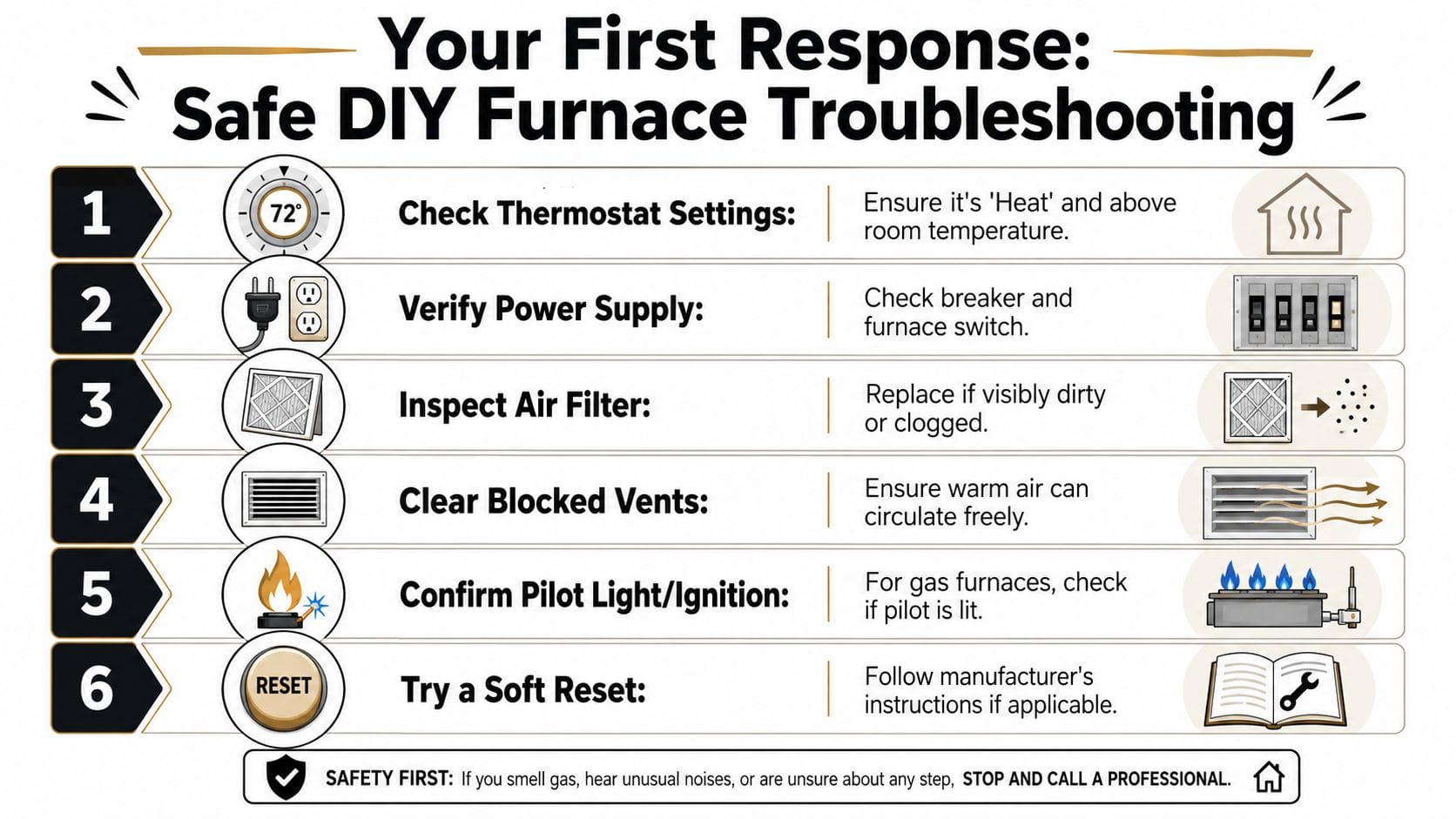
Here's a homeowner-friendly checklist to work through in order:
Start with the simple checks
Thermostat first. Make sure it's set to Heat and the temperature is above room temperature. If the screen is blank, it may need batteries or may not be getting power.
Check the breaker and furnace switch. Furnaces often have a nearby service switch that looks like a light switch. Someone may have turned it off by accident.
Look at the filter. Pull it out and hold it up to the light. If it's visibly packed with dust, replace it. In many homes, the filter slot is beside the blower compartment or where the return duct meets the furnace cabinet.
A practical example. If you slide out the old filter and it's grey, bowed, or packed tight with lint and pet hair, don't put it back in and hope for the best. Install the new filter with the airflow arrow pointing toward the furnace.
After that, make sure all main vents and registers are open and not blocked by rugs, boxes, or furniture. Restricted airflow can create comfort problems and can also trip safety limits.
For readers who want a broader overview of gas heating issues, this guide on gas furnace repair basics covers common service situations.
What you can replace and what you should leave alone
This walkthrough is worth watching before you touch anything beyond the thermostat and filter:
Safe DIY checks usually include:
- Changing the filter
- Resetting the thermostat
- Verifying power
- Opening blocked vents
- Checking whether the furnace door panel is seated properly
What you should leave alone:
- Gas valves and gas piping
- Ignitors and burners
- Wiring inside the furnace
- The heat exchanger area
- Manual relighting procedures if you don't know the exact manufacturer method
If you remove panels, smell gas, see scorching, or feel unsure at any point, stop there. Saving a service fee isn't worth turning a furnace problem into a safety problem.
Drawing the Line When to Call for Professional Furnace Repair
It is 6 a.m. in Surrey, the house feels cold, and the furnace clicks on, then shuts right back off. At that point, the job changes from homeowner checks to proper diagnosis. A furnace problem can involve gas, flame, venting, high voltage, low voltage, condensate, and safety controls. Guessing inside the cabinet can turn a repairable issue into a safety risk.
The line is simple. If the problem goes beyond the thermostat, filter, power supply, or open vents, stop and call a qualified technician.
Red flags that mean stop
Professional service is the right call if you notice any of the following:
- You smell natural gas. Leave the home, avoid switches and open flames, and call for help from outside.
- The furnace still will not run after basic checks. The fault may be in the ignition sequence, control board, inducer, pressure switch, blower, or another safety circuit.
- You hear grinding, squealing, scraping, or hard banging. Those sounds often point to failing motors, loose components, or ignition and combustion problems.
- Water is pooling around the unit. That can come from a blocked condensate drain, venting issue, or a secondary problem that needs testing.
- The breaker keeps tripping. Repeated electrical faults need inspection, not another reset.
- The flame looks unstable, lazy, or unusual. Burner and combustion issues should be checked with the right tools.
- The furnace starts, stops, and keeps trying again. Short cycling can overheat parts and make the original fault harder to read.
A practical example from a Surrey home
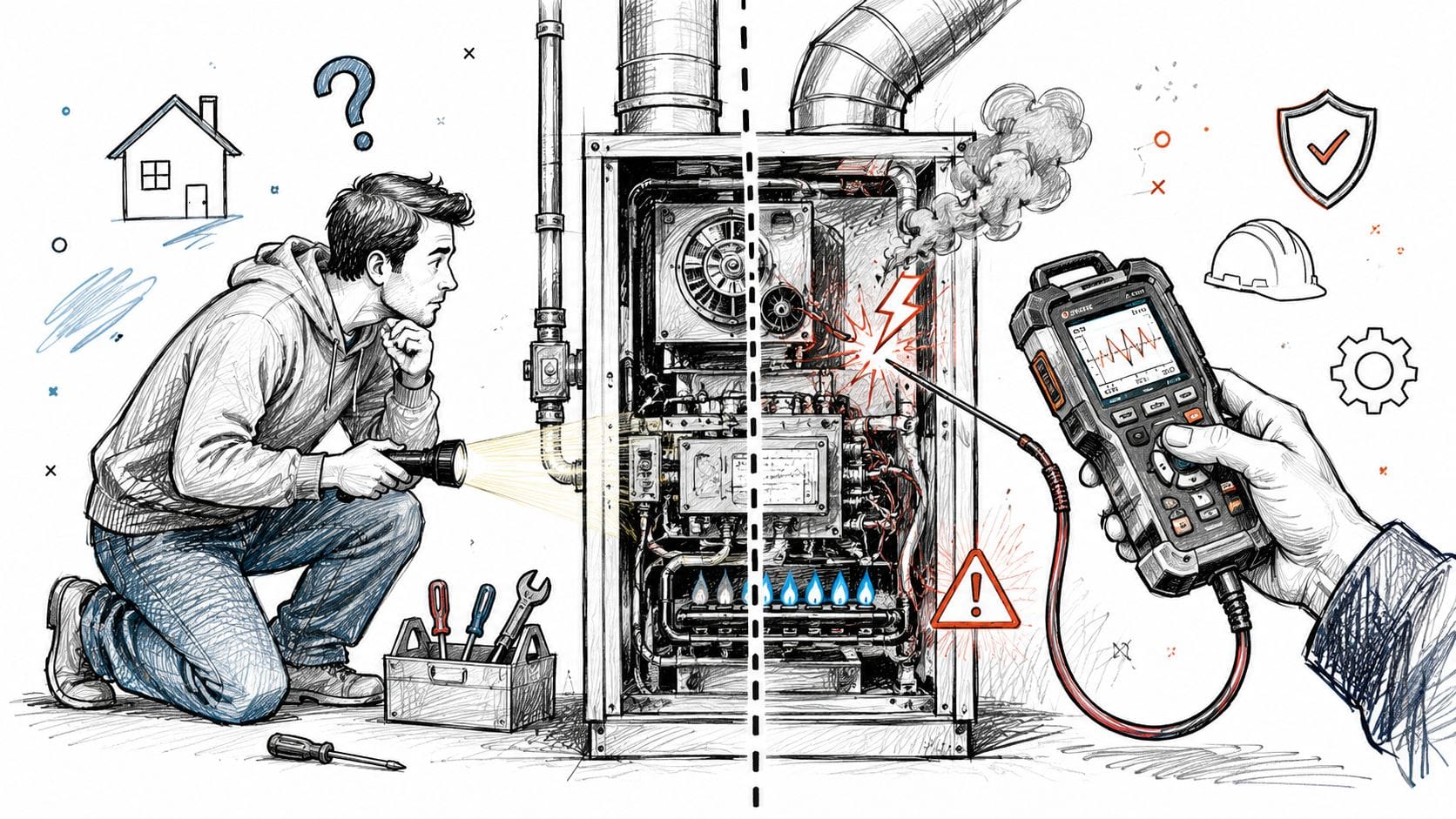
A common call in older Surrey houses goes like this. The homeowner changes the thermostat batteries, puts in a fresh filter, and gets heat for a few minutes. Then the furnace shuts off again and the house goes cold.
That usually means the furnace is not failing at random. It is hitting a limit, losing pressure-switch proof, struggling with ignition, or dealing with a blower or venting problem. Those faults need meter readings, pressure checks, and sequence testing. Repeated resets do not fix them. They often erase the clues that make diagnosis faster.
I also tell homeowners to treat age as part of the decision, not the whole decision. A single repair on a sound furnace can make sense. A major repair on an older unit with venting, efficiency, or parts-availability concerns needs a harder look, especially if you may soon be comparing it with new furnace cost factors in Surrey and BC. That repair versus replace choice is where local code requirements and rebate eligibility can start to matter, and many articles skip that part.
Encano Plumbing & Drainage Ltd. offers 24/7 service in Surrey and nearby communities.
If the furnace keeps trying and failing, stop restarting it. One clear service call is safer, and it usually gets to the answer faster.
The Repair Call What to Expect and How Much It Costs in Surrey
Most homeowners worry about two things during a breakdown. What's wrong, and how much will it cost. A proper service call should answer both clearly.
What happens on a service visit
A technician should start with diagnosis, not parts-swapping. That usually means checking thermostat call, power, control sequence, airflow conditions, venting, and the relevant safety controls. If the issue is obvious, such as a failed ignitor or heavily restricted filter, the explanation should be straightforward.
After diagnosis, you should get a clear description of the problem and what repair is recommended. If the unit has multiple issues, a good technician separates the urgent fix from the “keep an eye on this” items so you can make a sensible decision.
If you're comparing repair costs with replacement planning, this overview of new furnace cost considerations helps frame the bigger picture.
Typical furnace repair costs in Surrey BC 2026
A Surrey-specific pricing benchmark gives homeowners a useful starting point. According to local furnace repair pricing in Surrey, minor furnace repairs typically range from CAD $150 to $350, major repairs typically range from CAD $350 to $700, and a diagnostic fee commonly ranges from CAD $89 to $129, which is usually credited toward the repair if you proceed.
| Repair Type | Typical Cost Range (CAD) |
|---|---|
| Minor repair | $150 to $350 |
| Major repair | $350 to $700 |
| Diagnostic fee | $89 to $129 |
Those ranges are benchmarks, not a universal quote. The final bill depends on what failed, how accessible the equipment is, whether special-order parts are required, and whether the call happens under urgent conditions.
A practical example. If the problem turns out to be a straightforward component fault and the rest of the furnace is in decent shape, a repair can be the sensible move. If the visit uncovers a larger issue tied to heat exchange, venting, or repeated failures, that's when the conversation should shift from “Can it be fixed?” to “Should it be fixed?”
Repair vs Replace A Strategic Choice for Surrey Homeowners
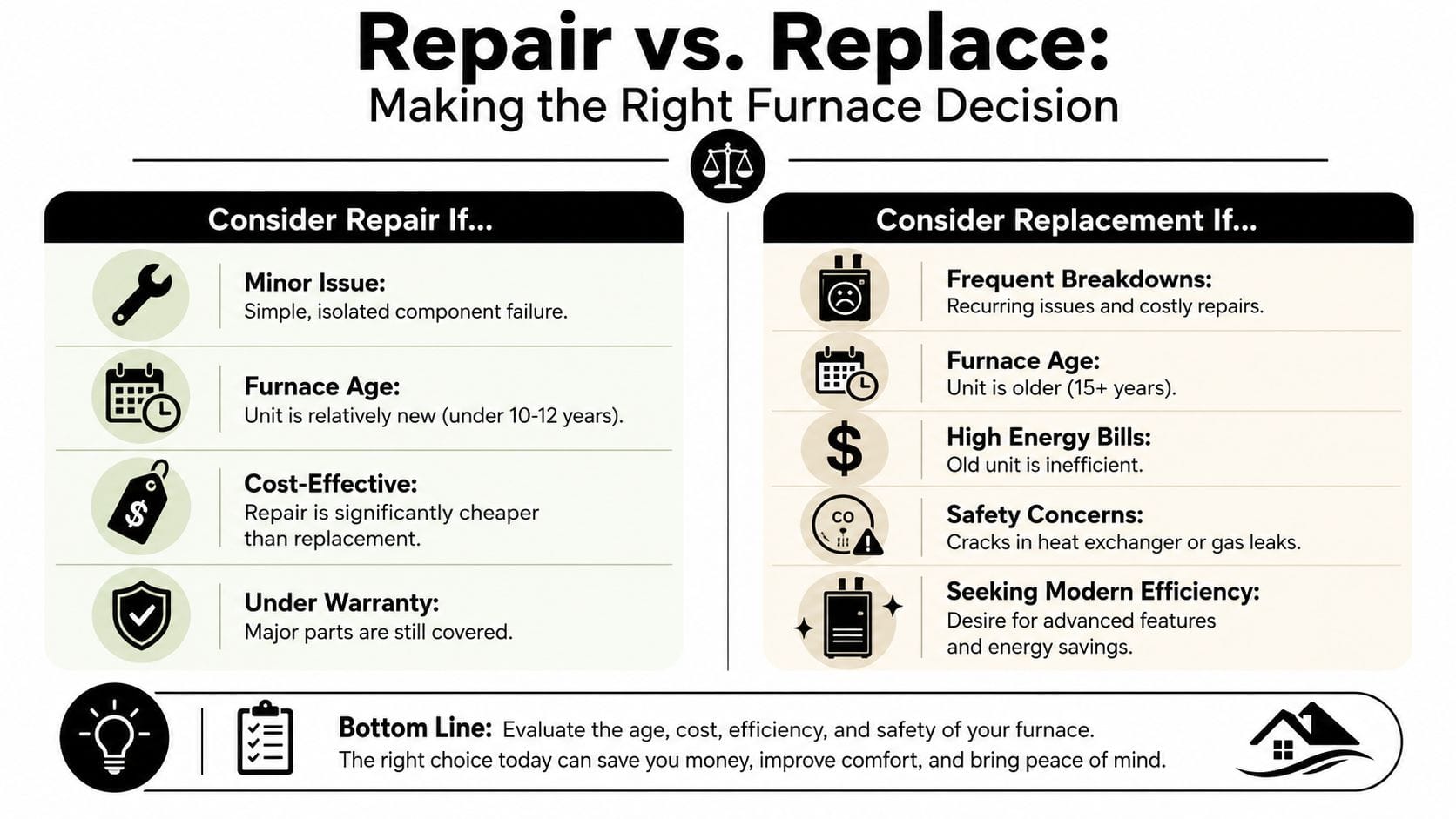
This is the part many homeowners wish someone had explained earlier. A furnace can be repairable and still not be the smart investment.
When a repair still makes sense
Repair is usually the practical choice when the problem is isolated. One failed component on a furnace that has otherwise been dependable is different from a unit that has started asking for money every season.
A simple working example is a homeowner whose furnace has heated reliably, then develops one clear fault and is otherwise sound. In that case, repairing the problem often buys useful time without creating a larger downstream issue.
When replacement becomes the smarter move
Replacement deserves serious consideration when repairs are piling up, performance is inconsistent, or the issue affects core safety-related parts of the appliance. That's also where Surrey-specific building context matters more than people realise.
The City of Surrey's Part 9 energy-efficiency requirements note that the building's heating system, air barrier continuity, insulation values, and ventilation equipment are part of a documented whole-building package. For Energy Step Code projects, as-built compliance also requires a final air-tightness test report and final energy model files. In practical terms, a major repair that changes combustion air, venting, or equipment sizing may connect to code and compliance considerations, not just comfort.
That's why the repair-versus-replace question in Surrey is no longer only about today's invoice. It can also involve whether a high-efficiency replacement or a heat pump retrofit is the better long-term move, especially when provincial and federal incentives may affect the economics.
Sometimes the expensive mistake isn't replacing too early. It's paying for one more repair on equipment that no longer fits the home's bigger energy plan.
If your furnace is still a solid candidate for repair, fix it properly. If it's become the weak point in the home's heating strategy, replacement may save more frustration than another patch.
Preventative Care and Frequently Asked Questions
The cheapest furnace repair is the one you never need. Most breakdowns don't begin as emergencies. They begin as ignored airflow problems, overdue maintenance, or small warning signs that were easy to miss.
Simple maintenance that prevents bigger problems
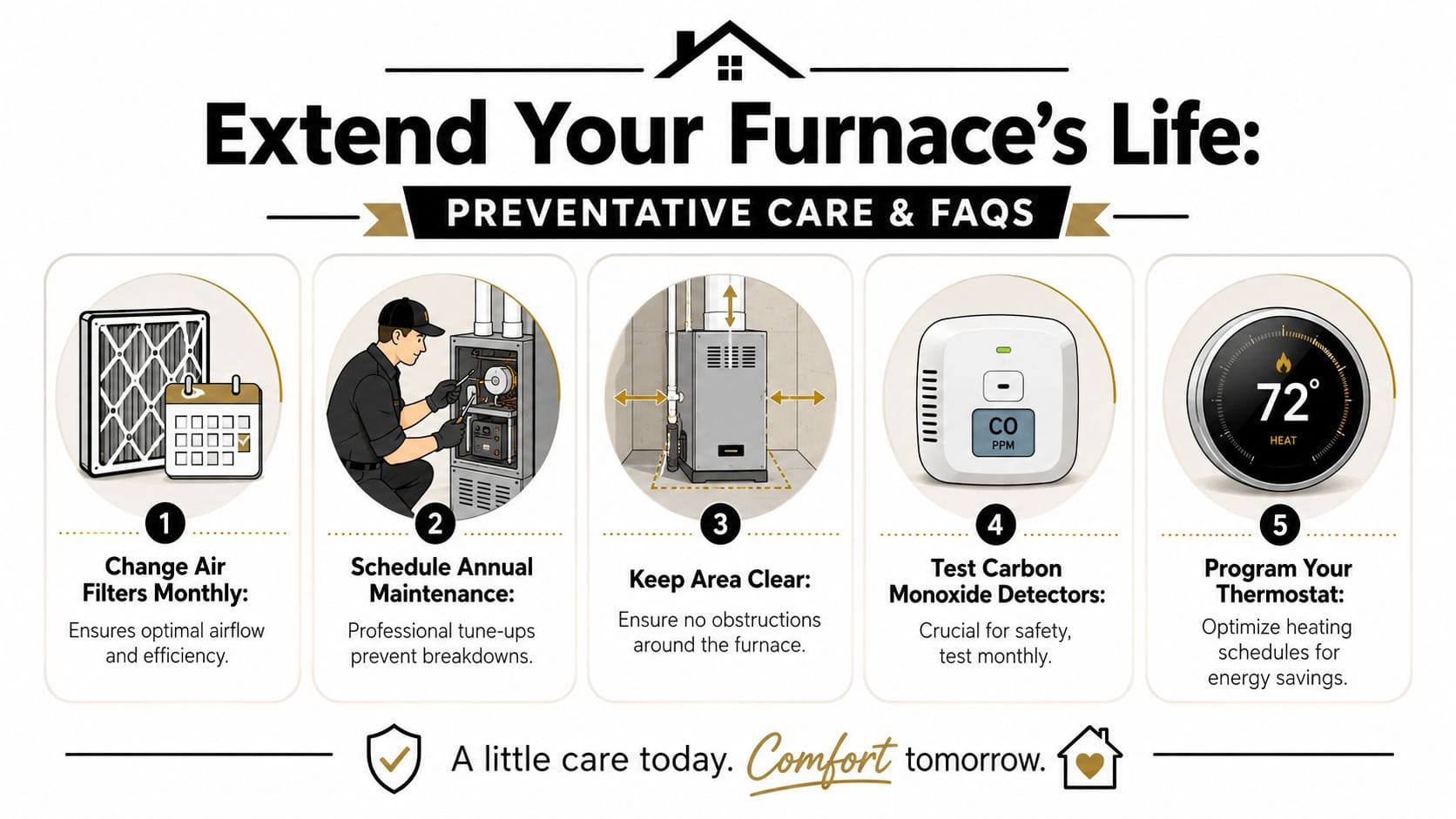
Professional guidance for the Surrey area recommends an annual thorough furnace tune-up and filter replacement every 1 to 3 months, depending on filter type and household conditions, with inspection of the burner, heat exchanger, venting, and flue for corrosion or blockages, as outlined in this Surrey furnace maintenance guide.
That advice matters because maintenance is not just about efficiency. It's about catching the problems homeowners can't safely inspect on their own.
Use this as a basic routine:
- Replace filters on schedule: Homes with pets, dust, or heavier use often need more frequent checks.
- Book annual maintenance: Tune-ups catch wear before a no-heat call does.
- Keep the area around the furnace clear: Storage piled around equipment makes service and safe operation harder.
- Test carbon monoxide detectors: Every level of the home should be covered.
- Pay attention to new sounds: Small changes are often the first clue.
For homeowners comparing broader heating options, Encano's heating and cooling service overview gives context on related system support.
Common questions homeowners still ask
Why is my furnace blowing cold air?
It may be in startup, may have an airflow issue, or may be failing to maintain ignition. If it keeps happening, it needs diagnosis.
Should I keep resetting the furnace?
No. One reset after basic checks may be reasonable if the manufacturer allows it, but repeated resets can hide a serious problem.
Can a dirty filter really shut down a furnace?
Yes. Restricted airflow can cause overheating and safety shutdowns.
When should I stop repairing an old furnace?
Stop looking only at whether the part can be replaced. Look at whether the furnace still makes sense for the home, the repair history, and any larger upgrade plan.
If your heat is out or your furnace keeps acting up, Encano Plumbing & Drainage Ltd. can help you sort out whether the right move is a safe repair, a deeper diagnostic, or a replacement conversation that makes sense for your Surrey home.