
In Metro Vancouver, a new furnace installation usually lands around $4,000 to $8,000 for an all-inclusive replacement, and more complex jobs in older homes can climb higher. That price usually covers the full project, not just the metal box in the mechanical room.
If you're reading this because the furnace is making noise, blowing cool air, or has stopped on a wet Vancouver night, you're asking the right question. Homeowners often search how much does a new furnace cost expecting a simple sticker price. In practice, furnace replacement in Vancouver is closer to a small renovation project.
A homeowner in East Vancouver might have a straightforward swap in an open basement. A homeowner in Richmond might have an older unit in a tight utility closet with venting that no longer suits a new high-efficiency model. Those two jobs do not cost the same, even if the furnaces look similar on paper.
That's why national price guides often feel incomplete. They can give a range, but they usually miss what pushes costs up in the Lower Mainland: older housing stock, damp conditions, venting rules, gas work, electrical updates, permits, and the labour needed to install everything safely and cleanly.
Table of Contents
- Your Guide to New Furnace Costs in Vancouver
- Deconstructing the Total Cost of a New Furnace
- Furnace Costs by Type A Vancouver Comparison
- Key Factors That Influence Your Final Price
- How to Save Money on Your New Furnace
- Getting a Trustworthy Quote in Vancouver
- Frequently Asked Questions About Furnace Replacement
Your Guide to New Furnace Costs in Vancouver
A lot of furnace calls start the same way. The house feels chilly, the thermostat is up, and someone is standing in socks by the heat register wondering why nothing warm is coming out. The first concern is comfort. The second is cost.
For Vancouver homeowners, the honest starting point is this: a full furnace replacement often sits in the mid-thousands, with common all-in ranges around $4,000 to $8,000 in the Metro Vancouver market, according to Canadian contractor guidance on furnace installation costs. Older homes, tighter utility spaces, and retrofit work can push a project toward the upper end.
That range makes more sense when you look at what you're buying. You're not just paying for a furnace cabinet. You're paying for equipment selection, safe gas and venting connections, removal of the old unit, start-up, testing, and making sure the installation suits your house.
In Vancouver, the expensive part is often not the furnace itself. It's the work needed to make the new system fit the home properly and legally.
A practical example. A simple furnace swap in a newer Burnaby townhouse with modern venting and easy access will usually be far more predictable than replacing a furnace in a Vancouver Special where the venting path, duct transitions, or gas connection need to be redone. Both homes need heat. One needs more labour and more materials to get there.
That's the lens to use for the rest of this decision. If you treat furnace replacement as an appliance purchase, quotes will seem confusing. If you treat it as a comfort, safety, and code-compliance project, the numbers start to make sense.
Deconstructing the Total Cost of a New Furnace
Most homeowners see one number at the bottom of a quote and try to compare that number alone. That's where problems start. A furnace quote has to be read like a scope-of-work document.
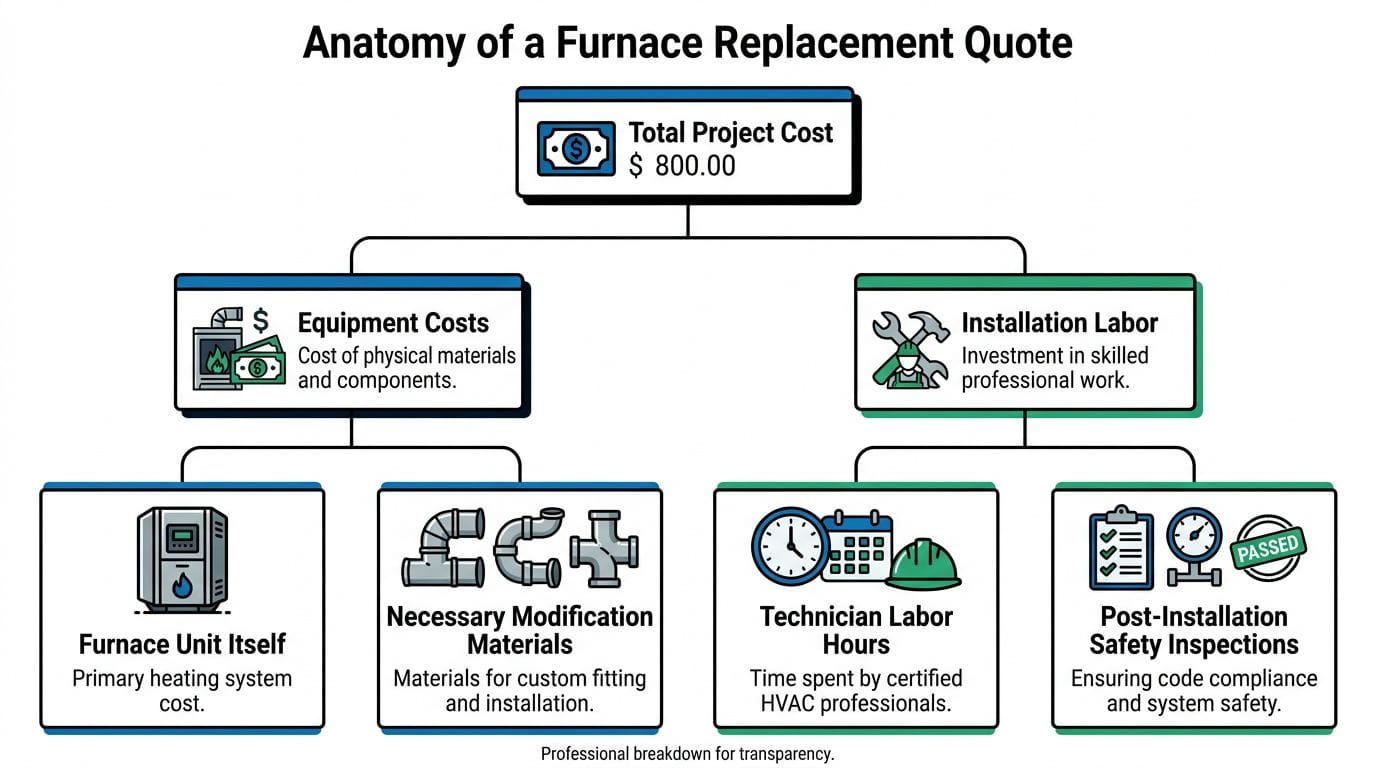
The equipment is only one part of the price
There are usually three cost buckets in a proper replacement:
- The furnace itself. This is the actual unit, and the price changes with size, efficiency, staging, and brand line.
- Installation labour. This includes removal of the old furnace, setting the new one, connecting gas or electrical, venting, startup, testing, and commissioning.
- Project extras. Many low quotes hide actual project costs here.
For homeowners in Vancouver, Richmond, and nearby areas, those extras can include a new thermostat for $150 to $400, permits for $50 to $300, and gas line modifications for $200 to $700, as outlined in consumer-facing furnace replacement cost guidance. Those items can shift the final bill fast.
A useful way to think about it is a car purchase. The sticker price is not your total drive-away price. With furnaces, the online equipment number is almost never the final installed number.
A practical quote comparison
Say you receive two quotes for what looks like the same furnace model.
Quote A is lower. It lists the furnace and basic installation.
Quote B is higher. It includes disposal of the old unit, permit handling, a thermostat update, venting materials, startup testing, and a note about a needed gas-line correction.
Which quote is cheaper? You can't tell until you know what's included.
Practical rule: If one quote is much lower, ask what has been excluded, not just what has been discounted.
Here's what to check line by line:
| Cost area | What to ask |
|---|---|
| Equipment | Is the furnace size and staging clearly listed? |
| Labour | Does the quote include removal, installation, startup, and testing? |
| Permit work | Who is pulling the permit if one is required? |
| Materials | Are venting parts, fittings, drain materials, and transitions included? |
| Controls | Is the thermostat included, reused, or extra? |
| Existing conditions | What happens if old ducting, venting, or gas piping needs correction? |
A proper quote should tell you whether you're buying a clean replacement or signing up for change orders later. That difference matters more than a flashy low number.
Furnace Costs by Type A Vancouver Comparison
Fuel type changes the budget right away. In Vancouver, the most common comparison is still natural gas versus electric for ducted furnace replacements, especially when a homeowner wants to know whether to keep the existing setup or switch directions.
What the main options usually look like
Canadian 2026 pricing references place installed costs at about $2,000 to $7,000 for electric furnaces and $3,800 to $10,000 for natural gas furnaces, according to Carrier's furnace cost guide. That spread tells you something important: fuel type is one of the biggest drivers of upfront cost.
Here's a simple Vancouver-focused comparison:
| System Type | Estimated Installed Cost | Operating Cost | Best For |
|---|---|---|---|
| Electric furnace | $2,000 to $7,000 | Often depends heavily on electricity use | Homes that already suit electric heating or where gas isn't practical |
| Natural gas furnace | $3,800 to $10,000 | Often attractive for homeowners already on gas service | Like-for-like gas replacements and homes with existing ducted gas heat |
| High-efficiency gas furnace | Higher within the gas range | Lower fuel use than lower-efficiency options | Owners planning to stay put and wanting better long-term value |
That table doesn't mean one option is always better. It means the right answer depends on the house, the services already available, and how long you plan to stay there.
For homeowners comparing heating upgrades more broadly, it also helps to understand how cooling work can overlap with heating decisions, especially in ducted homes. This overview of central air installation costs in Vancouver is useful if you're planning furnace and cooling work together.
A practical Vancouver decision example
A Burnaby homeowner with an older gas furnace usually faces a practical choice. Keep the gas setup and replace the furnace with a similar system, or make a bigger change that affects more of the home.
If the existing ducting is in decent shape and the gas service is already there, a like-for-like natural gas replacement often keeps the project simpler. If the homeowner chooses a higher-efficiency gas unit, the upfront cost may rise, but the system can make more sense for long-term use.
What doesn't usually work is choosing based only on the lowest cabinet price. A cheaper electric unit can still become an expensive project if the electrical side needs upgrading. A gas furnace can also move up in cost if venting or combustion-air requirements change. The smart comparison is total installed scope, not just equipment category.
Key Factors That Influence Your Final Price
Even within the same fuel type, two homes can get very different quotes. Vancouver homes vary a lot. Some have full basements with easy access. Others have tight closets, crawlspaces, or older mechanical layouts that turn a routine replacement into precision work.
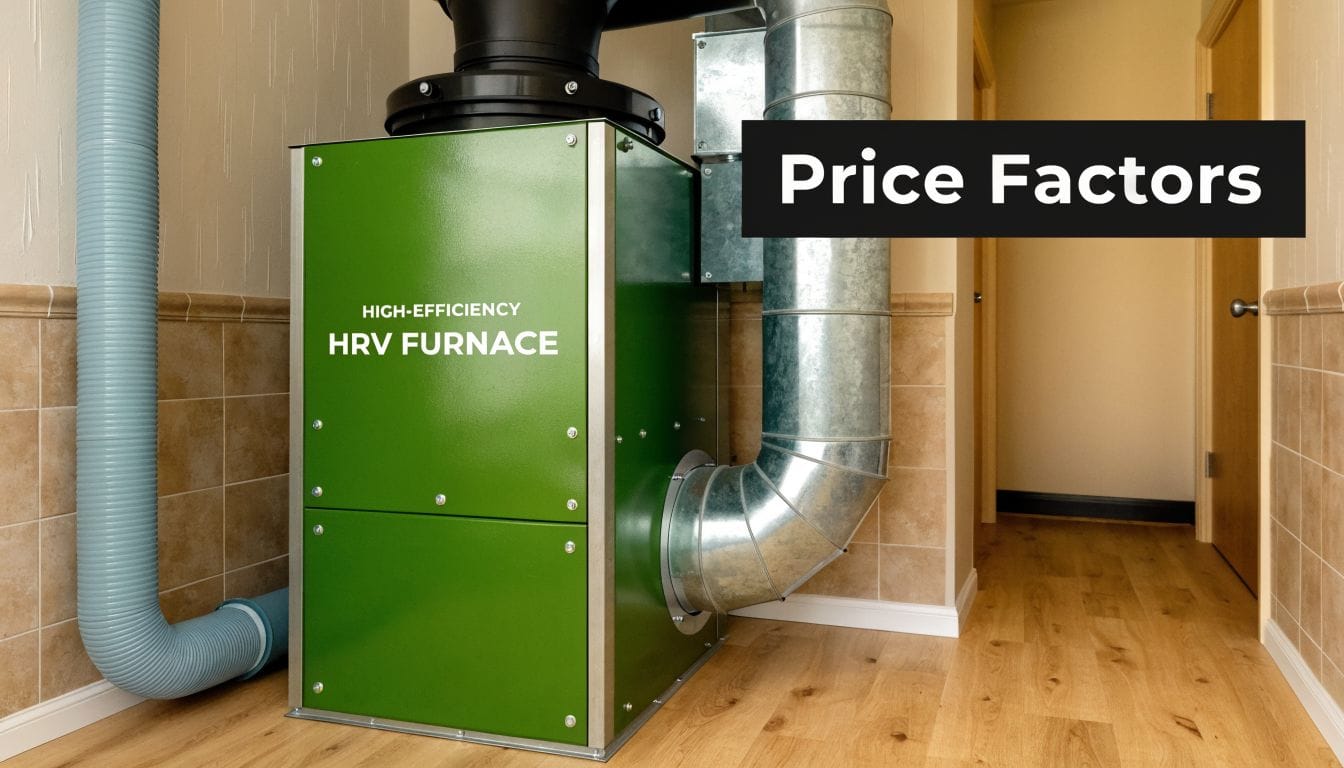
Size and efficiency change everything
Furnace sizing is one of the biggest pricing and comfort factors. For a typical 1,600 to 2,000 sq. ft. home, average replacement cost can be around $7,000 USD, and larger homes often cost more because they need more capacity and sometimes more advanced equipment, according to Bryant's furnace replacement cost guidance.
More important than the number is the principle. An undersized furnace can run too hard. An oversized furnace can short-cycle, which hurts comfort and wastes energy.
That matters in Metro Vancouver because damp coastal weather exposes sizing mistakes quickly. If the furnace is too large, it can blast heat, shut off early, and leave rooms feeling uneven. If it's too small, it may struggle during colder periods and run longer than it should.
If you want a clearer picture of the home before replacing equipment, a basic understanding of how to test your house for heat loss helps explain why proper load calculation matters more than guessing by old furnace size.
Older homes add real installation work
A 1970s Vancouver Special and a newer townhouse rarely produce the same install scope.
In older homes, the added cost often comes from things homeowners can't see at first glance:
- Venting updates that suit a modern high-efficiency furnace
- Gas-line corrections if the existing connection isn't appropriate for the new unit
- Condensate drainage for high-efficiency equipment
- Duct transitions or sealing where the old furnace doesn't match the new cabinet size
- Access issues in narrow mechanical rooms or crawlspaces
A practical example. Replacing a furnace in a newer South Surrey townhome may mostly involve equipment and standard installation. Replacing one in an older detached house in East Van may uncover venting that needs to be rerouted, a return-air setup that needs adjustment, or a plenum that must be rebuilt to fit properly.
The hidden cost in older Vancouver homes is usually correction work. The furnace exposes problems that were already there.
Later in the process, it helps to watch an install overview like this one because it shows why replacement isn't just unplugging one box and sliding in another.
Features and access also affect labour
Not all furnaces are equally simple to install.
A single-stage unit is generally more straightforward than a system with more advanced controls. A variable-speed or more high-end model can offer better comfort, but it may also bring extra setup, control wiring, and commissioning considerations. That's not a reason to avoid better equipment. It's just part of why premium systems cost more to put in properly.
Access is another labour driver that homeowners often underestimate:
| Site condition | Why it affects price |
|---|---|
| Tight closet installation | Harder removal and fitting work |
| Crawlspace or limited clearance | Slower labour and more awkward material handling |
| Open basement mechanical room | Faster, cleaner replacement in many cases |
| Older duct layout | More fabrication and sealing work |
What works well is choosing the furnace that suits the house. What doesn't work is buying by brochure features alone, then expecting the installation cost to stay flat.
How to Save Money on Your New Furnace
Saving money on a furnace doesn't mean chasing the lowest quote. It means controlling the parts of the project that create waste.

Save on the project not just the unit
The first money-saving move is to buy the right size and right configuration, not the cheapest furnace on the sheet. In many homes, overspending on features you won't benefit from gives poor value. In other homes, going too basic can mean higher running costs and weaker comfort.
A practical example. If a homeowner is deciding between a basic replacement and a more efficient setup, the better question is not “Which one costs less today?” It's “Which one suits this house, this duct system, and how long I plan to stay here?”
Three ways homeowners usually save most effectively:
- Choose the correct scope. A like-for-like replacement is usually less costly than changing system type or adding major upgrades.
- Ask what is included. A complete quote prevents surprise charges after work starts.
- Bundle smartly. If other major home mechanical work is already planned, it can make sense to review heating work at the same time. For example, homeowners already budgeting for water heater replacement costs in Vancouver sometimes coordinate mechanical updates to reduce disruption.
Paying for proper sizing and a complete quote usually saves more than shaving a little off the install price.
Timing and maintenance matter
Emergency replacement is almost always the worst buying moment. When the furnace fails in cold weather, homeowners are under pressure and have less time to compare options carefully.
If your furnace is aging but still operating, planning ahead gives you better control. You can compare equipment types, review the quote properly, and deal with any duct or venting issues before they become urgent.
After installation, routine maintenance matters too. A good furnace lasts better when filters are changed on schedule, airflow stays clear, and small issues get handled early. The cheapest furnace becomes expensive quickly if neglect leads to poor performance or repeated service calls.
One practical note for Vancouver homes. Because many homes here deal with moisture, mixed insulation quality, and older building envelopes, clean airflow and correct setup matter just as much as the furnace model itself.
Getting a Trustworthy Quote in Vancouver
A good quote answers the questions that usually cost homeowners money later. In Vancouver, that often means work hidden behind the furnace itself. Venting in an older basement. A condensate drain for a high-efficiency unit. Gas piping that was acceptable years ago but does not match current code or the new appliance setup.
That is why a trustworthy quote starts with the house, not the brochure.
What a real quote should include
A proper estimate from a licensed BC contractor should show exactly what is being installed and exactly what labour and materials are part of the price. If the quote is thin, the risk shifts to you.
Look for these details:
- The furnace make, model, and efficiency level
- A clear installation scope, including removal of the old unit
- Venting, drainage, and gas work included in the price if the job calls for it
- Duct transitions or sheet metal adjustments where the new cabinet does not match the old one
- Permit responsibility and inspection handling
- Exclusions, allowances, or possible extras listed plainly
In older Vancouver homes, I would also want to know whether the contractor checked access, combustion air, vent routing, and where condensate will drain. Those are the details national price guides usually skip, and they are often the reason one quote is far higher than another.
A one-page quote with a model number and a lump sum is not enough.
Why the lowest quote is often incomplete
Cheap quotes usually come from one of two places. The contractor is cutting labour, or the contractor is leaving out work that may show up once the old furnace is removed.
That second problem is common here. Many Vancouver houses have a mix of old and newer mechanical work, especially in homes that have been renovated in stages. You pull out the furnace and find undersized venting, an awkward drain path, a poor duct connection, or gas piping that needs correction. If the quote never dealt with those possibilities, the homeowner gets hit with extras or the installer starts looking for shortcuts.
Ask one direct question before you approve anything: What happens if you find venting, gas, or duct issues once the old furnace is out, and what have you already allowed for in the quote?
A straight answer matters. So does the way they inspected the job. If the estimator did not spend time looking at the vent route, the existing drain, the filter setup, and the duct connections, the number is only a starting point.
Encano Plumbing & Drainage Ltd. is one local company homeowners may speak with for heating and gas work in Vancouver and nearby communities. The standard should stay the same no matter who you call. Clear scope. Clear exclusions. No guessing on safety, code, or permit items.
Frequently Asked Questions About Furnace Replacement
How long does a furnace replacement usually take?
A straightforward furnace changeout is often done in one day. Older Vancouver homes are rarely that simple.
If the installer has to correct venting, rework gas piping, add proper condensate drainage, or adapt the new cabinet to older ductwork, the job can run longer. Tight mechanical rooms, basement stairs, and partial crawlspace access also slow things down. The timeline depends on how much of the surrounding system needs to be brought up to a safe, workable standard.
Is a high-efficiency furnace always worth it in Vancouver?
It often is, but the answer depends on the house.
In Vancouver, efficiency has to be looked at alongside venting route, condensate management, and installation cost. In an older house with a difficult exhaust path or limited drainage options, a high-efficiency unit can still be the right choice, but the added work changes the value equation. Homeowners planning to stay long term usually care more about lower gas use and quieter operation. If the plan is to sell soon, the payback may matter less than getting a reliable, code-compliant system in place.
Why does one home get quoted much more than another?
The furnace itself is only part of the price. Labour hours, permit requirements, disposal, sheet metal work, vent materials, and correction of existing deficiencies can change the number fast.
That is especially true in Vancouver houses that have been updated in stages over decades. One home may need a clean replacement. Another may need a new vent route, drain work because of our damp climate, and code corrections tied to previous renovations. On paper both jobs are "furnace replacement." In practice, they are not the same project.
Should I replace the thermostat at the same time?
If the existing thermostat is not compatible with the new furnace, replace it. That avoids control issues and lets the equipment run the way it was designed to run.
If the current thermostat is in good condition and matches the new system's staging and fan controls, it may be fine to keep it. This is a small line item compared with the full install, but it is worth checking before work starts so there are no surprises on install day.
Can I use the old ductwork?
Sometimes. It needs to be inspected, not assumed.
I look at airflow, duct sizing, return air, leakage, and how the old plenum connects to the new furnace. Many older Vancouver homes have duct systems that "work" but do not work well. A new furnace connected to undersized or poorly sealed ducts can still leave rooms cold, noisy, or short on airflow. Reusing old ductwork can save money, but only if it supports the new equipment properly.
What should I ask before approving a quote?
Ask what is included in the total price, what permit and inspection costs are included, and what conditions could still change the final bill. Ask who is handling venting, gas, drainage, electrical connections, and disposal of the old furnace.
Then ask one more question. What did the estimator inspect before writing the quote?
A careful quote is based on more than a model number. It should reflect the vent route, duct transitions, filter setup, access, and the specifics of your house, not a generic replacement allowance.
If your furnace is aging, noisy, unreliable, or no longer heating the house evenly, Encano Plumbing & Drainage Ltd. can assess the system and provide an in-home quote for a Vancouver-area replacement. A proper site visit shows what the job really involves and whether the right answer is a simple swap or a larger upgrade.