A leaking supply line can turn into floor damage in minutes. If you know how to shut off water main before a plumber arrives, you can limit the mess, protect cabinets and drywall, and buy yourself valuable time.
For homeowners, tenants, and property managers, this is one of those basic skills that matters most when something has already gone wrong. The key is not just knowing that a shutoff exists, but knowing where it is, what it looks like, and how to use it without forcing a stuck valve or creating a bigger problem.
How to Shut Off Water Main in an Emergency
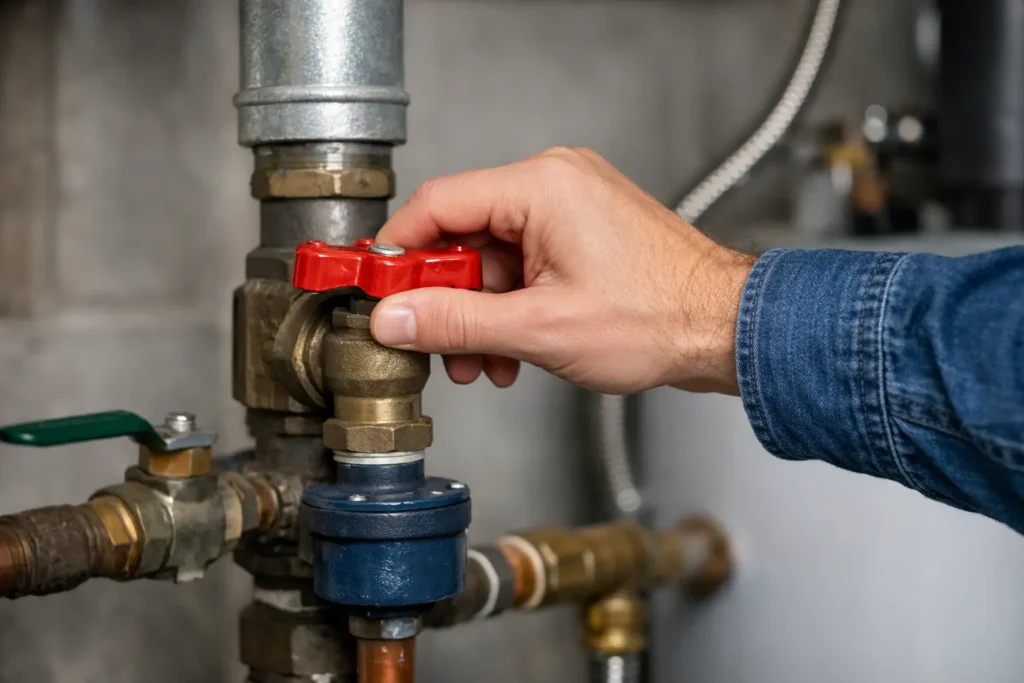
If a pipe has burst, a fitting has failed, or water is pouring somewhere you cannot isolate, go straight to the main water shutoff. In many homes, the valve is located where the water line enters the building, often in a basement, crawl space, utility room, garage, or near the water meter. In warmer areas it may be outside by an exterior wall or in a ground box near the street.
There are usually two common valve types. A gate valve has a round handle and shuts off by turning clockwise several full turns. A ball valve has a lever handle and shuts off with a quarter turn. When the lever is parallel to the pipe, water is usually on. When it is perpendicular, water is off.
Turn the valve slowly and firmly. Do not jerk it. If it stops and water is still running, the valve may be partially closed, damaged, or you may be at the wrong shutoff. Once the main is off, open a nearby cold-water faucet at the lowest level of the property to relieve pressure and drain some remaining water from the lines.
If the problem is close to electrical outlets, a panel, or any powered equipment, keep your distance and address the electrical hazard first. Water and electricity are a dangerous combination, and that changes the order of operations.
Finding the Main Shutoff Before You Need It
The best time to find your shutoff valve is when nothing is leaking. In a single-family home, start near the front foundation wall, basement mechanical area, or where the meter is installed. In condos and apartments, the setup depends on the building. Some units have an individual shutoff inside the suite, while others require building maintenance or access to a shared mechanical room.
If you manage a rental or commercial property, it is worth labeling shutoffs clearly and making sure staff knows which valve controls which area. In older buildings, there may be multiple valves added over time. Not all of them fully work, and not all of them control the entire property.
This is where a little planning helps. Test the valve during a calm moment, not during an active leak. If it is seized, corroded, or drips from the stem when turned, that is a sign it should be repaired or replaced before it fails in a real emergency.
What to Do After You Shut Off the Water Main
Once the water is off, your next steps depend on the size of the problem. If it is a failed faucet supply hose or a toilet valve issue, the immediate crisis may be under control. If a pipe has burst inside a wall, if there is water staining ceilings, or if flooring is already soaked, move quickly to reduce secondary damage.
Start by removing valuables and anything that can absorb water, like rugs, boxes, and soft furnishings. Use towels or a wet vacuum if it is safe to do so. Then identify whether the leak came from a plumbing system, an appliance, a heating line, or possibly rainwater intrusion. They can look similar at first, but the response is not always the same.
It also helps to turn off your water heater after the main is closed, especially if it is electric. Running certain systems without normal water supply can strain equipment. With gas water heaters, use caution and follow manufacturer instructions if you are adjusting settings or shutting the unit down.
How to Shut Off Water Main Without Damaging the Valve
A lot of people get stuck at the same point. They find the valve, try to turn it, and it does not move. The instinct is to grab a wrench and force it. That can snap an old handle, twist the stem, or create a leak at the valve itself.
If the valve feels stiff, try a steady hand first. If it will not budge with reasonable pressure, stop there. For older gate valves especially, forcing them can turn a controllable plumbing issue into a full replacement emergency. A licensed plumber can often tell quickly whether the valve is safe to operate or whether the water should be shut off at the meter or curb stop instead.
If your home has a curb shutoff near the property line, leave that to a professional unless you know the local rules and have the right tool. Utility-side components are not the place for guesswork.
When a Fixture Shutoff Is Enough
Not every plumbing issue requires shutting down the whole building. If the leak is under a sink, behind a toilet, or connected to a washing machine, there may be a local shutoff valve nearby. Turning off only that fixture keeps the rest of the property operational, which matters in busy households and occupied commercial spaces.
Still, fixture valves fail too. If you turn one off and water keeps flowing, go back to the main. The right move is the one that stops damage fastest.
For apartment residents, this can get tricky. You may not have access to the building main, and some in-suite valves may not isolate everything. In that case, contact building management immediately while taking basic steps to contain water. Knowing that limitation ahead of time can save precious minutes.
Common Problems People Run Into
The biggest issue is simply not knowing where the valve is. The second is discovering too late that the valve does not fully close. Homes with aging plumbing often have shutoffs that have not been touched in years, and that lack of use can lead to seizure or internal wear.
Another common problem is mistaking one valve for another. A water heater shutoff, irrigation shutoff, or branch line valve may be nearby but not control the full domestic supply. If faucets are still running strongly after you think the main is off, recheck the valve location.
Then there is the pressure already in the system. Even after the main is closed, some water will continue to flow from faucets and damaged pipes until the lines drain down. That does not always mean the shutoff failed. It may just mean there is still residual water in the plumbing.
A Simple Readiness Check for Homeowners and Property Managers
A quick inspection once or twice a year can prevent a lot of stress. Find the main shutoff, make sure access is clear, and confirm everyone responsible for the property knows where it is. If the valve is hidden behind storage, painted over, heavily corroded, or impossible to turn by hand, that is worth addressing now.
This matters even more in older homes around Vancouver and nearby areas, where a mix of renovations, aging service lines, and outdated valves can make emergency shutoffs less straightforward than expected. A short service visit to replace a failing shutoff is far easier than managing a flooded room after hours.
For landlords and facility managers, create a simple internal note with valve locations, water heater details, and emergency contacts. That kind of preparation reduces downtime and helps protect tenants, equipment, and finishes.
When to Call a Plumber Right Away
If the main valve will not close, leaks when touched, or only partially stops the flow, call a licensed plumber immediately. The same goes for burst pipes, active ceiling leaks, water near electrical systems, or any situation where you cannot tell where the water is coming from.
This is also a smart time to get help if your property has no obvious main shutoff, has shared building plumbing, or uses older valves that feel fragile. Encano Plumbing & Drainage Ltd. regularly helps homeowners and property managers handle urgent shutoff issues, valve replacements, and leak-related plumbing repairs with minimal disruption.
Knowing how to shut off water main is not about becoming your own plumber. It is about staying calm, protecting your property, and making the next step easier when something goes wrong.