A pipe bursts at 1:30 a.m., water is spreading across the floor, and every minute feels expensive. That is exactly when an emergency plumber matters most – not just to stop the immediate problem, but to protect your home, building, or business from much larger damage.
Plumbing emergencies rarely wait for business hours. They show up during a cold snap, in the middle of a tenant complaint, right before opening time, or when guests are on the way. The real challenge is knowing what counts as an emergency, what you can do safely right away, and when fast professional help is the smartest move.
What counts as a true plumbing emergency?
Some plumbing problems are urgent because they can quickly damage property, interrupt operations, or create a health and safety risk. A burst pipe is the obvious example, but it is far from the only one. Overflowing toilets, major drain backups, sewer smells inside the building, no hot water in a commercial setting, and sudden leaks around a water heater can all move from inconvenient to serious very quickly.
The key question is not just, “Is this annoying?” It is, “If I wait until tomorrow, will the damage, cost, or risk get worse?” If the answer is yes, you are likely dealing with an emergency.
For homeowners and apartment residents, the most common emergencies involve active leaks, clogged main drains, failed water heaters, and toilets that cannot be shut off. For landlords and property managers, the stakes can be even higher because one issue can affect multiple units, damage common areas, or disrupt tenants. In commercial and government properties, downtime matters too. A plumbing problem that closes washrooms, disrupts kitchens, or creates slip hazards is not something to push down the list.
Signs you need an emergency plumber right now
Burst or leaking pipes
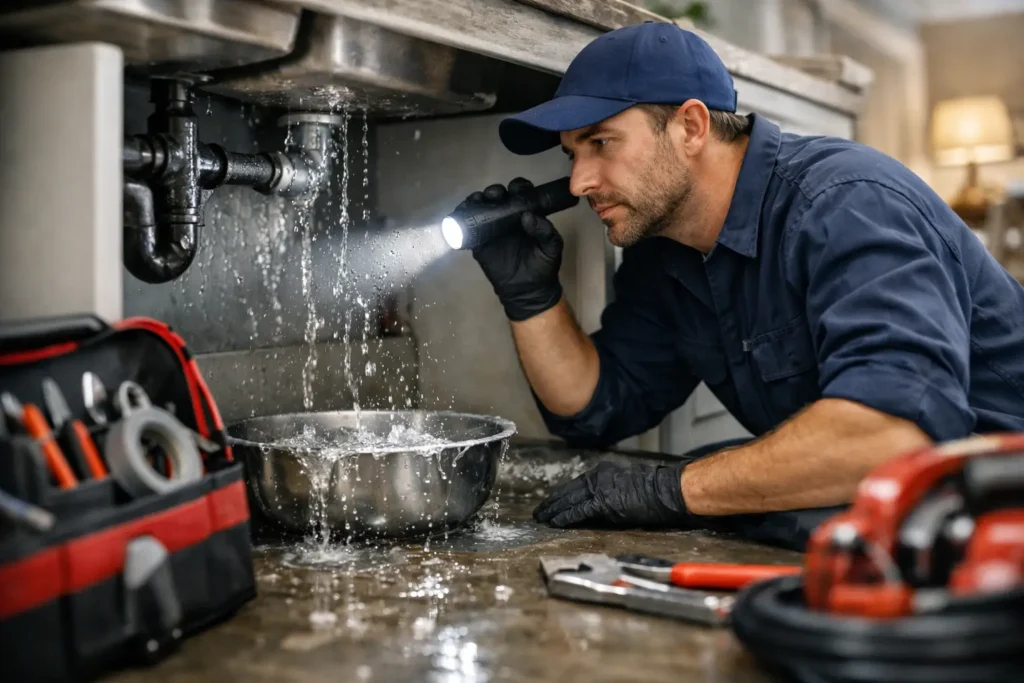
A burst pipe can release a surprising amount of water in minutes. Even a smaller leak behind a wall or under a sink can soak drywall, flooring, cabinetry, and insulation before you realize how bad it is. If you see water pooling, hear rushing water, or notice a sudden drop in pressure paired with unexplained moisture, act fast.
Shut off the nearest fixture valve if you can identify the source. If not, shut off the main water supply and call for help. Waiting to “see if it slows down” usually costs more in repairs.
Sewer backup or multiple drains clogging at once
One slow sink may be a local clog. Several drains backing up at the same time usually points to a larger problem in the main line. If flushing one toilet causes water to rise in the tub or a basement drain starts backing up, that is not a DIY moment.
Sewage exposure carries health risks, and backups can damage floors and lower-level spaces quickly. This is one of the clearest cases for emergency service.
No water or no hot water
Losing hot water may feel less dramatic than a flood, but it can still be urgent depending on the property. In a family home, it may be manageable for a short time. In a restaurant, multi-unit building, care facility, or any commercial space that depends on sanitation and daily operations, it can be a serious disruption.
No water at all can also signal a bigger issue, especially if it is isolated to your property and not a neighborhood-wide outage. Frozen lines, hidden leaks, valve failures, or supply problems should be checked promptly.
Overflowing toilets that will not stop
If one toilet is clogged but the rest of the plumbing works normally, you may have a little time. If the toilet is actively overflowing, will not stop filling, or the problem is affecting multiple fixtures, the risk of water damage rises fast.
Knowing where the toilet shutoff valve is can buy you time. If the shutoff does not work or the overflow is tied to a drain backup, call an emergency plumber.
Water heater leaks or failure
A leaking water heater is never something to ignore. Small drips can turn into a tank failure, and once that happens, you may be dealing with a lot more than cold showers. There is also the issue of gas connections, electrical components, and pressure inside the system.
If you notice leaking around the tank, strange banging sounds, rusty water, or sudden temperature loss, it is worth getting checked quickly. Sometimes the fix is straightforward. Sometimes replacement is the safer and more cost-effective option. It depends on the age of the unit and the source of the problem.
What to do before the plumber arrives
The first step is always safety. If water is near electrical outlets, panels, or appliances, stay clear of the area and shut off power only if you can do so safely. If you suspect a gas-related issue near a water heater or boiler, leave the area and seek immediate professional help.
Next, stop the flow of water if possible. That may mean turning off the fixture valve under a sink or behind a toilet, or shutting off the main water valve to the property. If you manage a building, make sure staff know where shutoff points are before an emergency happens.
After that, move what you can out of the affected area. Towels, buckets, and basic containment can help limit damage while you wait. Take photos if the issue may involve insurance, especially for leaks, flooding, or sewer backup.
One thing not to do is keep using the plumbing system to test the problem. Repeated flushing, running water, or using chemical drain cleaners can make the situation worse or complicate the repair.
Why speed matters more than most people think
Water damage is not only about what you can see. Moisture gets under flooring, behind cabinets, and inside walls faster than most people expect. A leak that seems minor at night can become warped flooring, damaged drywall, and mold concerns days later.
With drain and sewer issues, the problem is often farther down the line than the visible symptom. What starts as a slow backup can become a full blockage if wastewater keeps entering the system. Fast diagnosis matters because the right fix depends on the cause. Grease buildup, tree root intrusion, collapsed pipe sections, and foreign objects all require different solutions.
That is why professional emergency service is not just about arriving quickly. It is about showing up ready to identify the issue and solve it properly, whether that means leak detection, drain cleaning, pipe repair, water heater service, or isolating a larger system failure.
What a good emergency plumber should provide
A strong emergency response is about more than being on call. You want clear communication, practical troubleshooting, and honest expectations from the start. A dependable plumber should explain what they are seeing, what needs immediate attention, and whether there are options based on budget, timing, and long-term reliability.
Transparent pricing matters here. Emergencies are stressful enough without surprise charges or vague answers. So does respect for the property. The right plumber works efficiently, protects the space as much as possible, and focuses on getting your home or building back to normal with minimal disruption.
In the Vancouver area, fast response also needs local experience. Older pipes, heavy rain, drainage issues, and mixed residential-commercial building types can all affect how a plumbing emergency is diagnosed and repaired. A local team that has seen these situations before can often move faster because the patterns are familiar.
How to reduce the chance of another emergency
Not every plumbing emergency can be prevented, but many can be caught earlier. Slow drains, fluctuating water pressure, unexplained water marks, running toilets, and aging water heaters all deserve attention before they become urgent. The same goes for sewer lines that have a history of recurring backup.
Routine inspections are especially valuable for landlords, commercial properties, and older homes. Small maintenance visits often cost far less than after-hours emergency repairs and water damage restoration. If a fixture or pipe has been giving you warning signs for months, it is rarely cheaper to keep waiting.
Encano Plumbing & Drainage Ltd. sees this firsthand with local homes and buildings that call only after a manageable issue has turned into a major one. Fast help matters, but so does catching the next problem before it gets there.
When plumbing fails suddenly, there is no prize for waiting it out. The smartest move is to stop what you safely can, protect the property, and get skilled help involved early – because the quickest repair is often the one that starts before the damage spreads.