Forced-air heating is a system that uses a furnace to warm air and a blower to push it through ducts and vents to heat the whole home. In Canada, 51% of households with a primary heating system used a forced air furnace in 2021, while 25% used electric baseboard heaters, so this is the heating setup most homeowners run into first Statistics Canada.
You feel that reality on a cold January morning in a Vancouver house, when one thermostat click is supposed to warm bedrooms, hallways, and the family room at once. That setup only works well when the furnace, ducts, blower, filter, and controls are all doing their jobs together.
Table of Contents
- Understanding Forced Air Heating in Canadian Homes
- How a Forced Air System Heats Your Home
- Fuel Types and Efficiency Options for Forced Air
- Advantages and Disadvantages of Forced Air Heating
- Common Problems and Maintenance Tips for Homeowners
- When to Call a Professional HVAC Technician in Greater Vancouver
Understanding Forced Air Heating in Canadian Homes
A family in a Vancouver detached house turns up the heat before breakfast, and warm air starts moving through the rooms a few minutes later. That is the basic appeal of forced air. It heats air at a central point, then sends it through ductwork so the whole house changes temperature quickly.
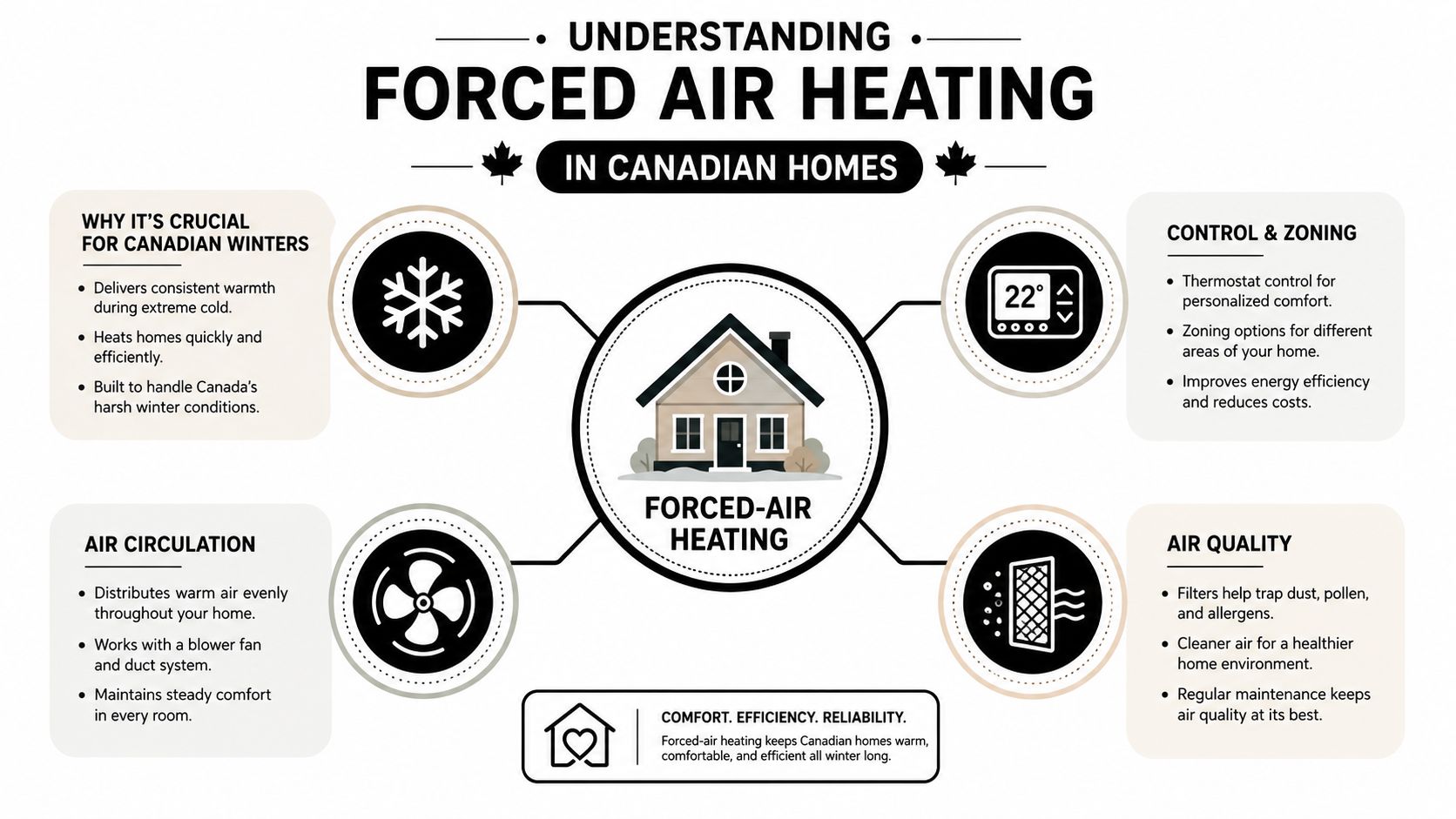
Forced-air heating is a central heating system where a furnace heats air and a blower pushes that air through ducts and vents into living spaces. In practical terms, it is a whole-home system, not a room-by-room heater, so the ducts, returns, filter, and thermostat matter as much as the furnace itself.
That broader view matters in Canada because forced air is the country's most common whole-home heating setup. Statistics Canada's 2021 data puts forced air furnaces at 51% of Canadian households with a primary heating system, and electric baseboards at 25% Statistics Canada. If you own or manage a home in Metro Vancouver, you are very likely dealing with ducted heating or planning for it.
Why it fits so many Canadian homes
The system became a modern residential standard in 1935, when the first forced-air furnace used an electric fan to move heated air through ductwork Green Apple Mechanical. That shift changed home heating from passive circulation to active airflow, and it is a big reason forced air still works well with add-ons like filtration and air conditioning.
A forced-air system only feels simple when every part is sized and maintained properly.
In Greater Vancouver, that usually means a furnace in a utility room, ducts running through ceilings or crawlspaces, and supply vents placed in bedrooms and main living areas. A Richmond rancher with older ducting is a good example. The thermostat may work fine, but the home can still feel uneven if returns are blocked, filters are overdue, or the ducts need attention. For a closer look at what hidden duct issues can do to airflow, ductwork cleaning is one part of the maintenance picture.
How a Forced Air System Heats Your Home
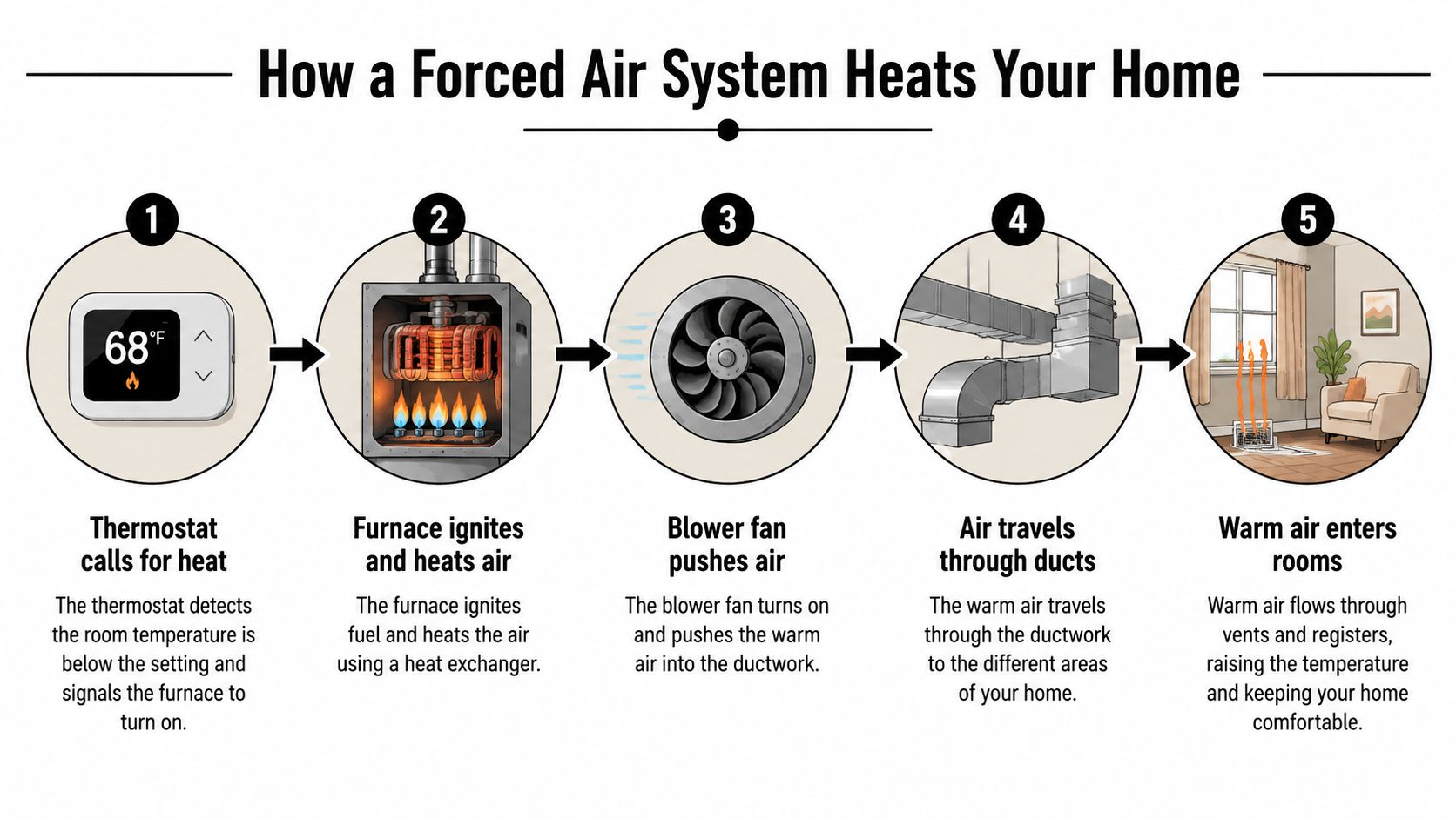
A forced-air system works like a circulatory network. The blower acts like the heart, the ducts act like arteries, and the vents are the places where warmth reaches the rooms you live in every day.
The main parts and what they do
A standard forced-air furnace has five core parts, the furnace, heat exchanger, blower motor, thermostat, and air filter Carrier. The thermostat calls for heat, the furnace starts the heating cycle, the heat exchanger warms the air without direct contact with combustion gases, and the blower motor sends that warmed air through the ductwork.
The heat exchanger is the safety line between combustion and the air you breathe indoors.
In a New Westminster basement suite, that cycle can start when the upstairs thermostat senses the home has cooled off overnight. The furnace fires, the heat exchanger warms the air, the blower moves it, and supply vents carry the heat into the living room, bedrooms, and hallway until the set temperature is reached. If the duct layout is uneven or a return is blocked, the warm air can arrive later in some rooms than others, even though the furnace is running normally.
What the air filter really protects
The air filter does not heat the home, but it protects the rest of the system. Dust buildup can restrict airflow, and in a Surrey home during wildfire smoke season that can leave the blower working harder than it should while the heat exchanger and ducts collect more dirt over time.
A simple way to think about it is this, if the furnace is the engine and the blower is the pump, then the filter is the gatekeeper. A clean filter helps the system move air properly, while a clogged one can make the house feel less comfortable even when the furnace is running.
For homeowners who want a closer look at duct upkeep, this ductwork cleaning guide is a useful companion read. The key idea is that forced air is never just one box in a closet, it is the whole route from thermostat to vent.
Fuel Types and Efficiency Options for Forced Air
A forced-air system is a delivery method, not a fuel type. The ducts and blower move heat made by natural gas, electric elements, and, in some homes, oil or propane HouseMaster. In a Metro Vancouver house, that can mean anything from a gas furnace in a detached home to an electric air handler in a condo, but the air still travels through the same basic path from equipment to rooms.
What changes and what stays the same
A natural gas furnace burns fuel in a combustion chamber, then sends exhaust outside through a flue or side-wall vent. An electric air handler uses heated coils instead. The heat source changes, but the ducts, blower, and vents still do the work of carrying warm air through the home.
| Fuel Type | Typical Efficiency | Best Suited For | Key Consideration |
|---|---|---|---|
| Natural gas | Qualitatively, often chosen for strong whole-home heat | Detached homes with existing gas service | Needs safe combustion and venting |
| Electric elements | Qualitatively, common in some condos and smaller systems | Homes without gas lines | Depends on electrical setup |
| Oil or propane | Qualitatively, used in some cases | Properties built around those fuels | Fuel storage and service planning |
A Burnaby homeowner with a gas furnace and a condo owner with an electric air handler may face very different utility setups, but comfort still depends on clean airflow through properly sized ducts. If you are considering a larger retrofit, a dual-fuel heat pump overview can help you compare that option with a simple furnace swap.
Why system design matters more than furnace size
Canadian guidance from CMHC and HRAI says ductwork should be sized to the greater of heating airflow, cooling airflow, or 1.5 air changes per hour, with supply-duct air velocity typically 3.6–4.6 m/s and return-duct velocity around 2.6 m/s. It also notes typical residential heating capacities of 11–45 kW at airflow rates of 300–750 L/s CMHC/HRAI guidance.
Those figures matter because a bigger furnace does not automatically mean better comfort. If the ducts, filter, or returns are restrictive, the blower can still struggle to keep airflow in range, and some rooms may heat unevenly even while the equipment is running normally.
Advantages and Disadvantages of Forced Air Heating
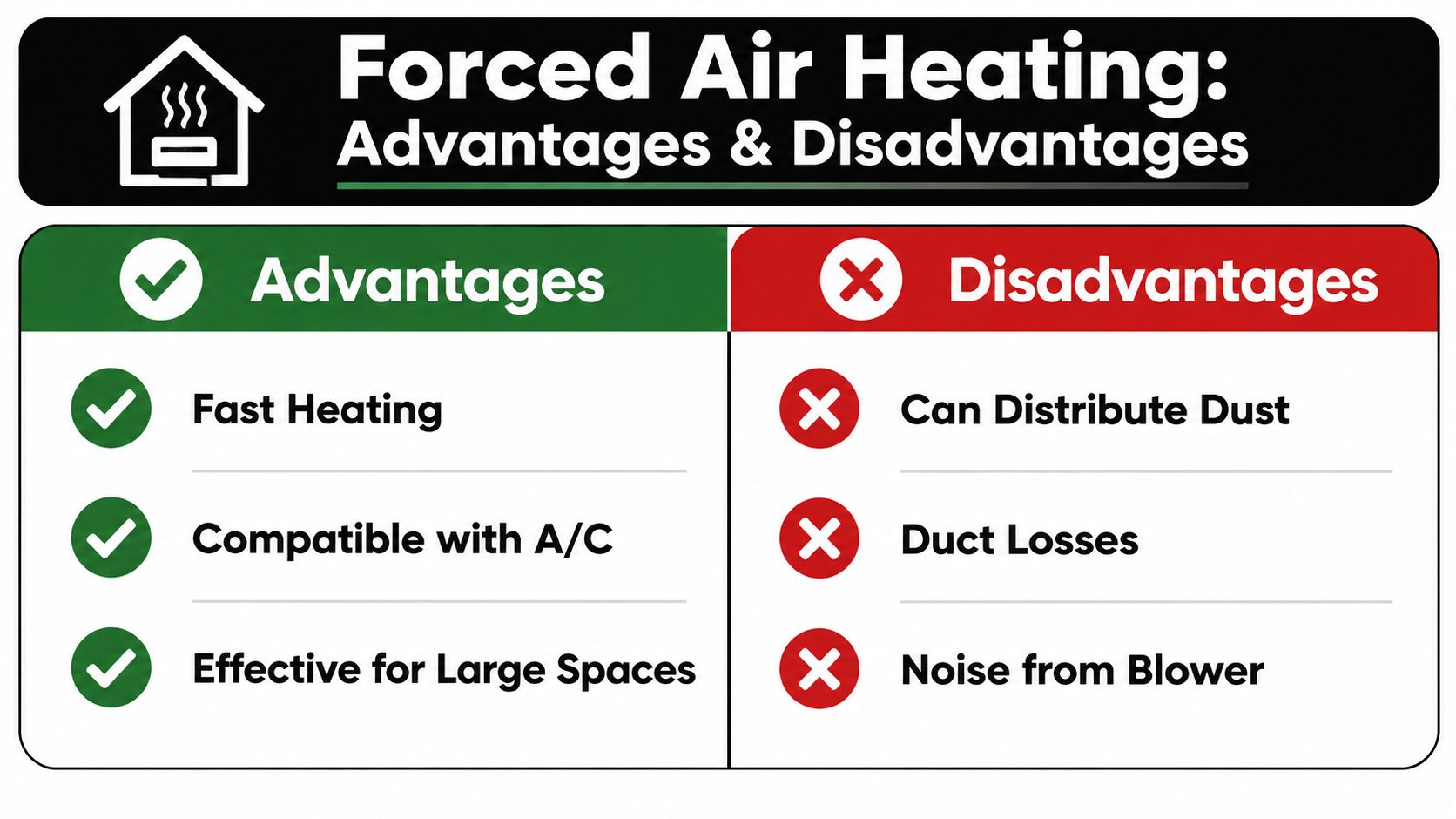
Forced air wins on speed and flexibility. A furnace can warm a full house faster than many radiant systems, and the same ductwork can often support central air conditioning and filtration, which makes it attractive in homes where one distribution network has to do a lot of work.
The upside
In a Greater Vancouver house with existing ducts, forced air is often the most straightforward retrofit path. You can add or upgrade a furnace, improve filtration, and keep one central system serving the whole home rather than installing separate heaters in every room.
That compatibility matters during wildfire season too. Forced-air systems can help with indoor comfort, but only if the filter and envelope are in good shape, because the same duct network that moves warm air can also move dust and smoke particles around the house when maintenance slips.
The trade-offs
The weak spots are usually the distribution system, not the furnace cabinet. Poor duct design can leave cold rooms at the end of long runs, noisy blowers can make nights less comfortable, and dry winter air is a common complaint in heated homes.
If the filter is neglected, the system can become a comfort tool and an air-quality problem at the same time.
That's the trade-off for Metro Vancouver families and strata units. Forced air can be a clean, efficient comfort system, or it can feel stuffy, dusty, and uneven if leaks, restrictive filters, or poor return-air design go unaddressed.
A homeowner in Surrey with an older furnace and leaky ducts may decide the system is still worth keeping because it serves the whole house. A strata owner in New Westminster with limited ventilation and recurring dust may see the same system as a maintenance burden until the ducts and filtration are corrected.
Common Problems and Maintenance Tips for Homeowners
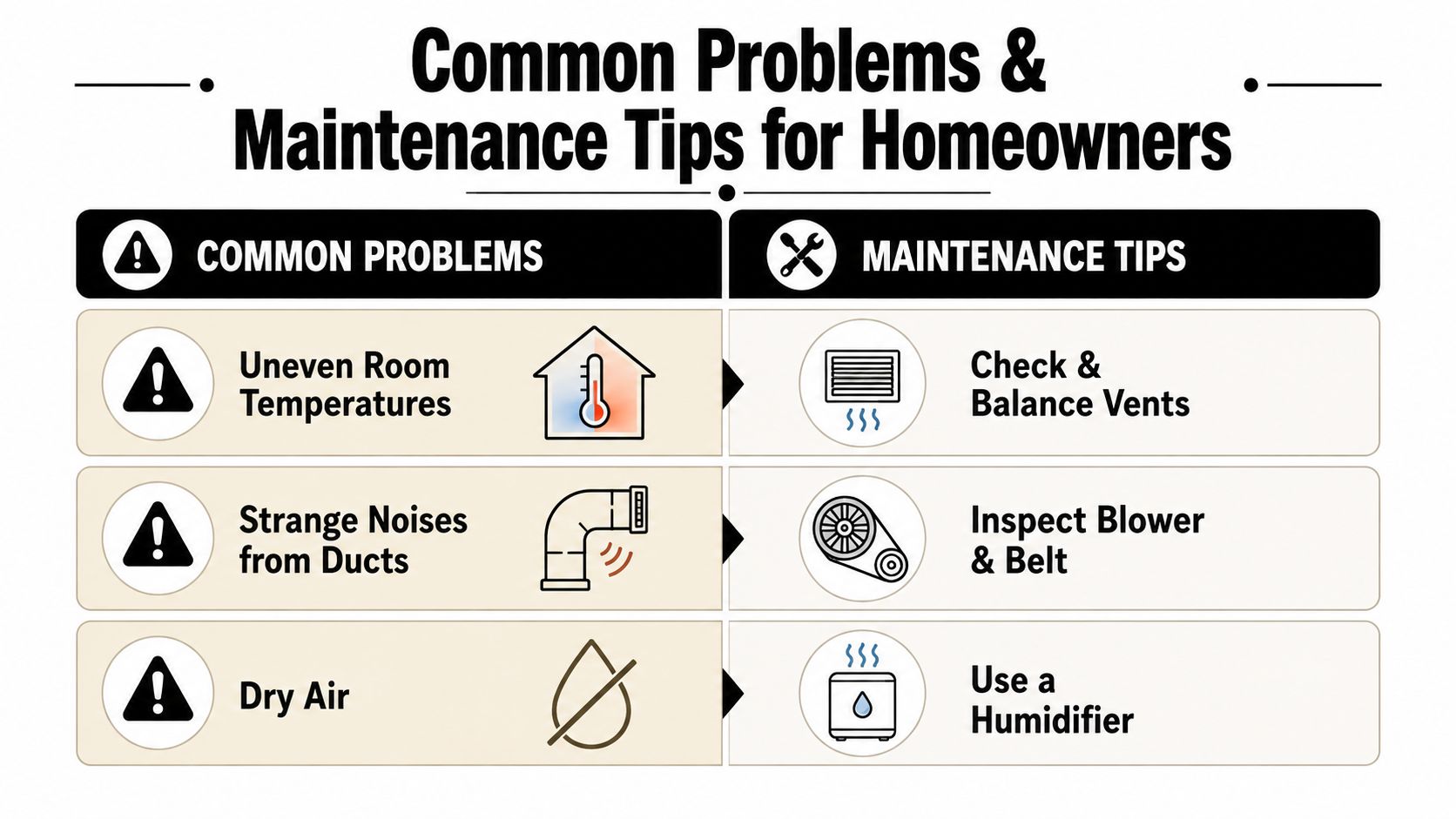
A forced-air system usually gives small warnings before it breaks down. One room stays chilly, another feels stuffy, the blower sounds different, or the heat seems to arrive in weak bursts. Those clues usually point to airflow restriction, duct issues, or a system that has gone too long without maintenance.
A simple first check can save time. Make sure supply and return grilles are not blocked by furniture, pet hair, or rugs, then look at the filter before assuming the furnace itself is failing.
- Uneven Room Temperatures: Check that vents are open and returns are clear, then look for long duct runs, leaks, or balance issues that may need a technician.
- Strange Noises from Ducts: Rattling, humming, or whistling often points to airflow strain, loose duct sections, or a blower working harder than it should.
- Dry Air: Winter heating can leave the home feeling dry even when the furnace is working normally, so a humidifier or better moisture control may help.
Airflow is the part many homeowners miss. A forced-air system is not just a heat source, it is a moving-air system, and the ducts, returns, and filter all have to cooperate. If the filter is too restrictive, the returns are undersized, or the ductwork adds too much friction, the air slows down and the rooms at the end of the runs feel it first.
For yearly care, a furnace tune-up is one of the easiest ways to catch small problems before they spread through the rest of the system, and this furnace tune-up resource is a practical place to start. Keep vents unblocked, replace filters on schedule, and pay attention to new noises or odours instead of waiting for a shutdown.
Don't ignore the safety parts
The heat exchanger keeps combustion gases separate from indoor air, and the vent system carries exhaust outdoors through a roof flue or side-wall vent RVCC. If that barrier is damaged, the issue stops being about comfort and becomes a safety concern.
A practical example is a New Westminster home with visible rust near the furnace and a musty, metallic odour near the supply vents. That combination deserves immediate attention, because a cracked heat exchanger is not a DIY issue and should not wait until the next season.
When to Call a Professional HVAC Technician in Greater Vancouver
Call a technician when the problem is persistent, not occasional. Cold spots that never go away, frequent short-cycling, visible soot or rust near the furnace, or strange odours from vents all point to a system that needs a proper inspection.
Red flags that need a service call
A suspected cracked heat exchanger should be treated as a safety issue, not a comfort complaint.
A technician can check whether the issue is airflow, combustion, duct leakage, or a furnace fault. That matters because forced-air upgrades should be treated as whole-system design work, with load calculations, duct sizing, and static-pressure verification guiding the choice, not just the furnace nameplate.
If you're in Vancouver, Richmond, Burnaby, New Westminster, Delta, or Surrey, Encano Plumbing & Drainage Ltd. handles heating, ductwork inspection, thermostat upgrades, and preventive maintenance along with emergency response. They've been serving local residential, commercial, and government properties for 10+ years, and they offer 24/7 emergency response with transparent pricing.
A good inspection should leave you with a clear picture of what's working, what's restrictive, and what needs attention before the next cold snap. That's the right standard for a system that carries both comfort and safety through the whole home.
If your forced-air system is noisy, uneven, or overdue for a check, book a visit with Encano Plumbing & Drainage Ltd. for heating service, ductwork inspection, thermostat work, or emergency help across Greater Vancouver. A professional look at airflow, filtration, and safety components can keep your home warmer, cleaner, and easier to live in through the winter.