
If you're in Greater Vancouver and your furnace is getting older, the same thought usually comes up every winter. You want lower gas bills, better comfort, and a heating system that doesn't lock you into one fuel source. You also don't want to gamble on a setup that sounds good in a brochure but struggles through weeks of damp, near-freezing weather.
That's where a dual fuel heat pump makes sense. It operates much like a hybrid car, using the efficient electric side when conditions suit it, then calling on gas heat when the weather turns and the economics change. In a Vancouver winter, that matters more than most generic articles admit. Our challenge isn't usually prairie-style deep freeze. It's long stretches of mild, wet, and humid cold that test defrost logic, airflow, and control settings.
A properly designed dual fuel system gives you cooling in summer, efficient electric heating for much of the heating season, and furnace backup when the heat pump shouldn't be carrying the load alone. That's a practical fit for many homes in this region, especially if you already have ductwork and a gas furnace in place. If you're comparing options, it helps to understand how heating and cooling systems work together in a Vancouver home.
Table of Contents
- Introduction The Smartest Way to Heat Your Vancouver Home
- What Is a Dual Fuel Heat Pump
- How Dual Fuel Systems Perform in Vancouver's Climate
- Real Savings Cost and Carbon Reduction
- Installation and Retrofit Considerations
- Estimating Your Investment Costs and Rebates in BC
- Is a Dual Fuel System Right for You and Your Property
Introduction The Smartest Way to Heat Your Vancouver Home
A lot of Vancouver homeowners are in the same spot. The furnace still runs, but it's noisy, the house has hot and cold rooms, and each heating season feels more expensive than it should. At the same time, going fully electric can feel like a big leap if you're worried about winter performance.
A dual fuel heat pump solves that problem by splitting the job between two pieces of equipment that each do their best work in different conditions. The heat pump handles the lighter, more efficient heating work and also gives you air conditioning. The furnace takes over when outdoor conditions stop favouring the heat pump.
That sounds simple, but its true value lies in how it behaves over a full Vancouver winter. On many days, the system can rely on electric heating. When the weather turns colder, wetter, or both, it has a second heating source ready without you touching a thing.
Practical rule: The best dual fuel system isn't the one with the fanciest brochure. It's the one that switches at the right time for your house, your utility rates, and your duct system.
A practical example helps. Say your home in Burnaby or Richmond sees a typical January week with damp air, overnight frost, and daytime temperatures that bounce back up. A well-set dual fuel system may run the heat pump through much of that week, then bring on the furnace only when the balance point says gas heat is the better call. You keep comfort, avoid forcing the heat pump into the wrong job, and get more value from both pieces of equipment.
What Is a Dual Fuel Heat Pump
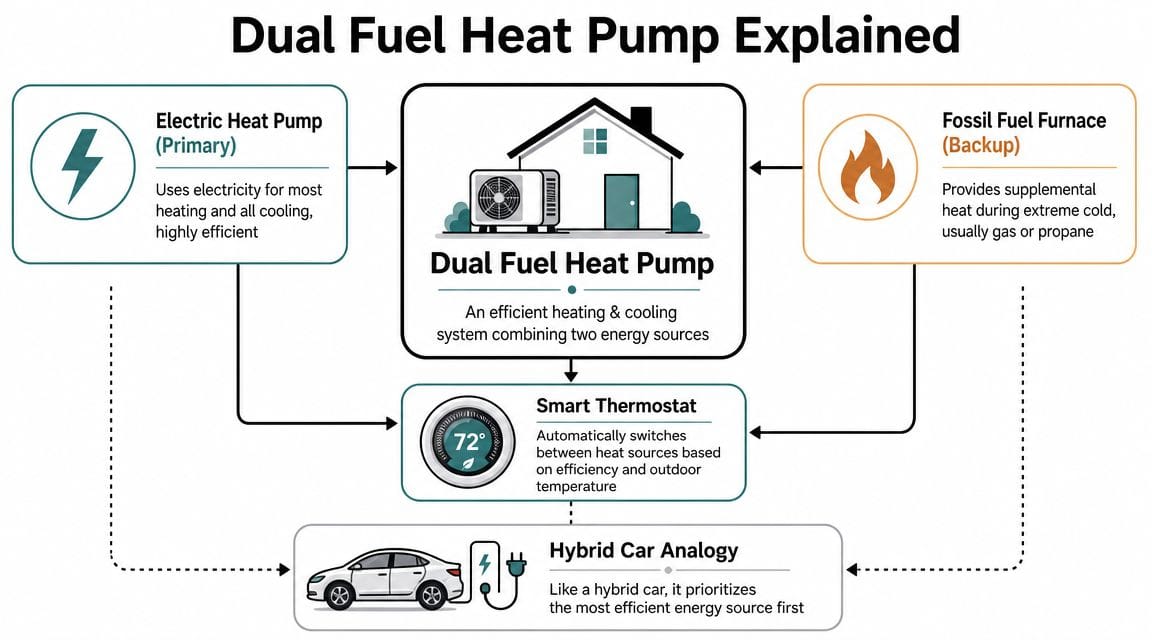
A dual fuel heat pump combines an electric heat pump with a natural gas furnace, with controls that decide which heat source should run. According to ACEEE's dual fuel heating analysis, this setup produced heating cost savings of 5% to 16% in single-family homes. In BC, that idea gets even more interesting because the electric portion of heating can take advantage of a highly renewable grid.
How the system works day to day
The outdoor unit is the heat pump. It moves heat rather than creating it with combustion. In shoulder season and much of a typical coastal winter, that's often the preferred way to heat.
Inside, the gas furnace stays in the system as the second heat source. It can deliver stronger output when outdoor conditions make heat pump operation less favourable.
The thermostat or control board acts as the decision-maker. It looks at conditions and shifts between the two. Done properly, that changeover should feel automatic, not like the house is constantly hunting for temperature.
A simple Vancouver example looks like this:
- Mild rainy day: The heat pump does the heating because outdoor conditions are still suitable.
- Cold overnight stretch: The control may decide the furnace should take over.
- Summer operation: The heat pump handles cooling like a central AC system.
Why smart controls matter
Many homeowners are often misled. A dual fuel setup is not just “add a heat pump beside a furnace.” The control logic is the product.
If the switchover happens too early, you burn more gas than necessary. If it happens too late, comfort can suffer and the system may run longer than it should. In Vancouver's climate, those control choices matter because winter often sits near the edge where either heat source could work, but not always equally well.
A dual fuel system should feel boring in the best way. No manual switching, no guessing, and no rooms that suddenly cool off because the controls weren't commissioned properly.
How Dual Fuel Systems Perform in Vancouver's Climate
A typical Vancouver winter morning tells you more about dual fuel performance than any brochure. It is 3°C, raining overnight, then turning frosty by dawn. The heat pump can still carry a good share of the load, but moisture on the outdoor coil changes how the system behaves. That is the part generic cold-climate guides usually miss.
In Greater Vancouver, the main question is not whether a heat pump works in winter. It does. Instead, the question is how well the controls handle long stretches of mild, damp weather, short cold snaps, and repeated defrost cycles without giving up and switching to gas too early.
The balance point in a coastal winter
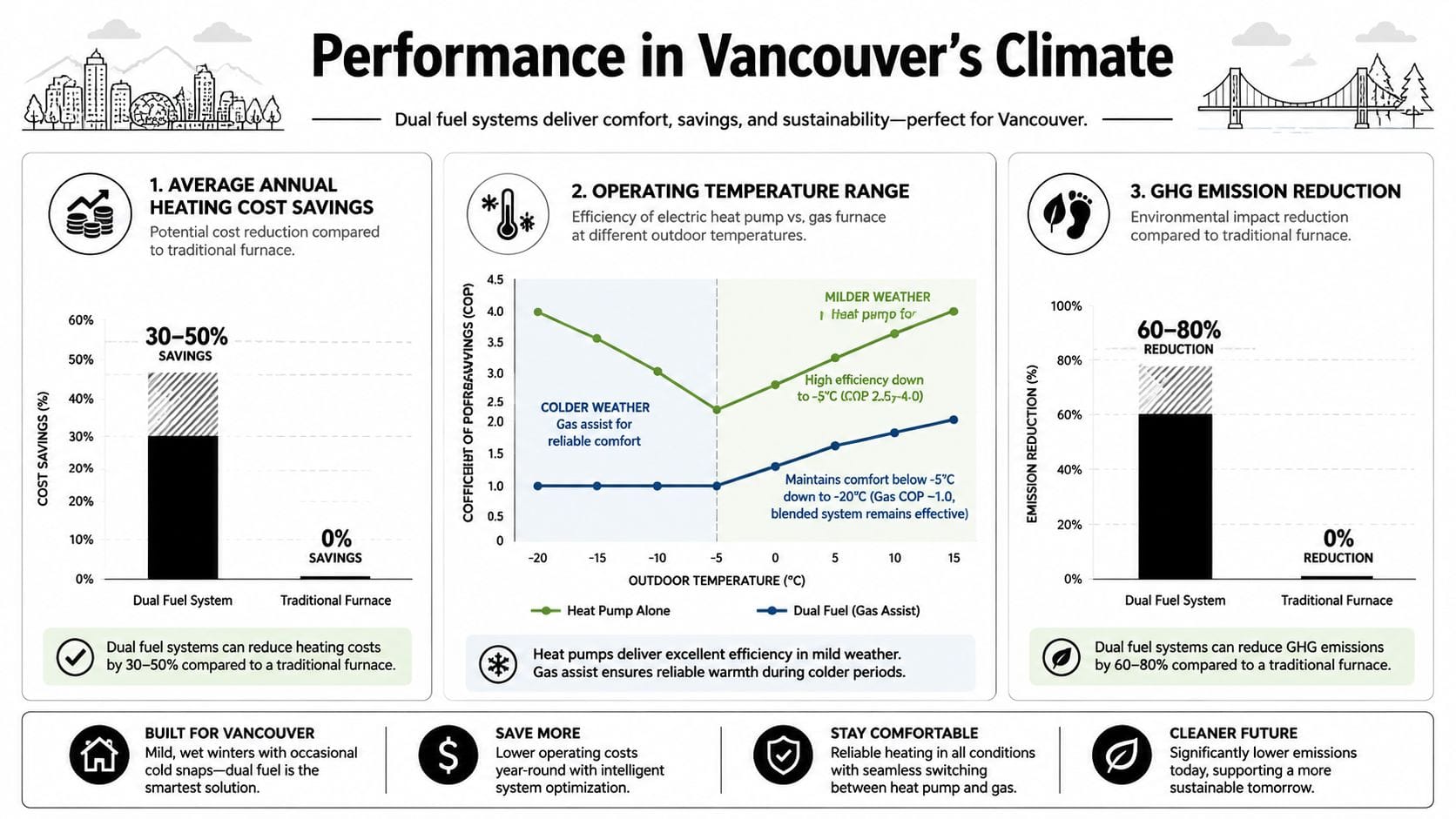
The balance point is the outdoor temperature where the system should switch from heat pump heating to furnace heating, based on capacity, operating cost, or both. There is no single Vancouver number that applies to every house. A drafty older East Van home, a tighter newer build in Burnaby, and a renovated character house on the North Shore can all have different balance points even with similar equipment.
This setting matters more here than in colder inland climates because our winter often sits in the grey zone. Outdoor temperatures are frequently mild enough for the heat pump to do useful work, but damp enough that performance is affected by frost and defrost. If the switchover is set too high, the furnace takes over before it needs to and the homeowner loses much of the benefit of dual fuel. If it is set too low, the system may run longer, recover more slowly, and feel less steady during colder wet spells.
In the field, I see more problems from conservative changeover settings than from the heat pump itself.
What defrost means for real comfort
Defrost is normal in Vancouver. In fact, it is one of the defining realities of running a heat pump in our climate.
When outdoor air is cold and wet, frost can build on the coil. The unit has to clear that frost to keep transferring heat properly. During a defrost cycle, the outdoor unit may pause, reverse operation briefly, and produce visible steam. Homeowners often think something is wrong the first time they see it on a wet winter morning. Usually, nothing is wrong at all.
What matters is frequency, recovery, and control logic. A well-set dual fuel system will clear the coil, return to heat pump operation, and keep indoor comfort fairly stable. A poorly set one will treat every defrost event like a reason to fire the furnace, which increases gas use and makes the heat pump look worse than it really is.
A Vancouver-relevant discussion of coastal dual-fuel performance and defrost behaviour shows why setup and commissioning matter so much in this market.
| Condition | What a well-set system does | What a poorly set system does |
|---|---|---|
| Mild cool weather | Runs the heat pump steadily | Switches to gas too soon |
| Damp near-freezing spell | Manages defrost and returns to heat pump operation when appropriate | Overuses furnace after defrost events |
| Short cold snap | Uses furnace when needed for comfort and capacity | Hunts between modes or sacrifices comfort |
One practical example. If you notice the outdoor unit steaming on a cold, wet morning in Vancouver, that can be normal defrost. The useful question is whether the house stays comfortable and the system settles back into heat pump operation afterward. If it keeps dropping into furnace heat during ordinary coastal weather, the issue is often the setup, not the basic dual fuel concept.
Real Savings Cost and Carbon Reduction
A lot of Vancouver homeowners ask the same question after they understand how dual fuel works. Will it lower my bills enough to matter, and will it cut carbon in a meaningful way in a mild coastal climate where the furnace may only run for part of the winter?
In practice, savings depend less on the label on the equipment and more on how many hours the heat pump can carry the load before the system switches to gas. In Vancouver, that can work well because much of the heating season sits in the range where a heat pump is efficient, while the furnace stays available for colder mornings, higher demand periods, or homes with tougher envelopes. Carbon reduction can also be meaningful here because BC electricity is relatively low carbon.
The cost side is more personal. It depends on your gas rate, your electricity rate, your thermostat strategy, your insulation level, and the condition of the existing furnace. A house with a serviceable furnace and decent ducts often has a better dual fuel business case than a house that needs major duct repairs and a full furnace replacement at the same time. If you are weighing that part of the project, it helps to compare it with the cost of replacing a furnace in Vancouver before deciding whether to keep the existing gas side or start fresh.
A quick homeowner suitability check
Before looking at brands or rebates, check the house itself:
- Existing furnace condition: A sound furnace can often remain as the backup heat source.
- Ductwork quality: Restrictive or undersized ducts can reduce heat pump output and cut into expected savings.
- Electrical readiness: Some homes need minor electrical upgrades for the outdoor unit and controls.
- Current comfort problems: Cold rooms, hot rooms, and airflow issues should be addressed in the design, not ignored.
Where the Savings Come From
The savings come from control strategy.
A well-set dual fuel system uses the heat pump for the long stretches of typical Vancouver winter weather, then brings on gas only when that choice makes sense for comfort, capacity, or operating cost. If the balance point is set too high, the furnace takes over too often and the numbers disappoint. If it is set thoughtfully for the house and utility rates, the heat pump handles a large share of the season and gas use drops.
That trade-off matters. Some homeowners want the lowest monthly operating cost. Others are willing to pay a little more in exchange for lower emissions and less gas use. Both are reasonable goals, but they lead to different control settings.
A practical example is an older Vancouver home with an aging mid-efficiency furnace, average insulation, and no air conditioning. In that case, a dual fuel upgrade can do three jobs at once. It can improve shoulder-season comfort, add cooling for summer smoke and heat events, and reduce reliance on gas through much of the heating season. That is usually where the full value becomes clear, not in one simplified utility comparison pulled out of context.
Installation and Retrofit Considerations
A dual fuel project succeeds or fails before the equipment is turned on. The house has to be assessed properly, the load has to be calculated, and the airflow has to support the new operating pattern.
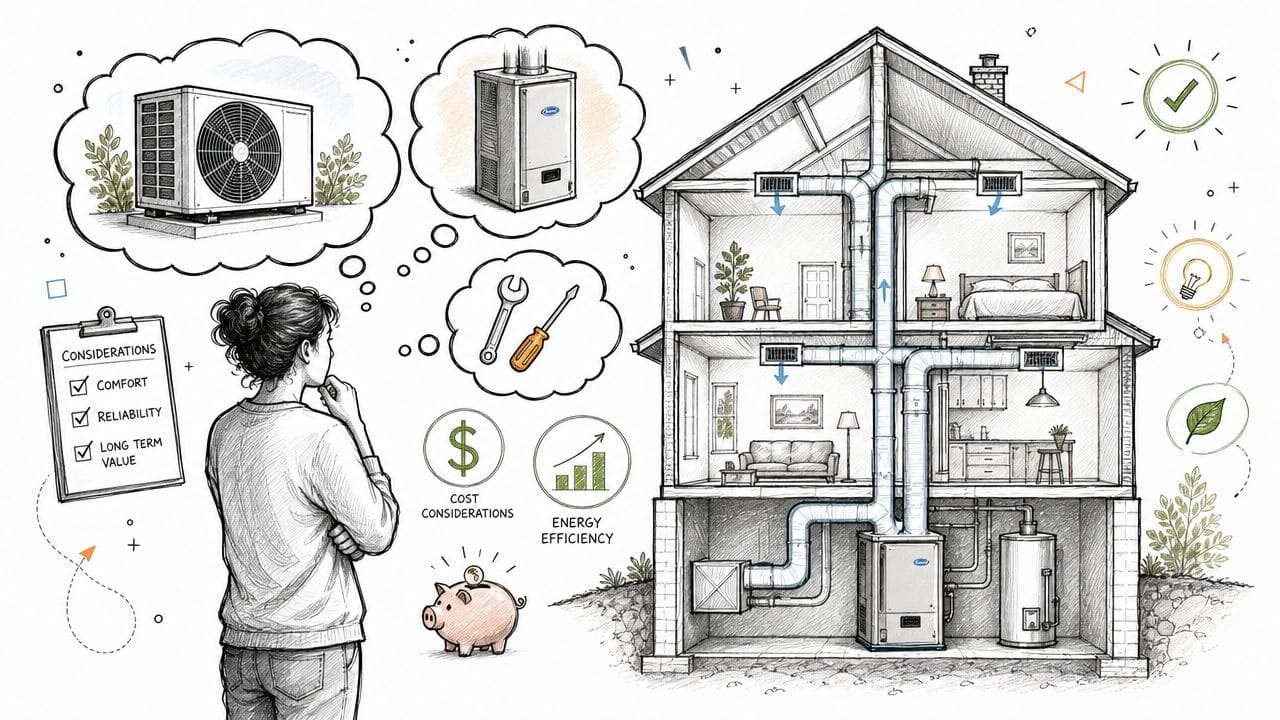
A dual-fuel installation also requires the switchover point to be tuned to local energy prices, often around -1°C to 4°C, and every job should start with an on-site assessment and load calculation. Technical install guidance also notes that duct restrictions can erase performance gains and push the system to rely on the furnace earlier than intended, as outlined in this dual-fuel HVAC setup guide.
What has to be checked before install day
The first question is whether the existing furnace can stay. Sometimes it can. Sometimes the blower, controls, age, or physical condition make replacement the smarter move.
The next issue is ductwork. Many retrofit quotes become too simplistic concerning it. Heat pumps are sensitive to airflow. If the duct system is restrictive, the heat pump side can underperform even if the outdoor unit is excellent. That's why homeowners comparing options should understand the broader cost of replacing a furnace and related system components.
Here's what should be reviewed on site:
- Load calculation: The house needs a real heating and cooling load assessment.
- Duct inspection: Return air, supply sizing, and restrictions should be checked.
- Control compatibility: Thermostat and board logic must support dual fuel operation.
- Equipment placement: Outdoor unit location affects service access, drainage, and noise planning.
Why setup matters as much as equipment
A poorly commissioned dual fuel system often gets blamed on the heat pump, when the actual problem is airflow, thermostat logic, or a bad cutover temperature.
One installer example in the guidance emphasised checking total external static pressure and keeping a specific air handler below 0.8 inches water column because duct restrictions can wipe out gains. The broader lesson is simple. If the air side is wrong, the system can end up using the furnace more often than the design intended.
This walkthrough gives a good visual sense of how a dual fuel system is assembled and controlled:
A practical retrofit example: a Vancouver Special with an existing gas furnace and older ductwork may look like an easy candidate on paper. But if the returns are weak and static pressure is high, the heat pump side may never deliver what the quote promised. In that case, a contractor should talk about duct changes or airflow corrections before talking about efficiency claims.
Estimating Your Investment Costs and Rebates in BC
Upfront pricing for a dual fuel heat pump varies too much by house and scope to give one honest number without seeing the job. Equipment choice, line-set routing, electrical work, duct modifications, controls, and whether the existing furnace stays all affect the total.
That's why the smarter way to think about investment is by property type and decision criteria, not by chasing a generic online price. If you're also comparing cooling upgrades, it helps to review what drives the cost to install central air in a ducted home, because some of the same labour and duct considerations overlap.
A Canadian pilot study reported estimated annual operating cost savings of about $300 to $1,000 per site, with all payback periods under nine years, according to the dual-fuel air-source heat pump pilot study.
Homeowners
For a detached homeowner, the main decision is usually whether the house already has the right bones for a straightforward retrofit. Existing ductwork and a usable furnace can make the project cleaner. Homes that need airflow corrections or electrical upgrades should still be considered, but the quote needs to reflect the full job.
The same pilot study is useful here because it grounds the conversation in actual field monitoring rather than brochure language. Savings existed, but they depended on the site and the equipment.
Strata
Strata decisions are less about one suite and more about repeatability. Board members and property managers typically want predictable maintenance, a clear retrofit standard, and equipment that won't create comfort complaints across different units.
In that setting, the best candidate buildings are usually those where ducted systems already exist and the mechanical strategy can be standardised. The wrong approach is approving a concept first and asking control and duct questions later.
Commercial
Commercial owners usually care about operating cost, reliability, and how the HVAC plan fits broader building goals. A dual fuel setup can be attractive where gas backup is still desirable but there's a push to reduce carbon intensity from day-to-day heating.
The financial case is strongest when the mechanical design matches how the building is actually used. A lightly occupied office, a rental home, and a strata common area don't carry the same heating profile.
For all three audiences, rebates can materially change the decision, but they also change over time and by programme rules. The right way to handle incentives is to verify current eligibility during the quote process rather than build the whole investment case around an assumed rebate amount.
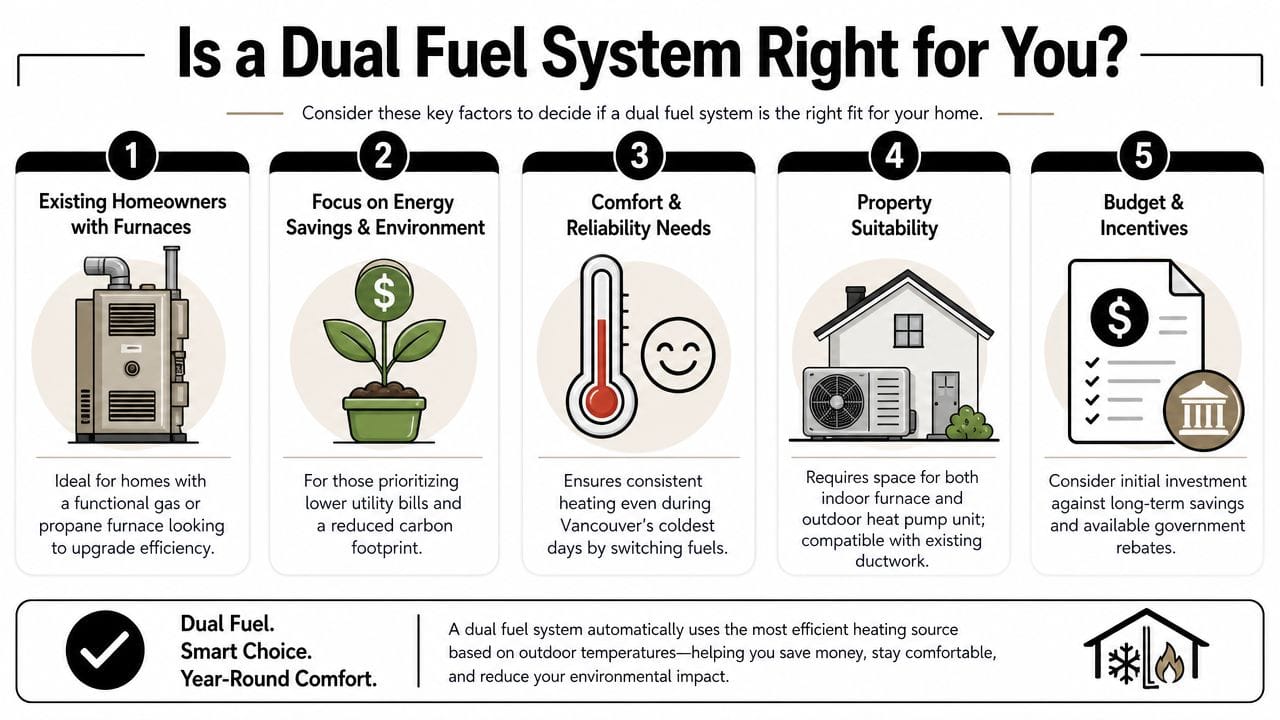
Is a Dual Fuel System Right for You and Your Property
The right candidate for a dual fuel heat pump isn't just someone who wants new equipment. It's someone whose house, comfort goals, and utility priorities line up with what the system does well.
For detached homeowners
This setup usually fits best if you already have a ducted home and want to modernise without giving up furnace backup. It also makes sense if summer cooling matters to you, because the heat pump adds that function naturally.
The biggest mistake homeowners make is focusing only on the outdoor unit. The better question is whether the whole house system can support proper airflow, control logic, and a sensible switchover strategy.
For strata managers
Strata properties need consistency more than novelty. If the building has multiple similar suites with ducted heating, a dual fuel strategy can make sense where the board wants efficiency improvements but still values gas backup during colder periods.
That said, controls and installation standards have to be uniform. One suite with poor setup can create disproportionate complaint volume, even if the rest of the building is fine.
For commercial properties
Commercial spaces need comfort and continuity. A dual fuel setup can support both if the building's heating load and operating schedule justify it.
This is especially relevant for properties that don't want to go all-in on a single heating source. The dual fuel approach keeps flexibility in the system while allowing more of the year to be handled by electric heating.
A quick decision screen helps:
- Strong fit: You have existing ductwork, a gas connection, and want both heating efficiency and cooling.
- Possible fit: You need some duct or control work, but the building is otherwise well suited.
- Weak fit: The property lacks practical ducted distribution or the economics strongly favour another path.
Good dual fuel projects are rarely accidental. They come from matching the house to the equipment, then tuning the controls for the local climate instead of copying a generic template.
For Vancouver homes, that local tuning is the difference between a system that saves energy and one that keeps defaulting to the furnace whenever the weather gets wet and awkward.
If you're weighing a dual fuel heat pump for a home or building in Greater Vancouver, Encano Plumbing & Drainage Ltd. can help you assess the proper fit. Their team works across Vancouver, Richmond, Burnaby, New Westminster, Delta, Surrey, and nearby communities, with heating, gas, and HVAC experience that's grounded in local building conditions. The best next step is a proper on-site evaluation of your furnace, ductwork, controls, and comfort goals so you can decide based on how the system will perform in your property, not on generic marketing claims.