
You can smell it before you see it. The furnace kicks on, a faint dusty puff comes out of a bedroom register, and suddenly you're wondering whether the whole duct system needs cleaning or whether you're about to pay for something that won't change much at all. In Greater Vancouver, that's the right question to ask, because ductwork cleaning is useful in some homes and a waste of money in others.
The line is clearer than most sales pitches admit. Canadian and U.S. guidance points away from routine cleaning and towards targeted corrective service when there's visible contamination, moisture damage, vermin, or debris that's affecting the system. That's the standard worth using when you're deciding whether to book a crew or just replace a filter and move on.
Table of Contents
- What Ductwork Cleaning Means
- Health and Efficiency Benefits Worth Expecting
- Signs Your Ductwork Needs Attention
- How Professionals Clean Ductwork
- Cost and Frequency Benchmarks
- DIY Surface Cleaning Versus Professional Service
- Hiring the Right Local Contractor
What Ductwork Cleaning Means
A Richmond family calls after noticing dust on the bedroom grilles every week, even though they've been keeping the house tidy. The question is whether the ductwork itself has enough contamination to justify a proper cleaning, or whether the system needs better filtration and a closer look at moisture, debris, or a disconnected boot.
What is inside the system
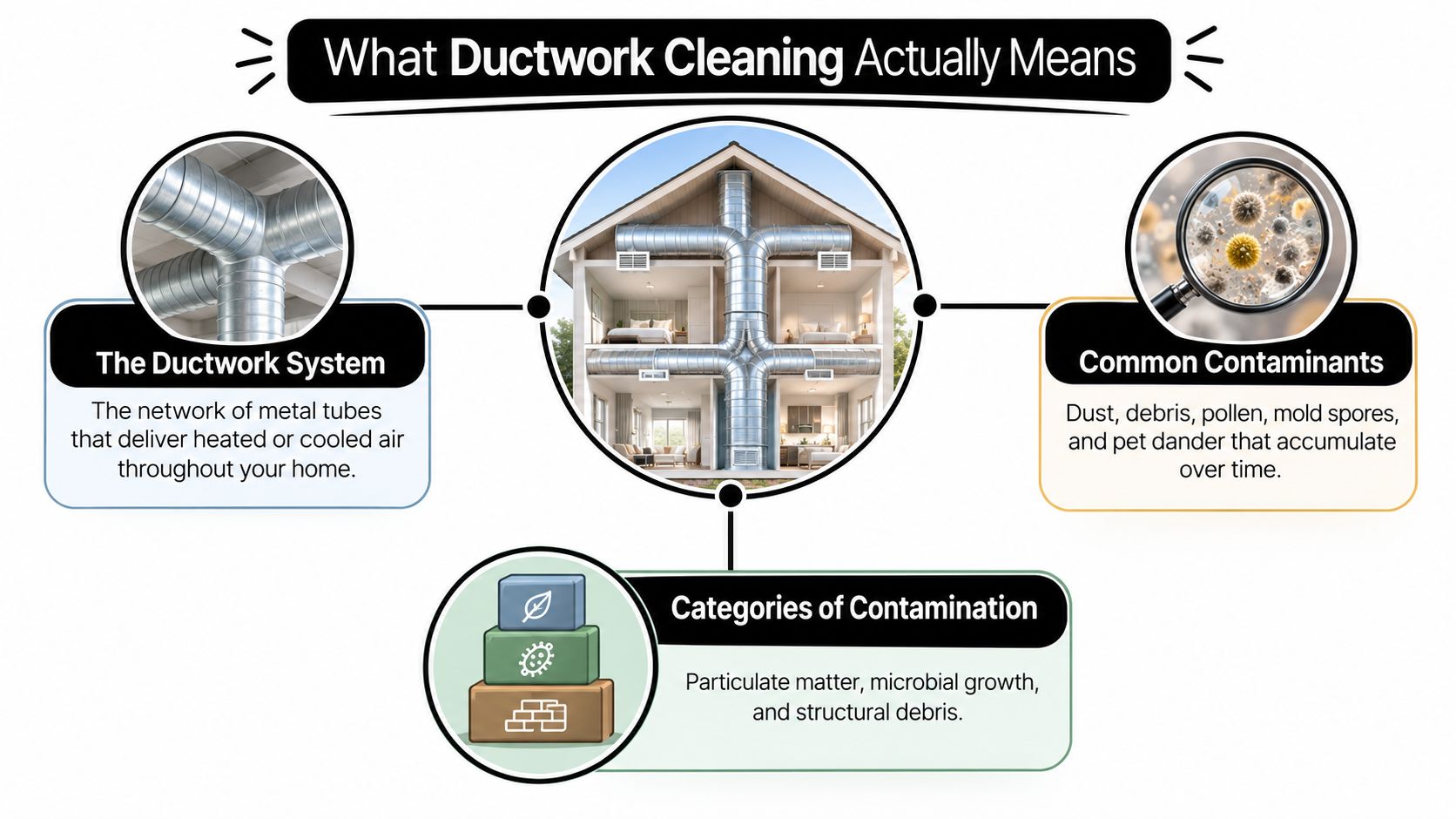
Residential ductwork is the network that moves heated or cooled air from the furnace or air handler to the rooms and back again. Over time, the inside surfaces can collect ordinary dust, pet hair, pollen, and the fine debris that gets past filters. In a normal, dry, well-filtered system, that buildup is often modest and not a reason to rush into cleaning.
The three contamination types that matter are particulate accumulation, biological growth, and physical debris. Particulate buildup is the dust-and-dander story most homeowners picture. Biological growth is the moisture story, which includes mould in wet sections or insulation. Physical debris is the renovation mess, rodent nesting, or broken fragments that should not be in the system at all.
Practical rule: if the contamination is visible, wet, smelly, or blocking airflow, you are no longer talking about routine maintenance. You are talking about a corrective job.
The NRC review found the existing evidence was insufficient to draw solid conclusions about routine duct cleaning benefits, and it also found poor evidence that cleaning improves indoor air quality. That matters because it keeps this topic grounded. A clean-looking grille does not automatically mean the hidden ducting is dirty enough to matter, and a dusty vent does not automatically mean the whole system needs a full mechanical cleaning.
In practice, ductwork cleaning is not “vacuum the vents and hope.” It is a specific service for a specific problem. If you want to understand how airflow can be affected elsewhere in the system, a good place to start is how a furnace moves air. That is why a good inspection comes before the quote.
Health and Efficiency Benefits Worth Expecting
If a duct system is dry, filtered well, and free of contamination, cleaning should not be pitched as a miracle fix. In practice, the gains are usually modest unless there is a clear problem inside the system. Official guidance has been consistent on that point, and the most honest way to frame the work is as a targeted corrective service, not routine maintenance.
What cleaning can help with
When there is visible mould, rodent activity, or heavy debris, cleaning can make sense because it removes a known contaminant from the air path. That is the strongest case for the service. If dust, drywall grit, or nesting material is collecting in branches, elbows, or takeoffs, removing it can bring the system back closer to normal operation. If the contamination is biological, source removal is better than leaving it in place and hoping filtration handles it later.
That also sets the limit on the promises. Allergy relief claims are often overstated, and energy savings are usually small unless the ducts were restricted. A cleaner system can help, but only when the problem was real enough to affect flow or indoor conditions in the first place.
What the system can't promise
Clean ductwork does not fix poor filtration, leaky returns, or moisture problems. Those issues still need attention. If the air handler, coil, or blower is dirty, cleaning only the visible ducts leaves the main restriction untouched.
Airflow problems also need to be checked upstream of the grille. A system can look fine at the register while the furnace side is still weak, dirty, or poorly balanced. This airflow guide for furnace systems is a useful reminder that supply complaints often start in the mechanical equipment, not in the branch run you can see.
Bottom line: cleaning is most defensible when it removes a known source, not when it is sold as a cure-all.
A realistic outcome checklist
- Good candidate: visible mould, vermin evidence, or post-renovation debris.
- Possible benefit: airflow was restricted and contaminants are being removed.
- Low expectation: a dry, well-filtered system with normal dust only.
- Not a substitute for: filter upgrades, leak repairs, or moisture control.
Signs Your Ductwork Needs Attention
The first clue usually shows up at the register. A homeowner turns on the heat and sees dust puff out, or notices dark streaks around a vent that used to look clean. That is the point where an inspection makes sense, before anyone starts selling cleaning as if it were the answer to every problem.
The signs that matter most
Visible dust puffs tell you material is being pushed out of the system, not just sitting inside it. Musty odours are a different matter, because smell often points to moisture or microbial growth somewhere in the duct path or nearby equipment. Recent renovation dust is its own category, since construction debris can settle into branches and elbows where a household vacuum will never reach.
Rodent or insect evidence is harder to dismiss. Nesting material, droppings, or chewed insulation mean the ductwork is not just dirty, it has been contaminated. Visible mould on duct sections or water staining near the air handler should shift the discussion away from routine servicing and toward source control first.
If water got into the system, don't start with perfume, sealants, or a quick vacuum. Find out why the moisture got there.
Signs seen in real homes
A Burnaby townhouse after a kitchen reno often shows fine dust in the supply boots long after the floors are clean. A New Westminster basement suite may pick up a damp smell when the fan runs because a wet section never dried properly. A Surrey rental can have one bedroom that keeps triggering allergy complaints while the rest of the home seems fine, which usually points to a local issue rather than a whole-house one.
The EPA's position is clear on the trigger point. Duct cleaning should not be routine and should be considered when there is substantial visible mould, vermin infestation, or excessive dust and debris being released into the home (EPA guidance). That is a much better standard than “it's been a few years.”
For anyone worried about moisture damage, this mould-focused local guide is a better starting point than any sales flyer. Greater Vancouver's damp climate makes moisture intrusion more relevant than generic dust alone, so a dirty register is only the beginning of the conversation.
How Professionals Clean Ductwork
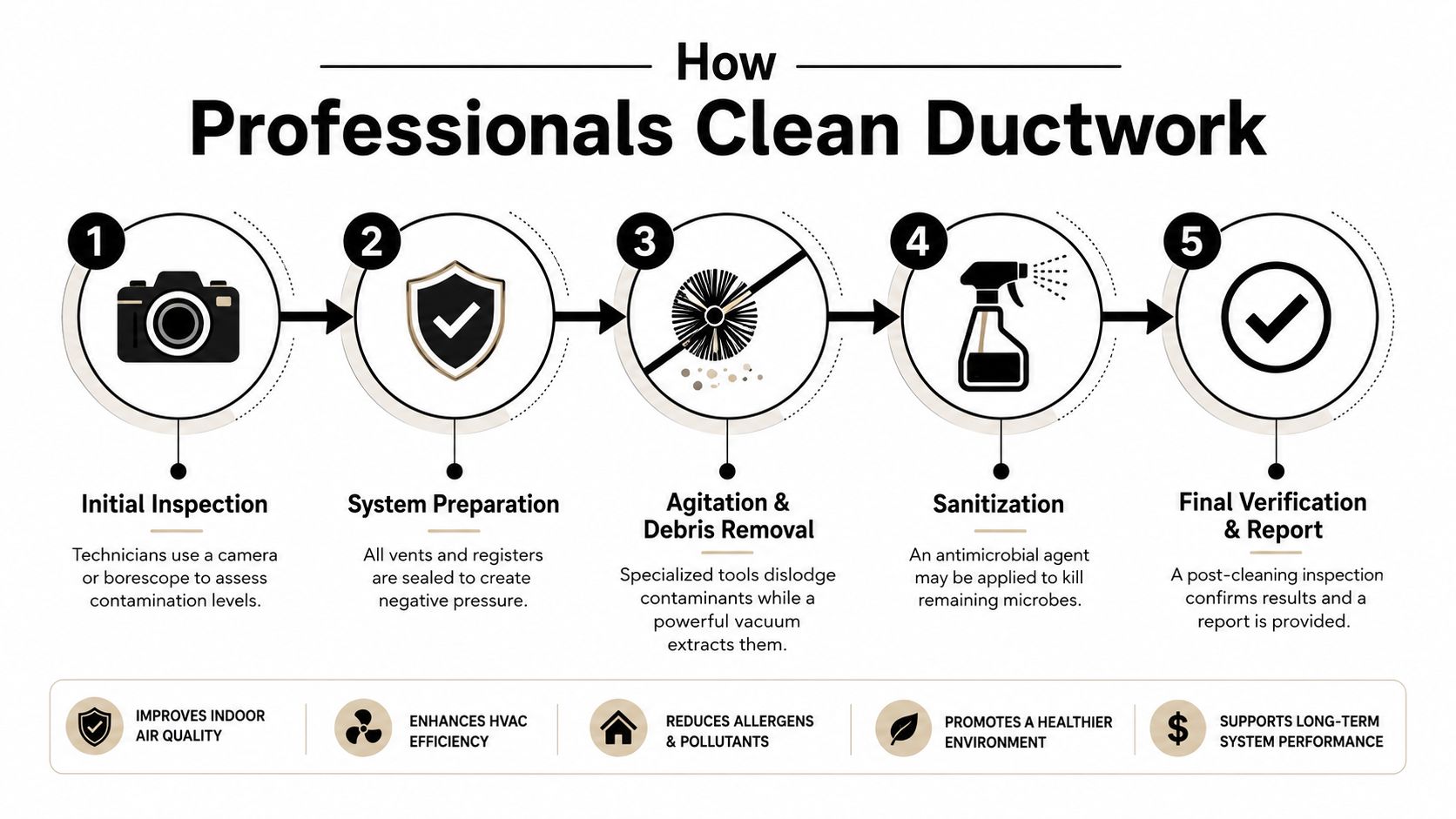
A proper job starts with inspection, not with a truck and a sales pitch. The technician should look inside the ducts with a camera or borescope, identify where the contamination is, and check whether the air handler, coil, and blower are part of the problem. If they cannot show you what is inside before they start, they are asking for blind trust.
What the actual process looks like
The work starts with containment. Registers get sealed, the system is placed under negative pressure so loosened debris stays in the collection setup, and the technician works from the source outward. Brushes or air whips are used to break contamination loose from the trunk and branch lines while a vacuum draws it into a collection chamber. That is source-removal cleaning, and it is the part that separates real duct cleaning from a quick pass with a shop vac.
The UFGS specification for institutional and government facilities requires source-removal cleaning, and if collection equipment exhausts inside the building it must use HEPA filtration with 99.97% collection efficiency at 0.3 microns or greater (UFGS 23 01 30.41). It also calls for cleanliness verification right after the work and before the HVAC system goes back into service. For a homeowner, the point is simple. A contractor should be able to show that the system is clean, not just say the work is done.
What should be cleaned besides the ducts
A real job usually includes the coil and blower, because leaving those dirty cuts the value of the cleaning right away. If the system has picked up renovation dust or moisture, those parts often hold the same contamination as the duct runs. On jobs tied to new construction or renovation, contamination prevention matters just as much as cleanup. That means keeping internal duct surfaces clean during fabrication and transport, protecting openings, and removing coverings only right before installation so the system can be checked before commissioning.
For a practical local planning reference on HVAC scope and access, this central air installation cost page helps show why tight access and extra equipment work change the job. The technical benchmark is not to clean it later if you can avoid it. Keep dust out before the system is commissioned, and you save time, money, and arguments later.
What to ask for at the end
- Before-and-after photos of the actual duct sections.
- A walk-through of any hidden contamination found.
- A written note if the coil, blower, or insulation needs separate attention.
- A clear answer on whether the job was cleaning, remediation, or both.
Cost and Frequency Benchmarks
Homeowners get misled fastest on price. A clean, straightforward condo job is one service, while a contaminated multi-zone house is another. In Greater Vancouver, the number moves with access, register count, system layout, and whether the job stays at the ducts or expands to the air handler and contamination control.
Typical cost ranges in Greater Vancouver
| Home Type | Number of Registers | Typical Cost Range (CAD) | Notes |
|---|---|---|---|
| Small condo or apartment | Low register count | Varies by access and scope | Often simpler if the system is compact and easy to access |
| Townhouse | Moderate register count | Varies by access and scope | Costs rise if the system is split, tight, or partially hidden |
| Single-family home | Higher register count | Varies by access and scope | More branches, more time, more setup |
| Post-renovation or contamination cleanup | Any | Varies widely | Containment and source removal add complexity |
| Jobs including air handler and coil | Any | Higher than duct-only work | Added labour and equipment cleaning |
For a local planning benchmark on HVAC project pricing, this central air installation cost page shows why access and scope change the number. Accessibility matters as much as house size, and sometimes more.
How often cleaning makes sense
Fixed-calendar advice is too blunt. Source-control thinking works better. Clean when there is a trigger, such as visible contamination, renovation dust, water damage, vermin, or airflow restriction. If none of that is present, routine cleaning is usually hard to justify.
The EPA guidance says to get written estimates from at least three providers and ask to see the contamination before work begins. That is a practical first step because it forces a contractor to explain the job instead of hiding behind a package price.
A cheap quote on a clean, dry system can still be too much if nothing needs doing. A higher quote on a contaminated system can be fair if it includes proper containment and verification.
Prevention during construction is far cheaper than cleaning after the fact, which is why poor protection during renovation turns into an expensive cleanup later. In practice, the trade-off is simple. Pay for control up front, or pay later for access, containment, and removal.
DIY Surface Cleaning Versus Professional Service
Homeowners can do a few things well. They can vacuum visible grilles, replace filters, keep furniture off return openings, and brush accessible boot areas. Those tasks keep the system healthier between visits, but they don't reach deep into the branches where the contamination sits.
What you can safely do yourself
- Vacuum visible registers: Use a household vacuum with a brush attachment on the grille face.
- Change filters on time: A well-fitted filter does more than many realise.
- Keep openings clear: Don't block returns with furniture, rugs, or curtains.
- Wipe accessible boot areas: Clean the metal at the room edge if you can reach it safely.
That's maintenance, not remediation. It helps the system stay tidy, but it won't remove stuck dust, mould, rodent debris, or renovation material inside the ducts.
What should stay with a pro
Anything inside the ductwork itself belongs with a contractor who uses source-removal equipment and knows how to control contamination. Coil cleaning, blower cleaning, mould work, and vermin cleanup are all outside normal DIY limits. The NIH guidance is direct here, duct cleaning should be a last resort after contaminants are identified and controlled, and it warns against biocides and sealants because even EPA-registered products may irritate the eyes, nose, and skin (NIH DOHS HVAC duct cleaning guidance).
The same guidance says no biocides are currently EPA-registered for fibreglass duct board or fibreglass-lined ducts. That matters in older commercial and multi-unit buildings, where wet or damaged fibreglass should be removed and replaced rather than sprayed over. A wet liner is a material problem, not a fragrance problem.
Avoid the leaf-blower myth: pushing air through a duct without capture can move debris deeper into the system or into the living space.
The practical line is easy to remember. If you can reach it with a vacuum and a cloth, it's probably DIY. If you need containment, negative pressure, verification, or contamination removal inside the system, it's professional work.
Hiring the Right Local Contractor
The best contractor is the one who can explain the problem plainly and show the evidence before they start. In Greater Vancouver, that means looking for proper business licensing, WorksafeBC coverage, written scope, and a contractor who answers specific questions without getting defensive. If they treat duct cleaning like a mystery service, walk away.
Questions worth asking on the phone
- What exactly is included? Ask whether the quote covers supply ducts, returns, registers, the air handler, and coil.
- What equipment do you use? A reputable crew should describe negative pressure capture and agitation tools.
- Can you show before-and-after photos? If they won't, that's a problem.
- Will I get a written estimate? You should.
- Do you do post-clean verification? Ask how they prove the system is clean enough to return to service.
Red flags show up fast. High-pressure upselling, “whole-home sanitisation” offered as a default add-on, refusal to show contamination, and no written scope are all bad signs. A contractor who pushes a cleaning package before looking inside the system is selling a story, not solving a problem.
Encano Plumbing & Drainage Ltd. is a representative example of the kind of multi-trade contractor many homeowners prefer to work with, because the same team can handle plumbing, drainage, heating, gas, and HVAC issues across Vancouver, Richmond, Burnaby, New Westminster, Delta, and Surrey. That matters when duct concerns overlap with moisture, leak detection, or broader mechanical troubleshooting, since the issue is often not isolated to one vent.
What a good job day looks like
Expect drop cloths, register removal, sealed negative-pressure setup, and a final walkthrough. The technician should explain what was found, what was cleaned, and what wasn't touched. If the job exposed a moisture problem or damaged liner, you should leave with a recommendation, not a guess.
For a quick comparison, DIY vent vacuuming handles surface dust and nothing more. Professional ductwork cleaning handles internal contamination, hidden debris, and system verification. That's the difference between tidying and restoring.
If your registers are dusty, your vents smell musty, or you've had renovation debris, water damage, or vermin in the system, get a proper inspection instead of guessing. Reach out to Encano Plumbing & Drainage Ltd. for practical help with ductwork cleaning, HVAC issues, and the moisture-related problems that often sit behind them.