
You're standing in ankle-deep shower water, or watching a kitchen sink drain more slowly every week. The first reaction is usually to grab a plunger, pour in a chemical opener, or push a wire down the drain. That can work for a small, localised blockage, but the same approach can make a building-drain problem harder to diagnose and riskier to repair.
The practical answer to how to clean drain pipe starts before the first tool. Identify where the restriction is, protect the work area, use the least aggressive method that fits the symptoms, and confirm that flow has returned through the whole affected line. A slow sink, a backed-up basement floor drain, and several gurgling fixtures aren't the same job.
Table of Contents
- Why Every Drain Job Starts With a Diagnosis
- Spotting the Clog Before You Reach for a Tool
- Tools, Materials, and a Safe Work Area
- The Step-by-Step DIY Cleaning Sequence
- When the Snake Is Not Enough, Stubborn and Recurring Clogs
- The Chemical Drain Cleaner Trap and Safer Alternatives
- Prevention Habits and When to Call Encano
Why Every Drain Job Starts With a Diagnosis
A kitchen sink that drains a little slower each week usually has a partial restriction. Grease, food residue, soap, and settled debris can narrow the passage without stopping flow completely. That doesn't mean the pipe needs high-pressure cleaning immediately, but it does mean the slowdown is useful evidence.
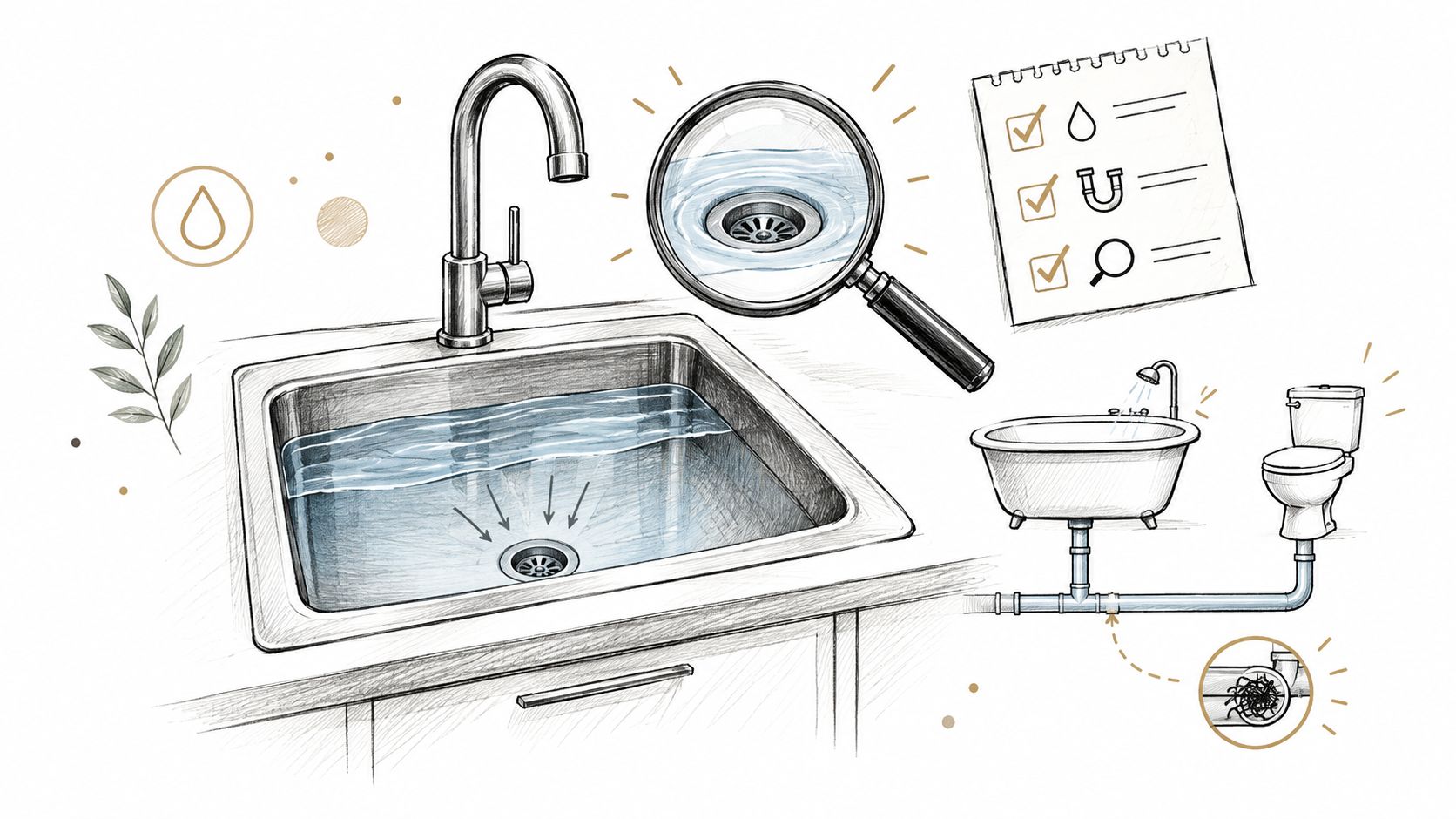
Start by asking one simple question: is one fixture affected, or are several fixtures behaving badly? A localised clog usually stays at one sink, tub, or shower. The stopper, P-trap, trap arm, or nearby branch connection may be holding the obstruction. A building-drain or shared-line issue affects more than one fixture, often with symptoms appearing at a lower drain or when another fixture is used.
The one-fixture rule
If only the kitchen sink is slow and the bathroom, laundry, and toilet are normal, begin with the sink itself. If a bathtub drains slowly while a toilet gurgles, or water rises in a tub when the washing machine empties, stop treating the problem as hair in one drain. Those signs suggest the restriction is farther downstream.
The same logic applies in a strata building. A unit-level symptom can come from a private fixture branch, while a problem affecting multiple suites may involve a shared stack, building drain, or lateral. Repeatedly clearing one fixture without recording what happens elsewhere can hide the actual location.
Practical rule: One slow fixture invites controlled DIY work. Several connected symptoms call for isolation, documentation, and a wider inspection.
California illustrates why this distinction matters over the life of a property. Its wastewater network includes approximately 100,000 miles of sewer lines and more than 900 utility providers, while many collection-system pipes and manholes are more than 50 to 60 years old and infrastructure needs exceed $65 billion, according to the California infrastructure assessment. The lesson for a homeowner or property manager isn't that every drain needs commercial equipment. It's that age, condition, and maintenance history should influence the response.
Before reaching for a tool, note which fixtures are slow, when the symptom started, whether the problem follows appliance use, and whether wastewater appears at a low point. That short diagnosis often saves more time than forcing a snake into the first drain you notice.
Spotting the Clog Before You Reach for a Tool
A useful drain check takes only a few minutes and doesn't require dismantling anything. Run a small amount of water at the affected fixture, then observe nearby fixtures. Listen to the toilet, look at the tub or floor drain, and ask whether the symptom changes when a washing machine, dishwasher, or neighbouring unit uses water.
Read the pattern, not just the puddle
A single slow bathroom sink often points to hair, soap residue, a dirty stopper, or material in the P-trap. A single shower that holds water may have hair at the strainer or in the trap. Those are reasonable places for a homeowner to begin.
The warning signs change when water travels elsewhere:
- Gurgling toilet: Air pressure is moving through a restricted drain path, especially when a nearby sink or appliance empties.
- Several slow fixtures: The restriction may be downstream of the point where those drains connect.
- Water in a tub or floor drain: Wastewater is finding a lower opening, which can indicate a building-drain or main-line problem.
- Foul odour at a floor drain: Sewer odour, standing water, or repeated wetness deserves more than a sink-level treatment.
- Backup during neighbour use: In a strata property, this can point beyond the private fixture and toward shared drainage.
Stop using water if more than one fixture is affected or if wastewater is backing up. Photograph the water level, affected fixtures, cleanout location, and any visible debris. Write down what was running when the symptom appeared. That record helps a technician distinguish an obstruction from root intrusion, a sag, a displaced joint, or a septic-system issue.
Know when DIY stops making sense
A complete blockage, recurring backup, or sewage odour isn't a good test case for repeated chemical treatments. A camera inspection becomes particularly useful when the line clears briefly and blocks again, because cleaning won't correct a collapsed, cracked, severely displaced, or root-damaged pipe.
California's public sewer-overflow reporting also shows why municipal performance doesn't answer every private drainage question. State sanitary-sewer-overflow statistics generally exclude failures inside privately owned sewer laterals, so a city network may report acceptable performance while a home, strata complex, or business has repeated backups in its own line. The California Water Boards performance information provides that important boundary.
For septic properties, don't assume a household drain symptom is only a pipe problem. A poorly maintained onsite system can become plugged and allow partially treated wastewater to surface. Keep people and pets away from sewage, and never direct wastewater into a yard, ditch, storm drain, or watercourse. British Columbia requires domestic sewage to go to an authorised destination and prohibits discharge onto land or into water sources under its Sewerage System Regulation.
Tools, Materials, and a Safe Work Area
Drain cleaning is a wet, contaminated job even when the blockage is minor. Set up the area before opening anything. Stop water use at the affected fixture, place a bucket beneath the trap, cover the cabinet or floor with old towels, and keep children and pets away.
A sensible household kit includes:
- Cup plunger: Use this on flat sink, tub, and shower drains where the rubber cup can seal.
- Flange plunger: Reserve this shape for toilets, where the extended flange fits the bowl outlet.
- Manual drain auger: A hand-crank cable in the 6 to 8 mm range is suitable for many sink and tub blockages.
- Bucket and towels: Catch trap water and protect flooring before loosening fittings.
- Nitrile gloves and safety glasses: Prevent contact with contaminated water and splashback.
- Wet/dry vacuum: Use only where the equipment and setup are suitable for wet material, and never improvise around live electrical hazards.
- Flashlight and phone camera: Record the cleanout, fittings, water level, and debris before disturbing them.
A wire hanger is too stiff and blunt for many drain paths. It can scratch fittings, snag at bends, or push material deeper. A pressure washer is also the wrong household substitute for sewer jetting. Without the correct hose, nozzle, access, pressure control, and discharge plan, it can damage a pipe or send contaminated water into the building.
Chemical drain opener deserves a separate warning. If someone has already poured a product into the drain, don't plunge, snake, or open the trap until you know what was used and have taken appropriate precautions. Ventilate the space, keep your face away from the opening, and tell any plumber exactly what product went down the line.
Canadian public-health guidance warns that household drain chemicals can cause burns, poisoning, fires, and explosions when mishandled. Products must never be mixed because harmful gases may form, and British Columbia promotes less harmful options such as baking soda, vinegar, and hot water in appropriate situations, as described in this Canadian household chemical guidance.
The Step-by-Step DIY Cleaning Sequence
A Burnaby homeowner with a slow kitchen sink doesn't need to begin with an electric machine. The sensible sequence is stop, test, inspect, escalate, and confirm.
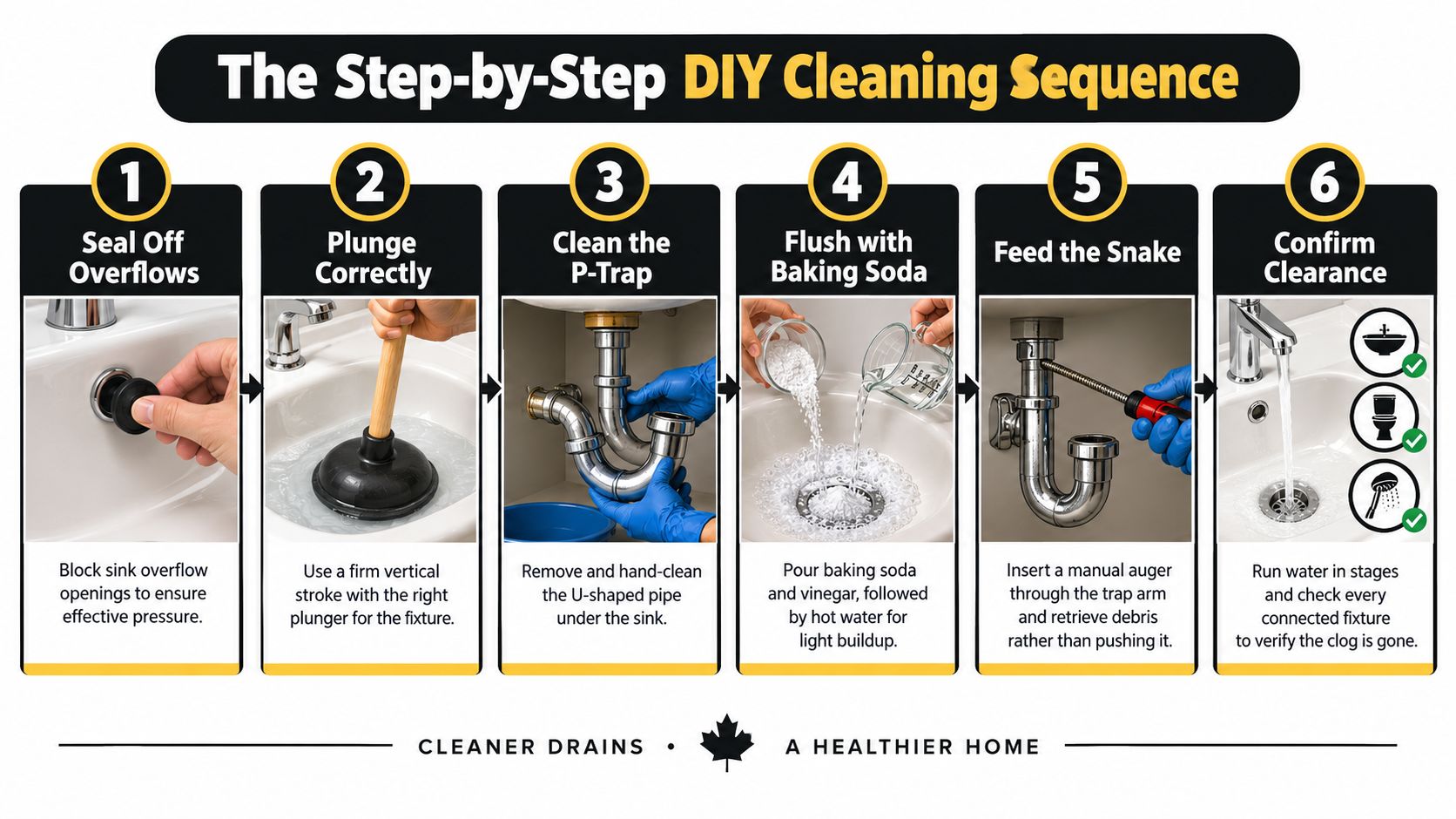
First, stop adding water and remove anything stored beneath the sink. Put a bucket under the P-trap and lay towels around the cabinet base. If the sink has an overflow opening, cover it with a wet cloth. That gives a plunger pressure somewhere useful instead of allowing air to escape through the overflow.
Start with the least disruptive method
Use a cup plunger on a sink or tub, with enough water to cover the cup. Press down gently first to remove air, then work the handle vertically while keeping the seal intact. If the water level drops and stays down, test the result gradually rather than immediately opening every tap.
If plunging doesn't change anything, remove the P-trap by loosening the slip nuts carefully. Let the water and sediment drain into the bucket, then clean the U-shaped section by hand and inspect the washers before reassembly. A trap full of grease, food, hair, or soap residue is a local blockage, and no deeper tool is needed once the trap is clean.
For a minor household clog with no standing backup, British Columbia identifies baking soda, vinegar, and hot water as alternatives to environmentally harmful drain-cleaning products. Remove standing water, put baking soda into the drain, add vinegar, allow the reaction to work briefly, and flush with hot water, following the provincial guidance on household drain products. This is suitable for light buildup near the fixture, not a substitute for mechanical clearing when several fixtures are slow.
Feed, retrieve, and verify
If the trap is clear but the drain remains restricted, feed a properly sized manual auger through the trap arm or an accessible cleanout. Turn the cable as it advances. When you meet resistance, don't ram it forward. Rotate, withdraw slightly, and work the head so it catches or breaks up the obstruction.
A useful British Columbia access-first procedure is to identify affected fixtures, stop water use, locate the nearest accessible cleanout, and open it slowly while standing to the side. Feed the cable in the direction of normal flow and retrieve the obstruction rather than pushing it downstream, as set out in the Canadian plumbing code publication.
Reassemble the trap, run water in stages, and check every connected fixture. A clear sink with a toilet that still gurgles isn't a completed job. If water rebounds, the cable meets hard resistance, or the same symptom returns, stop escalating force and arrange an inspection.
When the Snake Is Not Enough, Stubborn and Recurring Clogs
A manual snake can reopen a passage without cleaning the pipe wall. That distinction matters. A cable may punch through grease or settle debris, yet leave a narrow coating that catches new material soon afterward.
Consider a Vancouver home where the kitchen sink clears after snaking but slows again whenever the dishwasher runs. That pattern can indicate grease along the branch line, a restriction farther downstream, or a poorly draining shared connection. In another property, roots may enter through a joint. A low spot can hold sediment, while a collapsed or displaced section can repeatedly trap the cable and debris.
Match the tool to the defect
A powered drain machine is appropriate for some branch-line blockages, but it demands control and experience. The cable can twist, bind, or become difficult to retrieve. Hydro-jetting is useful for grease, sludge, and accumulated deposits because water scours the interior, but it isn't automatically safe for every older pipe.
Before jetting, confirm the pipe material, condition, diameter, access points, blockage type, and discharge destination. In a multi-unit or commercial property, isolate affected flows and work from a downstream access point toward the upstream point where possible. Withdraw the nozzle repeatedly so it cleans the wall and brings debris back instead of just driving material deeper.
A camera inspection should come before aggressive cleaning when the blockage recurs or the line's condition is unknown. It can show roots, cracks, a sag, a failed connection, or heavy buildup. A post-cleaning camera pass or full-flow test then tells you whether the line is open and whether the pipe itself is sound.
Flow restored doesn't mean the pipe is repaired. It only proves that water has found a route through.
Municipal sewer specifications also emphasise flow control, spill prevention, approvals, and directing sewage and extracted material to the specified sanitary or combined sewer. Grease, sediment, roots, and sewage must never be discharged onto a street or into a storm drain. If the obstruction prevents downstream-to-upstream cleaning, a reverse setup from the upstream maintenance hole may be needed, as described in Toronto's sewer pipe cleaning specification.
For a practical comparison of the two common approaches, see hydro-jetting versus snaking. The right choice depends on what the camera and access conditions show, not on which machine sounds more powerful.
The Chemical Drain Cleaner Trap and Safer Alternatives
Caustic drain opener is often sold as the fastest answer to a slow drain. In a Vancouver-area home, strata building, or property with a septic system, it can create a second hazard without fixing the first problem.
These products can burn skin and eyes, release dangerous fumes, and react badly when mixed with another cleaner. Residue also makes later mechanical work more dangerous because a plumber may encounter concentrated chemical liquid while opening a trap or retrieving a cable. A product that softens part of a blockage won't repair root intrusion, a collapsed pipe, a sag, or a shared-line obstruction.
Put the bottle down when
- The drain is completely blocked: Standing chemical solution has nowhere useful to go and can splash during plunging or dismantling.
- Water is already backing up: The liquid may be contaminated and chemically active.
- Several fixtures are affected: A deeper drainage problem needs diagnosis, not another dose.
- There is a chemical smell: Keep people away, ventilate safely, and disclose the product before work begins.
- A septic system is involved: Avoid actions that may interfere with the system or send inappropriate substances into the wastewater process.
- The blockage keeps returning: Recurrence points toward buildup, roots, structural damage, or poor drainage conditions.
In a Richmond strata building, a manager may be tempted to approve a chemical treatment for one unit. That choice can expose the next person working on the branch, affect shared drainage, and leave the underlying fault undocumented. Mechanical clearing, followed by a camera inspection where symptoms recur, gives the building a safer record and a more useful maintenance decision.
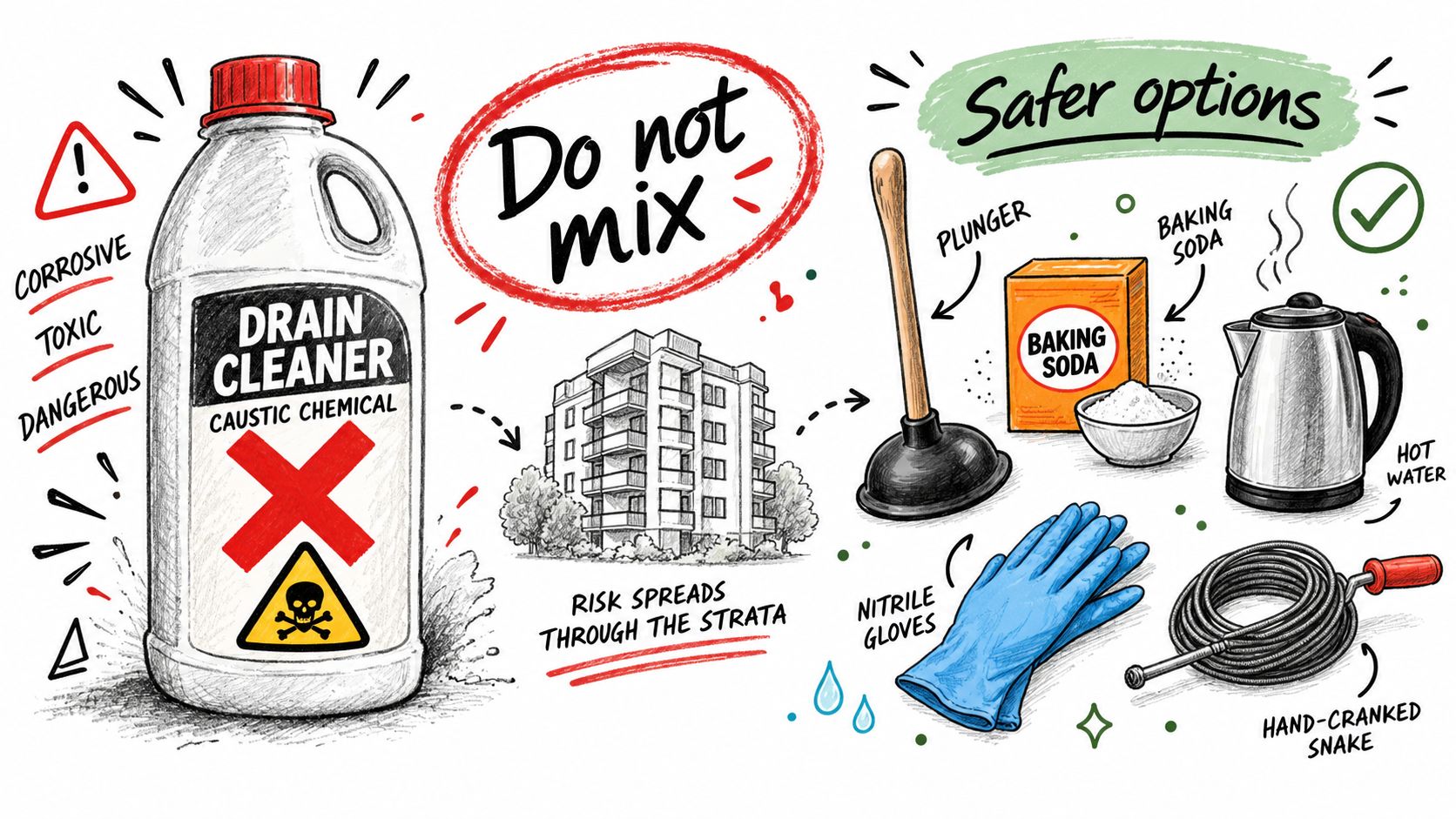
For light buildup at one fixture, use a strainer, remove visible material, clean the stopper and trap, and consider the baking soda, vinegar, and hot-water method described earlier. Don't pour grease, medicines, household products, or other waste down a drain just because water still flows. British Columbia warns that pollutants entering storm drains can reach local water bodies, so sanitary drainage and stormwater must be kept separate.
For more detail on the risks of a common caustic product, see whether Drano is bad for pipes. The safer principle is straightforward: use mechanical methods for an actual obstruction and reserve professional equipment for a line that needs deeper cleaning or diagnosis.
Prevention Habits and When to Call Encano
Prevention begins at the drain opening. Use strainers in sinks, tubs, and showers. Remove hair and food before it enters the pipe, wipe grease into a container for disposal, and don't flush wipes, paper towels, dental floss, or hygiene products. A kitchen drain that receives less grease needs less aggressive cleaning later.
For a strata or rental property, record recurring symptoms by unit and date, then compare them with stack, building-drain, and lateral work. Planned CCTV inspections can reveal whether a recurring blockage is a maintenance issue or a structural defect. Don't let each resident apply a different chemical treatment to the same shared line.
Escalate when the evidence changes
Call a licensed technician when:
- The same drain blocks again after clearing: The obstruction may be deeper or the pipe may be damaged.
- Several fixtures slow or back up: The problem is likely beyond one trap or branch.
- Sewage appears indoors: Stop water use and treat the area as a sanitation problem.
- Roots are suspected: Mechanical clearing may restore flow temporarily, but the entry point still needs assessment.
- The property uses septic drainage: Follow the system's maintenance plan and authorised discharge requirements.
- Pipe material is uncertain: High-pressure cleaning should wait until condition and suitability are confirmed.
- A backflow component needs changing: Use current code-compliant parts, not an improvised cap or valve.
The 2024 British Columbia Plumbing Code no longer lists manually operated gate valves and screw caps as acceptable drainage backflow-protection solutions because they rely on intervention that may not occur during an event. The bulletin also states that PE-RT tube isn't permitted for drainage, building sewers, or venting systems, so alterations should follow the current BC Plumbing Code bulletin.
For a clearer decision on the handoff point, use this guide to decide when to DIY and call a professional. Encano Plumbing & Drainage Ltd. provides CCTV inspection, mechanical drain cleaning, hydro-jetting, trenchless sewer work, and emergency response across Vancouver, Richmond, Burnaby, New Westminster, Delta, and Surrey.
Encano Plumbing & Drainage Ltd. can diagnose recurring or blocked drains with camera inspection, mechanical cleaning, and high-pressure jetting when the pipe condition allows it, rather than guessing at the cause. Visit Encano Plumbing & Drainage Ltd. to request scheduled service or emergency help for a drain problem that has moved beyond safe DIY cleaning.