A sink that starts draining a little slower every week rarely stays a small problem for long. In many homes and commercial buildings, drain cleaning gets put off until the water stops moving altogether, and by then you may also be dealing with odors, gurgling, or a backup where you least want one.
The good news is that not every clogged drain is an emergency. The tricky part is knowing when a simple fix is enough and when the blockage points to something deeper in the line. If you catch the signs early, you can often avoid water damage, pipe strain, and the mess that comes with a full backup.
What drain cleaning actually solves
Most people think of drain cleaning as removing a clog from a sink or tub. That is part of it, but the bigger job is restoring proper flow through the pipe so wastewater moves out the way it should.
A blockage can build from grease, soap scum, hair, food scraps, paper products, sediment, or scale inside older pipes. In kitchens, grease is one of the biggest culprits because it coats the inside of the pipe and slowly traps other debris. In bathrooms, hair and soap usually create the problem. In floor drains, laundry lines, and commercial systems, the buildup can be more complicated.
Proper cleaning is not just about poking a hole through the clog. A temporary opening may get water moving again, but leftover debris can quickly grab more material and send you right back to the same problem. That is why recurring clogs deserve a closer look.
Common signs you need drain cleaning
Some warning signs are obvious. Others are easy to ignore until the problem spreads to multiple fixtures.
If one sink is draining slowly, the issue may be local to that fixture. If several drains in the building are slow at the same time, or if flushing a toilet affects a nearby tub or shower, the blockage may be farther down the system. Gurgling sounds, bad smells, standing water, and bubbling in toilets all suggest that air and water are struggling to move through the line.
Sewage smells deserve attention right away. They can point to a blockage, a venting issue, or a sewer problem rather than a simple fixture clog. Likewise, if wastewater comes up through a floor drain or lower-level fixture, that is no longer a basic drain cleaning job. It is a strong sign that the main line may be restricted.
The DIY methods that are usually safe
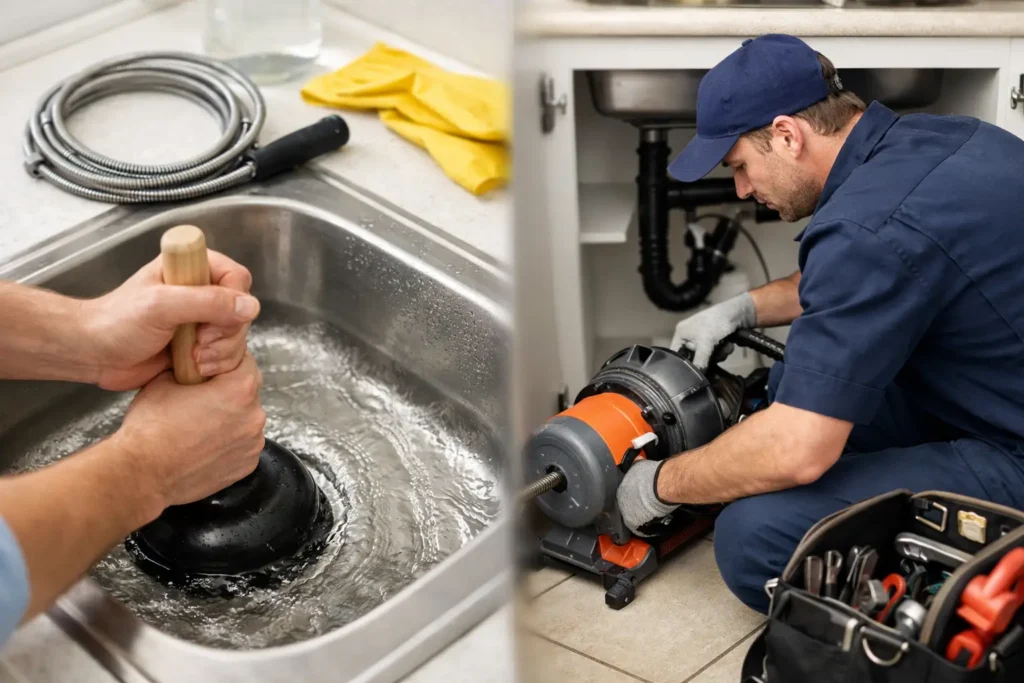
For a minor clog, a few basic steps are reasonable. A plunger can work well on sinks, tubs, and toilets when used properly. A simple drain snake or hand auger can also help remove hair or localized debris close to the opening.
Hot water can sometimes improve flow in kitchen drains when grease is beginning to build, though it will not solve a heavy blockage. Removing and cleaning the sink stopper in a bathroom often makes a surprising difference because so much hair collects there before it ever reaches the trap.
What matters is using methods that clear the drain without damaging the pipe. Gentle mechanical removal is usually safer than pouring in strong chemicals and hoping for the best.
What not to pour down your drains
Chemical drain cleaners are popular because they promise fast results, but they come with trade-offs. They may burn through part of a clog, but they can also sit in the pipe, create fumes, and cause damage over time, especially in older plumbing or certain types of drain lines.
They are also hard on anyone who has to work on the drain later. If the cleaner remains in standing water, it creates a safety risk during repairs. For homes with children, pets, or tenants, that risk is worth taking seriously.
Homemade mixtures can be hit or miss too. Baking soda and vinegar will not replace proper drain cleaning for a serious blockage. At best, they may help loosen light residue. At worst, they give a false sense that the problem is handled when buildup is still growing in the line.
When a slow drain means a bigger issue
Not all clogs are created equal. A sink that clogs once after food scraps go down the disposal is different from a drain that backs up every month. Repeated issues usually mean one of two things: the line was never fully cleaned, or there is an underlying problem such as root intrusion, pipe damage, poor slope, or heavy scale buildup.
This matters even more in older properties and multi-unit buildings. A recurring backup may affect other units, interrupt business operations, or lead to hidden leaks if pressure builds where it should not. In those cases, drain cleaning is part of diagnosis, not just maintenance.
For property managers and business owners, recurring clogs should be treated as an operating issue, not a one-time inconvenience. Waiting often turns a manageable service call into an after-hours emergency.
Professional drain cleaning vs. a quick fix
A professional approach starts with finding where the restriction is and what is causing it. Sometimes the right tool is a mechanical auger. In other cases, hydro jetting is the better option because it removes grease, sludge, and residue from the pipe walls rather than simply punching through a narrow path.
There is an it depends factor here. Hydro jetting can be highly effective, but the pipe condition matters. Fragile, damaged, or poorly connected lines may need inspection first. That is why experienced plumbers do not treat every blockage the same way.
Camera inspections can also add real value when the symptoms suggest a deeper issue. If roots, cracks, offsets, or collapsed sections are involved, repeated drain cleaning alone will not solve the problem for long. It may restore flow temporarily, but the line will continue failing until the underlying defect is addressed.
Why routine drain cleaning can save money
Many people wait until a drain is fully blocked because that feels like the moment action is necessary. The problem is that plumbing systems rarely fail without warning. Slow drainage, occasional odors, and intermittent backups are all signs that the system is under stress.
Routine drain cleaning can help prevent emergency calls, water damage, tenant complaints, and disruption to kitchens, bathrooms, or commercial washrooms. For restaurants, multi-family buildings, and high-use facilities, preventive service often costs much less than dealing with a closure, cleanup, or sewer backup.
For homeowners, regular maintenance is less about doing it on a fixed calendar and more about matching service to how the property is used. A busy family home with long hair, heavy kitchen use, and older piping may benefit from more frequent attention than a lightly used newer home.
A few habits that help keep drains clear
Good drain habits are simple, but they work best when everyone in the building follows them. Grease should never go down the kitchen sink, even with hot water. Food scraps belong in the trash or compost. In bathrooms, hair catchers can reduce buildup before it starts.
Only flush toilet paper unless the product is specifically approved by your plumbing professional and local system requirements. Many wipes marketed as flushable still contribute to blockages. For floor drains and utility sinks, keeping debris out matters just as much as what goes in.
If a drain starts acting differently, do not ignore it for weeks. Early attention is usually easier, cleaner, and less expensive.
When it is time to call for help
If you have tried a plunger or hand snake and the drain is still slow, it is time to stop forcing it. The same goes for repeated clogs, sewage odors, multiple backed-up fixtures, or water coming up where it should not. Those are signs that the problem may extend beyond one drain opening.
A reliable plumbing team can identify whether you are dealing with a simple blockage, a branch line issue, or a main sewer problem. That kind of clarity matters, especially when you need a fast solution without guessing, damaging the pipe, or paying for the wrong repair.
For homes and buildings in Vancouver and nearby areas, working with a local company that handles both emergency service and long-term drain solutions can make a stressful problem much easier to manage. Encano Plumbing & Drainage Ltd. takes that practical approach – find the cause, clear the line properly, and help prevent the same issue from coming back.
A clean drain is not something most people think about until it stops doing its job. But when water flows the way it should, the whole property works better, and that peace of mind is worth protecting.