
You're standing in a Richmond driveway on a wet winter morning, staring at a furnace that has started making a grinding noise. The house still has a separate air conditioner, the electrical panel is older, and a contractor has offered two very different solutions: replace the furnace, or convert the home to a heat pump. The cheaper quote isn't automatically the better decision, and the more efficient system isn't automatically the right fit.
For most Greater Vancouver homes, a properly designed heat pump is the better long-term direction. But if your furnace still has useful life, replacing everything immediately can waste perfectly serviceable equipment and create avoidable electrical or ductwork costs. The sensible answer depends on your existing system, cooling needs, home layout, panel capacity, and whether a staged or dual-fuel upgrade makes more financial sense.
| Home situation | My practical recommendation |
|---|---|
| Furnace and air conditioner both need replacement | Price a full heat pump conversion first |
| Working furnace with no immediate cooling problem | Consider waiting, repairing, or planning a staged upgrade |
| Working furnace and a need for new cooling | Investigate a heat pump that can handle both jobs |
| Older home with limited electrical capacity | Complete a load assessment before choosing equipment |
| Home with difficult ductwork or multi-unit restrictions | Compare ducted, ductless, and dual-fuel options |
| Property where backup heat matters | Consider a dual-fuel arrangement |
British Columbia has already moved well beyond the early-adopter stage. Provincial reporting says the number of households with heat pumps rose from an estimated 142,000 in 2017 to 254,000 in 2024, while heat pump shipments exceeded natural gas furnace shipments in 2022. The province estimated that about 13% of B.C. households used a heat pump at that time, according to the Government of British Columbia's heat pump reporting.
Table of Contents
- How Heat Pumps and Furnaces Actually Work
- Comparing Efficiency and Operating Costs
- Climate Suitability for Greater Vancouver
- Installation Requirements and Home Readiness
- Navigating Rebates and Upfront Costs
- The Case for Dual Fuel and Staged Replacement
- Making the Right Choice for Your Property
How Heat Pumps and Furnaces Actually Work
A furnace failure usually creates pressure to make a quick decision. The house is cold, the repair technician is explaining heat exchangers and ignition components, and a replacement furnace appears to be the simplest answer. That may be true, but it helps to understand what you're comparing before you sign a contract.
One system creates heat, the other moves it
A natural gas furnace burns fuel in a combustion chamber. The resulting heat passes through a heat exchanger, and a blower sends warmed air through the home's ductwork. The furnace exhaust leaves through a flue, and the appliance performs one main job, heating the home.
An electric heat pump takes a different approach. It uses a refrigeration cycle to move heat from one place to another. In winter, the outdoor unit extracts available heat from the outside air and transfers it indoors. Even air that feels cold contains usable thermal energy, although the heat pump must work harder as outdoor conditions become more demanding.
That difference matters because the heat pump isn't making all its heat through electrical resistance. It uses electricity to operate the compressor, fans, and controls, then moves ambient heat into the home.
Practical rule: Don't judge a heat pump by the temperature you feel outside. Judge it by the equipment's tested cold-weather capacity, the home's heat loss, and the quality of the installation.
The same equipment can cool your home
A heat pump also includes a reversing valve. In summer, the valve changes the direction of refrigerant flow so the system removes heat from the house and releases it outdoors. A correctly selected central heat pump can therefore provide both heating and cooling, rather than requiring a separate furnace and air conditioner.
That makes the comparison more useful when you consider the whole mechanical system. A furnace is not a complete cooling solution. If the existing air conditioner is also near replacement, a heat pump may replace two ageing appliances through one coordinated project.
A practical example is a Burnaby home with a working furnace but an air conditioner that no longer cools reliably. Replacing only the furnace preserves the old cooling equipment and postpones the same disruption. A heat pump conversion may cost more to install, but it addresses both functions and gives the homeowner one matched system to maintain.
The choice comes down to heat pump vs furnace. It's a choice between generating heat through combustion and transferring heat through a refrigeration cycle, then deciding which approach fits the building and the owner's timing.
Comparing Efficiency and Operating Costs
A working furnace creates a timing decision for a Greater Vancouver homeowner. Replacing it today may secure dependable heat, while switching to a heat pump may reduce gas use and address ageing cooling equipment in the same project. The right comparison is the cost of delivered heat over the system's useful life, not the equipment price alone.
Efficiency matters, but it does not set the bill by itself. Your operating cost depends on equipment performance, the home's heat loss, heating demand, and the relationship between electricity and natural gas prices.
Canada's residential heating mix provides useful context. In 2023, 46% of Canadian households used a forced-air furnace as their primary heating system, while heat pumps accounted for 8% and mini-split heat pumps for another 1%. In British Columbia, forced-air furnaces served 39% of households, while electric baseboard heaters served 30%. Canada's heat pump stock also grew from 238,000 units in 2000 to 1,335,000 in 2023, and heat pumps represented 7.9% of residential heating systems in 2023, up from 1.9% in 2000, according to Statistics Canada's comparison of household heating systems. The technology is gaining ground, but the property still determines whether the switch makes financial sense.
Compare delivered heat, not appliance labels
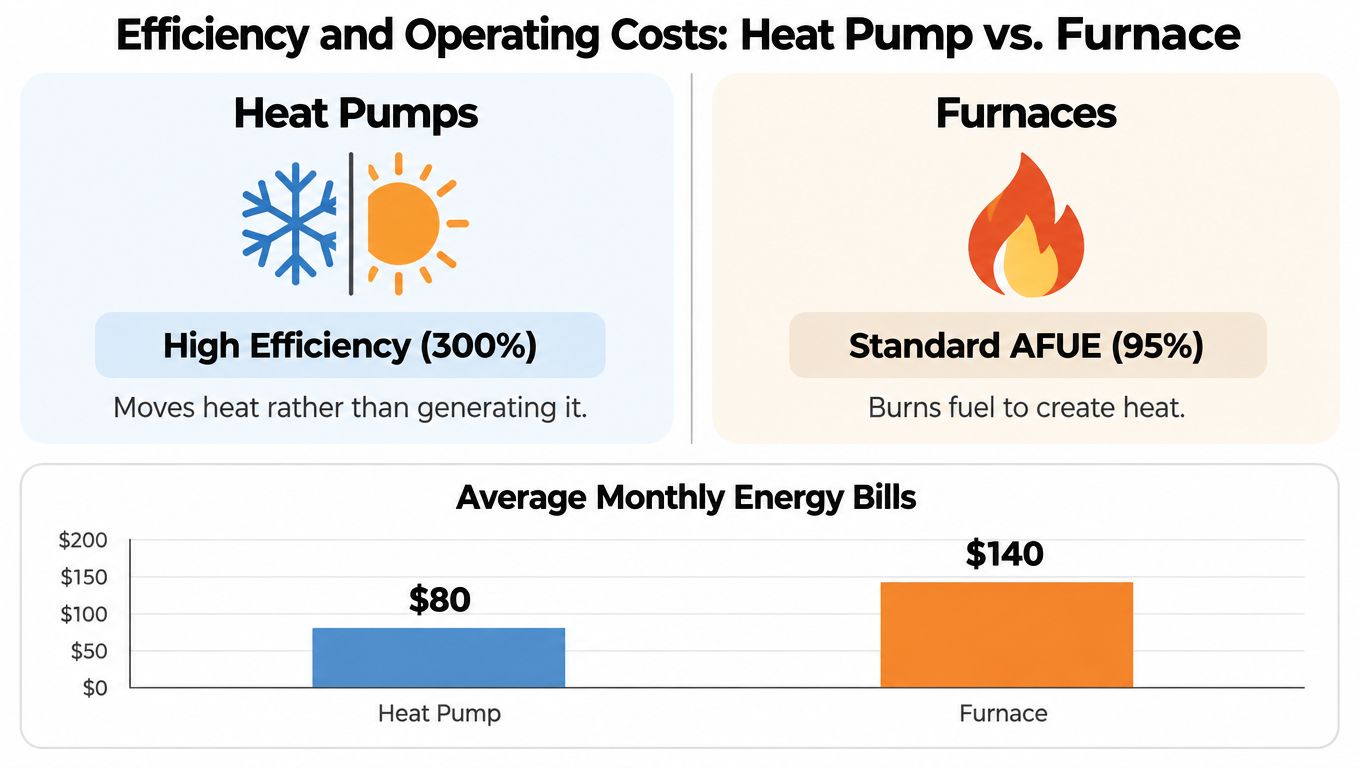
A furnace's efficiency is commonly expressed through AFUE, which measures useful heat delivered against fuel consumed over the heating season. A heat pump's performance is commonly expressed through COP, which compares heat delivered with electricity consumed at a specific outdoor temperature. Those ratings describe different technologies, so a direct comparison requires the home's heating load and local utility rates.
Field monitoring of 10 California retrofit homes found measured heating COP results generally landed between 2 and 3 at outdoor temperatures of 30°F to 60°F, while cooling COP results ranged from 2 to 5. Greenhouse-gas emissions were 44% to 98% lower than the baseline natural-gas systems, although five of eight homes recorded utility bill increases ranging from 3% to 27% as winter electricity use rose. The ACEEE field evaluation of residential heat pumps shows the practical trade-off: higher efficiency can change the size and timing of household energy bills without guaranteeing a lower total bill.
The Vancouver bill can look different
Greater Vancouver homeowners often have a favourable electricity environment, but a generic contractor estimate is not enough. Ask for a comparison based on your bills, the home's heat-loss calculation, and the expected operating sequence. A heat pump reduces gas consumption while increasing electricity consumption, shifting costs between utility accounts.
The first heating season can expose installation problems. Poor sizing, leaky ducts, inadequate insulation, defrost faults, or a thermostat that calls for supplemental resistance heat can all raise electricity use. Have the contractor document the heating-load calculation, backup-heat settings, and control sequence.
If the furnace still works, staged replacement can be the practical answer. Keep the furnace as backup while installing a heat pump, then replace the furnace when repair costs or reliability justify it. Review new furnace costs and replacement decisions before comparing quotes. A dual-fuel setup can spread the investment while giving the home two heating options.
Climate Suitability for Greater Vancouver
Greater Vancouver is not the Prairies, and it shouldn't be treated like them. Richmond, Vancouver, Burnaby, New Westminster, and nearby municipalities experience damp winters with long stretches of moderate heating demand rather than the sustained severe cold found in northern and inland regions.
That climate generally favours air-source heat pumps. A modern cold-climate unit can continue extracting heat from outdoor air when the temperature feels unpleasant, although its capacity and efficiency change as conditions fall. The contractor still needs to select equipment for the home's design heat loss rather than choosing a model based only on cooling capacity.
Mild does not mean effortless
The Lower Mainland's damp weather creates its own installation demands. Outdoor coils can collect moisture and frost, and the system may enter defrost mode to maintain performance. The outdoor unit needs adequate clearance, a stable base, sensible condensate management, and protection from falling debris without being boxed into a tight enclosure.
Variable-speed compressors are particularly useful in this setting because they can adjust output instead of operating only at full capacity. That can support steadier indoor temperatures and reduce the abrupt cycling common with poorly matched equipment. It doesn't eliminate the need for correct design. An oversized or badly commissioned system can still deliver disappointing comfort.
A heat pump doesn't need to behave like a furnace to keep you comfortable. It may deliver warmer air more gradually and run for longer periods. That steady operation is normal, not a sign that the system is failing.
Cooling is another reason the regional climate matters. Vancouver homes have historically treated air conditioning as optional, but warmer summer conditions have made reliable cooling more valuable. A heat pump can provide cooling through the same distribution system, while also helping manage indoor moisture during cooling operation.
What local homeowners should ask
Ask for the equipment's low-temperature performance data, not just its marketing name. Confirm how the system will respond during defrost, what backup heat is available, and whether the installer has calculated both heating and cooling loads.
A practical example is a two-storey Richmond home with central ducts and no current air conditioner. The mild climate makes a ducted heat pump a strong candidate, but the result still depends on whether the ducts can move the required airflow and whether the electrical service can support the selected equipment. The climate makes the technology practical. It doesn't remove the building assessment.
Installation Requirements and Home Readiness
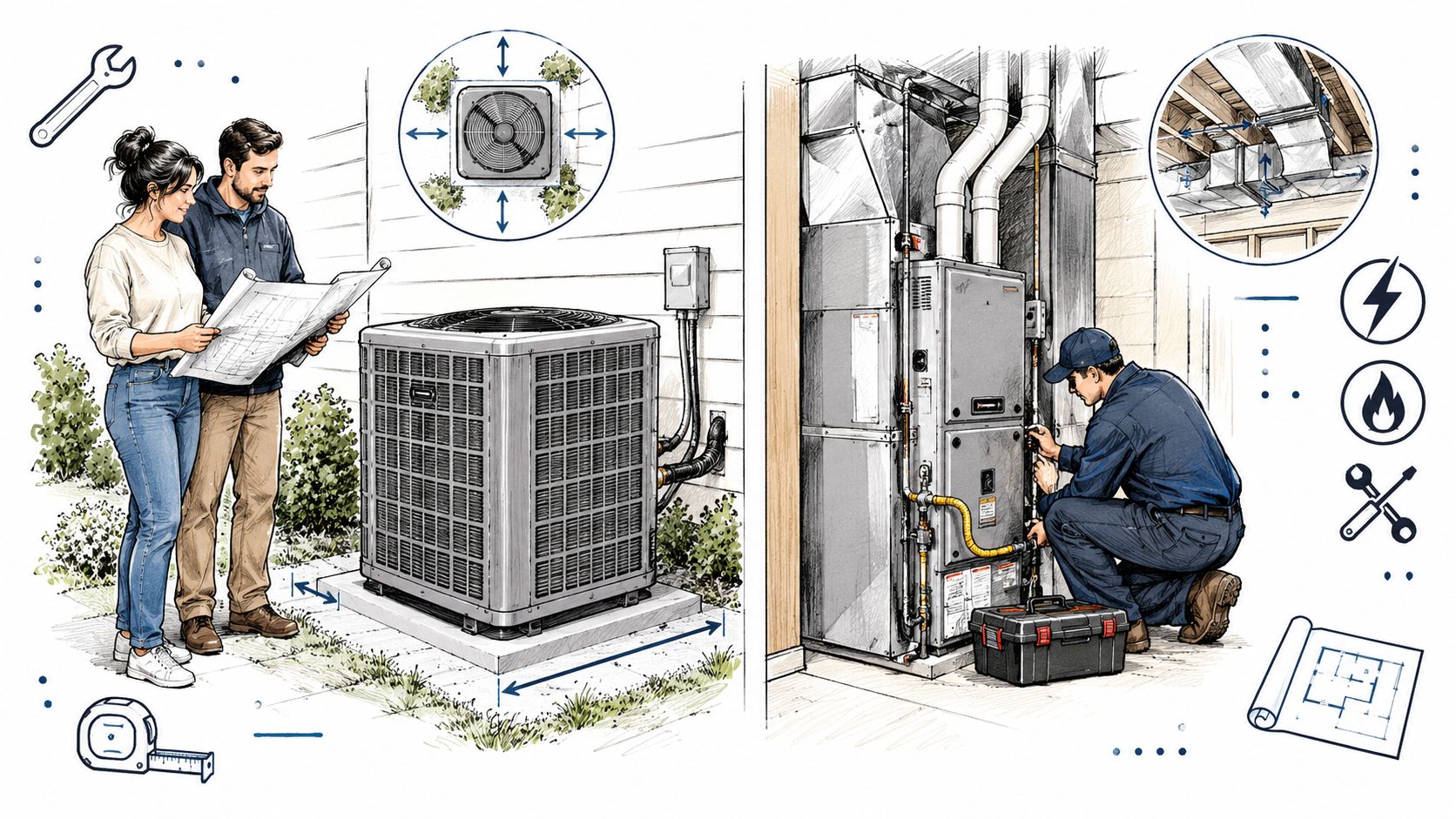
A furnace replacement can sometimes use the existing gas line, venting, ductwork, thermostat wiring, and electrical service. A heat pump retrofit may use some of those components, but it also adds an outdoor unit, refrigerant lines, condensate considerations, electrical demand, and controls that coordinate heating and cooling.
The installation should begin with an assessment, not a product brochure.
Start with the building
First, inspect the ductwork. Heat pumps may deliver air at a different temperature and may run for longer periods than a furnace. Undersized ducts, restrictive filters, closed dampers, disconnected runs, and poorly sealed plenums can create noise and weak airflow.
Next, check the electrical service and panel. Older Vancouver-area houses may need electrical work before a central heat pump can be installed, but you shouldn't assume a panel upgrade is required or unnecessary without a load calculation. The electrician and HVAC contractor need to assess the existing service, the selected equipment, backup heat, and other major loads.
Then examine the outdoor location. The unit needs service access, airflow, drainage, and a mounting arrangement that won't transmit excessive vibration into the building. In a strata property, the outdoor location may also require approval before work begins.
Plan the project, not just the appliance
A complete retrofit can involve HVAC work, electrical work, gas disconnection or modification, permits, refrigerant installation, thermostat commissioning, and follow-up balancing. Get those responsibilities in writing. Ask who handles permit applications, who completes electrical changes, and who tests the finished airflow and controls.
This heat pump installation guide is useful background before requesting quotes, especially if you're comparing a simple furnace swap with a whole-home electrification project.
A professional load calculation matters more than a rule based on floor area. The installer should consider insulation, windows, orientation, air leakage, ceiling height, occupancy patterns, and the home's existing heat distribution. Equipment selected only by the old furnace size can be badly matched.
Here is the practical sequence I recommend:
- Assess the envelope: Check insulation, drafts, windows, and obvious air-sealing problems.
- Test distribution: Inspect duct sizing, static pressure, airflow, filters, and registers.
- Review electrical capacity: Confirm whether the service and panel can support the proposed system and backup strategy.
- Choose the operating plan: Decide between full heat pump, dual fuel, or a staged upgrade.
- Commission the system: Verify airflow, refrigerant operation, thermostat logic, defrost behaviour, and condensate drainage.
For a visual explanation of the installation process, watch the following HVAC overview:
Navigating Rebates and Upfront Costs
Heat pumps usually require more planning at the beginning than a like-for-like furnace replacement. That doesn't mean the heat pump will be more expensive over its useful life, but it does mean the quote needs to show the complete project, including electrical work, duct modifications, controls, permits, and any eligible incentive.
Don't treat a rebate as a guaranteed discount until you confirm the program's current rules. Programs can change, funding can be limited, eligible equipment can differ, and some applications require approval before the work starts.
Check the current program rules
British Columbia homeowners should investigate current federal and provincial initiatives, including any active Canada Greener Homes programs, and check utility offerings such as BC Hydro incentives. Confirm the following before signing:
- Eligibility: Check whether the property type, household, and existing heating system qualify.
- Equipment requirements: Verify that the exact model and configuration meet the program's criteria.
- Pre-approval: Ask whether an application or energy assessment must be completed before installation.
- Required documentation: Keep invoices, model numbers, permits, commissioning records, and proof of payment.
- Stacking rules: Confirm whether federal, provincial, municipal, and utility incentives can be combined.
The contractor should provide model numbers and a clear scope of work. A vague promise that “rebates may apply” isn't enough for a major mechanical upgrade.
California's rebate structure shows why income and property type can materially affect incentive design. The state's 2024 statewide rebate program offered income-qualified single-family homeowners up to $8,000 for a qualifying heat pump HVAC system, while households at 80% to 150% of area median income could receive up to $4,000. Multifamily properties could receive up to $14,000 per unit for heat pumps and related electrification measures, according to the California Energy Commission residential energy rebate information. Those figures are California examples, not a promise of availability in British Columbia.
Compare net cost, not sticker price
A proper comparison should place the furnace replacement, heat pump conversion, and dual-fuel option in separate columns. Include equipment, installation, electrical work, duct changes, cooling equipment, permits, maintenance assumptions, and confirmed incentives.
For a strata council, the process is more involved. The decision may require common-property approval, electrical planning for multiple suites, outdoor-unit placement, noise review, and a consistent maintenance plan. A lower-cost individual installation may not be the right solution for the building.
The most useful quote is the one that explains what happens after incentives end, electricity rates change, or the existing furnace fails before the planned upgrade. That is the financial reality a brochure won't show.
The Case for Dual Fuel and Staged Replacement
Replacing a working furnace just because heat pumps are more efficient isn't always responsible. If the furnace has useful life left, a full conversion can bring forward costs that the house doesn't yet require. The better answer may be to add cooling now, plan for electrification later, or install a dual-fuel system that uses both technologies.
A dual-fuel arrangement pairs an electric heat pump with a gas furnace. The heat pump handles suitable operating conditions, while the furnace remains available when the control system determines that gas heat is the better backup. The changeover point should be designed around equipment performance, comfort, utility pricing, and the homeowner's priorities.
When staged replacement makes sense
Staged replacement is strongest in homes where the furnace is reliable but the air conditioner needs attention. Rather than buying another cooling-only unit, the homeowner can investigate a heat pump for cooling and heating, then decide how the furnace participates.
It can also suit a property with electrical constraints. The homeowner may first improve insulation, repair duct leaks, complete electrical planning, or upgrade the panel, then replace the furnace when it reaches the end of its serviceable life. That spreads disruption across planned projects rather than forcing every change during an emergency.
A practical example is a Vancouver homeowner with a furnace that still operates properly but an ageing air conditioner. I wouldn't automatically recommend tearing out the furnace. I'd compare a heat pump that can work alongside it, a full heat pump replacement, and a straightforward cooling repair. The right choice depends on the furnace's condition, the home's electrical service, and whether the homeowner wants to reduce gas use immediately.
Don't assume backup means defeat
Some homeowners view the furnace as evidence that the heat pump has failed. That's the wrong way to think about dual fuel. The furnace provides resilience and gives the control system another heating source. The heat pump can still provide the majority of the home's heating and all of its cooling, while the furnace remains available for specific conditions.
California's planning data highlights why staged pathways matter. State reporting indicated about 1.9 million heat pump units had been installed by the end of 2024, compared with an estimated 23 million units needed to decarbonize space and water heating, according to the California Energy Commission filing on heat pump adoption and planning. That gap doesn't prove every home should use dual fuel, but it does show why gradual replacement strategies deserve serious attention.
Read this overview of dual-fuel heat pump systems before deciding that the only choices are “keep the furnace” or “remove the furnace.” In Greater Vancouver, a controlled transition can be more practical than a rushed all-at-once conversion.
Making the Right Choice for Your Property
My recommendation for Greater Vancouver homeowners is straightforward: choose a full heat pump when both heating and cooling equipment are due, choose staged or dual fuel when the furnace still has useful life, and choose a furnace replacement only when the property constraints or budget clearly justify it.
A heat pump is the first option I'd investigate for a home that needs a new furnace and air conditioner together. It is also compelling for homes currently using electric resistance heat, provided the distribution system and electrical service can support the conversion. California Energy Commission guidance describes replacing both a conventional central air conditioner and furnace with an electric heat pump to convert the heating side from gas to electricity, while also stating that electric heat pump HVAC systems are significantly more efficient and produce fewer greenhouse-gas emissions than conventional furnace systems. The California homeowner energy resource provides that technical context, although local B.C. conditions and programs must be assessed separately.
Use the property profile, not a sales slogan
| Home profile | Current equipment status | Recommended strategy |
|---|---|---|
| Detached home with central ducts | Furnace and air conditioner both near replacement | Price a properly sized ducted heat pump first |
| Older home with a reliable furnace | Cooling is inadequate or failing | Compare heat pump cooling, dual fuel, and staged replacement |
| Home with limited panel capacity | Furnace works and electrical upgrades are unresolved | Complete load assessment and plan upgrades before choosing |
| Home using electric baseboards | No central ducted system | Investigate a suitable ductless or ducted heat pump design |
| Strata unit or multi-unit building | Outdoor placement and electrical work require approval | Obtain building approval and coordinate a property-wide plan |
| Landlord focused on immediate low capital cost | Furnace has failed and cooling is not required | Compare a high-efficiency furnace with the full future cost of conversion |
| New residential construction | Project is being designed now | Plan around current code, electrical readiness, and heat pump requirements |
The California Energy Commission says its 2025 Energy Code applies to permit applications submitted on or after January 1, 2026, and expands heat pump use in newly constructed residential buildings while strengthening electric-readiness requirements. That's a California code example, not a Greater Vancouver rule, but it demonstrates why builders and property managers should check the applicable local code before designing a new project. The 2025 California Building Energy Efficiency Standards explain that jurisdiction-specific context.
If your furnace is making dangerous combustion-related noises, producing unusual odours, or failing during cold weather, arrange a professional inspection rather than delaying for a perfect long-term plan. If it still runs reliably, get an assessment before replacing it. Ask for three scenarios: furnace replacement, full heat pump conversion, and dual fuel or staged replacement.
That comparison will tell you more than a generic “heat pumps are cheaper” or “furnaces are more reliable” claim. The best system is the one that matches the home's heat loss, ductwork, electrical service, cooling needs, maintenance plan, and realistic replacement timeline.
Encano Plumbing & Drainage Ltd. provides furnace repair, heat pump installation support, HVAC assessments, and coordinated heating and gas service for homes and buildings across Greater Vancouver. Visit Encano Plumbing & Drainage Ltd. to request a practical assessment and compare a furnace replacement, heat pump conversion, or staged upgrade.