

You've got a dripping shutoff valve in the basement, a water heater that's started making noises it didn't make last winter, and a strata notice about old risers in the wall. In the Lower Mainland, those problems rarely stay separate for long. A weak pipe, a tired heater, and an aging drain stack usually sit inside the same hidden system, and the bill comes due when one part starts failing faster than the rest.
Heating and plumbing also carry the history of the home. Canada didn't reach a modern indoor-plumbing standard overnight, and the same slow rollout of heating and water systems still shows up in older houses, strata buildings, and municipal spaces across British Columbia. The practical job today is not just fixing the leak or replacing the boiler, it's understanding how the whole network inside the walls, floors, and mechanical room works together.
Table of Contents
- Why Heating and Plumbing Belong in the Same Conversation
- The Core Components Every Homeowner Should Recognise
- Equipment Choices That Shape Long-Term Performance
- Warning Signs You Should Never Ignore
- What to Do When Something Goes Wrong at the Worst Time
- Realistic Costs and Timelines in 2026
- How to Choose a Reliable Local Contractor
- Putting It All Together for the Year Ahead
Why Heating and Plumbing Belong in the Same Conversation
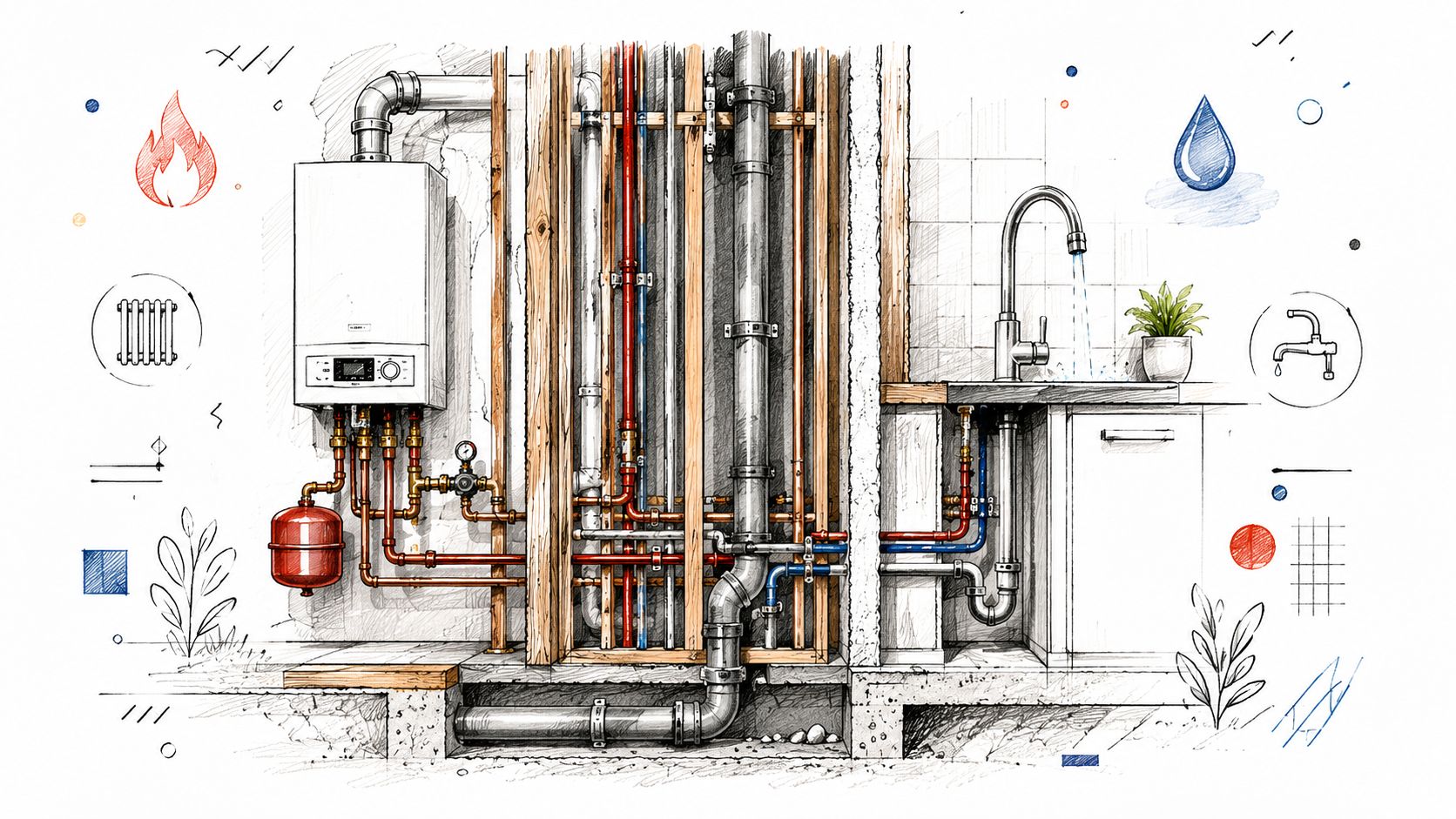
A Vancouver bungalow can feel fine at bedtime and then turn ugly by sunrise. A split pipe under the kitchen, a dead shutoff, and a tired hot-water tank can turn one cold morning into a wet floor, no shower, and a heater that can't keep up because the system's pressure or supply has been disturbed. That's heating and plumbing, they share water, controls, fuel, and often the same access routes.
One failure can pull on the rest
Older Lower Mainland homes often hide a mix of copper, legacy steel, drain runs, and patched-in equipment. Canadian housing history shows how slowly indoor plumbing became standard, with nearly half of homes still lacking hot piped water, a bathtub or shower, or a flush toilet in 1940, and over a third still lacking a flush toilet then, while over 25% of houses in a broader North American dataset still didn't have complete plumbing facilities by 1960, as recorded in this historical overview. That kind of slow transition explains why so many local homes still carry old components that don't fail neatly one at a time.
Heating followed a similar path. The same historical record shows coal and wood were still dominant heating sources in 1940, while by 2000 their share had fallen below 5% in the same source. The takeaway for homeowners is simple, older infrastructure often needs to be judged as a system, not as separate isolated parts.
Practical rule: If you're pricing a boiler, a water heater, or a pipe repair, check the other two at the same time. The cheapest quote on paper can become the most expensive job once access, venting, drainage, or electrical capacity gets added back in.
A practical example, a Richmond strata suite gets a leak under the tub and the fix isn't just the valve. The plumber also finds brittle supply lines, poor shutoff access, and a water heater that's overdue for replacement. That single call becomes a coordinated repair instead of three emergency visits.
The Core Components Every Homeowner Should Recognise
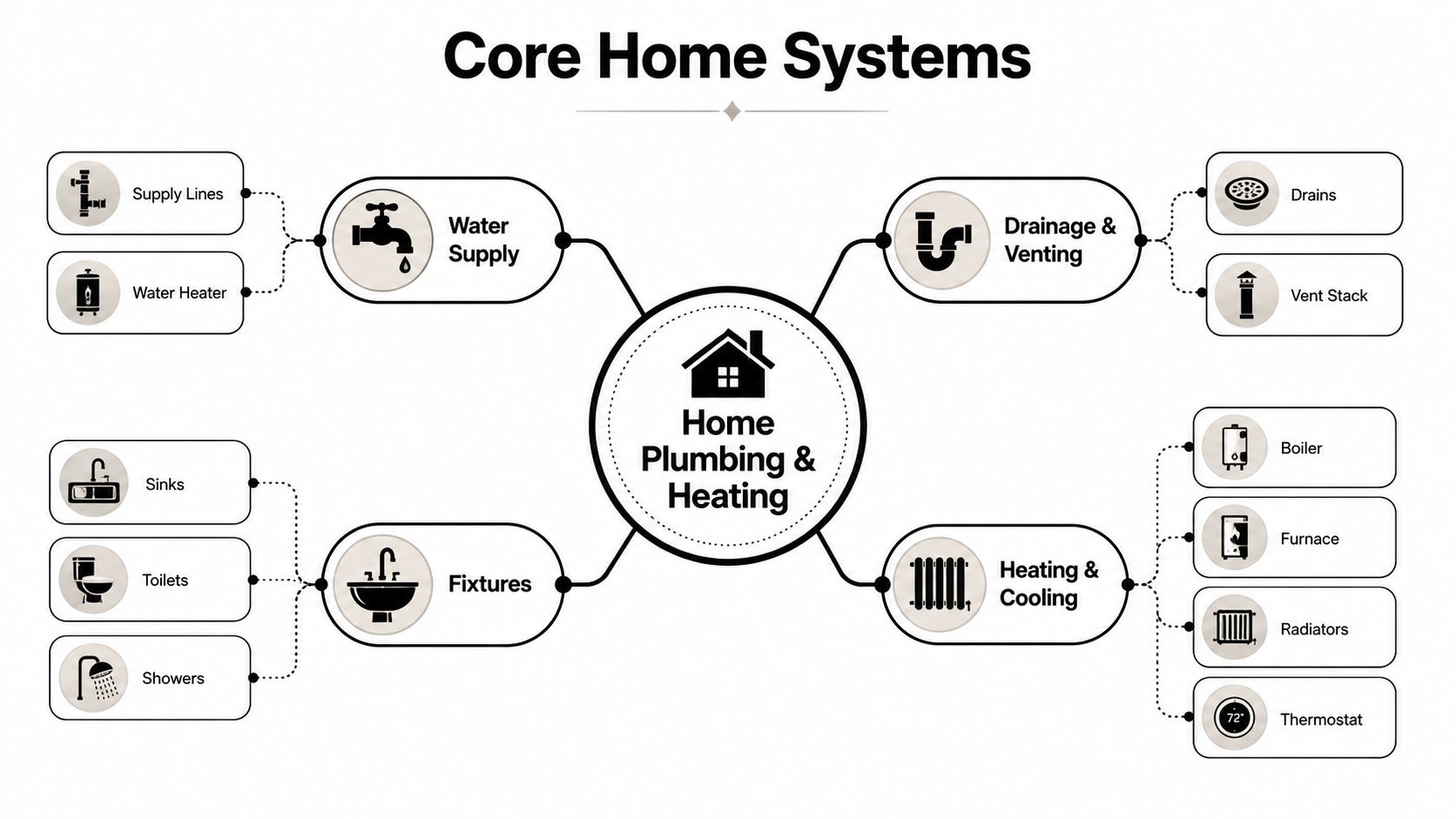
View the house as a living body where supply lines are arteries, drains and vents clear waste and balance pressure, and the heater or boiler keeps the space comfortable. If you can point to each part in the basement or mechanical room, you'll be better positioned than many owners who cannot identify the key components before a contractor starts speaking quickly.
What each part actually does
The water supply brings potable water into the home through main lines and branch lines. From there, the water heater raises the temperature, then fixtures draw from that heated supply as needed. If the hot side is weak, the problem might be the heater, a recirculation issue, a mixing valve, or scaling and sediment inside the tank.
The drainage and venting side matters just as much. Drains move wastewater out, while vents keep air moving so traps do not get sucked dry and fixtures do not gurgle or empty slowly. A slow sink is more than an annoyance, it can be the first sign of a partial blockage, a bad vent, or a stack problem shared with neighbours in a multi-unit building.
Heating equipment is not one thing
A furnace pushes warm air through ducts. A boiler heats water for radiators or hydronic baseboard systems. A thermostat tells the equipment when to start and stop, and a poorly placed thermostat can make a whole floor feel too hot or too cold even when the equipment itself is working properly.
The old and new systems behave differently. Gas systems burn fuel on site. Electric systems turn current into heat. Hydronic systems move hot water instead of air, which often gives a different comfort feel and a different maintenance pattern. The details matter because the wrong assumption at the start leads to the wrong repair.
A good walk-through starts at the shutoff valve, then moves to the heater, then to the drains and vents. If the client cannot trace those three points, the diagnosis usually drifts.
For a Burnaby homeowner, knowing where the main shutoff is, where the water heater drains, and where the thermostat reads the house gives a contractor better information in the first two minutes than many people provide in the first two days. If you want a broader overview of how the pieces fit together, this heating and cooling reference is a useful place to start.
Equipment Choices That Shape Long-Term Performance
The equipment in the basement sets the tone for the next decade. In Greater Vancouver, the choice is not just brand versus brand, it is tank versus tankless, boiler versus forced air, and older piping versus modern PEX. Each option changes space use, repair access, and how the home behaves when several fixtures run at once.
The water heater decision is about demand, not just size
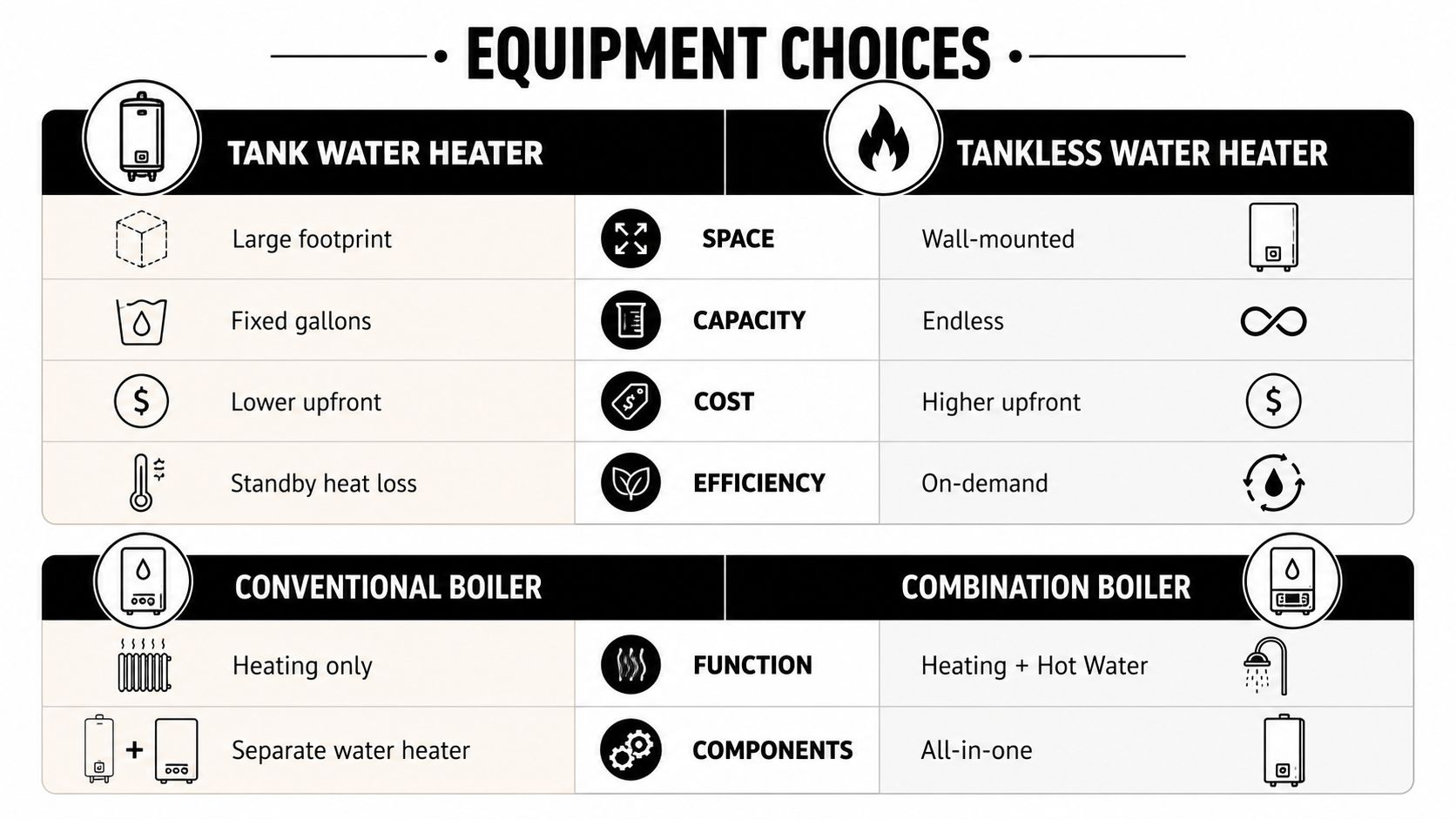
Tank heaters are easy to read. They store heated water, which gives you a buffer when someone showers and another person runs the dishwasher. Tankless units save space and heat on demand, but they only work well when the rest of the system is set up correctly, especially gas supply, electrical support, venting, and flow expectations.
The replacement question is often not, “What is more modern?” It is, “How does the household use hot water?” ASPE-style hot-water design guidance focuses on fixture-unit load, first-hour delivery, recovery rate, and storage volume, because a system that looks efficient on a brochure can still disappoint when multiple fixtures run together. In multifamily and mixed-use buildings, that matters far more than average daily use.
Real-world test: If two showers, a laundry cycle, and a kitchen tap can overlap in your building, size for that overlap, not for the calmest hour of the day.
Boilers and furnaces create a similar fork in the road. A conventional boiler is built for heating, while a combination boiler can handle space heat and domestic hot water in one cabinet. That saves room, but it also concentrates more responsibility in one unit. Forced-air furnaces, on the other hand, work best when ductwork is sound and airflow is balanced.
How each component functions
Old copper can still perform well, but it may come with hidden corrosion, joint issues, or hard-to-access repairs. Galvanized pipe is often a bigger liability because internal scaling narrows flow over time. PEX gives more flexibility and often less labour in retrofits, but it still needs careful routing, support, and protection from heat or damage.
The code and energy picture is changing too. California's 2025 Title 24, Part 6 update pushes low-emitting, heat-pump-forward design, and the practical point carries north in a useful way, replacement planning now has to consider electrification readiness, electrical panel headroom, condensate routing, and distribution losses before a swap is approved. For some buildings, that means a heat-pump water heater makes sense. For others, the existing system, strata constraints, or electrical capacity make a phased upgrade more sensible. The Encano Plumbing & Drainage Ltd. heating and cooling page is one place local owners often look when they want to compare that kind of work with plumbing-side changes.
Warning Signs You Should Never Ignore
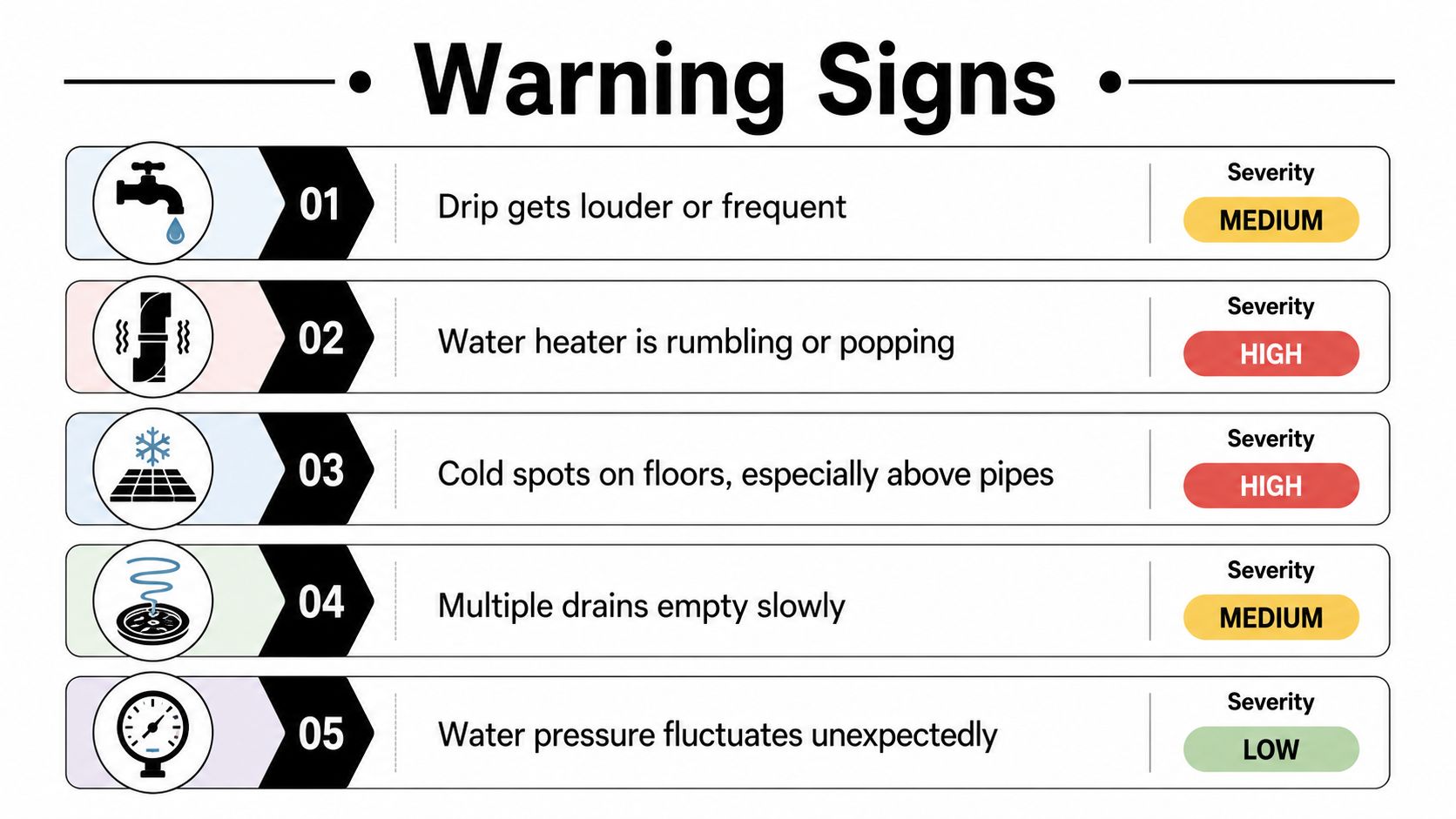
Small symptoms usually show up before the failure does. A drip that gets louder, a water heater that starts rumbling, a floor that feels cold in one patch, or drains that slow down together are all signs that the system is changing. On a single-family house, that can mean a local fix. In a strata building, it can mean a shared stack, vent, or circulation issue that needs to be traced quickly.
Seasonal checks catch the quiet failures
In winter, listen for changes. Rattles in the mechanical room, cold rooms that used to hold temperature, or pressure swings at the tap often point to wear that's already underway. A quick check of visible piping, shutoffs, and radiator or baseboard temperatures can tell you whether the issue is local or systemic.
Spring is the right time for a closer look at drains and visible leaks. Summer is when you should check the water heater, especially if it hasn't been flushed or inspected in a while. Fall is the season to make sure heating controls, thermostats, and any exposed piping are ready before the first cold snap arrives.
The maintenance habit matters more than the calendar date. Annual tank flushing, pressure checks, and a once-over of accessible pipe runs can catch sediment, weak valves, and small leaks before they become drywall, flooring, or cabinet damage. The hidden leak guide is useful if you've got unexplained moisture but can't see the source.
Read the signs in context
A single slow drain can be local. Multiple slow drains in one unit or several units usually isn't. A fluctuating pressure reading might be a minor pressure-reducing valve issue, or it might point to a larger supply problem. A heater that pops every now and then may be tolerable for a while, but rumbling and persistent noise deserve attention.
If the symptom got louder this month, it's already past the “wait and see” stage.
For strata managers, the best move is a seasonal walk-through with a paper trail. For homeowners, a simple photo log of leaks, noises, and temperature changes can help a technician avoid guesswork and shorten the visit.
What to Do When Something Goes Wrong at the Worst Time
At 12:40 a.m. in a New Westminster triplex, a tenant hears water moving where it shouldn't. The ceiling stain grows, the slab line has let go, and the first instinct is to panic. The right response is calmer and faster than many expect, shut the main water off, isolate the water heater if it's tied into the problem, keep people away from wet electrical panels, and call a 24/7 crew.
A few minutes matter more than a perfect diagnosis. If the water is coming from a hot line, closing the heater isolation valve reduces further feed into the break. If the leak is active near the electrical room or panel, power safety comes first. If the system can be safely depressurised, opening the right tap or outdoor outlet can help relieve trapped water before the technician arrives.
What to do before the truck gets there
The order matters because the wrong move can spread damage. Shut the main supply first if you can reach it safely. Then protect the area, move items off the floor, and keep everyone clear of slippery surfaces and live electricity. If the leak is tied to heating or hot water, the technician will want to know whether the burner, boiler, or heater should stay off until they arrive.
A practical example from a townhouse cluster in the Lower Mainland, a homeowner shut off the main within five minutes, placed towels at the hallway transition, and cut power to a nearby under-cabinet outlet before the leak spread under the flooring. That small response kept the damage to a limited patch of drywall and trim instead of a full flooring tear-out.
Keep a short fridge checklist
- Know the main shutoff: Find it before you need it, not during the leak.
- Mark the heater valves: Hot water isolation valves should be visible and reachable.
- Protect electrical areas first: Water and panels don't mix.
- Call early, not after cleanup: Waiting usually adds damage.
- Document the scene: Photos help with strata and insurance follow-up.
In an emergency, the first good decision is usually the one that stops water movement. The second is the one that keeps the repair crew from guessing.
Realistic Costs and Timelines in 2026
The right budget depends on access, age, and what hides behind the walls. A basic tank swap can be straightforward in a detached house with clear access, but it becomes more involved in a strata building with tight mechanical rooms, permit requirements, or limited shutoff access. The same is true for sewer work, where trenchless methods reduce surface disruption but still depend on line condition and entry points.
What drives the quote up or down
Older buildings often need more time because the technician has to work around original framing, stacked units, shared risers, or non-standard equipment. If a diagnosis requires video inspection or acoustic leak detection, the upfront visit can look expensive, but those tools often prevent blind demolition and shorten the total job. That's usually where the money is saved, not in the first line of the estimate.
For hot water planning, the big mistake is still undersizing. The water heater replacement guide is useful reading if you're comparing a repair against a full changeout, because the decision usually turns on age, access, and whether the rest of the piping can support the new equipment.
The best timeline is the one that assumes the building will reveal one extra issue. A tidy job stays tidy. A 40-year-old condo stack usually doesn't.
Budget for the work around the work
- Permits and access: These can add coordination even when the repair itself is simple.
- Equipment availability: Special-order parts slow schedules.
- Strata rules: Elevator bookings, move-in windows, and notice periods matter.
- Diagnostics first: A clear diagnosis usually costs less than opening the wrong wall.
A smart budget in 2026 is less about chasing the lowest quote and more about choosing the contractor who can explain why the job takes the time it takes. If they can't tell you what's being measured, inspected, or isolated, they probably haven't diagnosed enough yet.
How to Choose a Reliable Local Contractor
A reliable contractor should be able to tell you what they found, how they found it, and what they're trying to protect. For homeowners, that starts with the licence and insurance conversation, but it shouldn't end there. Ask whether the company uses video inspection cameras, acoustic leak detection, and high-pressure jetting, because those tools signal a team that diagnoses before it demolishes.
Ask for proof, not just promises
Warranty terms should be in writing, and they should name both parts and labour if the job includes a replacement. If the contractor talks only about the product warranty and never about workmanship, that's a gap. For strata managers and municipal or commercial facilities, you also want a team that can document access, shutoff coordination, and repair limits clearly enough for building records.
Trade tickets and certifications matter because heating, plumbing, gas, and drainage work often overlap. The person quoting the job should understand the whole chain, not just one piece of it. That is especially true in older buildings where a pipe repair can affect a boiler loop, a drain stack, or a make-up water line in the same visit.
Questions a good tradesperson should ask you
- What changed first? Noise, leak, pressure, temperature, or drainage.
- Where is the shutoff? Main, branch, or fixture isolation.
- Who else shares this system? Neighbours, tenants, tenants above or below, or municipal equipment.
- What's the access like? Crawlspace, ceiling void, mechanical room, or buried line.
- What did the last repair leave behind? Patchwork often tells the story.
A serious operator will want those answers before quoting. Encano Plumbing & Drainage Ltd. is one local option that works across residential, commercial, and government buildings with plumbing, heating, gas, and drainage services, so the conversation stays on one system instead of four disconnected trades.
Putting It All Together for the Year Ahead
Schedule the inspection before the next cold snap, budget for the equipment that's already at the edge, and don't postpone repairs just because they still “work.” In a home, heating and plumbing rise or fall together, and the cheapest decision this month can be the most expensive one by spring.
If you want a practical read on a leak, a boiler issue, or a hot-water replacement, Encano Plumbing & Drainage Ltd. handles heating, plumbing, drain, and water-heater work across Vancouver and the Lower Mainland. Book a visit through Encano Plumbing & Drainage Ltd. if you want a contractor who can look at the whole system instead of just one broken part.