
A November downpour is filling the gutters of a Richmond home faster than the downspout can discharge. The homeowner watches roof water rush across the driveway, carry leaves toward the storm drain, and disappear. A rainwater collection system sounds like an obvious answer, but Lower Mainland installations aren't a matter of placing a barrel under a pipe.
The practical questions are more specific. How much storage does a typical roof justify? Can the tank supply irrigation only, or will it connect to toilets and laundry? Which parts can a homeowner install, and when do permits, backflow protection, licensed plumbing, winterization, and water-quality controls become necessary? This guide approaches those decisions from the perspective of systems built for Vancouver-area weather and BC requirements.
Table of Contents
- Why Vancouver Homeowners Are Looking at Rainwater Collection
- How a Rainwater Collection System Actually Works
- Sizing Your System for Lower Mainland Rainfall
- BC Permits, Codes, and Cross-Connection Rules
- Costs and Realistic Uses From Barrel to Cistern
- Maintenance Through Vancouver's Four Seasons
- Common Problems and When Bigger Is Not Better
- When to Call a Licensed Plumber and How Encano Helps
Why Vancouver Homeowners Are Looking at Rainwater Collection
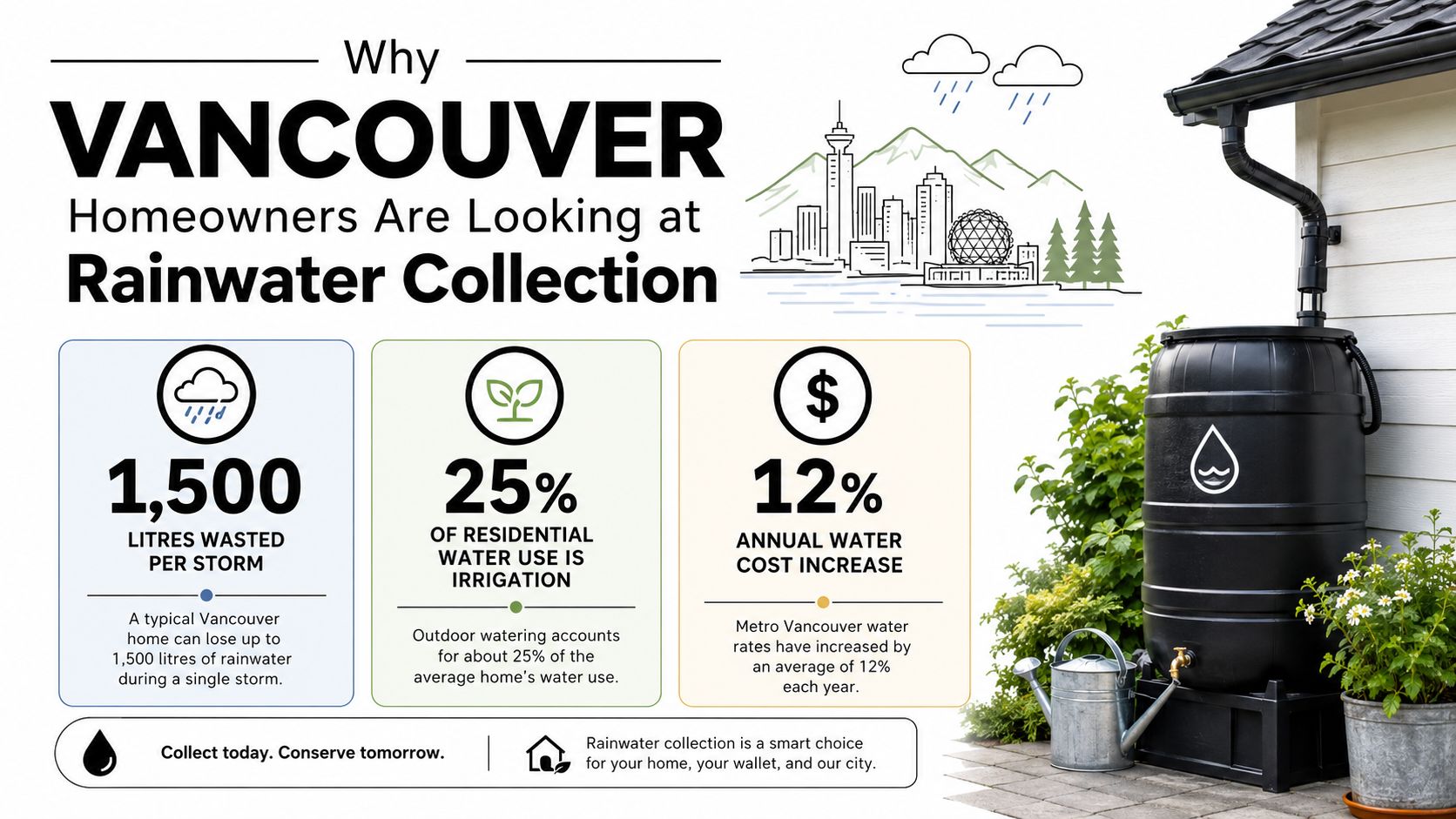
The Richmond homeowner at the downspout has a familiar problem. During a wet autumn storm, the roof produces more runoff than the property can use immediately, yet the same household may face restricted outdoor watering during the dry summer. Capturing some of that seasonal supply can reduce demand on treated municipal water, provided the system is sized and installed around local rules rather than generic advice from another jurisdiction.
Vancouver receives roughly 1,500 millimetres of annual rainfall, according to climate information for Vancouver International Airport, and a typical roof can collect a substantial volume over a year. The opportunity is real, but the timing matters. Much of the rainfall arrives when gardens need less water, while summer restrictions limit how freely stored water can be used for outdoor irrigation.
The local reasons people are paying attention
Metro Vancouver's outdoor watering restrictions make storage more valuable during dry periods, especially for vegetable beds, planters, and carefully managed irrigation. Homeowners in Langley and Surrey with acreage properties may also look for supplemental nonpotable water when wells produce less reliably during late summer.
Local development practice is another factor. Newer building and drainage expectations increasingly favour managing runoff onsite, rather than sending every drop directly into the storm system. A rainwater collection system can form part of that approach when its overflow is directed safely and the installation complies with local drainage requirements.
Practical rule: Collect rainwater for a clear use first. Don't choose a tank because the roof can fill it. Choose it because the household can use the stored water without creating a maintenance problem.
The strongest case usually combines outdoor demand, suitable roof drainage, safe overflow, and enough space for a stable tank. The weakest case is a large tank installed in a cramped, unheated location with no plan for cleaning, pump service, or winter protection.
How a Rainwater Collection System Actually Works
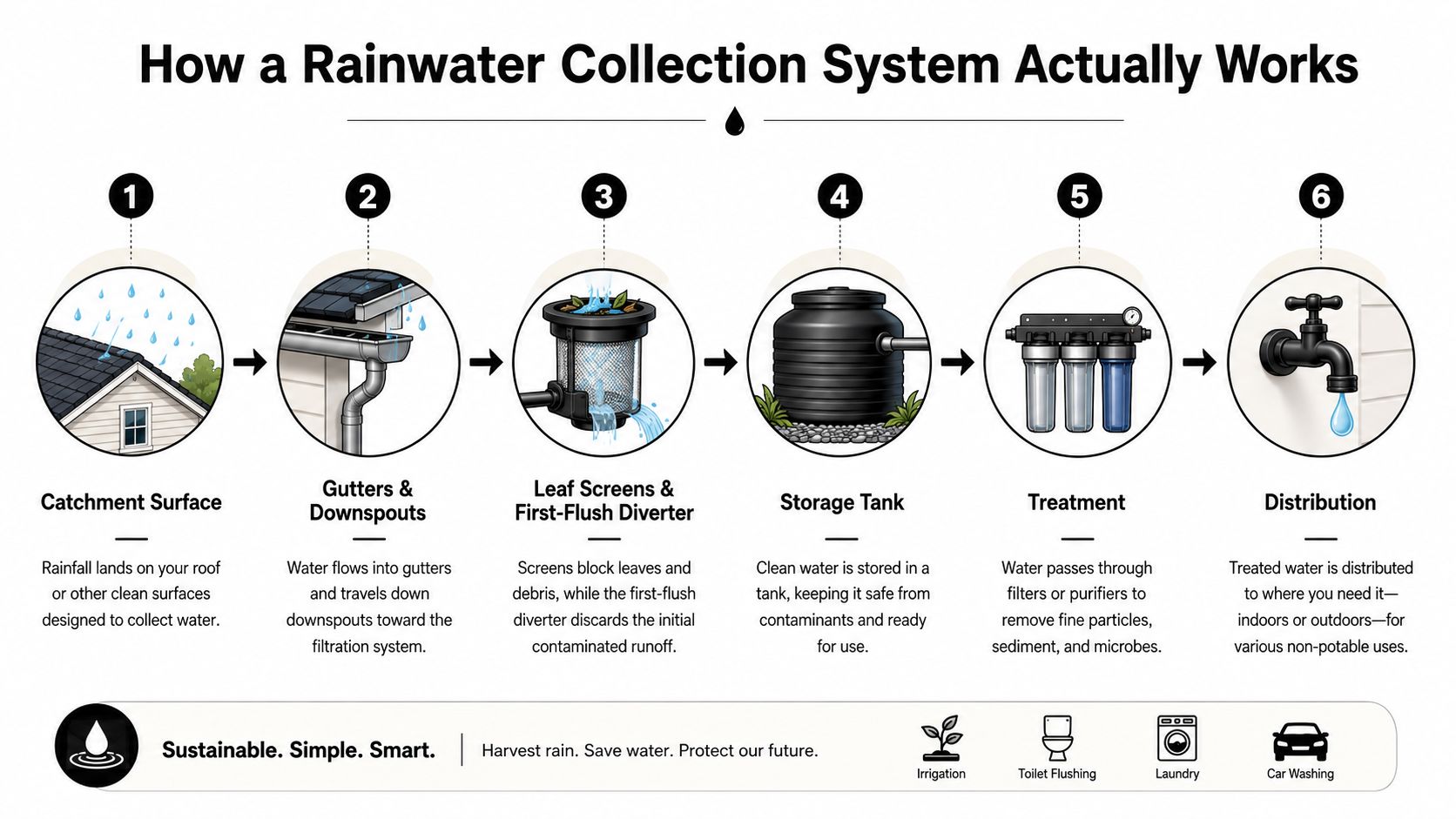
Water moves through a residential system in a predictable sequence. The equipment changes with the intended use, but the basic path remains the same: roof, gutter, screening, diversion, storage, treatment where required, and distribution.
Start with the roof and conveyance
The catchment surface is normally the roof. In a Killarney bungalow, existing asphalt shingles may feed a garden barrel, while a larger project might use a clean, well-maintained roof connected to a dedicated cistern. The gutter and downspout carry that runoff. Aluminium leaf guards and properly sized downspouts help keep cedar needles, fir debris, and roof grit out of the storage line.
A homeowner can often replace a damaged diverter or connect a small barrel, but the details matter. A downspout must still discharge safely when the barrel is full, and the overflow shouldn't wash against the foundation or cross onto a neighbour's property.
Remove the first dirty runoff
The first water from a roof often carries accumulated dust and organic debris. A leaf screen catches larger material, while a first-flush diverter sends the initial runoff away from the tank. Products such as a 4-inch Schefer or Orbinox first-flush unit may suit larger conveyance lines, but the correct selection depends on pipe layout, access, and required flow.
A 200-litre garden barrel doesn't need the same assembly as an indoor nonpotable system. That difference becomes important the moment collected water approaches a household plumbing connection.
Store, treat, and distribute
Storage may be a food-grade polyethylene cistern, an opaque above-ground tank, or a concrete tank selected for a particular site. The tank needs a screened inlet, secure access, an overflow connection, and a base that won't settle or tilt.
Garden irrigation may use a simple outlet or a 12-volt pump. A larger distribution system might use a half-horsepower booster pump, sediment cartridges, and ultraviolet treatment before sending water to approved nonpotable fixtures. A Kerrisdale home that feeds toilets and laundry is therefore a regulated plumbing system, not an enlarged version of a barrel.
For background on correctly routing roof runoff into a collection setup, see this guide to professional downspout installation.
The video below shows the operating principles visually.
Sizing Your System for Lower Mainland Rainfall
A large roof can collect plenty of water, but storage volume alone does not guarantee useful returns. Tank sizing starts with two calculations, supply and demand. In Vancouver, wet months can refill storage while summer use is limited by dry weather and municipal restrictions.
A simplified calculation uses roof area in square feet, rainfall in millimetres, and an efficiency factor:
Roof area × rainfall in millimetres × 0.8 = approximate litres captured
The factor accounts for roof runoff losses, first-flush diversion, splash, and conveyance inefficiency. A 1,500-square-foot roof receiving roughly 9 millimetres of rain during a month could capture about 10,800 litres, commonly rounded to about 11,000 litres. That amount only helps if the property has adequate storage and a practical use for the water.
A vegetable garden or established yard can use stored water quickly during a dry spell. Toilet flushing or laundry creates steadier indoor demand, but those applications require compliant treatment, plumbing separation, and professional design.
A practical sizing comparison
| Roof Size | Annual Catchment | Tank Size | Realistic Uses |
|---|---|---|---|
| Small roof section | Qualitatively modest | 200-litre barrel | Hand-watering planters |
| Typical urban roof | Substantial seasonal supply | 2,200-litre cistern | Vegetable beds and garden hose |
| Larger home roof | High wet-season collection | 4,500-litre cistern | Drip irrigation and broader property irrigation |
| Large roof or acreage | Very high potential | 9,000-litre cistern | Irrigation with possible approved nonpotable expansion |
A Vancouver garden may use about 2,000 litres per week at the May peak, based on the planning assumption used for this type of system. That demand explains why a modest tank can empty quickly after several dry days, then remain full during a rainy month.
Size the tank around actual demand and the available installation area. In BC, simple uncovered rain barrels are subject to a 100-gallon aggregate limit for each existing downspout, as described in BCCDC rain barrel guidance. A larger arrangement brings plumbing, structural, drainage, and permitting questions into the design, especially where the tank or its overflow affects the property drainage system.
BC Permits, Codes, and Cross-Connection Rules
Rooftop barrels and indoor rainwater supplies follow different regulatory paths in BC. A small barrel at grade may suit a homeowner installation for garden irrigation. An indoor system becomes an alternate water source, with requirements for potable-water separation, treatment, inspection, and safe operation.
The CSA B805:22 and ICC 805:2022 standards cover the design, materials, installation, and operation of rainwater and stormwater systems used for potable and nonpotable purposes, as described in the Standards Council of Canada listing. BC guidance also requires nonpotable systems to remain separate from potable water, include backflow protection, and identify nonpotable piping clearly.
Run this property checklist before buying equipment
- Small outdoor storage: A barrel at grade, used only for irrigation, may fit the simpler regulatory path. Confirm local requirements before installation.
- Larger storage: A cistern, buried tank, structural support, or changed drainage route may require building, plumbing, or drainage review.
- Indoor connection: Toilets, laundry, and other indoor fixtures require approved separation from the potable supply and professional plumbing work.
- Backflow protection: Any system near or connected to potable plumbing needs an appropriate cross-connection control device, installed and tested under local requirements.
- Overflow management: Discharge must stay on the property and avoid erosion, foundation damage, public rights-of-way, and neighbouring land.
The BCCDC guidance places a 100-gallon, or approximately 450-litre, aggregate cap on collection vessels for each existing downspout within the covered residential rain barrel arrangement. The 100-gallon cap applies to simple residential barrels. Larger tanks enter a different compliance category, with added questions about plumbing, structure, drainage, and permits.
San Francisco's local FAQ shows why broad legality can mislead homeowners. A permit may be required when a downspout is disconnected from the sewer, while a diverter that returns overflow to the downspout may follow another path. Greater Vancouver municipalities also apply their own plumbing, drainage, and soil rules. A Vancouver, Richmond, Burnaby, or Surrey property needs local confirmation rather than an assumption based on a neighbour's installation.
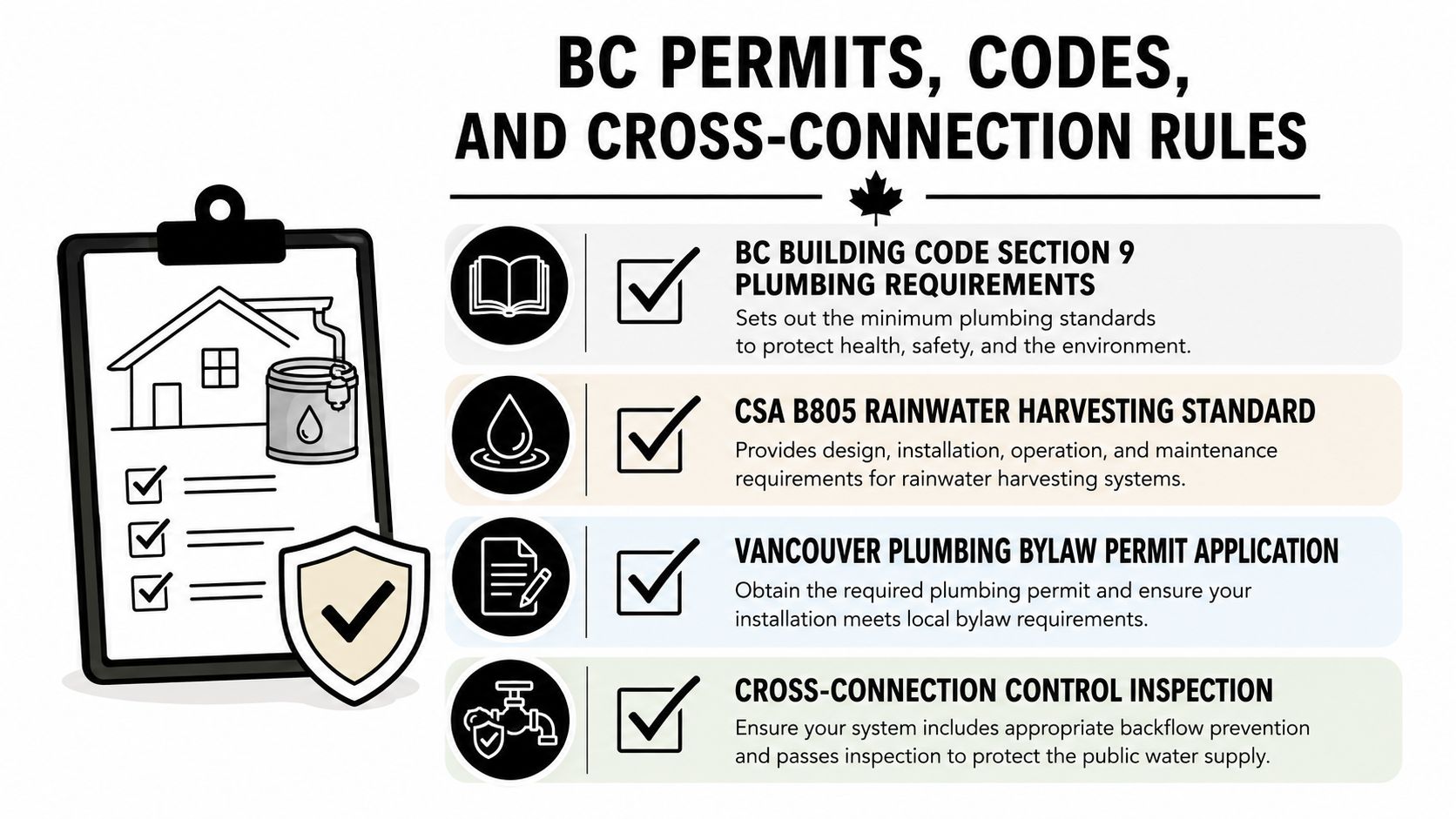
Indoor or pressurized work requires a clear cross-connection plan before any pipe is connected. Review backflow preventer installation requirements, then have a licensed plumber handle connections, testing, and required inspections.
Costs and Realistic Uses From Barrel to Cistern
The cheapest rainwater collection system is not automatically the most economical. A barrel can solve hand-watering needs with little complexity, while an indoor reuse system can require excavation, pumping, treatment, testing, permits, and ongoing servicing. The right comparison is between the use you want and the infrastructure that use demands.
The following cost bands are planning ranges for Greater Vancouver projects, not guaranteed quotations:
| System Tier | Typical Cost Range | Realistic Uses | Permit Required? |
|---|---|---|---|
| Basic DIY barrel | $75 to $200 | Hand-watering planters and small beds | Often not for a simple outdoor setup, confirm locally |
| Above-ground cistern | $1,500 to $3,500 installed | Drip irrigation and garden hose use | May be, depending on size, placement, drainage, and municipality |
| Sub-surface cistern with treatment | $6,000 to $15,000 or more | Approved indoor nonpotable toilet and laundry use | Yes, where plumbing and site rules trigger review |
A small barrel is practical when the homeowner can place it securely at grade, connect it to a downspout diverter, screen the openings, and use the water regularly. It won't provide reliable pressure for a long irrigation network. A mid-range system adds a first-flush diverter, pump, overflow design, and more substantial storage, but it still needs careful siting and maintenance.
A full system can support toilet flushing and cold-water laundry only after treatment and plumbing separation are designed correctly. California's EPA water-reuse summary lists several approved nonpotable applications there, including toilet and urinal flushing, clothes washing, car washing, ornamental features, and irrigation. BC projects still need to follow BC rules and local approvals, so a California use list isn't a permit by itself.
What drives the budget
- Tank and excavation: Buried storage costs more because access, soil, equipment, and restoration all affect the work.
- Pump selection: A gravity-fed barrel is simple. A pressurized indoor distribution line needs a properly selected pump and controls.
- Treatment: Sediment filtration and UV cartridges add equipment and service obligations.
- Plumbing labour: Indoor tie-ins, backflow devices, testing, and inspections require licensed trade work.
For water-quality decisions and service planning, use a qualified water quality testing service. Potable use remains impractical for most homeowners because treatment and regulatory expectations are far more demanding than garden irrigation.
Maintenance Through Vancouver's Four Seasons
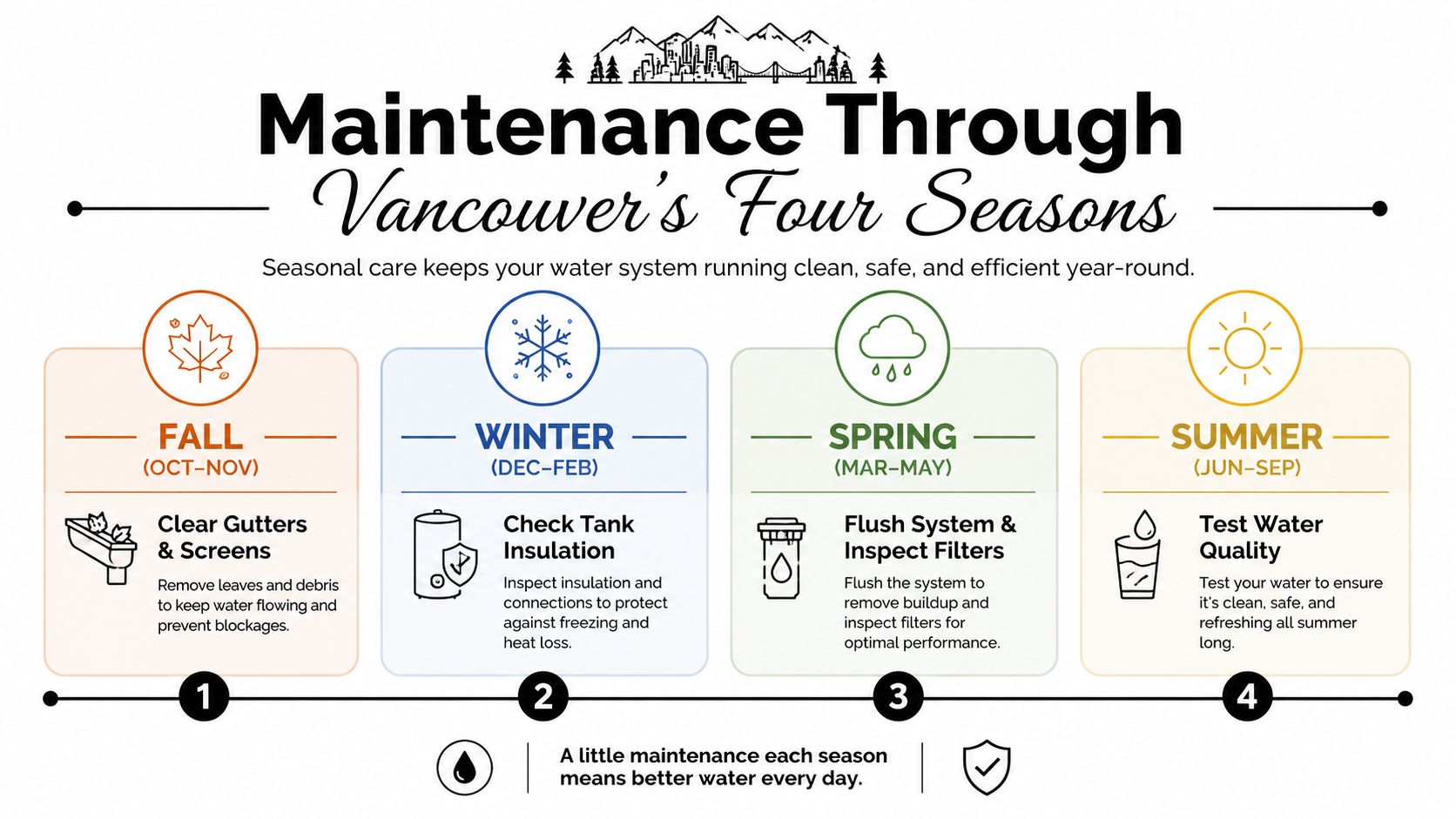
A rainwater collection system succeeds or fails on maintenance. Vancouver's wet autumn, mild winter, spring debris, and dry summer each create a different weak point. A tank that works in October can have a blocked screen, seized pump, or unsafe overflow by July if nobody checks it.
Fall and winter
In October and November, clear leaves and needles from gutters, leaf guards, and tank screens before the heaviest rainfall. Open and inspect the first-flush diverter. A stuck-open unit can send usable water away, while a blocked unit can send dirty roof water straight into storage.
During December through February, inspect exposed pipe, fittings, valves, and pumps. Vancouver doesn't experience prolonged severe freezing every winter, but a hard freeze can split above-ground PVC or damage a pump in an unheated shed. Drain exposed equipment where appropriate, insulate vulnerable sections, and follow the tank manufacturer's winter instructions.
Winter check: Above-ground outdoor tanks in cold climates should be fully drained before winter where BC guidance requires it, and nonpotable systems should be shut down during winter months.
Spring and summer
From March through May, clean screens after pollen and maple samaras fall. Inspect the cistern inlet and mosquito screening, then check for sediment, odour, leaks, or damaged seals.
During June through August, run the pump before peak garden demand. Confirm the overflow still discharges safely into the intended soakaway or drainage route, and check whether the backflow preventer is due for its annual test.
Homeowners can usually clean screens, remove leaves, inspect visible connections, and operate a garden valve. A licensed plumber should handle pressurized faults, pump wiring or controls outside the homeowner's competence, treatment equipment, backflow testing, and any work on indoor plumbing. Plan gutter cleaning twice yearly in leafy neighbourhoods, carry out quarterly visual checks, and arrange cistern desludging every 3 to 5 years where the tank's sediment load requires it.
Common Problems and When Bigger Is Not Better
The most common failures are small omissions that surface after a wet season or a sudden cold snap. A lid, screen, overflow route, or exposed fitting can determine whether a simple barrel remains useful.
Mosquitoes and debris enter an uncovered barrel. Light passing through a translucent tank encourages algae. Cedar and fir needles overwhelm undersized screens, while a pump can cycle repeatedly when the tank is nearly empty during a dry spell. Freeze-cracked fittings usually result from water left in an exposed, vulnerable line.
Match the fix to the fault
- Mosquitoes: Install or replace a tight lid and fine screening. A plumber should investigate an inlet or overflow that cannot be sealed properly.
- Algae: Shield the tank or replace a translucent model with an opaque one. If collected water feeds treatment equipment, have the filtration and disinfection arrangement assessed.
- Needles and sediment: Clean the gutter and screen first. Continued loading may call for a better leaf guard, access point, or first-flush arrangement.
- Pump cycling: Check the water level, intake, filter condition, and visible leaks. A professional should diagnose pressure controls and indoor distribution faults.
- Freeze damage: Replace cracked outdoor fittings and drain exposed sections. A plumber should inspect connected pipework before restarting the system.
The BCCDC guidance for simple residential barrels limits aggregate collection vessels to 100 gallons per existing downspout. Adding barrels indefinitely is therefore a poor expansion plan. A system exceeding 18,925 litres can require engineered drawings, so site conditions and approval may matter more than the tank's advertised capacity.
Larger storage also means more water to manage. An oversized cistern in an unheated crawl space may remain partly full, see little turnover, and become harder to clean. Match capacity to actual irrigation, toilet, or laundry demand. The wettest month may fill a tank, but that alone does not show that the property needs more storage. In Greater Vancouver, the BCCDC barrel limit, CSA B805 design expectations, cross-connection controls, and winter conditions set practical boundaries before tank size becomes the main question.
When to Call a Licensed Plumber and How Encano Helps
A homeowner can usually place a properly supported barrel under a downspout, attach a manufacturer-approved diverter, clean a screen, and maintain an outdoor irrigation connection. That work still needs safe overflow and stable placement. It shouldn't alter potable plumbing or create a concealed cross-connection.
Call a licensed plumber when the project includes any of the following:
- Indoor fixture supply: Toilets, laundry, or other pressurized lines inside the home.
- Potable-side work: Any alteration to the domestic water supply or make-up connection.
- Backflow prevention: Installation, adjustment, repair, or testing of an RP or DCVA device.
- Buried or structural storage: Excavation, engineered support, tank access, or drainage changes.
- Treatment equipment: Filtration, UV disinfection, controls, and water-quality components serving indoor fixtures.
These tasks involve more than joining pipe. The installer must prevent cross-connection, provide access for testing and maintenance, select compatible materials, and coordinate permits and inspections with the local authority. Unpermitted plumbing work can also create insurance and property-sale complications.
A practical professional process starts with a site visit. The installer reviews roof drainage, available tank space, overflow routes, soil and access constraints, intended demand, and whether the system remains outdoor-only or crosses into the building. The next steps are yield estimation, cistern selection, pump and treatment design, permit handling, installation, backflow testing, commissioning, and documentation for the relevant municipality.
Encano Plumbing & Drainage Ltd. handles stormwater upgrades, drainage work, plumbing connections, water-quality equipment, and related service across Vancouver, Richmond, Surrey, Burnaby, North Vancouver, and nearby communities. That makes a qualified contractor useful when a simple barrel has grown into a pressurized or indoor rainwater collection system that needs code-aligned installation and a clear service record.
If you're planning a rainwater collection system in Vancouver, Richmond, Surrey, Burnaby, or North Vancouver, Encano Plumbing & Drainage Ltd. can assess roof yield, storage, overflow, pumping, treatment, permits, and backflow requirements before work begins. Contact the team to plan an outdoor irrigation setup or a properly documented nonpotable plumbing upgrade that fits your property and BC rules.