
In Greater Vancouver, a professional sump pump replacement usually costs $650 to $1,200 for a standard job, and more complex projects with battery backup systems or discharge upgrades can reach $1,500 to $3,000+. If you're in Vancouver, Richmond, or elsewhere in the Lower Mainland, that local range is far more useful than generic national pricing.
If you're reading this while listening to a sump pump kick on during another long stretch of rain, you're not alone. A lot of homeowners only start looking up sump pump replacement cost when the basement already feels damp, the pump sounds rough, or the pit is cycling more often than it used to.
That's the stressful part of this job. A sump pump doesn't get much attention when it's working properly, but when it starts struggling, every sound matters. In Vancouver and Richmond, where groundwater and stormwater pressure can stay high for long periods, a weak pump isn't a minor nuisance. It's a warning.
The biggest mistake I see is waiting for a complete failure because the old unit still “sort of works”. That approach often turns a planned replacement into an emergency call, usually at the worst possible time. A proper replacement costs money, but it's still far cheaper than dealing with water damage, soaked flooring, damaged drywall, and the disruption that follows.
Table of Contents
- That Sound from the Basement What Your Sump Pump Is Telling You
- The Bottom Line Sump Pump Replacement Cost Breakdown
- Key Factors That Influence Your Final Quote
- A Practical Example Two Vancouver Basements
- DIY Replacement vs Hiring a Professional Plumber
- Why Vancouver Sump Pump Costs Are Different
- Frequently Asked Questions About Sump Pumps
That Sound from the Basement What Your Sump Pump Is Telling You
A common call in the Lower Mainland starts the same way. The homeowner hears the pump running during a heavy rain, then notices it sounds harsher, runs longer, or cycles more often than before. The basement is still dry, so it's easy to assume there's time.
Sometimes there is. Often there isn't.
In Vancouver and Richmond, the sump pump is the quiet piece of equipment standing between your basement and a water problem that spreads fast. It handles the groundwater your home can't ignore. When the pump begins to labour, rattle, or short cycle, it's usually telling you something in the system has changed, or the unit itself is wearing out.
What those sounds often mean
Not every noise means immediate failure, but certain patterns deserve attention:
- Long run times: The pump may still be moving water, but it's working harder than it should.
- Frequent cycling: This can point to float issues, water re-entering the pit, or a pump that's nearing the end of its useful life.
- Grinding or harsh vibration: Internal wear or debris can keep a pump running right up until the moment it stops.
- Silence during obvious wet conditions: That can be worse than noise. It may mean the pump isn't activating at all.
Practical rule: If a sump pump only gets your attention when the weather is bad, you're already late for ideal replacement timing.
A lot of basement water issues don't begin with a dramatic flood. They start with a pump that weakens gradually, then loses the fight during a storm or a power interruption. If your home has had any past drainage concerns, it's worth understanding how basement drain backup problems develop because the sump system and the broader drainage path often affect each other.
Why waiting gets expensive
A proactive replacement gives you options. An emergency replacement gives you urgency, limited time to compare systems, and sometimes extra work if the old failure exposed other weaknesses.
That's why sump pump replacement cost shouldn't be treated as just the price of a new machine. In this region, it's the cost of keeping the basement protected before the old pump picks the timing for you.
The Bottom Line Sump Pump Replacement Cost Breakdown
The most useful answer is local. In Vancouver, British Columbia, replacing an existing sump pump typically ranges from $450 to $1,200, and a homeowner in Richmond replacing a standard submersible pump in an existing pit with no additional work would likely pay about $850, according to this Vancouver cost guide from JZ Plumbing.
For broader context only, national U.S. data puts sump pump replacement at about $1,363 on average in 2026, with most homeowners spending $645 to $2,120 for a standard submersible swap in an existing pit, according to HomeAdvisor's replacement cost overview. That's useful as a baseline, but it doesn't isolate California-specific pricing and it's less helpful for Lower Mainland budgeting.
What homeowners usually pay
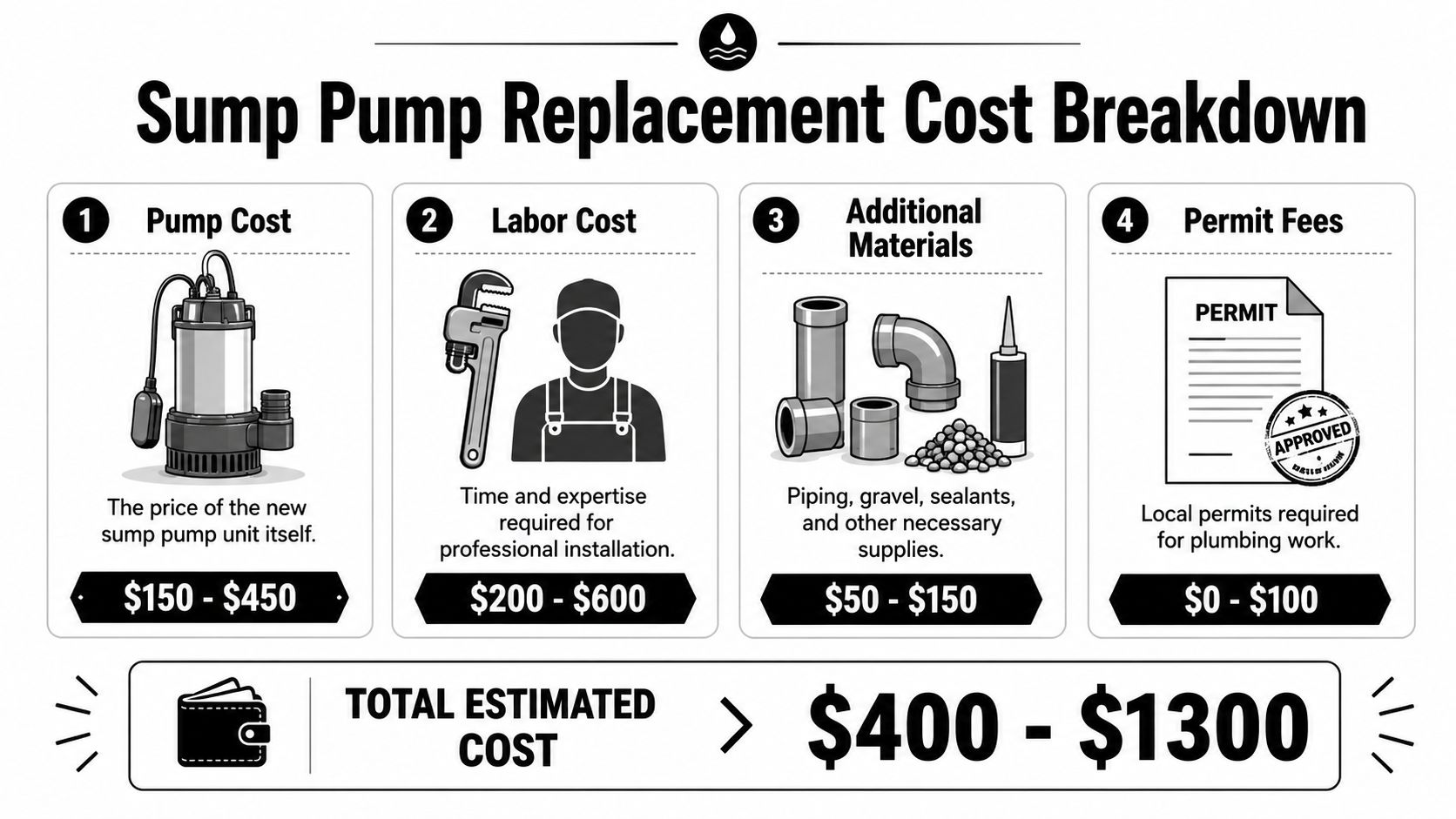
Here's a practical way to think about a replacement quote in Vancouver.
| Scenario | Typical cost range |
|---|---|
| Basic pedestal pump swap in Vancouver | $450 to $1,200 |
| Standard submersible pump replacement in an existing pit | $650 to $1,200 |
| Richmond example, standard submersible replacement with no extra work | About $850 |
| Complex replacement with upgraded discharge lines or battery backup | $1,500 to $3,000+ |
The spread is wide because some homes need a direct swap and others need the surrounding system corrected at the same time.
What is usually included in the quote
A straightforward quote usually covers the old pump removal, the new unit, installation labour, and basic connection materials. If the pit is in good shape and access is simple, that's where the price tends to stay controlled.
What can push the number up is rarely a mystery once you see the full system:
- Pump type: Submersible units usually cost more than a basic pedestal swap.
- Backup protection: A battery backup adds cost, but it also covers the exact moment many homeowners are most vulnerable, during a storm-related outage.
- Discharge work: If the line needs changes, the job stops being a simple replacement.
- Electrical or code updates: Older setups often need cleanup to match current expectations.
A quote that seems higher than expected often includes work the old system should have had all along.
For homeowners comparing estimates, the right question isn't just “What does a sump pump replacement cost?” It's “What exactly is this price fixing, replacing, and protecting?”
Key Factors That Influence Your Final Quote
The pump itself is only one line item. The final bill reflects the whole drainage setup around it.
In the Greater Vancouver region, replacing a submersible sump pump in an existing pit typically costs $650 to $1,200, but complex installations that need upgraded discharge lines or battery backup systems rise to $1,500 to $3,000+. Battery backup add-ons alone range from $350 to $900, based on Greater Vancouver replacement pricing from The Basement Guide.
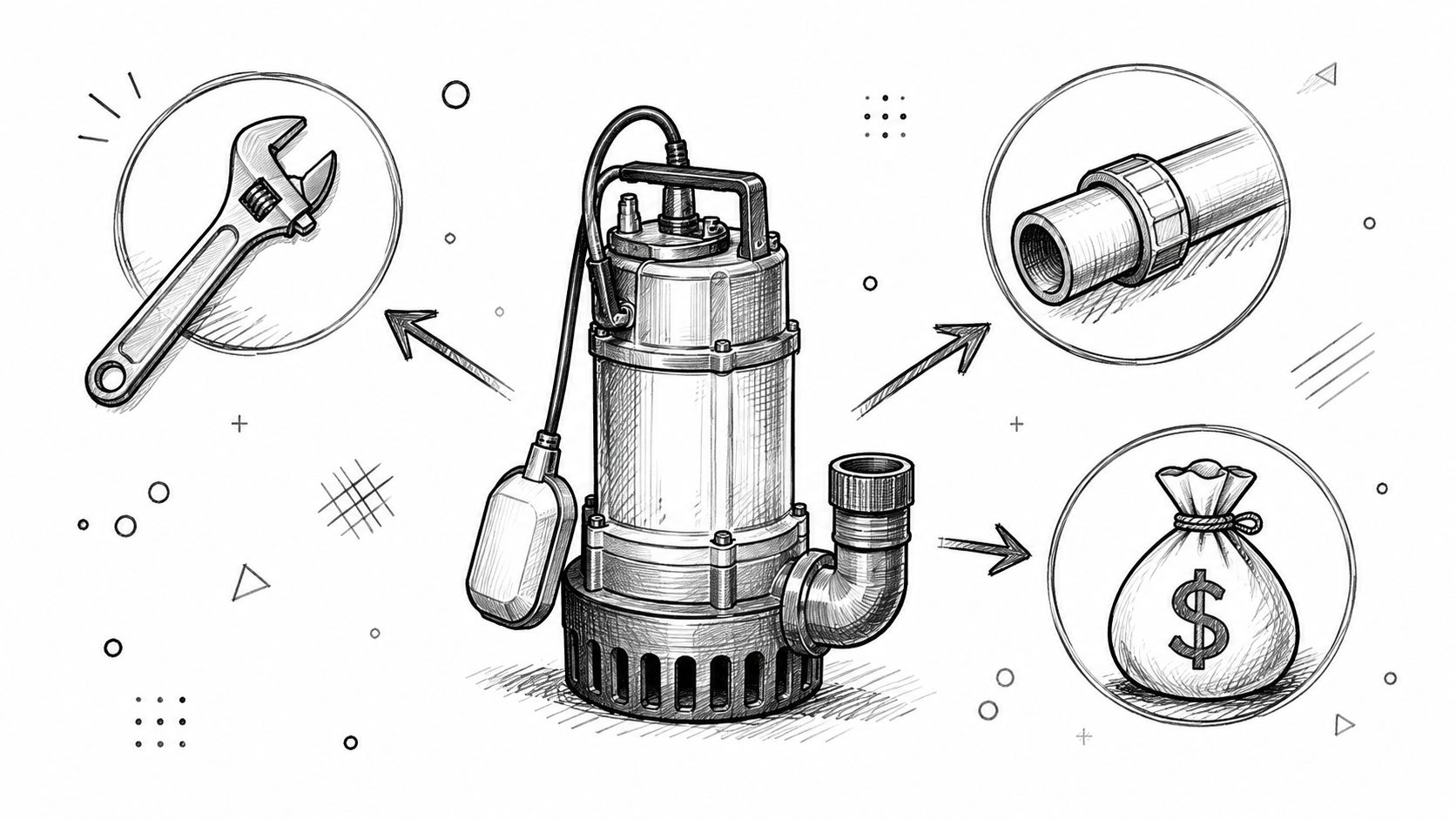
The pump itself is only one part of the price
The first factor is the type of replacement. A direct swap into an existing pit is the simplest version of the job. If the old pump comes out cleanly, the basin is usable, and the discharge line is already properly set up, the price stays closer to the standard range.
Then there's the choice between a basic setup and a more resilient one. In this region, many homeowners don't really need the cheapest possible pump. They need one that can keep up during prolonged wet weather and keep protecting the basement if conditions worsen.
Here's what changes the quote fastest:
- Submersible versus pedestal: A pedestal swap can be the cheaper route when the application suits it.
- Battery backup: This is one of the most important upgrades in a coastal climate where storm conditions and outages can overlap.
- Controller quality: Backup systems vary. Better controls and stronger battery capacity increase cost, but they also improve reliability.
The hidden costs are usually in the system around the pump
A replacement gets more expensive when the old installation had weak points beyond the pump itself.
- Undersized or awkward pits: If the basin is too tight, badly placed, or difficult to access, the labour grows quickly.
- Discharge line problems: Homes with poor discharge routing, missing check valves, or lines that need upgrading will need more than a pump swap.
- Code and drainage requirements: Municipal expectations around discharge matter. They can affect pipe size, termination point, and overall layout.
- Basement condition: Finished basements usually demand more care and protection during the work.
If you want a good primer on the drainage side of the system, it helps to understand how weeping tiles work around a home's foundation. Many sump issues make more sense once you look at how groundwater is being collected before it even reaches the pit.
A sump pump replacement can be cheap, or it can be complete. Those aren't always the same thing.
The best quotes explain which parts are true replacement and which parts are correction work. That's the difference between paying for another few months of function and paying for a system that's ready for the next hard rain.
A Practical Example Two Vancouver Basements
Real budgeting gets easier when you compare actual situations instead of averages. Two homes can both need a new sump pump, but the final number won't look anything alike.
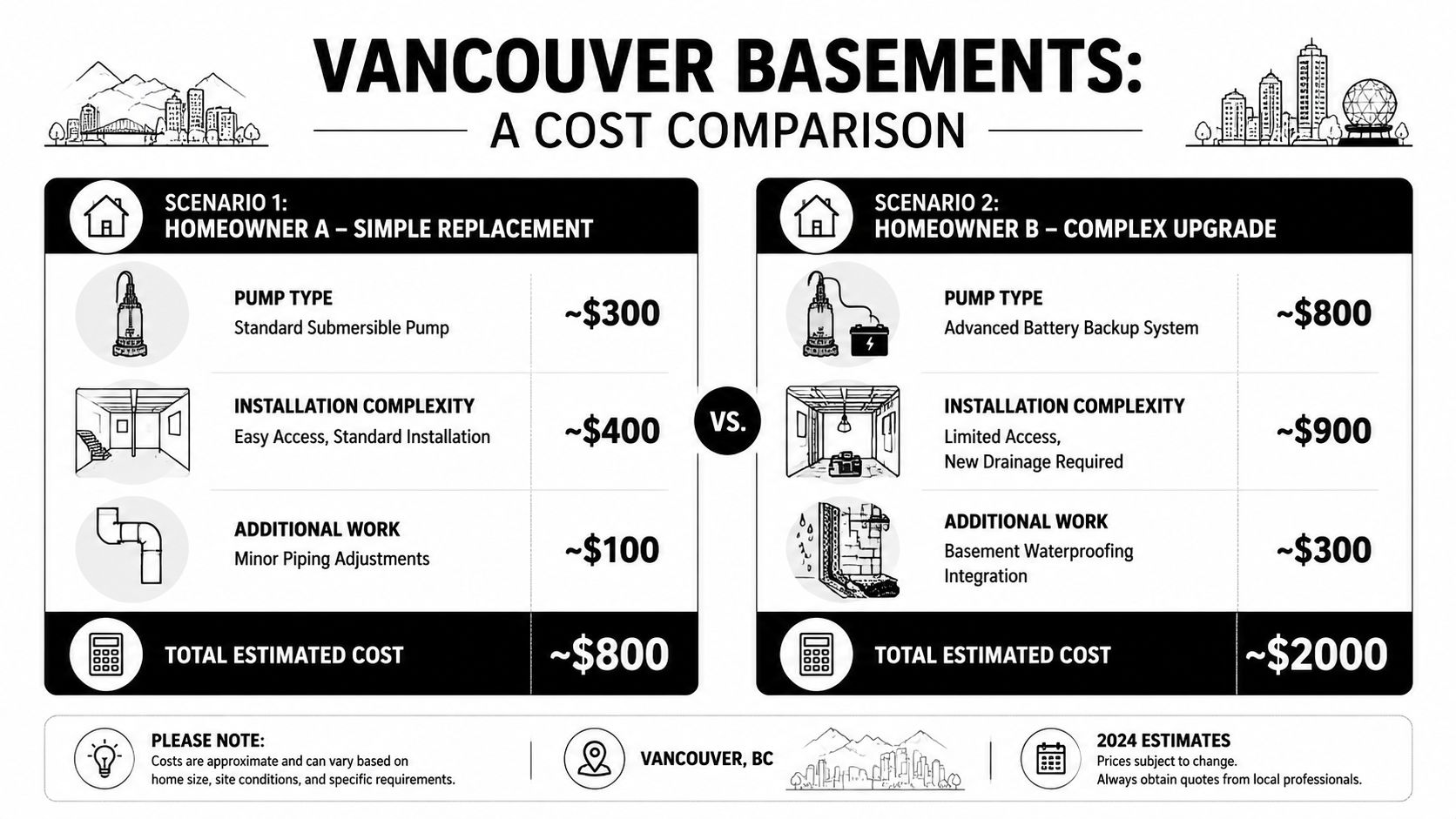
Basement A in Richmond with a straightforward swap
The first homeowner has an existing sump pit in good condition. The old pump is tired but the discharge path is serviceable, the access is open, and there's no sign of electrical or drainage complications.
This is the kind of job that stays near the lower end of local pricing. A Richmond homeowner replacing a standard submersible pump in an existing pit with no additional work would likely land around $850, as noted earlier from the Vancouver-specific source.
That kind of replacement usually feels manageable because the quote is solving one clear problem. The old pump comes out. The new one goes in. The rest of the system supports it.
Basement B in Richmond with upgrades for reliability
The second homeowner also needs a replacement, but the details change everything. The old unit has failed, the discharge line needs upgrading, and the owner doesn't want to go through another mid-storm scare. They choose a battery backup system and ask for the installation to be brought up to a more dependable standard.
That's where the project moves into the $1,500 to $3,000+ range that applies to more complex Lower Mainland jobs. The higher number isn't just for a fancier pump. It reflects the added work needed to build a system that keeps working when conditions are worst.
A simple way to compare the two:
| Home | Main condition | Likely cost direction |
|---|---|---|
| Richmond home with existing pit and no extra work | Straight replacement | Near the standard local range |
| Richmond home with discharge upgrades and battery backup | More complex protection-focused replacement | Into the higher local range |
The practical difference isn't whether both homes need a pump. It's whether the old system already did its job properly.
This is why generic articles often frustrate homeowners here. They give one broad average, but they don't reflect the choices people in Vancouver and Richmond face. Most quotes aren't random. They're built around the condition of the pit, the discharge route, the backup plan, and the consequences of failure.
DIY Replacement vs Hiring a Professional Plumber
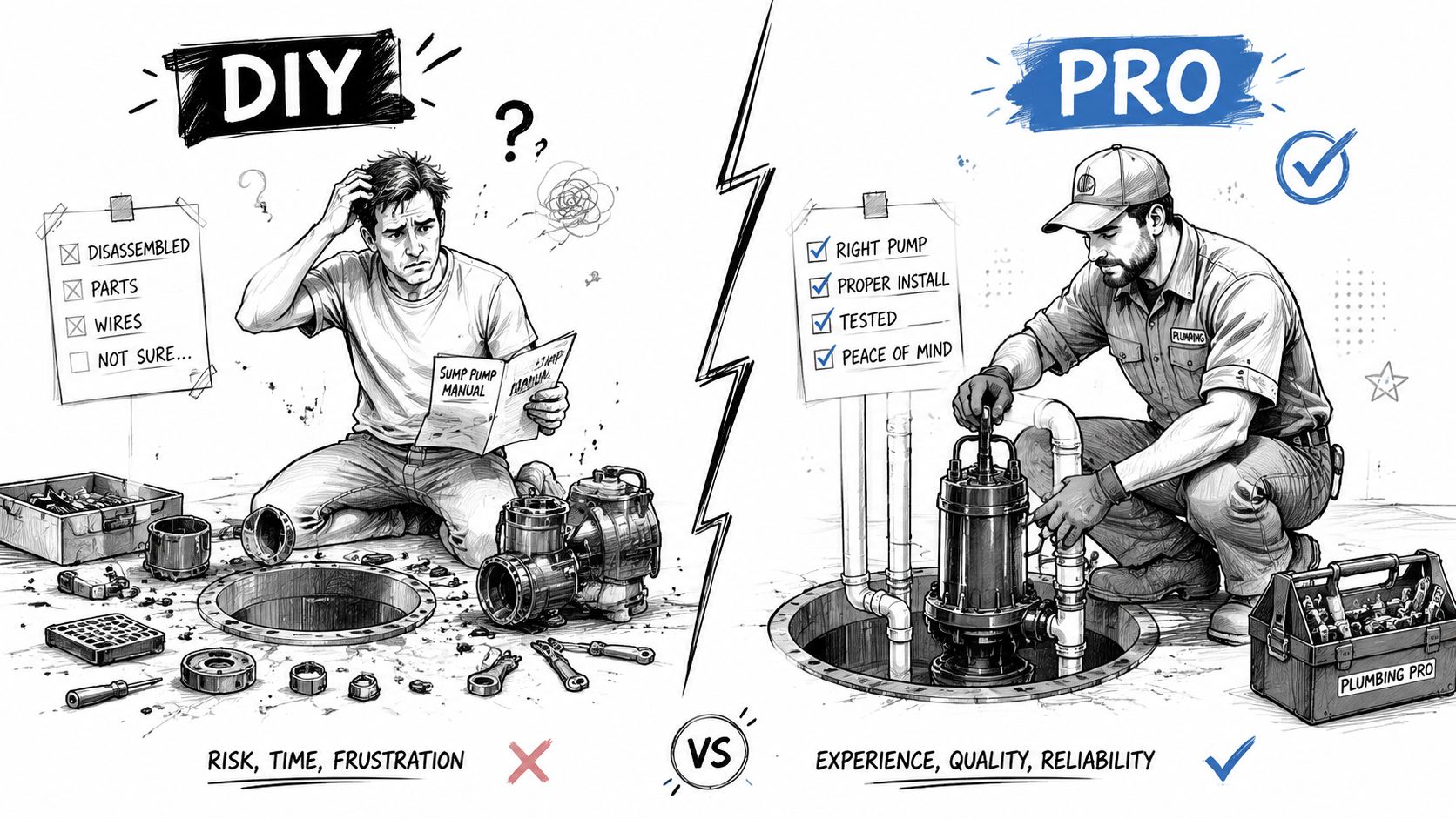
Homeowners ask this all the time, and the honest answer is simple. A mechanically confident person can remove and replace some sump pumps. That doesn't mean a DIY replacement is the right risk in the Lower Mainland.
What DIY can handle and where it goes wrong
If the job is a very basic swap, DIY can look appealing. The old pump is unplugged, lifted out, and replaced with a similar unit. On paper, that seems straightforward.
The trouble is that most failures don't come from putting a new pump in the pit. They come from missing one of the details around it:
- Wrong sizing: A pump that technically fits may still be the wrong choice for the water conditions.
- Poor float setup: If the float doesn't move freely, the pump may not trigger when it should.
- Discharge mistakes: A bad connection or poor line layout can send water back toward the pit.
- No backup plan: The installation may work fine until the exact storm event when power drops.
In high-water-table areas like Delta and Surrey, a repair on a pump older than 7 years is often only temporary. Deferring replacement for a $500 repair can lead to emergency replacement costs of $1,200+ and over $5,000 in basement flooding repairs when the pump fails during the next major storm. Those numbers matter because they show how quickly a “cheaper” decision can stop being cheap.
If you're comparing replacement options, it helps to review what goes into a proper professional sump pump installation before deciding that a simple swap is all your home needs.
Why professional installation changes the risk
A proper installation is about more than labour. It's about reducing the chance that the new pump becomes another weak point.
A qualified plumber checks the basin condition, verifies discharge performance, looks at valve arrangement, confirms safe operation, and matches the replacement to the home's drainage demands. That's especially important in finished basements, strata properties, and older homes where one bad assumption can turn into water damage.
Here's a helpful walkthrough of common sump pump issues and replacement basics:
Professional work also gives homeowners something DIY never really can. Accountability if something isn't right, and a much stronger chance that the system will work when nobody is standing nearby watching it.
Why Vancouver Sump Pump Costs Are Different
Most online pricing articles miss the point for this region. They treat sump pumps as a generic plumbing fixture with a generic price. That doesn't hold up in Vancouver, Richmond, Surrey, Delta, or other Lower Mainland communities where wet weather and groundwater pressure shape the job.
National averages miss local risk
There's a major gap in existing content around region-specific pricing for Greater Vancouver, where local labour rates of $90 to $180/hr and the need for battery backups due to frequent power outages push the true flood-protection cost to $1,500 to $2,200 or more. That's why a national average can sound reasonable on paper but still leave a homeowner underbudgeted.
The local environment changes the decision. A basic replacement may be enough for one property, but in many coastal and low-lying areas, the safer plan includes backup power and discharge improvements that general articles treat as optional extras.
The right system here is built for weather and drainage conditions
Greater Vancouver also has hydrological conditions that make delayed decisions riskier. In high-water-table zones such as Delta and Surrey, a repair on an older pump can fail again within months, and that's why repair-versus-replace decisions need to be made carefully rather than emotionally.
A practical way to think about local pricing is this:
- You're not only buying a pump. You're paying for a system that can handle sustained wet conditions.
- You may need backup, not just replacement. Power loss during a storm is part of the actual risk profile here.
- Local code and discharge expectations matter. The line out of the house matters almost as much as the pump in the pit.
In Vancouver, the cheapest sump pump quote can be the most expensive outcome if it ignores how the basement actually handles water.
That's why local advice beats broad averages every time. A homeowner in a dry region can often get away with a simpler setup. A homeowner in Richmond or along other vulnerable parts of the Lower Mainland usually needs a more dependable answer.
Frequently Asked Questions About Sump Pumps
How long should a good sump pump last
A sump pump's lifespan depends on use, water conditions, maintenance, and how well the original installation was done. In practical terms, if a pump is getting older and starts showing reliability issues, it's smart to think in terms of replacement planning rather than waiting for a total stop.
If the home depends heavily on that pit during rainy periods, age matters even more. The busier the pump, the less sense it makes to squeeze extra time out of a tired unit.
What warning signs mean the pump may be close to failure
Watch for changes in behaviour more than one single dramatic symptom.
- It runs louder than before: Noise often shows wear before total failure.
- It cycles too often: Frequent starts can point to a control issue or an overworked system.
- It struggles during heavy rain: If the pit level rises more than usual, the pump may be losing capacity.
- It only gets attention after storms: That usually means maintenance and testing are being left too late.
If you don't trust the pump when the forecast turns ugly, replace it before the forecast proves you right.
How often should you test your sump pump
Test it regularly, especially before and during the wet season. The goal isn't just to hear the motor run. You want to confirm the float activates properly, the pump discharges water, and the system returns to rest normally.
A useful homeowner habit is simple:
- Check the pit visually for debris, silt, or obvious obstructions.
- Test operation with water so you can see the float and pumping cycle.
- Listen to the discharge pattern and note anything different from normal.
- Call for service early if the pump sounds strained, inconsistent, or unreliable.
A sump pump is one of those devices that earns its value without fanfare. Keep it maintained, replace it before failure, and it will probably spare you a much larger repair.
If your basement pump is noisy, unreliable, or overdue for replacement, Encano Plumbing & Drainage Ltd. can help you assess the system, explain the trade-offs, and install a sump pump solution that fits Vancouver conditions. For homeowners, strata managers, and property managers across Richmond, Vancouver, Burnaby, Surrey, Delta, and nearby communities, the goal is simple: a dry basement, a safer property, and a replacement done properly the first time.