
You're probably here because you found water under the pipe coming off your hot water tank, or you noticed a slow drip that only seems to happen at certain times of day. That's a common homeowner moment in Vancouver. The tricky part is that a dripping valve doesn't always mean the valve itself has failed.
A water heater pressure relief valve, usually called a T&P valve for temperature and pressure, is one of the most important safety parts on the tank. When it works properly, it protects the heater and the people in the home. When it leaks, sticks, or gets blamed for the wrong problem, the fix can go in the wrong direction fast.
Most consumer advice jumps straight to “replace the valve.” Sometimes that's correct. Often, especially in Metro Vancouver homes with backflow preventers or pressure-reducing valves, the underlying issue is a closed system that traps thermal expansion while the tank is heating. Knowing the difference matters.
Table of Contents
- Understanding Your Water Heater's Most Important Safety Device
- Why Your T&P Valve Matters for Safety and Code Compliance in Vancouver
- Is Your Relief Valve Leaking or Dripping What It Means
- A Homeowner's Guide to Safely Testing Your T&P Valve
- T&P Valve Replacement When to Call a Pro and What to Expect
Understanding Your Water Heater's Most Important Safety Device
If you think of your water heater like a pressure cooker, the T&P valve makes immediate sense. A pressure cooker needs a reliable way to release excess pressure before things get dangerous. Your water heater needs the same protection.
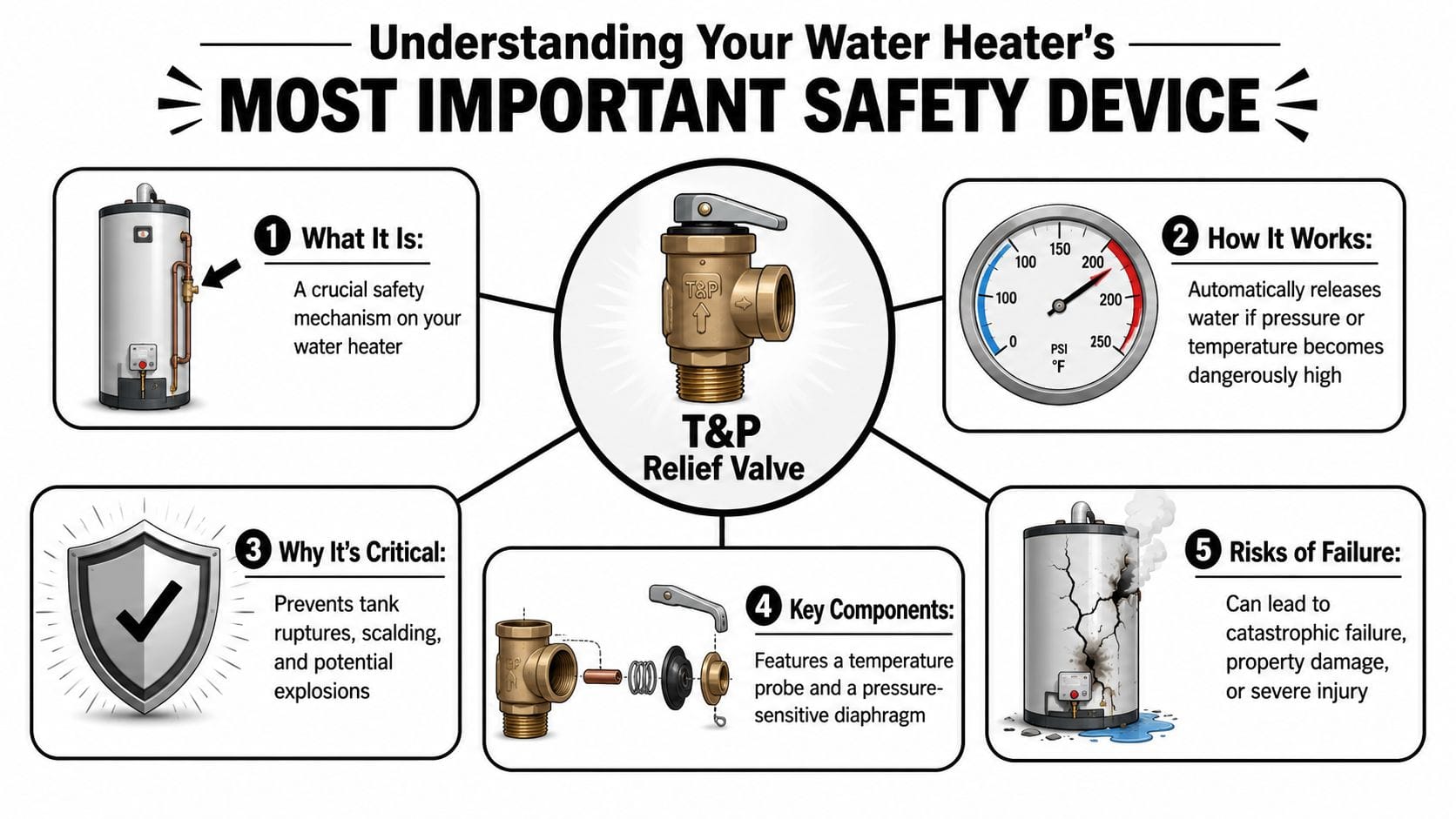
A temperature and pressure relief valve is designed to open automatically if the tank gets too hot, too pressurised, or both. It's not an optional accessory. It's the primary safety device standing between normal operation and a failed tank.
What the valve actually does
Inside the valve, there are components that respond to pressure and temperature. In plain terms, one part reacts when pressure in the tank climbs too high, and another senses excessive temperature. If either condition crosses the valve's limit, the valve opens and discharges water through the attached pipe.
That discharge can look alarming to a homeowner. But in the right situation, it means the valve is doing its job.
Practical rule: A T&P valve is supposed to stay quiet most of the time. If it opens, something in the system needs attention, even if the valve itself is still good.
A practical example. Say a family in Vancouver runs morning showers, then the heater fires hard to recover. If expansion pressure has nowhere to go, the tank pressure rises during that heating cycle. The valve may release a small amount of water to protect the system. That's not “good” in the sense that nothing is wrong, but it may not mean the valve has failed.
Why the rating on the heater matters
Homeowners often assume all relief valves are interchangeable. They aren't. For residential water heaters, the valve must match the vessel's maximum allowable working pressure, and the correct selection comes from the heater nameplate, not guesswork. On many heaters that's 150 psi, though some models can differ. Model codes cap the valve setting at 150 psi and 210°F (99°C), but the correct choice is still determined by reading the tank information first, as explained in this guidance on selecting the correct T&P relief valve.
That's why grabbing a random valve off the shelf isn't good practice. The tank tells you what belongs on it.
If you're trying to avoid emergency repairs, regular upkeep helps the entire system last longer. A good starting point is this guide on how to maintain a water heater properly.
Why Your T&P Valve Matters for Safety and Code Compliance in Vancouver
The T&P valve matters for two reasons. First, it protects people and property. Second, the installation around it has to meet code. In British Columbia, that means the valve and its discharge piping have to be treated as a complete safety assembly, not as an afterthought.
A water heater stores heated, pressurised water. If pressure relief can't happen properly, the tank is no longer operating in a controlled way. That's why plumbers pay close attention not only to the valve body itself, but also to the pipe connected to it.
The discharge pipe is part of the safety device
The discharge line has one job. It must let hot water leave safely if the valve opens. If that pipe is undersized, trapped, valved off, tied into the wrong drain, or terminated where people can't see it, the valve can't perform the way it's supposed to.
The code requirements are specific. The BC Plumbing Code, following international standards, requires the T&P discharge line to run independently by gravity, terminate no more than 6 inches above the floor, and be rated for high-temperature water. Those rules help prevent backpressure and reduce the risk of occupant scalding during a relief event, as outlined in this code-focused water heater safety article.
Here's what usually doesn't work:
- Adding a shutoff valve on the discharge line. That defeats the point of an emergency relief path.
- Running the pipe uphill or letting it sag. Water can sit in the line and interfere with proper discharge.
- Terminating where nobody can see it. A homeowner may miss the warning signs of a problem.
- Reducing the pipe size. That can restrict flow when the valve needs to open.
The discharge tube isn't just plumbing trim. It's part of the safety function.
A practical Vancouver example
In older Vancouver and Burnaby homes, I often see replacement tanks installed neatly, but with little compromises around the discharge pipe. Someone may have shortened it too much, run it awkwardly into a drain connection, or used material that isn't appropriate for hot discharge water.
That matters during a real relief event. If the line creates backpressure or sprays where someone can be burned, the safety device has been undermined by the installation.
For homeowners, the takeaway is simple. Don't judge the valve by the brass body alone. Look at the pipe coming off it, where it ends, and whether it appears to run naturally downward without obstruction.
Is Your Relief Valve Leaking or Dripping What It Means
A drip from the water heater pressure relief valve can mean very different things. Sometimes the valve is worn, fouled by debris, or no longer sealing well. Other times the valve is reacting exactly as it should to a pressure problem elsewhere in the system.
That second scenario gets missed all the time.
The key question is when it drips
If the valve drips only when the water heater is heating, that pattern often points to thermal expansion in a closed system, not a bad relief valve. A closed system is commonly created by a backflow preventer or a pressure-reducing valve that stops expanded water from pushing back into the municipal side. In that situation, pressure rises inside the home as the tank reheats, and the T&P valve becomes the escape point. In many cases, the right fix is a thermal expansion tank, not valve replacement, as described in this explanation of why a relief valve releases water during heating cycles.
That's the nuance homeowners need. If you replace the valve without solving the trapped expansion, the new valve may start dripping too.
Interpreting Your T&P Valve's Symptoms
| Symptom | Potential Cause | What to Do |
|---|---|---|
| Drips only during heating cycles | Closed system causing thermal expansion | Have the system checked for a backflow preventer, pressure-reducing valve, and need for an expansion tank |
| Steady dripping all day | Valve seat issue, debris, wear, or system pressure problem | Stop guessing and have the valve and house pressure diagnosed |
| Water from the discharge after a manual test won't stop | Valve may not have reseated properly | Call a qualified plumber promptly |
| Corrosion around the valve body or threads | Age, leakage, or moisture exposure | Plan for professional inspection and likely replacement |
| No visible leak at the tank, but water appears nearby | Water may be travelling from another plumbing source | Rule out surrounding leaks before blaming the T&P valve |
If you're not sure whether the water is really coming from the relief piping or from somewhere else above or beside the heater, this guide on how to spot hidden plumbing leaks in your home can help you narrow it down.
A practical example from a closed system
Here's a common Metro Vancouver scenario. A homeowner replaces an older pressure-reducing valve, or the water service includes backflow protection. Everything seems fine until the water heater starts dripping from the T&P discharge tube during recovery periods.
They replace the relief valve. The dripping stops briefly, then returns. The reason is simple. The valve wasn't the root cause. The tank heats water, the water expands, the closed system traps that extra volume, and the pressure needs somewhere to go.
If the drip has a pattern, diagnose the pattern before replacing parts.
A true failed valve usually looks less selective. It may leak steadily, fail a test, show corrosion, or continue passing water when the heater isn't even in an active heating cycle. Pattern matters. Timing matters. The cheapest fix on paper can become the wrong fix in practice.
A Homeowner's Guide to Safely Testing Your T&P Valve
Homeowners can do one basic maintenance check on a T&P valve. It has to be done carefully, and it's not something to improvise. The water released can be very hot.
Before testing, make sure the discharge pipe is in place and terminates where released water can be handled safely. If the piping looks questionable, don't test it until a plumber has checked it.
Before you touch the lever
Wear gloves and eye protection. Use a bucket that can handle hot water. Keep children and pets away from the area.
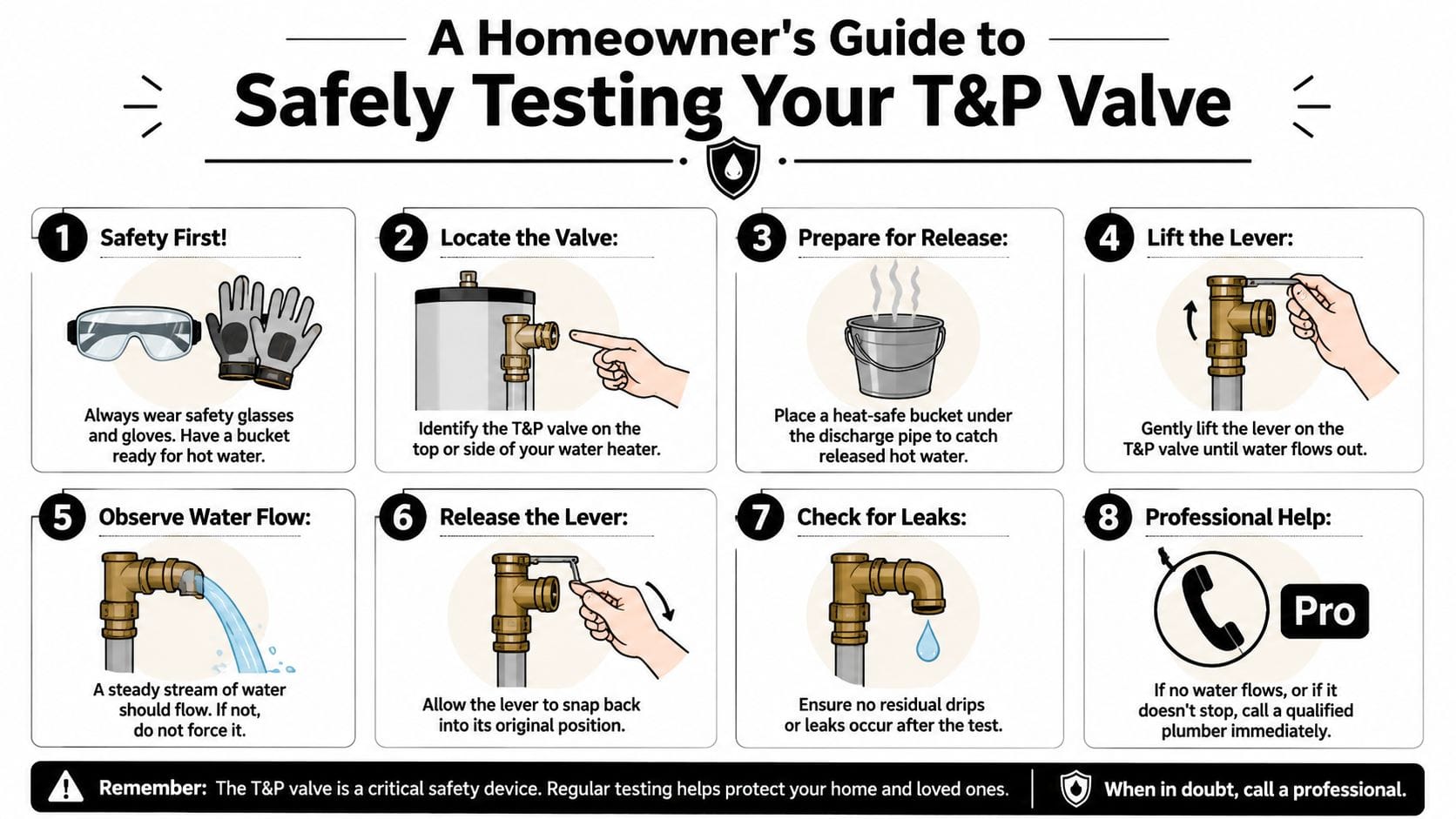
A short visual walkthrough can help before you start:
How to perform the test safely
Follow these steps in order:
- Position the bucket. Place it under the end of the discharge pipe, not directly under the valve body.
- Stand clear of the outlet. Don't put your face or hands near the discharge opening.
- Lift the test lever briefly. You should hear and see water move through the pipe.
- Let the lever snap back. Don't ease it down slowly.
- Watch the pipe after the test. The flow should stop once the valve reseats.
What are you looking for?
- A normal result is a brief release followed by a clean stop.
- A problem result is no water flow at all.
- Another problem result is continued dripping after the lever returns fully.
Don't keep cycling the lever if the valve won't reseat. At that point you need service, not a stronger pull on the handle.
If you see no discharge, or the valve continues leaking after the test, stop there. That's no longer maintenance. It's a repair issue.
T&P Valve Replacement When to Call a Pro and What to Expect
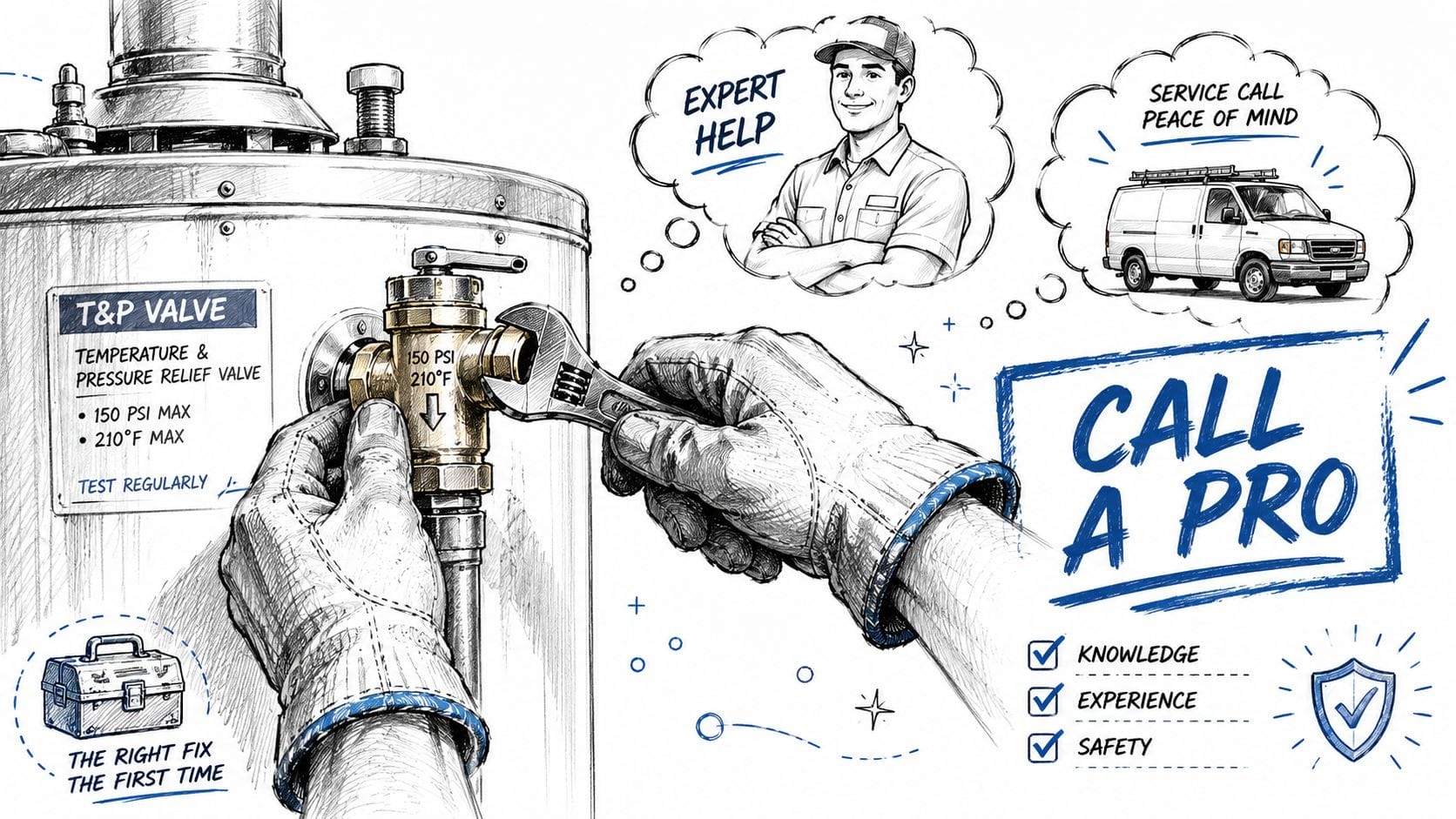
There are times when a homeowner should stop troubleshooting and book a plumber. A T&P valve falls squarely into that category once it shows signs of actual failure, once the discharge piping is questionable, or once the system needs diagnosis for expansion control.
When replacement is the right move
Call a professional if any of these apply:
- The valve fails a manual test. No discharge, weak response, or a lever that doesn't behave normally.
- It keeps leaking after the test. That usually means it didn't reseat cleanly.
- Corrosion is visible. Rust, mineral crust, or staining around the valve body or threads can signal deterioration.
- The drip has been misdiagnosed before. Replacing the same symptom twice usually means the root cause hasn't been addressed.
- The discharge setup looks wrong. Poor routing, bad termination, or improper materials need correction along with any valve work.
What a proper replacement involves
A proper replacement isn't just unscrewing one valve and threading in another. The plumber will typically isolate the heater as needed, lower pressure in the tank, remove the existing valve carefully, confirm the replacement matches the heater requirements, and inspect the discharge piping at the same time.
That matching step matters. The replacement has to suit the heater's nameplate and the installation. If the larger issue is an ageing tank, not just the valve, it may make more sense to review water heater replacement options instead of putting money into a unit that's near the end of its service life.
The best outcome is not “the drip stopped for now.” The best outcome is that the safety device is correct, the discharge piping is compliant, and the reason for the discharge has been properly identified.
If your water heater pressure relief valve is dripping, leaking, or doesn't look right, Encano Plumbing & Drainage Ltd. can inspect the valve, diagnose whether you're dealing with a failed component or a closed-system expansion issue, and make sure the repair is safe and code-compliant for your Vancouver-area home.