

You notice it when the house is quiet. Maybe it's in the basement bathroom, maybe near the laundry room, maybe it drifts in after rain and then seems to fade. A sewer smell in house is one of those problems that instantly changes how a home feels. People stop trusting the air, start checking every drain, and wonder if the issue is minor or urgent.
The good news is that sewer odours are usually traceable. Plumbing systems are built to keep wastewater moving out and sewer gases sealed inside the drainage system until they vent safely outdoors. When that barrier fails, there's usually a reason you can narrow down with a calm, methodical check.
Table of Contents
- That Unmistakable Odour Understanding Sewer Gas
- First Steps When You Detect a Sewer Smell
- A Homeowner's Diagnostic Checklist for Sewer Odours
- Simple DIY Fixes for Common Sewer Smell Causes
- When the Sewer Smell Signals a Deeper Problem
- Professional Solutions and Long-Term Prevention
That Unmistakable Odour Understanding Sewer Gas
In most homes, the first description is the same. Rotten eggs. Stale sewage. A foul smell that seems strongest near a bathroom, floor drain, or sink, then disappears before anyone else comes to check. That pattern matters, because sewer gas doesn't always behave neatly once it escapes into living space.
The BC Centre for Disease Control notes that sewer gas can include hydrogen sulfide, methane, and ammonia, and that at high concentrations hydrogen sulfide can dull the sense of smell. In other words, odour is not a reliable safety test by itself, as outlined in Wisconsin public health guidance on sewer gas exposure. That's one reason plumbers treat sewer odours as a building signal, not just an annoyance.
A normal plumbing system uses water seals to block gas. Every sink, tub, shower, floor drain, and toilet is supposed to create a barrier between the room and the drainage system. If that barrier dries out, cracks, loosens, or gets pulled apart by venting problems, gases can move back into the house instead of out through the roof vent.
Practical rule: If you can smell sewer gas indoors, something in the system is no longer sealing or venting the way it should.
A common example in Vancouver is the basement floor drain that nobody uses for months. The trap dries out, the gas barrier disappears, and the smell starts showing up in the laundry area. Another example is a bathroom that smells fine most days but turns bad after a toilet rocks slightly on the floor. In that case, the wax seal may be failing even if you don't see obvious water.
The right response isn't panic. It's process. Start by making the area safe, then work from the simplest causes outward.
First Steps When You Detect a Sewer Smell
Your first job is not diagnosis. It's to reduce exposure and avoid making the problem harder to read.
Open windows and exterior doors if you can do so safely. Turn on bathroom exhaust fans and kitchen fans that vent outdoors. Don't start spraying air freshener, lighting candles, or using scented cleaners to cover the smell. Masking the odour makes it harder to track the source, and an open flame isn't something to bring near a possible gas issue.
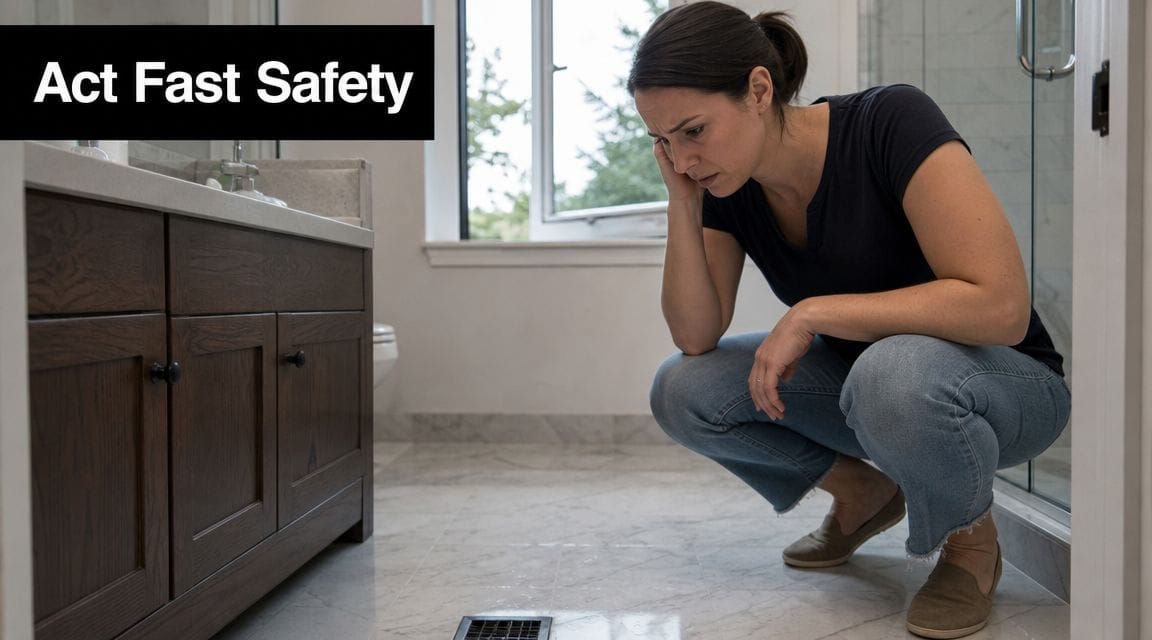
If anyone in the home feels unwell, stop troubleshooting for the moment. The public-health guidance tied to sewer gas notes symptoms can include headaches, dizziness, drowsiness, and nausea, and it also notes that high methane levels in enclosed spaces can create a suffocation risk. If the smell is strong and people are reacting to it, get fresh air first.
What to do in the first 15 minutes
- Ventilate the area: Open windows, open the bathroom or laundry room door, and let air move through.
- Keep people away from the strongest odour: Children, older adults, and anyone already feeling symptoms shouldn't stay in the affected area.
- Avoid “fixing” it with fragrance: Deodorisers hide clues. They don't solve the leak path.
- Hold off on heavy water use: If the smell is tied to a larger drainage or venting issue, running multiple fixtures can muddy the pattern.
One reason this matters is that sewer odour can mark a direct entry route from the drain system into the room. A peer-reviewed case study found that when sewer gas infiltration was happening, contaminant levels in bathroom air were nearly identical to levels inside the sewer pipe itself, confirming a direct pathway from the sewer into the home in that setting, as reported in this peer-reviewed indoor air study on sewer gas infiltration.
Don't judge risk by whether the smell fades after a few minutes. Ventilation can dilute the odour without fixing the opening that allowed it in.
A practical example. If the smell is strongest in a downstairs powder room, open the window, run the fan, and leave the room for a bit. Once the air clears, go back and check methodically. You'll get better answers than you will by sniffing around while the whole space is saturated.
A Homeowner's Diagnostic Checklist for Sewer Odours
Most sewer odour calls follow a simple order. Start with traps, then toilets, then venting signs, then clues that point to a hidden line problem. That sequence works because the most common failures are also the easiest to confirm.
Early in the check, it helps to work room by room and write down what you notice. If the smell is only in one bathroom, that's different from a smell appearing in the basement, laundry, and kitchen at the same time.
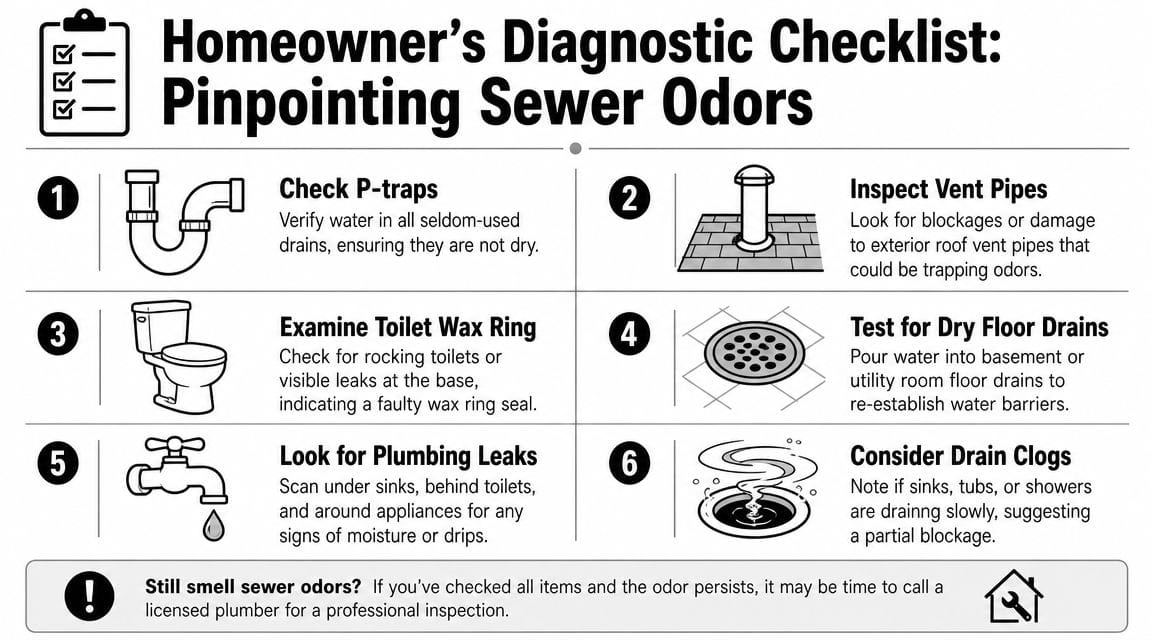
For a quick visual reference, use this checklist first.
Start with the easiest places
A professional workflow usually begins by re-filling every P-trap, checking the toilet wax ring, and making sure the main vent stack isn't obstructed, because a blocked vent can force sewer gas back into the home's drains, as described in Oatey's field guidance on sewer gas odours.
Check these first:
- Unused floor drains: Basement mechanical rooms, laundry rooms, and utility spaces are frequent trouble spots. If the drain hasn't seen water in a long time, the trap may be dry.
- Guest bathroom fixtures: A sink, tub, or shower that sits unused can lose its water seal.
- Laundry standpipes: If the smell is near the washer area, don't forget the standpipe and nearby floor drain.
A practical example. In a Vancouver basement suite, the owner might swear the smell is “coming from the walls.” Often the cause is a floor drain near the furnace room. Sewer gas spreads through the space, so the strongest smell isn't always where people first notice it.
Before you go further, run water briefly into every suspect fixture. Then wait and see whether the smell drops off in one specific area.
This short video gives a useful visual overview of what to look for:
Move to toilets and visible plumbing
If the smell stays centred around a bathroom, inspect the toilet next.
Look for a toilet that rocks when you sit on it or push gently side to side. Check the base for staining, dampness, or a persistent smell that stays low to the floor. Those signs often point to a failed wax ring or a poor seal between the toilet and flange.
Then look under sinks and behind accessible plumbing.
- Loose slip joints: A drain connection under a sink can leak odour without dripping much water.
- Corroded fittings: Older metal piping can open tiny pathways for gas.
- Cabinet odour: If the smell is stronger inside the vanity than in the room, that's a clue.
If the issue keeps returning and you can't isolate it visually, a drain camera inspection service is often the cleanest next step. Camera work helps confirm whether the problem is at a fixture, in a branch drain, or deeper in the sewer line.
Watch for whole-house clues
Some signs point beyond one isolated fixture.
- Slow drains: If several fixtures drain sluggishly, there may be a venting issue or partial blockage.
- Gurgling sounds: Air movement through traps can mean pressure isn't being relieved properly.
- Odour after using another fixture: If running the upstairs tub makes a basement drain smell worse, the system may be pulling or pushing air where it shouldn't.
If more than one drain smells, think system first and fixture second.
You can also look outside. If it's safe to do so from the ground, check whether the roof vent area shows obvious debris or damage visible from below. Don't climb onto the roof unless that's something you're equipped to do safely.
By the end of this checklist, you're usually in one of three categories. A dry trap is likely. A toilet or local seal failure is likely. Or the pattern suggests venting, blockage, or sewer-line trouble that needs tools beyond a basic homeowner check.
Simple DIY Fixes for Common Sewer Smell Causes
If your checks point to a simple cause, there are a few fixes that are reasonable to do yourself. The key is to stay with maintenance tasks and stop before you get into anything that requires opening drainage piping, pulling a toilet, or working on a roof vent.
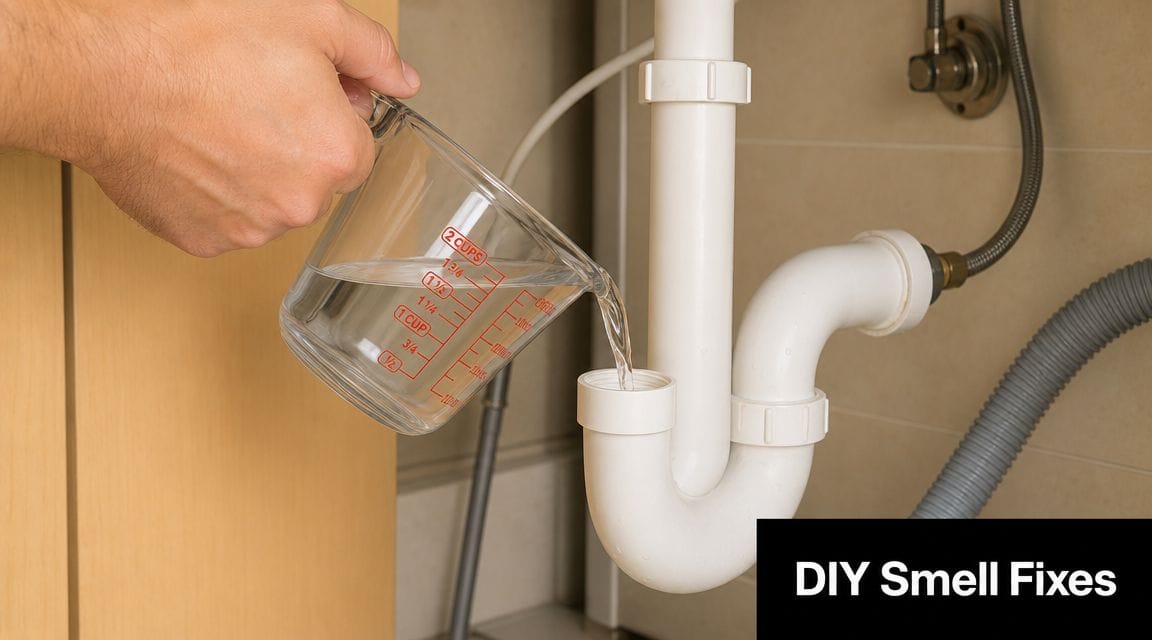
Re-prime a dry trap properly
This is the most common easy fix.
Pour water into the unused drain slowly and steadily. A sink or shower usually just needs enough water to restore the seal. For a basement floor drain, give it a proper refill rather than a quick splash. If that drain sits unused for long stretches, add a small amount of mineral oil on top of the water after refilling. That layer helps slow evaporation.
A good real-world example is the downstairs bathroom in a house with older kids who've moved out. The shower never gets used, the trap dries, and the room starts smelling “musty” or “sewer-like.” Re-priming the trap often solves it quickly.
Clean a drain when the smell is localised
If the odour is strongest at one sink but doesn't behave like raw sewer gas through the whole room, organic buildup in the drain opening or overflow can be part of it.
Use a simple cleaning approach:
- Remove visible debris from the stopper area.
- Flush with hot water.
- Clean the overflow opening and the drain surfaces you can reach.
- If you use a baking soda and vinegar rinse, treat it as a cleaning step, not a cure for every sewer odour problem.
This works best when the smell is coming from residue inside the sink drain assembly, not from a failed seal or vent issue.
What not to try
Some DIY habits create more trouble than they solve.
- Don't keep pouring bleach down drains: It doesn't fix a missing trap seal, bad wax ring, blocked vent, or cracked line.
- Don't caulk around a toilet to hide smell without diagnosing it: You can trap evidence of a leak and delay the proper repair.
- Don't ignore a recurring smell that comes back after one refill: That usually means the trap is being siphoned, the seal is failing somewhere else, or the source isn't the drain you first suspected.
A simple rule helps here. If a fix is safe, reversible, and clearly tied to what you found, it's reasonable. If you're guessing and the smell keeps returning, stop guessing.
When the Sewer Smell Signals a Deeper Problem
When the odour keeps coming back after the obvious fixes, the issue usually isn't a neglected floor drain anymore. At that point, the risk isn't just wasted time. It's that repeated DIY attempts can delay the right repair while the gas entry point stays open.
Some problems are hidden by definition. Cracked branch drains in walls, separated joints below slab, blocked main vents, and damaged sewer lines won't announce themselves neatly. The smell may move from room to room, appear only at certain times of day, or get worse when exhaust fans and clothes dryers change pressure in the house.
Red flags that point beyond a simple fixture issue
These patterns deserve a professional inspection:
- The smell returns soon after you refill traps
- More than one area is affected
- Fixtures gurgle or drain slowly
- The odour appears with no clear source room
- You notice sewage backup, dampness, or repeated toilet seal problems
A practical example from older Lower Mainland homes is the basement that smells fine in dry weather but develops intermittent odour during storm periods. Homeowners often assume one floor drain keeps drying out. Sometimes the actual issue is farther down the line.
Why wet Vancouver weather changes the diagnosis
In Metro Vancouver, sewer odours that show up after heavy rain may not be a simple trap issue. Wet-weather inflow and infiltration can stress sewer systems and overload private connections, forcing gases or even backups toward the home, as discussed in this explanation of why a house may smell like sewer after rain.
That matters in places like Richmond, Vancouver, Burnaby, and Delta, where older properties, lower-level suites, and below-grade spaces can be more vulnerable to pressure changes and drainage problems during storms. If the timing tracks with rainfall, don't assume the answer is inside one bathroom.
When sewer smell follows the weather, check the whole drainage system, not just the nearest drain.
This is also where repair method matters. If testing shows a damaged sewer section, patching symptoms at individual fixtures won't solve the source. In that case, it helps to understand trenchless sewer line repair options before deciding whether excavation is necessary.
The trade-off is straightforward. A homeowner can often manage a dry trap. A hidden vent defect, cracked sewer component, or weather-linked sewer pressure problem needs proper testing. That usually means smoke testing, camera inspection, and a repair plan based on evidence rather than smell alone.
Professional Solutions and Long-Term Prevention
When a plumber investigates persistent sewer odour, the goal is to confirm the gas entry point instead of chasing smell from room to room. The most useful tools are usually smoke testing, video camera inspection, and targeted checks of traps, vents, toilet seals, ejector pits, and exposed drainage connections. Smoke testing is especially effective because it shows where gas is escaping. A camera inspection helps determine whether the problem is in a fixture branch or farther down the sewer.
For landlords and strata councils, a recurring sewer smell isn't something to deodorise and revisit later. In BC, a persistent sewer odour is a meaningful safety signal because it can indicate failed plumbing components that allow flammable methane gas and other contaminants into occupied space, as described in this guidance on why sewage smells in bathrooms deserve prompt inspection.
What a plumber will usually do
- Verify simple failures first: Recheck trap seals, toilet bases, and visible joints.
- Test the venting system: A blocked or malfunctioning vent can affect several fixtures at once.
- Inspect the line internally: Camera equipment helps locate damage, separation, or blockage without guesswork.
- Match repair to the actual defect: A local seal failure needs a different solution than a line issue under slab or outside the foundation.
For prevention, regular fixture use helps keep traps sealed, and recurring slow drains or odours should be dealt with early. If buildup is part of the pattern, these signs you need professional drain cleaning are worth knowing before the odour turns into a backup.
Professional Sewer Repair Costs & Timelines in Vancouver
| Problem | Professional Solution | Estimated Cost (CAD) | Typical Timeline |
|---|---|---|---|
| Dry or repeatedly dry trap | Trap assessment, re-priming strategy, possible seal device recommendation | Contact plumber for quote | Often completed in one visit |
| Failed toilet wax ring | Remove and reset toilet with new seal | Contact plumber for quote | Often completed in one visit |
| Blocked or defective venting | Vent inspection, clearing, testing, repair as needed | Contact plumber for quote | Varies by access and repair scope |
| Suspected hidden drain leak | Smoke testing and targeted leak diagnosis | Contact plumber for quote | Usually diagnosis first, repair timeline varies |
| Damaged sewer line | Camera inspection, spot repair, or trenchless replacement depending on findings | Contact plumber for quote | Varies widely by location and method |
If you've got a sewer smell in house that keeps returning, the safest move is a proper diagnosis before it becomes a bigger drainage or indoor-air problem. Encano Plumbing & Drainage Ltd. serves Vancouver, Richmond, Burnaby, New Westminster, Delta, Surrey, and nearby communities with sewer inspections, drain diagnostics, repairs, and emergency plumbing support.