Water coming through a ceiling or pooling under a wall is the kind of problem that turns calm into panic in seconds. If you need to know how to stop a burst pipe, the first goal is not a perfect repair. It is stopping the water, protecting people and property, and keeping the damage from getting worse while you arrange a proper fix.
A burst pipe can happen in older homes, newer buildings, commercial spaces, and rental properties alike. Sometimes freezing is the cause. Sometimes it is corrosion, high water pressure, a failed fitting, or a pipe that was already weakened. Whatever caused it, your response in the first few minutes matters more than most people realize.
How to stop a burst pipe in the first few minutes
Start by shutting off the main water supply to the property. In most buildings, this is the fastest and safest way to stop the flow. The main shutoff is often near the water meter, in a mechanical room, crawl space, basement, garage, or along an exterior wall where the water line enters the building. Turn the valve clockwise if it is a wheel-style shutoff. If it is a lever handle, turn it so it sits perpendicular to the pipe.
If the leak is isolated and you know exactly which fixture or branch line feeds it, you may be able to shut off just that section. But in a real burst pipe situation, going straight to the main shutoff is usually the better call. It removes guesswork and saves time.
Once the water is off, open nearby faucets to drain remaining water from the system. Flush toilets once if needed. This relieves pressure in the pipes and helps reduce continued dripping from the damaged section.
Next, turn off electricity to affected areas if water is near outlets, light fixtures, appliances, or electrical panels. Do not step into standing water to reach a switch or panel. If there is any doubt about safety, wait for emergency help.
What to do right after the water is off
With the immediate flow stopped, shift your attention to limiting damage. Move furniture, rugs, electronics, boxes, and anything absorbent away from the leak. Use towels, buckets, mops, or a wet vacuum if you have one. The faster you remove water, the better your chances of avoiding warped flooring, stained drywall, and mold growth.
If water is bulging inside a ceiling, be careful. That bulge can hold a surprising amount of weight. In some cases, controlled draining may prevent a larger collapse, but this is one of those situations where caution matters. If you are unsure, it is smarter to wait for a plumber or restoration professional rather than create a bigger mess or put yourself at risk.
Take clear photos of the burst area and the surrounding damage. That helps with insurance claims and gives your plumber a better picture of what happened, especially if water flow changes before they arrive.
Temporary ways to stop a burst pipe leak
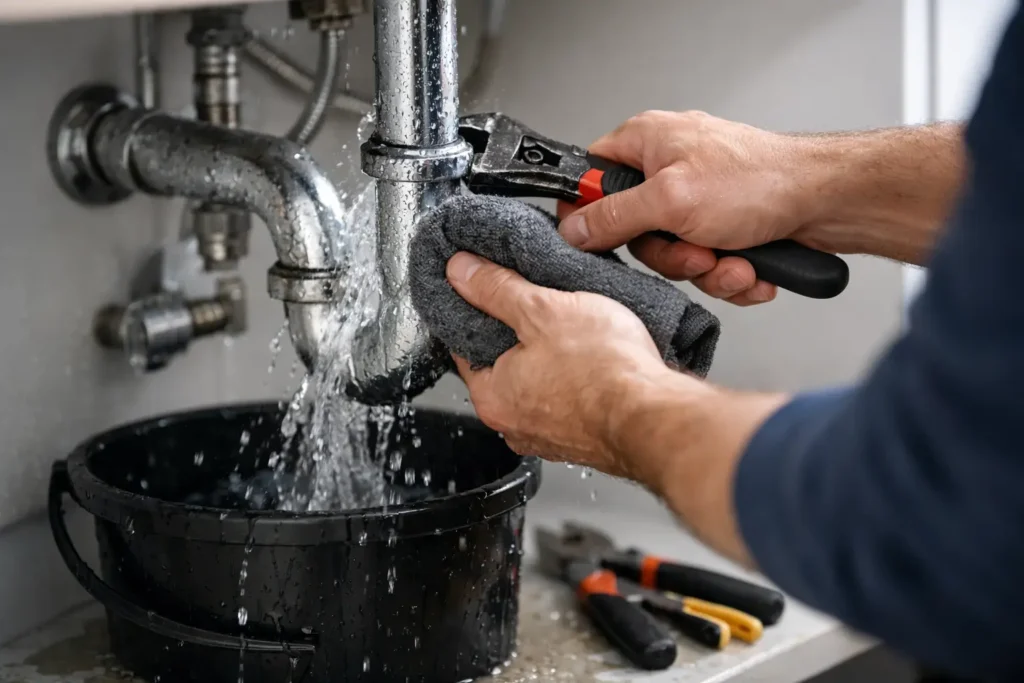
After the main water is shut off, some people want to know whether they can patch the pipe well enough to restore service. Sometimes a temporary fix can slow or contain the leak until a professional arrives, but it depends on the size of the break, the pipe material, and where the damage is located.
A pipe repair clamp can work for a small split or pinhole on an accessible metal pipe. Rubber patch kits and hose clamps can also help in a pinch. Epoxy putty may seal a minor crack if the pipe surface is dry enough and the damage is limited. For a very short-term measure, tightly wrapped rubber and tape can reduce dripping, but it is not a repair you should trust for long.
These options have limits. They are meant to buy time, not solve the problem. If the pipe has fully split, if the joint has failed, or if the damaged area is hidden behind walls or above ceilings, patch materials are not enough. In those cases, the safest move is keeping the water off and getting professional repair as soon as possible.
When not to try fixing it yourself
There is a big difference between a small visible leak under a sink and a true burst pipe affecting walls, ceilings, or multiple fixtures. DIY can make sense for simple shutoff steps and cleanup. It makes less sense when the risk of structural damage, contamination, or repeat failure is high.
You should avoid DIY repair if the pipe is inside a wall, under a slab, near electrical wiring, connected to a boiler or water heater system, or part of a commercial plumbing setup. The same goes for older galvanized piping, corroded copper, or damaged PEX connections that may need proper fittings and pressure testing.
If you restore water too early after a weak patch, the leak can reopen fast. That often leads to more water damage than if the line had stayed off in the first place. For landlords, property managers, and facility operators, that risk is even more serious because one leak can affect multiple units or occupied spaces.
Common causes of burst pipes
Knowing what likely caused the failure helps you understand whether one repair is enough or whether a larger plumbing issue is developing.
Freezing is the cause people think of first, and for good reason. When water freezes, it expands and puts pressure on the pipe until something gives. But burst pipes also happen from corrosion over time, especially in aging metal lines. High water pressure can stress weak joints and fittings. Poor installation, shifting foundations, repeated clogs, and worn-out supply lines can all play a part.
In some buildings, the pipe that bursts is not actually the oldest section. It is simply the weakest point under current pressure. That is why a plumber may recommend inspecting nearby piping, not just replacing the visibly failed piece.
Signs a pipe may be close to bursting
Sometimes a pipe failure happens without warning. Other times, there are clues. If you notice banging pipes, sudden drops in water pressure, discolored water, unexplained damp drywall, rising water bills, or musty smells near plumbing runs, do not ignore them.
In winter, pipes along exterior walls, crawl spaces, garages, and unheated utility areas need extra attention. If a faucet slows to a trickle during a cold snap, that can mean ice is already forming in the line. At that stage, acting early may prevent a full break.
How to prevent another burst pipe
The best prevention starts with knowing where your main shutoff valve is before there is an emergency. Everyone responsible for the property should know how to use it. In rental or commercial settings, that matters even more because delays can increase damage fast.
Insulating exposed pipes in cold areas is one of the simplest and most cost-effective steps. Sealing drafts near plumbing lines also helps. During freezing weather, keeping indoor heat stable and allowing a slight drip from vulnerable faucets can reduce pressure buildup.
Beyond cold-weather protection, regular plumbing inspections are worth it for older homes and buildings with a history of leaks. A professional can spot corrosion, poor pressure regulation, weak fittings, and aging supply lines before they fail at the worst possible time.
If your building has unusually high water pressure, a pressure-reducing valve may be needed. If you have had one burst, it is smart to ask whether the rest of the system should be evaluated. A single repair may solve the immediate problem, but prevention often requires looking at the whole picture.
When to call an emergency plumber
If water is actively damaging walls, ceilings, flooring, equipment, or neighboring units, call right away. The same goes if you cannot locate the shutoff valve, if the pipe is inaccessible, or if you suspect multiple leaks. Emergency plumbing service is also the right move when gas appliances, water heaters, boilers, or electrical hazards are involved.
For homes and buildings around Vancouver and nearby areas, fast response can make a major difference in repair cost and downtime. A licensed plumber can isolate the problem, replace the failed section properly, test the line, and help you understand whether there are warning signs elsewhere in the system. That is the kind of practical support property owners need in a real emergency, and it is why teams like Encano Plumbing & Drainage focus on quick action and clear next steps instead of guesswork.
After the repair, do not skip the dry-out
Stopping the leak is only part of the job. Wet drywall, insulation, wood framing, and flooring can continue causing trouble long after the pipe is fixed. If materials stay damp, mold and hidden damage can follow.
Use fans and dehumidifiers if the area is safe to access. Remove saturated materials when necessary. If the leak was extensive, professional drying and restoration may be the smarter route. It costs more upfront, but it can prevent much bigger repairs later.
When a pipe bursts, the best response is calm, quick, and practical: shut off the water, make the area safe, reduce the damage, and get the repair handled the right way. A temporary patch might buy you a little time, but a proper fix protects your property for the long run.