
The first hot stretch of the year often catches Vancouver homeowners off guard. You switch the thermostat to cooling, the outdoor unit hums, and the house still feels sticky by late afternoon. Upstairs gets warm first. The bedroom won't cool down. By dinner, you're standing over a floor vent trying to decide whether this is a small problem or the start of an expensive one.
That pattern is common across Vancouver, Richmond, Burnaby, and nearby communities because many systems here don't run hard for months on end. They sit idle through cooler weather, then get asked to perform during a sudden heat event. Parts that seemed fine in spring can fail under load. Filters clog unnoticed. Coils collect grime. A weak capacitor might only show itself when the unit has to start repeatedly on a hot day.
Table of Contents
- Your Guide to Air Conditioning Repair in Vancouver
- 7 Telltale Signs Your AC Needs Professional Repair
- Common Causes Behind Air Conditioner Failures
- DIY Troubleshooting Steps You Can Safely Perform
- When You Must Call a Professional HVAC Technician
- How to Choose a Reputable AC Repair Contractor in Vancouver
- Preventing AC Breakdowns with Regular Maintenance
- Frequently Asked Questions About AC Repair
Your Guide to Air Conditioning Repair in Vancouver
A lot of homeowners are in the same position now. The system worked last summer, so you assumed it would work again. Then the first warm week hits, the indoor temperature climbs, and suddenly air conditioning repair becomes urgent instead of optional.
That urgency is becoming more common. Statistics Canada reported that 63.2% of Canadian households had an air conditioner in 2022, up sharply from 42.1% in 2013, according to this summary citing the national survey on Canadian household air conditioner ownership. In practical terms, that means more homes across Greater Vancouver now depend on cooling equipment, and more of those systems are old enough to need skilled diagnosis when they act up.
In our climate, breakdowns often show up after intermittent use. A system may seem fine during a mild spring, then struggle once it has to run through a warm afternoon and evening. That's why a Vancouver-focused repair guide needs to deal with local habits, not just generic advice written for hotter regions.
If you want more local cooling-related reading, Encano's air conditioner articles and updates are a useful starting point.
In Greater Vancouver, the first real heat of the season often reveals problems that were already there. The heat didn't create the fault. It exposed it.
7 Telltale Signs Your AC Needs Professional Repair
What your home is telling you
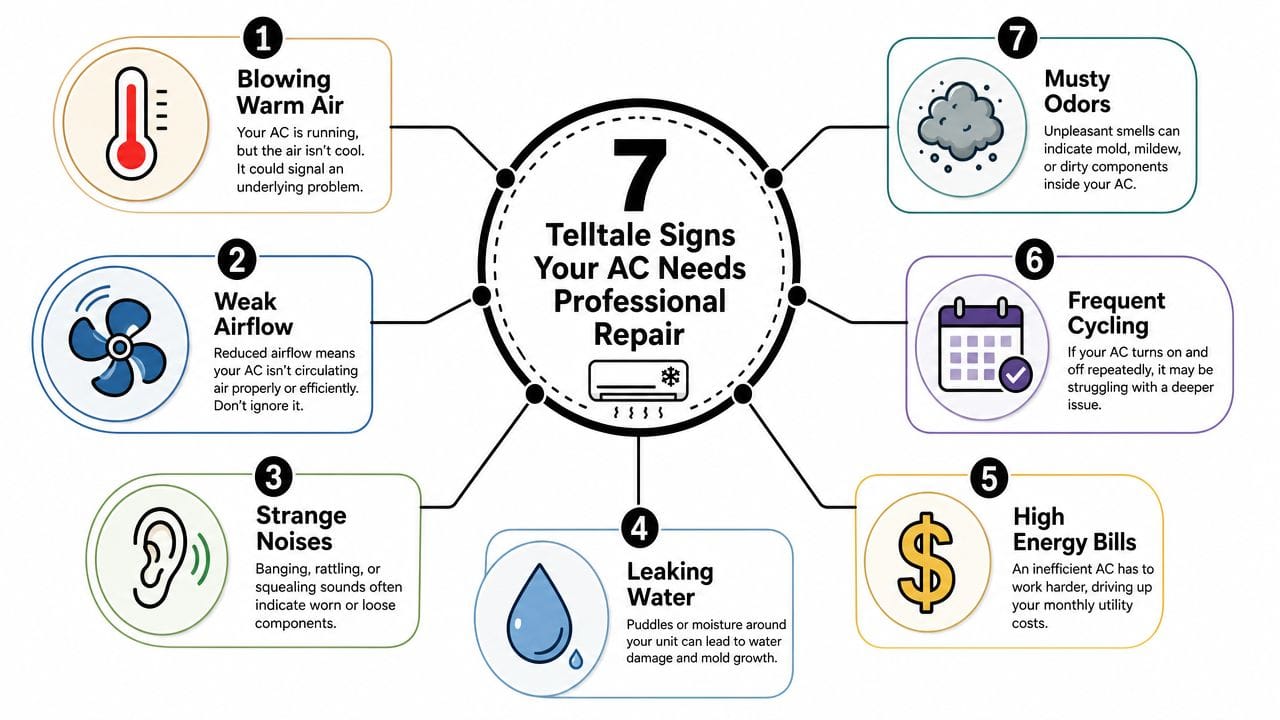
Some AC problems announce themselves clearly. Others start small and get dismissed for days. If you notice any of the signs below, it's worth paying attention before the unit turns a repairable issue into a major failure.
Blowing warm air. If the fan runs but the air at the vent isn't cool, the system may have a refrigerant issue, a coil problem, or an electrical fault keeping the compressor from doing its job.
Practical example: the living room vent feels active, but the room temperature doesn't drop even after an hour.Weak airflow. Air may be cool but barely moving. That usually points to a blocked filter, a dirty evaporator coil, a blower issue, or restricted duct airflow.
Practical example: the hallway vent pushes air well, but the back bedrooms feel starved.Strange noises. Buzzing, grinding, rattling, squealing, or metallic knocking all matter. A gentle start-up sound is normal. Sudden mechanical noise is not.
Practical example: the outdoor unit starts with a loud buzz and then trips off.Leaking water. Small condensation in the right place is normal. Water where it shouldn't be often means a blocked condensate drain, poor drainage, or ice melting off a frozen coil.
Practical example: you notice a damp patch near the indoor unit or around the furnace area.High energy bills without better comfort. If the house feels warmer while the unit seems to run more often, the system may be working harder because airflow or heat transfer has dropped.
Practical example: the AC runs through the evening, yet the upstairs still feels heavy and warm.Frequent cycling. An AC that starts and stops too often may have thermostat trouble, airflow problems, sensor issues, or a component that can't maintain stable operation.
Practical example: the unit runs for a short burst, shuts off, then starts again before the house has cooled.Musty or burning odours. A musty smell often points to moisture and biological growth around wet components. A burning or sharp electrical smell is more serious and can signal overheating wiring or a failing motor.
Practical example: the system turns on and the first thing you notice isn't cool air. It's a smell that makes you reach for the thermostat.
A quick example from a typical service call
A common Vancouver call goes like this. The homeowner says, “It's not totally dead, it's just not keeping up.” That phrase usually means the system still runs, but one part of the cooling process has started to fail.
Practical rule: If the AC is still operating but comfort is dropping, don't assume that means the issue is minor. Many expensive failures begin as “it still kind of works.”
The useful step is to describe what you notice in plain language when you book service. Say whether the air feels warm, airflow is weak, the unit is noisy, there's water near the equipment, or the breaker has tripped. That gives the technician a better starting point than saying only that the AC “stopped working.”
Common Causes Behind Air Conditioner Failures
Why one symptom can have several causes
The same symptom can come from very different faults. Warm air doesn't automatically mean low refrigerant. Weak cooling doesn't always mean the compressor is bad. That's why proper air conditioning repair starts with testing, not guessing.
According to NREL guidelines, the core of a professional AC repair is diagnostics. A technician must systematically check refrigerant charge, airflow, and electrical components, as overlapping symptoms can be misleading. Weak cooling could be caused by low refrigerant, a blocked air filter, or a dirty coil, and only methodical testing can pinpoint the true fault, as outlined in NREL's AC diagnostic and repair guidance.
Think of the system like a loop. Air has to move across clean coils. Refrigerant has to circulate properly. Electrical parts have to start and run motors at the right time. If one part of that chain slips, the comfort problem you feel indoors can look very similar no matter which component is at fault.
The faults we see most often
Here are the causes that turn up again and again in residential systems.
| Common cause | What it does | What you may notice |
|---|---|---|
| Dirty filter or blocked airflow | Chokes the system and reduces heat transfer | Weak airflow, poor cooling, icing |
| Dirty evaporator or condenser coil | Makes it harder to absorb or reject heat | Long run times, warm supply air |
| Refrigerant leak or charge problem | Disrupts the cooling cycle | Weak cooling, icing, short cycling |
| Failed capacitor or contactor | Prevents motors or compressor from starting properly | Humming, clicking, hard starting |
| Clogged condensate drain | Stops water from draining away | Water leaks, moisture around equipment |
| Sensor or thermostat issue | Gives the system bad information | Inconsistent cycling, uneven temperatures |
A refrigerant leak is one of the most misunderstood problems. Refrigerant isn't like gasoline. The system doesn't “use it up” under normal operation. If the charge is low, there's usually a leak or another issue in the circuit that needs to be found and corrected.
A dirty coil creates another common summer problem. If the indoor coil can't absorb heat well, or the outdoor coil can't release it, the system keeps running with less effect. In Vancouver, where some units sit for stretches and then suddenly get heavy use, that drop in performance can seem abrupt even though the build-up happened slowly.
A capacitor failure is also common. A simple way to picture it is this. The capacitor gives the motor or compressor the push it needs to start and stay stable. When it weakens, the unit may hum, struggle to start, or shut itself down to protect other components.
If a technician diagnoses an AC by sound alone, be careful. Good repair work comes from measured checks, not from replacing parts based on hunches.
DIY Troubleshooting Steps You Can Safely Perform
A few checks are worth doing before you call. They won't solve every problem, but they can rule out the simple causes that waste time and money.
Start with this checklist.
A safe homeowner checklist
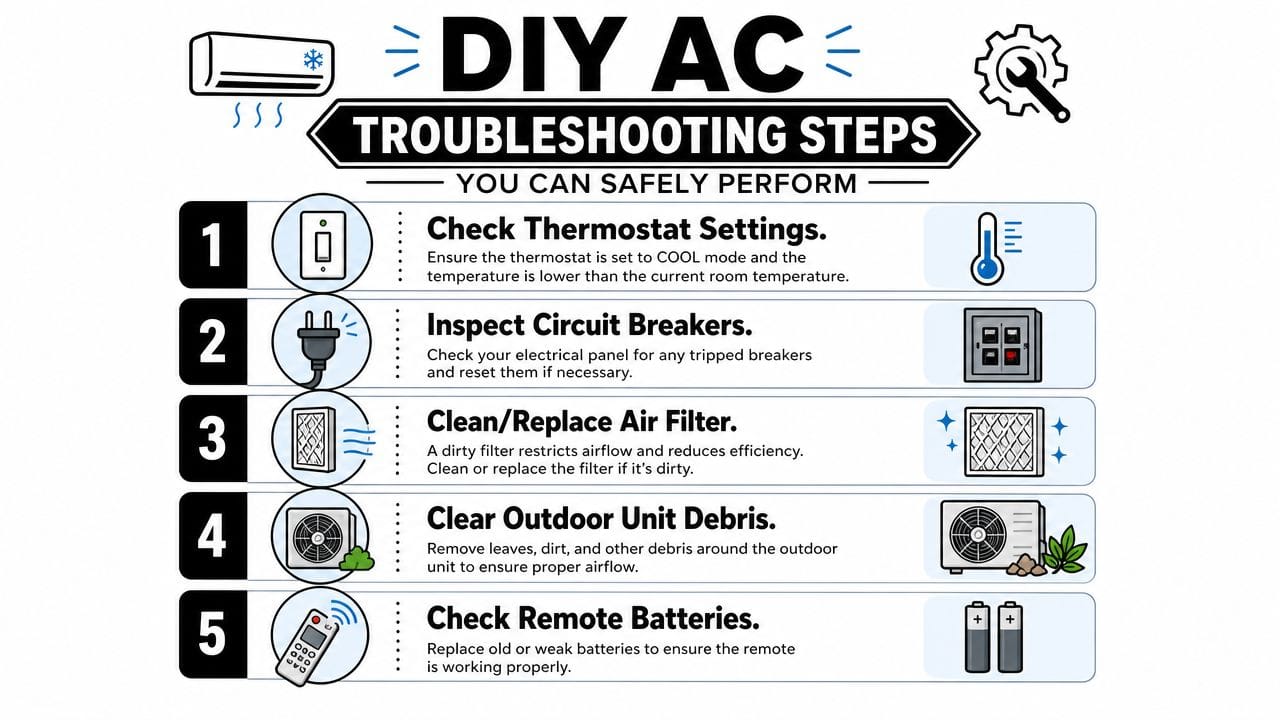
Check thermostat settings. Make sure it's set to cooling, not fan-only, and that the target temperature is below room temperature. If you use a remote or wall control, confirm the batteries and mode settings too.
Inspect the breaker. If the AC breaker has tripped once, reset it once. If it trips again, stop there. Repeated tripping usually means an electrical or mechanical problem that needs a technician.
Look at the filter. If it's loaded with dust, replace it. A clogged filter can reduce airflow enough to create poor cooling, icing, and strain on the system.
Open and clear vents. Make sure supply and return vents aren't blocked by rugs, furniture, or storage bins. Closing too many vents can also upset airflow and system balance.
Clear debris around the outdoor unit. Leaves, cottonwood fluff, and overgrown plants can crowd the condenser. Gentle housekeeping around the unit is fine. Don't bend fins or spray electrical sections.
A simple video walkthrough can help you do the basic checks in the right order.
Safety first
Do not open electrical panels, test live wiring, force a stuck contactor, chip ice off coils, or handle refrigerant lines. Those are not homeowner tasks.
The line between safe troubleshooting and unsafe repair is straightforward:
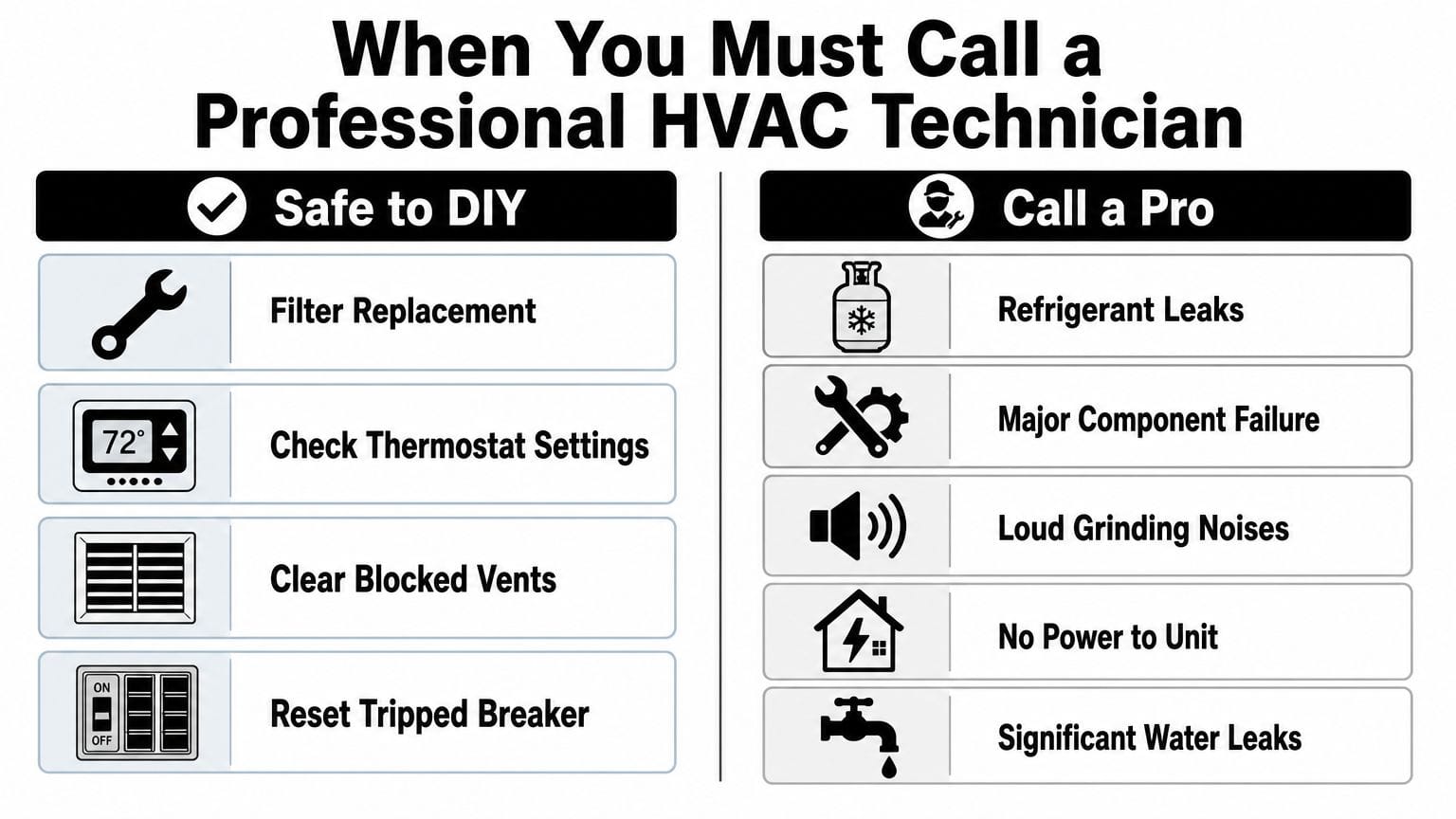
- Safe to do. Thermostat checks, filter replacement, vent inspection, breaker check, basic outdoor debris clearing.
- Not safe to do. Electrical diagnosis, capacitor replacement, refrigerant work, motor testing, deep disassembly, coil thawing with tools or heat.
Practical example: if you find the filter is dirty and replacing it restores airflow, great. If you replace the filter and the coil is still icing or the breaker still trips, stop. Continuing to restart the system can make the repair larger than it needed to be.
When You Must Call a Professional HVAC Technician
Some symptoms move the problem out of the DIY category immediately. At that point, the goal isn't to keep experimenting. It's to prevent equipment damage, electrical risk, or water damage inside the home.
Stop and book service right away
Call a technician if you notice any of the following:
- Grinding, screeching, or metallic banging. Those sounds can mean failing motors, loose blower parts, or compressor trouble.
- Burning plastic, hot wiring, or sharp electrical smells. Shut the system off. Electrical odours deserve immediate attention.
- Ice on refrigerant lines or the coil. Ice is a symptom, not the root cause. Running the unit longer won't fix it.
- The unit won't start after one breaker reset. Repeated resets can stress components and create a safety issue.
- Water is leaking heavily indoors. A blocked drain may sound minor, but it can damage floors, ceilings, or surrounding finishes.
Shut the system off if you smell burning, hear metal-on-metal noise, or see heavy icing. Comfort can wait. Safety can't.
What counts as urgent
Not every repair is a midnight emergency, but some situations shouldn't sit until next week. If a vulnerable family member is affected by indoor heat, if water is escaping into finished space, or if there's any sign of electrical overheating, treat it as an urgent service call.
In Greater Vancouver, urgent calls also increase during heat waves because delayed service can mean several uncomfortable days without cooling. If the system is limping along with loud noise or visible ice, turning it off and booking proper repair is usually the safer choice than trying to squeeze one more day out of it.
How to Choose a Reputable AC Repair Contractor in Vancouver
Hiring the right contractor matters because AC faults can look simple from the outside. A warm house can lead to a quick guess, a part swap, and the same problem returning days later. A solid contractor takes a wider view.
What a proper service call should include
According to the U.S. Bureau of Labor Statistics, a standard HVAC service call involves inspecting the entire system, cleaning components, and checking electrical and refrigerant systems, not just swapping a single part, as described in the BLS overview of HVAC mechanics and installers. That's the benchmark homeowners should use when comparing companies.
A proper visit should include more than “your capacitor is bad” or “you need gas.” You want someone who checks controls, airflow, coil condition, drainage, and electrical operation before closing the job.
Here's a practical hiring filter:
- Look for local familiarity. Vancouver homes range from detached houses to condos and strata buildings with varied access, equipment placement, and ventilation layouts. Local experience helps.
- Ask about licensing and insurance. This matters even more in multi-unit buildings and managed properties.
- Expect clear pricing language. You should understand what the visit includes, what was diagnosed, and what work is recommended.
- Ask what caused the failure. Good technicians explain the root issue, not just the failed part.
- Check warranty terms. Ask whether parts and labour are covered, and for how long.
Questions worth asking before you book
You don't need to sound technical. Ask direct questions.
| Ask this | Why it matters |
|---|---|
| Will you perform a full diagnostic before recommending a repair? | It filters out guesswork |
| Do you work on my system type? | Not every contractor handles every setup confidently |
| What will be inspected during the visit? | It shows how thorough the call will be |
| Will I get an explanation of the fault and repair options? | You need more than a yes-or-no answer |
| Do you provide written estimates? | It reduces confusion later |
For homeowners comparing options, it can also help to understand broader cooling project costs and upgrade context through guides such as central air installation cost information.
Encano Plumbing & Drainage Ltd. is one local company that provides HVAC service in Greater Vancouver, alongside its plumbing and drainage work. Whether you book them or another contractor, the useful standard stays the same. Choose someone who diagnoses the system as a whole.
A repair that lasts usually starts with someone taking measurements, not shortcuts.
Preventing AC Breakdowns with Regular Maintenance
Most breakdowns don't begin on the hottest day of the year. That's just when you notice them. The actual problem often starts earlier with dirt, loose electrical connections, blocked drainage, or restricted airflow.
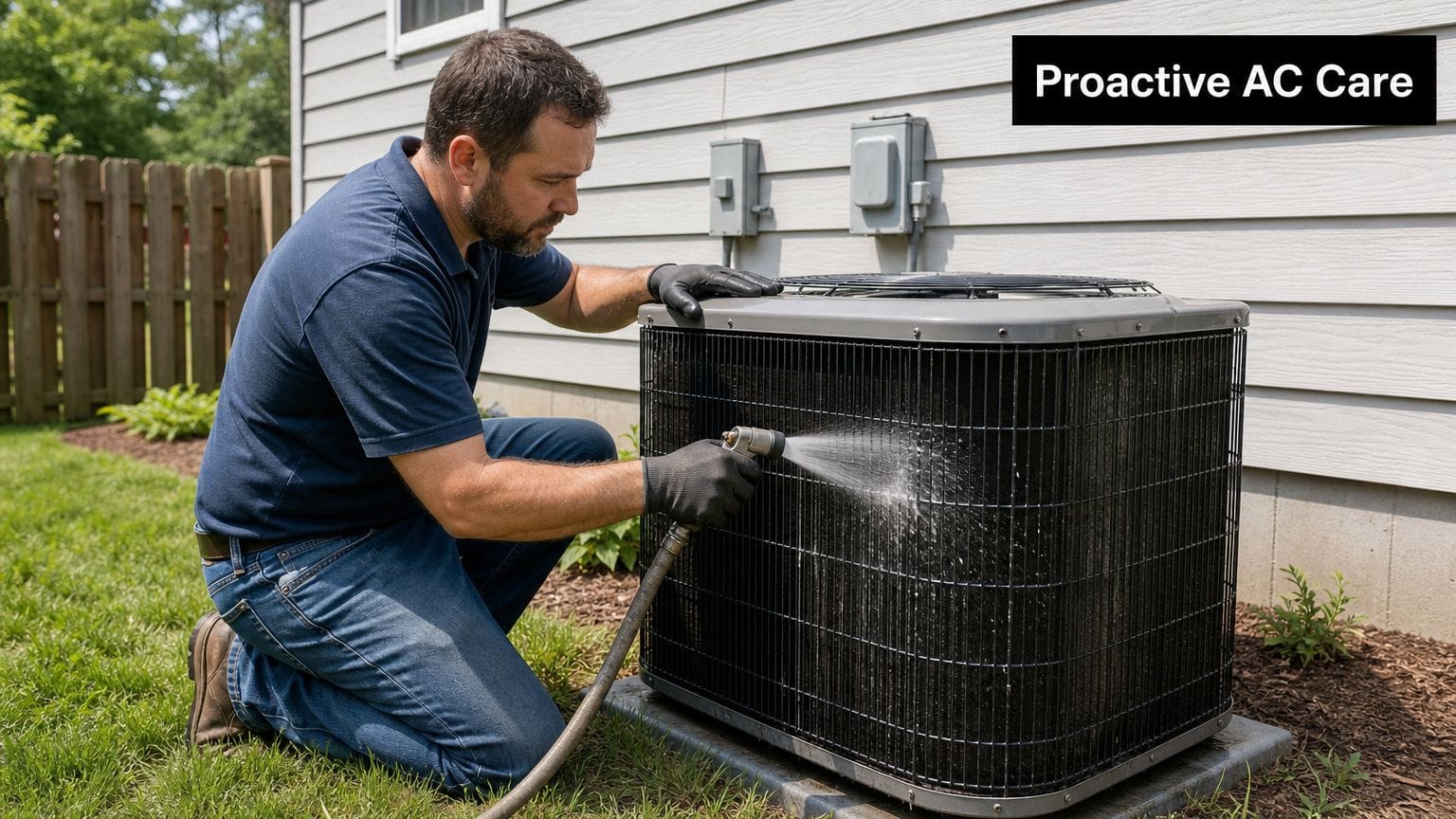
A simple Vancouver maintenance rhythm
A practical maintenance routine in Greater Vancouver doesn't need to be complicated.
- At the start of cooling season. Replace or inspect the filter, test the thermostat, and make sure the outdoor unit has breathing room.
- During summer use. Keep an ear out for changes in sound and check that condensate is draining properly.
- After dusty or smoky periods. Inspect the filter sooner than usual. Airflow problems often start there.
- Once a year. Book a professional tune-up. That visit should include cleaning key components, checking electrical connections, inspecting drainage, and confirming the system is operating properly.
A tune-up is basically a health check for the equipment. It won't prevent every failure, but it gives you a better chance of catching wear before it turns into a no-cooling call during a heat wave.
If you're also trying to improve comfort and reduce how hard your cooling equipment has to work, this guide on testing your house for heat loss is worth reading. Better envelope performance helps in summer as well as winter.
Frequently Asked Questions About AC Repair
How much does a typical AC repair cost in Vancouver
It depends on the fault, the parts involved, and how long diagnosis takes. A simple electrical component issue is very different from a refrigerant leak, drainage problem, or motor failure. The useful move is to ask for a clear diagnosis first, then a written estimate for the repair.
Is a noisy air conditioner an emergency
Sometimes, yes. A light change in sound may not be urgent, but grinding, screeching, banging, or buzzing with failed start-up should be treated seriously. If the sound is sharp, metallic, or paired with a burning smell, shut the unit off and call a technician.
How long should an air conditioner last before it needs replacing instead of repairing
There isn't one rule that fits every home. The factors are condition, repair history, refrigerant type, and whether the system is still cooling reliably. If breakdowns are becoming frequent or the repair is substantial, ask for both repair and replacement options so you can compare the short-term fix with the longer-term decision.
My AC runs, so why is the house still warm
Because “running” only means some parts are on. The system can still have low airflow, a dirty coil, a control issue, or a refrigerant-side problem. If it operates but doesn't cool, it still needs diagnosis.
If your system is blowing warm air, leaking, icing up, or making a noise that doesn't sound right, it's time for a proper assessment. Contact Encano Plumbing & Drainage Ltd. to book HVAC service in Greater Vancouver and get a clear diagnosis, practical repair options, and help restoring comfort safely.