Your furnace usually doesn't choose a convenient time to fail. It quits on a wet Vancouver morning, starts banging during an evening cold snap, or keeps running without ever making the house feel comfortable. At that point, most homeowners want the same thing. A clear answer on what to replace it with, what it should cost, how long it will take, and whether permits or Strata rules are going to slow everything down.
That's where furnace installation in Vancouver gets more complicated than generic online advice makes it sound. Local code, venting rules, airflow testing, multi-unit approvals, and the gas-versus-heat-pump decision all matter. A furnace that's installed neatly but commissioned poorly can still be noisy, inefficient, and hard on the equipment.
This guide is built around what affects a project in Vancouver, Richmond, Burnaby, and the surrounding area. It focuses on the decisions that change comfort, cost, and timeline.
Table of Contents
- Your Guide to a Stress-Free Furnace Replacement
- Choosing Your Heating System for Vancouver's Climate
- Why Proper Sizing and Ductwork Are Crucial
- Navigating Vancouver Permits Codes and Rebates
- The Furnace Installation Process Step by Step
- Understanding Furnace Installation Costs in Vancouver for 2026
- FAQs for Greater Vancouver Homeowners
Your Guide to a Stress-Free Furnace Replacement
When an older furnace starts making sharp metal noises, short-cycles, or stops heating evenly, homeowners often rush straight to brand names. That's usually the wrong first move. The smarter approach is to confirm what problem you're solving. Is the unit at end of life, or is the underlying issue airflow, venting, filtration, or controls?
A good replacement starts with the house, not the brochure. The contractor should look at the existing duct layout, venting path, filter arrangement, gas connection, drainage, and thermostat setup before recommending equipment. In Vancouver, local code and permitting also shape the job, especially in attached homes and Strata properties.
Here's the practical sequence that keeps projects calmer and cleaner:
- Confirm the failure point so you're not replacing equipment when the bigger issue is the duct system.
- Choose the right system type based on your current utilities, cooling needs, and budget.
- Check permit and Strata requirements early because paperwork can affect schedule.
- Review the installation scope in detail including venting, drains, filter cabinet, and commissioning.
- Expect performance testing at the end instead of treating startup like a simple power-on.
Practical rule: The best furnace replacement is the one that fits the home, the ductwork, and the permit conditions. Not the one with the flashiest features.
Choosing Your Heating System for Vancouver's Climate
A Vancouver homeowner usually reaches this decision after a specific failure. The old furnace is unreliable, the house has ductwork, and the question becomes whether to install another gas furnace or switch to a heat pump. In this market, the answer depends on the home's utility setup, whether you also need cooling, and whether Strata or electrical upgrade requirements will add cost.
Gas furnace or heat pump
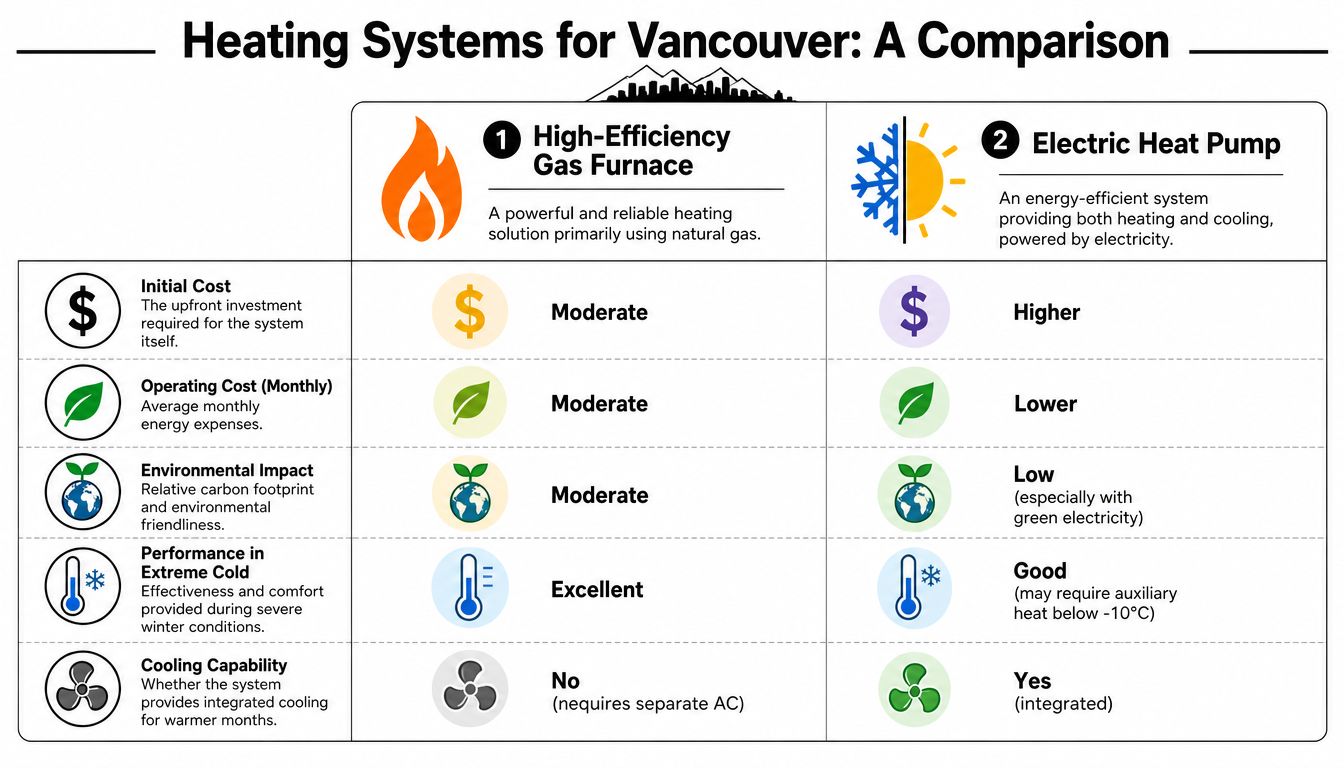
A gas furnace creates heat by burning natural gas and sending that heat through the duct system. A heat pump uses electricity to move heat, and it can cool the home in summer. That cooling piece matters more in Greater Vancouver than it did a decade ago, especially in top-floor condos, west-facing homes, and houses with large window areas.
For many detached homes in Vancouver, Burnaby, and Richmond, gas still makes sense when the house already has a gas service, the venting path is workable, and the owner wants the lowest replacement cost. Heat pumps become more attractive when the home also needs air conditioning, when the existing system is electric baseboard or an aging furnace plus aging AC, or when the owner wants to reduce combustion equipment in the house.
If you want a broader view before deciding, this overview of home heating system installation choices gives helpful background on the main system types.
Understanding the core decision
The sales pitch around heat pumps often skips the practical details. In Vancouver, those details matter.
If a house already has a sound gas line, usable ducts, and a separate AC system with life left in it, a high-efficiency furnace is often the lower-risk, lower-upfront option. If you are replacing both heating and cooling at the same time, the heat pump case gets stronger because one system can handle both jobs.
Strata properties add another layer. Some condo owners can install a heat pump only if the building allows outdoor units, condensate routing, and electrical changes. In older buildings, that approval process can matter as much as the equipment choice itself.
The same goes for service conditions. I have seen projects where a homeowner wanted to switch system types, but the better decision was to stay with gas because the electrical upgrade, pad location, line-set routing, and Strata paperwork pushed the total job well past the original budget. I have also seen the opposite. A homeowner planned to replace only the furnace, then realized their AC was near end of life too. At that point, a heat pump became the cleaner long-term move.
What usually makes the better choice in Vancouver
Choose a gas furnace if your priority is lower installation cost, you already have natural gas, and you do not need to replace cooling equipment right now.
Choose a heat pump if you want heating and cooling in one system, your current AC also needs replacement, or you want to shift away from gas use.
Both can work well here. Vancouver's winter temperatures are moderate enough that heat pumps perform better here than they do in much colder parts of Canada, but installation constraints still decide many jobs. Electrical capacity, refrigerant line routing, noise placement, venting changes, and building approvals affect the final answer more than marketing claims do.
The best system is the one that fits your house, your utility setup, your building rules, and the amount you want to spend now versus later.
Why Proper Sizing and Ductwork Are Crucial
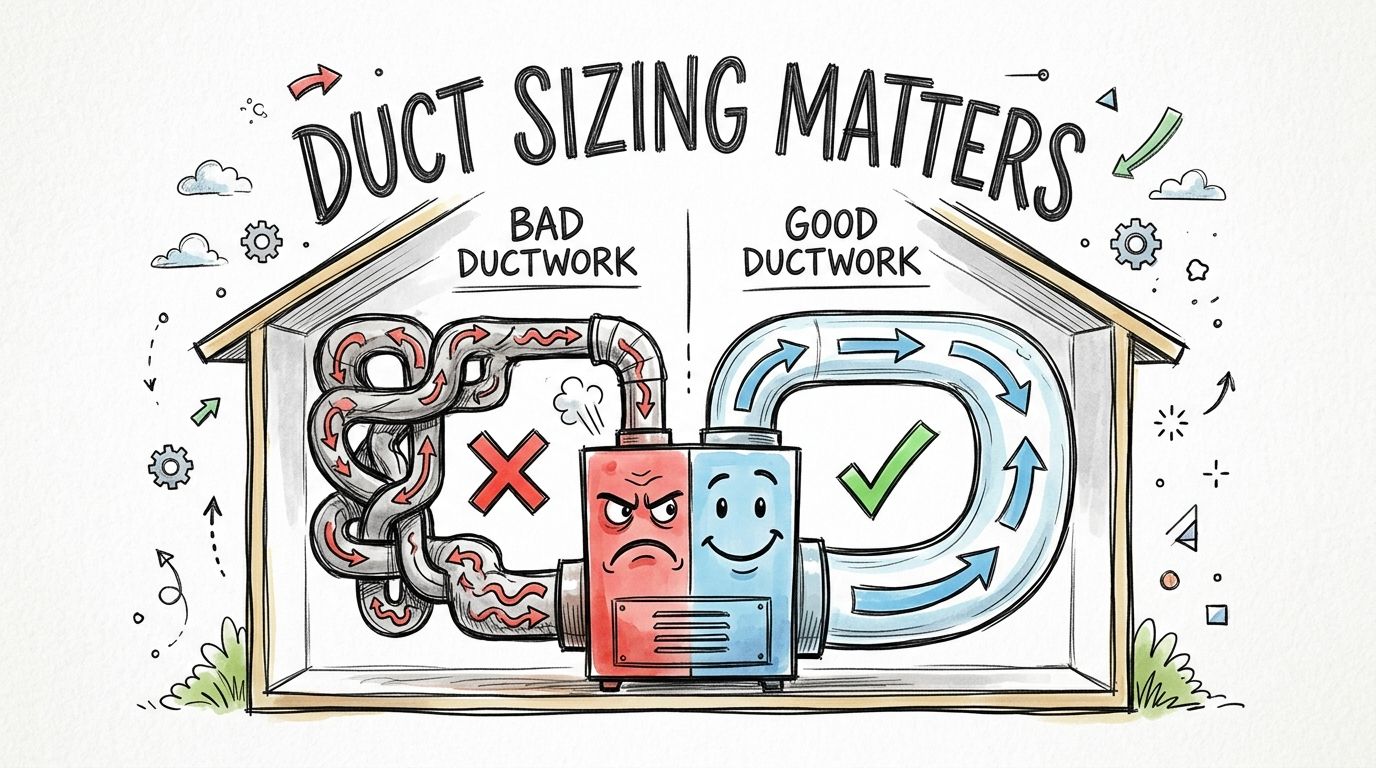
A new furnace can still perform badly if the duct system is wrong. Homeowners often focus on the cabinet in the mechanical room because that's the visible part. The harder truth is that airflow decides whether the new equipment will feel smooth and quiet or loud and uneven.
Bigger is not better
Oversizing is one of the most common mistakes in furnace replacement. A furnace that's too large for the home tends to heat quickly, shut off, and restart again. That short-cycling can leave rooms uneven, create temperature swings, and put unnecessary stress on components.
That's why a professional load calculation matters. The goal isn't to install the biggest unit that fits. The goal is to match the furnace output to the house and the airflow system supporting it.
Think of the duct system like circulation in the body. The furnace is the heart, but the ducts are the arteries and veins. If the pathways are too small, poorly shaped, or leaking, the equipment has to push harder than it should.
Ductwork is the hidden half of the job
Vancouver has specific installation expectations around airflow verification. Proper installation requires contractors to complete an external static pressure test and a ductulator calculation to confirm the ductwork matches the airflow requirements of the new system, according to the City of Vancouver furnace performance document.
That requirement matters because bad duct transitions, undersized returns, and leaky joints don't just waste heat. They raise static pressure, increase blower strain, and make the system noisier.
A proper duct review should look for:
- Return air limitations that starve the furnace for airflow
- Poor transitions at the supply or return plenum
- Accessible joints that need sealing in the furnace room
- Filter setups that are too restrictive for the required airflow
- Existing duct size mismatches when a new blower is introduced
If you're also evaluating cooling performance, this guide to central air installation cost factors helps explain why duct condition affects more than just winter heat.
A clean install isn't enough. If the airflow numbers are wrong, the furnace won't deliver what the label promises.
Navigating Vancouver Permits Codes and Rebates
A furnace swap in Vancouver often slows down before the equipment even arrives. The common holdup is not the install itself. It is permits, strata approval, and code details that have to be sorted before a crew can finish the job properly.
What Vancouver and BC rules change on your project
If you are replacing a furnace in Vancouver, the paperwork and code path depends on the home type and the scope. A detached house is usually simpler. A condo, townhouse, or any home under strata management can add approval steps, access coordination, and questions about what changes are allowed inside a shared building.
On the equipment side, BC efficiency rules affect what can be installed. Natural gas furnaces sold in Canada are generally high-efficiency models now, so code questions on site are usually venting, combustion air, condensate disposal, electrical connections, and whether the duct system and filter cabinet suit the new blower.
Vancouver's own furnace performance guidance is more specific than many homeowners expect. The City of Vancouver furnace performance document calls for duct transitions, sealing of accessible joints in the furnace room, and filter arrangements that support the required airflow. That matters in older Vancouver homes where the new furnace cabinet rarely matches the old one exactly.
The Strata timeline issue many owners miss
The city's heating rules can affect schedule as much as design. Under Vancouver's home heating permit requirements, replacing a heating system requires a permit, and the city notes in its home heating and cooling FAQ that permit timing can affect project scheduling, especially where review or approvals are involved.
In practice, strata jobs are where delays show up most often. I see the same trouble spots repeatedly:
- Strata approval may be needed before work starts, even for a like-for-like replacement.
- Mechanical permit review can stall the job if the application is incomplete.
- Access planning matters in towers and large complexes, especially for elevator use, suite entry, and old equipment removal.
- Scope changes can trigger more questions if the project shifts from straight furnace replacement to a hybrid or electrification plan.
That last point matters more now. Some owners start with a gas furnace quote and then realize building rules, electrical limits, or rebate goals make a hybrid system a better fit. If you are comparing that route, this guide to dual-fuel heat pump systems for Vancouver homes helps explain where a mixed setup makes sense in our climate.
What to ask about rebates
Rebates help only when the installed equipment, application timing, and paperwork all line up. I tell homeowners to treat rebate money as pending until the contractor confirms the exact model pairing and who is submitting what.
Ask for three things in writing:
- Which rebate programs may apply to your address and fuel type
- The exact equipment combination required to qualify
- Who handles the documents, dates, and submission steps
That simple paper trail prevents a common Vancouver problem. The homeowner budgets around an incentive, the install goes ahead, and only afterward does someone find out the equipment match or application timing does not meet program rules.
The Furnace Installation Process Step by Step
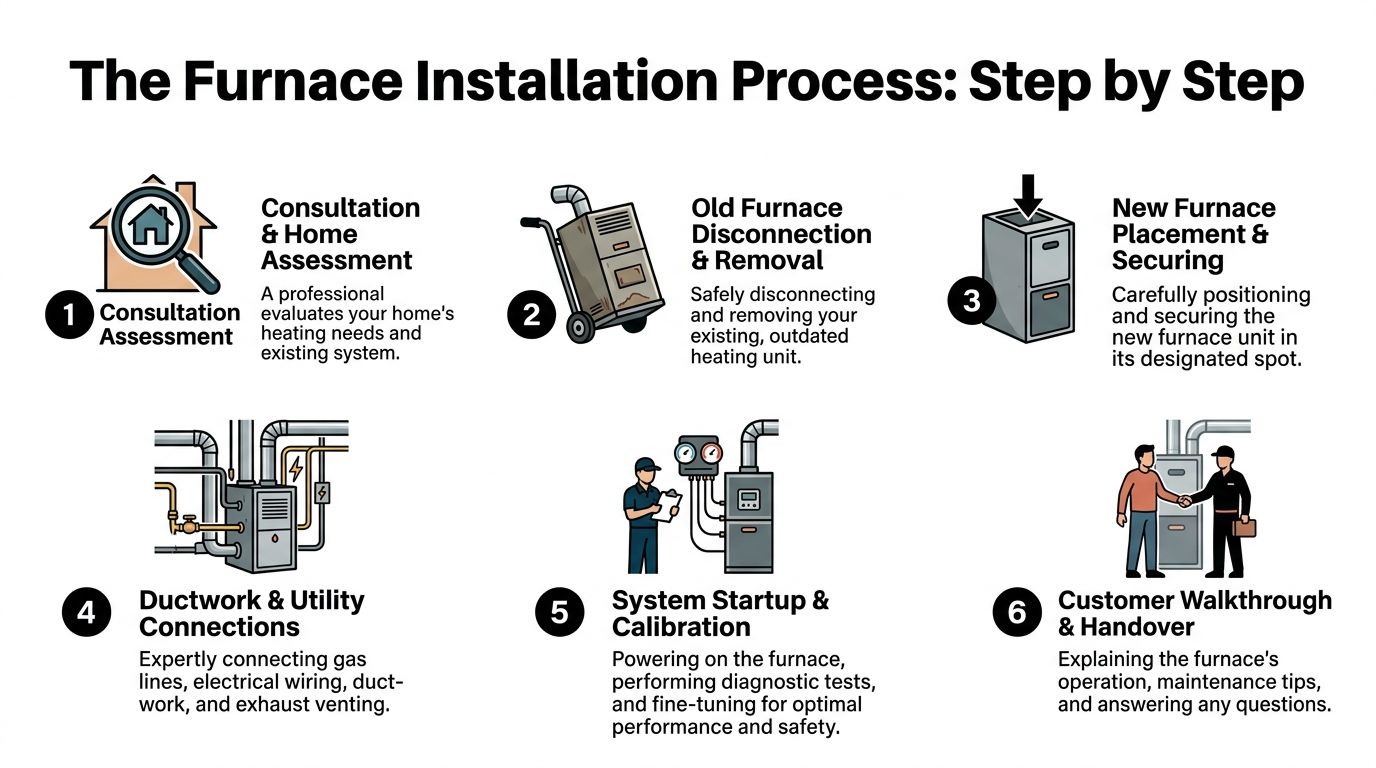
On installation day, the quality of the work shows up in the details. Good crews don't rush straight to swapping the box. They protect the work area, confirm the scope, and remove the old unit safely before any new connections are made.
A visual overview helps if you've never seen the sequence laid out clearly.
What happens before the new furnace is turned on
A typical furnace installation in Vancouver follows a predictable order:
-
Site protection and shutdown
Floors around the furnace area are protected. The crew isolates power and fuel, then confirms the old equipment is safe to disconnect. -
Removal of the old furnace
The old unit is disconnected from ductwork, venting, gas, electrical, and drain components. Removal matters more in tight Vancouver basements, laneway homes, and utility closets where access is limited. -
Placement of the new furnace
The new unit is set in position and levelled properly. If the cabinet height, width, or connection points differ from the old furnace, sheet metal modifications usually follow. -
Connections and upgrades
This stage includes duct transitions, gas piping adjustments where required, electrical reconnection, condensate drainage, thermostat wiring, and venting. High-efficiency furnaces often require PVC venting that differs from the vent arrangements found on older equipment.
A homeowner who wants to see a general installation walkthrough can watch this short residential furnace installation video.
Startup testing and commissioning
The last stage is where the project is either finished properly or merely made to run.
In Vancouver, proper installation requires an external static pressure test and a ductulator calculation to verify the existing ductwork is appropriate for the airflow requirements of the new furnace, as stated in the earlier City guidance. Commissioning is also a critical quality-assurance step after installation, not an optional extra.
That final phase usually includes checks such as:
- Airflow verification so the blower isn't working against excessive restriction
- Control testing to confirm the thermostat and safety sequence operate correctly
- Drainage review for condensing models
- Filter confirmation so the installed media matches the required airflow
- Customer walkthrough covering filter changes, thermostat operation, and maintenance points
Field advice: If the contractor can't explain what was tested after startup, the job isn't complete yet.
Understanding Furnace Installation Costs in Vancouver for 2026
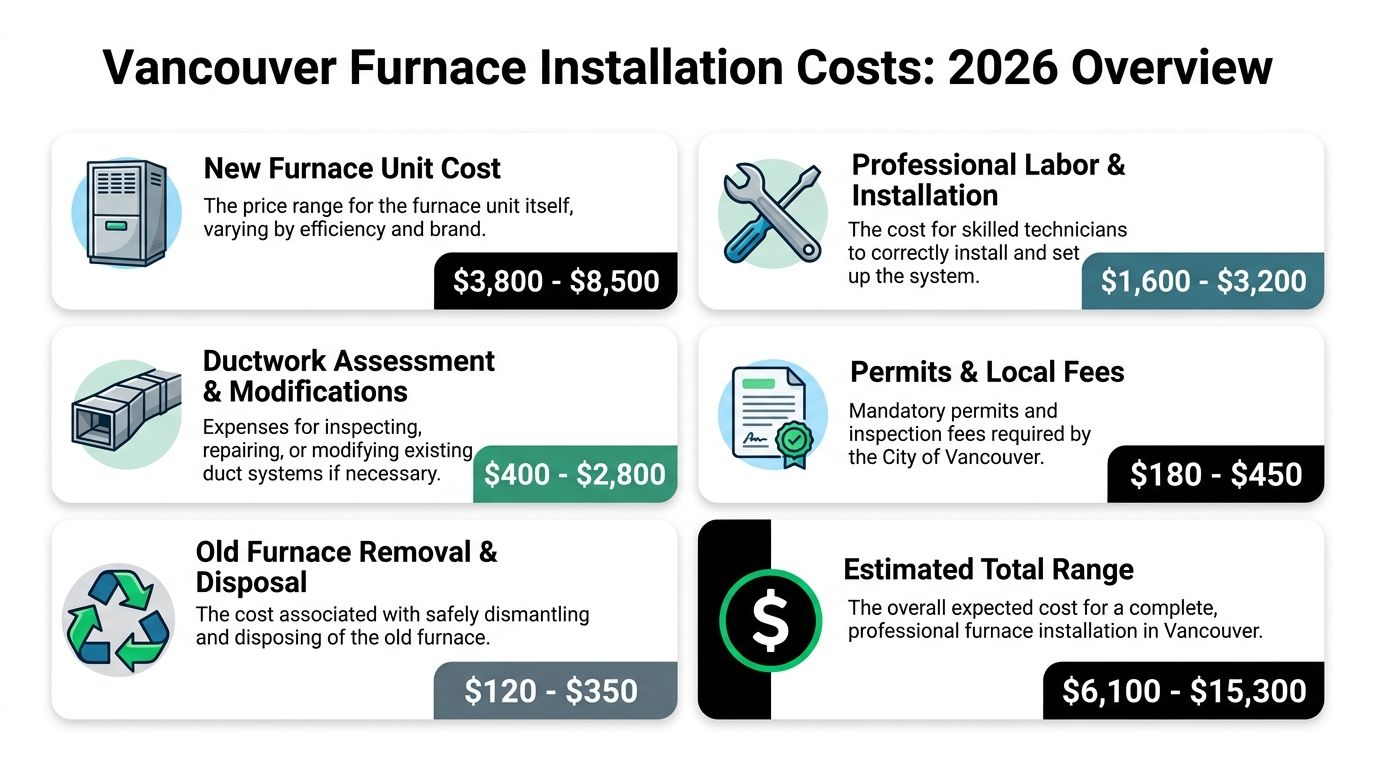
A Vancouver homeowner can get two furnace quotes for the same house and see a gap of several thousand dollars. In practice, that usually comes down to scope. One quote covers the box swap. The other includes the venting, drainage, duct corrections, permit handling, and startup work needed to make the new system run properly under BC requirements.
Local cost ranges
In Greater Vancouver, a standard gas furnace (80% AFUE) typically falls in the $3,500 to $5,500 range, according to this Greater Vancouver furnace and heat pump cost guide. The same source places high-efficiency furnaces (90% to 98% AFUE) in the $5,500 to $10,000 range. It also notes that premium or more complex installs can run above $10,000.
Those numbers are a starting point, not a promise. Vancouver-area pricing shifts fast when the old system was installed with shortcuts, or when the replacement triggers changes to venting, condensate disposal, controls, or return air.
What changes the number
Equipment matters, but labor scope usually decides where the quote lands.
Costs usually rise when the job includes:
- New venting routes for a condensing furnace
- Gas piping changes to meet the appliance input and site conditions
- Electrical work for an older panel, disconnect, or control setup
- Condensate drainage where no proper drain exists near the furnace
- Duct transitions and return-air fixes to get the required airflow
- Thermostat or control upgrades for multi-stage or variable-speed equipment
- Permit and inspection time, especially in Vancouver and some strata buildings
That last point catches homeowners off guard. In detached homes, permit handling is usually straightforward if the contractor is organized. In condos, townhomes, and other strata properties, approval steps can add cost before tools even come out.
A realistic Vancouver scenario
A Burnaby homeowner replaces an older mid-efficiency furnace with a new high-efficiency model. The gas service is already there. The ductwork is not ideal. The return drop is undersized, the filter rack is restrictive, and the new unit needs PVC venting and a condensate drain.
That job will not price like a basic swap.
From a technician's side, this is the difference between installing a furnace and installing a working heating system. If the lower quote skips the return-air correction or assumes the venting can stay as-is, the price may look attractive at signing and expensive later.
The safest way to compare bids is to read the scope line by line. Equipment model, permit responsibility, venting, drainage, controls, and duct modifications should all be spelled out.
FAQs for Greater Vancouver Homeowners
How long does furnace replacement usually take?
The physical installation is often a one-day job for a straightforward house replacement, but scheduling can stretch if permits, venting changes, or Strata approvals are involved. In Vancouver multi-unit properties, permit timelines can affect the calendar well before installation day.
Do rules differ between Vancouver, Richmond, and Burnaby?
The broad BC efficiency requirements still matter across the region, but local permit handling and municipal expectations can vary. Vancouver is the one to watch most closely for city-specific permit and performance requirements. That's why local experience matters.
What matters more, the furnace brand or the installer?
Installation quality matters more than most homeowners expect. A strong furnace installed on bad ductwork, with poor transitions or no commissioning, won't perform the way it should. Brand matters, but fit, airflow, venting, filtration, and startup testing matter first.
Can I just replace my furnace with the same size unit?
Sometimes yes, but assuming the old size was correct is risky. Homes change. Windows get upgraded, basements get finished, and duct systems often had compromises from the day they were built. Replacement should confirm sizing and airflow instead of copying the old nameplate.
What should I ask for in a quote?
Ask for the equipment model, efficiency rating, permit responsibility, venting scope, filter setup, duct modifications, thermostat details, and commissioning steps. If the quote is vague on those items, it's not complete.
Is gas still a sensible choice in Vancouver?
For many homes, yes. If the property already has gas service and existing cooling, a high-efficiency gas furnace can still be the most practical replacement path. In other homes, especially where heating and cooling are both being reconsidered, a heat pump may be the stronger long-term fit.
If you need help with a furnace replacement, permit questions, gas work, or HVAC planning in Greater Vancouver, Encano Plumbing & Drainage Ltd. provides heating, gas, plumbing, and drainage service across Vancouver, Richmond, Burnaby, New Westminster, Delta, Surrey, and nearby communities. Reach out for a clear assessment, transparent scope, and professional installation support that fits your home or building.