
If you notice a rotten-egg or sulfur smell, hissing, unexplained physical symptoms, or another suspected gas-leak sign, leave immediately, avoid ignition sources and electrical switches, and call emergency services or your gas utility from outside. In British Columbia, FortisBC says to call 1-800-663-9911 or 911 from outside the home when you suspect a natural gas leak.
You may notice the obvious odour while cooking, then wonder whether a faint hiss from the furnace, a failing pilot light, dying grass, or an unexplained bill increase means something else. These clues don't all carry the same urgency, but none justifies touching, tightening, relighting, or investigating suspected gas equipment yourself. Evacuate when an active leak is possible, report it from a safe location, and leave diagnosis and repair to a qualified technician.
The seven signs below cover smell, sound, symptoms, outdoor changes, appliance performance, gas usage, and physical changes around meters or connections. A single routine-service clue may call for prompt inspection, while an odour, hissing sound, alarm, or symptoms should be treated as an emergency.
Table of Contents
- 1. Rotten Egg or Sulfur Smell Near Gas Appliances
- 2. Hissing or Whistling Sound Near Gas Connections and Appliances
- 3. Physical Symptoms When You Are Inside the Home
- 4. Dead or Discoloured Plants and Grass Near Gas Lines
- 5. Pilot Light Repeatedly Goes Out or Won't Stay Lit
- 6. Unexplained Increase in Gas Bills or Higher Meter Reading
- 7. Condensation, Moisture, or Frost Around Gas Line Connections and Meters
- 8. Visible Damage, Corrosion, or Gaps in Gas Lines and Connections
- 8-Point Gas Leak Signs Comparison
- When a Warning Sign Becomes an Emergency
1. Rotten Egg or Sulfur Smell Near Gas Appliances
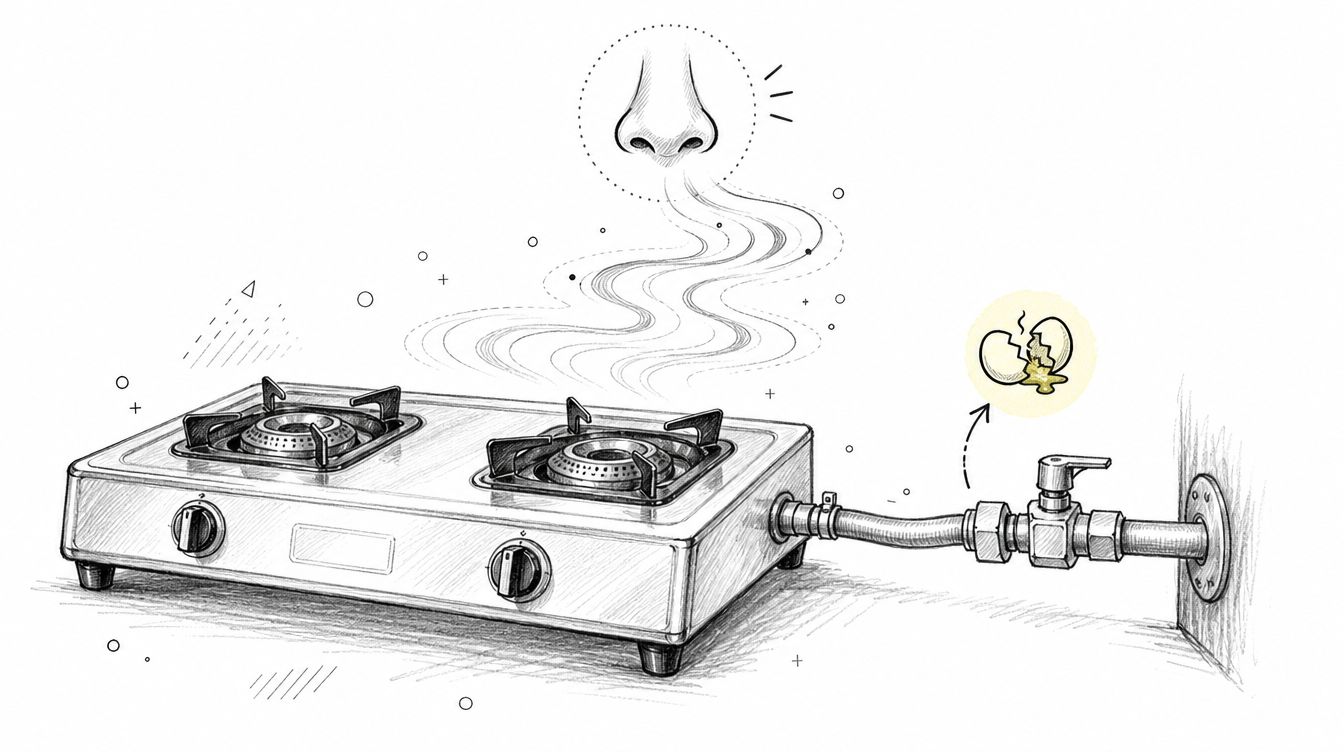
Natural gas itself has no natural odour, so utilities add mercaptan, an odorant designed to create the distinctive rotten-egg or sulfur smell. That odour is the main first-line warning homeowners can detect without equipment. Canadian Gas Association safety guidance says a rotten-egg smell, a gas alarm, or hissing near an appliance should be treated as a potential leak.
A practical example is a Richmond homeowner cooking dinner who notices a sulfur-like smell near the stove connection. The correct response isn't to bend down, move the appliance, or search for the exact fitting. Leave the home, avoid flames and electrical switches, and call FortisBC's natural gas safety guidance from outside. FortisBC directs residents to call 1-800-663-9911 or 911 after leaving.
Practical rule: Treat even a faint rotten-egg odour as a warning. You don't need to prove where it came from before evacuating.
Families should teach children to report unusual smells instead of investigating them. It's also useful to recognise the odour associated with gas safety, but familiarity should never turn into complacency. Odours can drift from a meter, shared mechanical room, exterior piping, or a neighbouring unit in attached and multi-unit housing. If the smell comes and goes, the response threshold doesn't change. Leave first and report the location and timing from outside.
For guidance on the risks and professional response involved in plumbing gas leaks, use a qualified contractor after the utility or emergency responders have made the area safe.
2. Hissing or Whistling Sound Near Gas Connections and Appliances
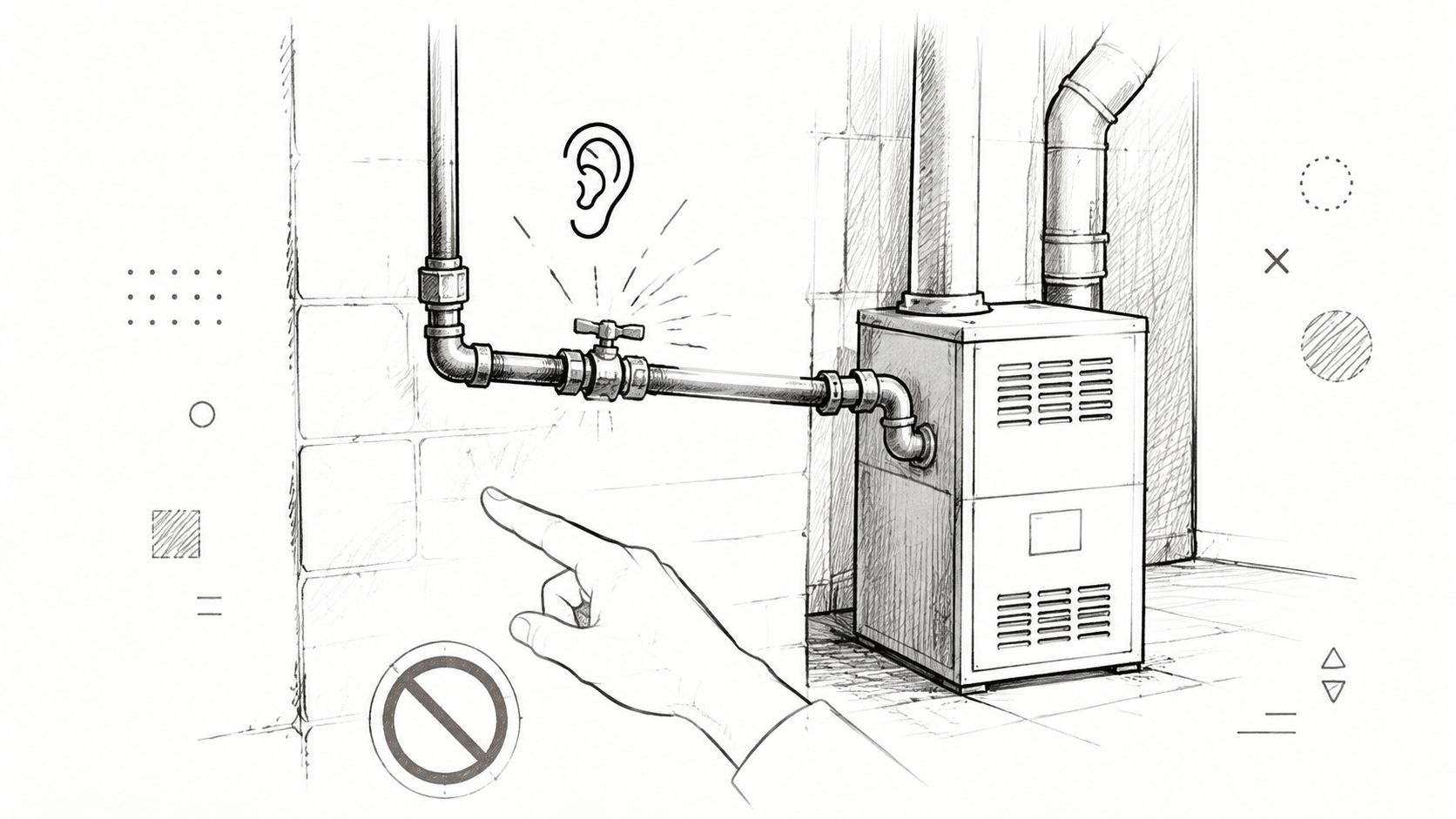
A steady hissing, whistling, or high-pitched sound near a gas appliance, visible pipe, meter, or connection deserves immediate attention. In a quiet basement, the sound may be easier to notice at night or when heating equipment is idle. You don't need to place your hand near the fitting or use a recording to confirm it. A suspected escape of pressurised gas is enough reason to leave.
Consider a homeowner who hears a persistent hiss near a furnace and water heater. The sound changes when the furnace runs, but that isn't an invitation to watch the cycle or inspect the connection. Get everyone outside, don't operate switches or appliances, and call emergency services or the gas utility from a safe location.
Separate normal appliance noise from a warning
Furnaces and water heaters can make ordinary operating sounds, including ignition and airflow noise. A new, continuous, or location-specific hiss is different from a familiar cycle. Record the time and location only if you can do so while leaving safely, and provide those details to the responder or technician later.
Don't use a smartphone near the suspected area, and don't return indoors to capture audio. The useful information is that the noise exists, where you first heard it, and whether anyone also noticed an odour or symptoms.

A visual explanation can help householders recognise why exterior piping and buried service lines matter, particularly where a sound may be faint indoors.
For strata residents, report whether the sound is inside the unit, near a meter set, in a shared mechanical room, or outside. Building staff may need that location, but residents shouldn't delay evacuation while waiting for a property manager.
3. Physical Symptoms When You Are Inside the Home
Headache, dizziness, nausea, unusual fatigue, eye or throat irritation, and confusion can indicate that the indoor environment isn't safe. FortisBC notes that symptoms linked to a gas leak can improve after going outside into fresh air because the leak may displace oxygen. Symptoms alone don't prove a natural gas leak, but they become urgent when several people feel unwell in the same area or improve after leaving.
A Burnaby family might notice two people becoming light-headed and nauseated in the basement, then feeling better outdoors. They shouldn't go back to search for the source or open windows from inside. Leave the property, call from outside, and seek medical advice for anyone who remains unwell.
Don't confuse gas odour with carbon monoxide
Carbon monoxide is a separate hazard. Technical Safety BC explains that CO is invisible and odourless, with possible symptoms including headache, dizziness, nausea, and fatigue. A rotten-egg smell points toward the utility odorant used for natural gas, while CO exposure may occur without any smell at all. That distinction matters because a CO alarm doesn't replace awareness of a gas leak, and noticing gas odour doesn't rule out a combustion or ventilation problem.
Install and maintain carbon-monoxide alarms according to local requirements and the manufacturer's instructions, but never use an alarm check or symptom comparison as a reason to remain inside a suspected hazardous area.
Several people feeling ill indoors at the same time is a reason to leave, not a reason to troubleshoot.
Tell responders which rooms, appliances, and symptoms were involved. Move children, older adults, and pets away from the property, and don't re-enter until qualified responders say it's safe.
4. Dead or Discoloured Plants and Grass Near Gas Lines
A narrow, unexplained area of dead or discoloured vegetation near a meter, buried service line, or exterior pipe can point to an underground or outdoor gas problem. Regional safety guidance identifies outdoor signs such as bubbling water, dust blowing, and dead vegetation near buried lines. The clue is the pattern, especially when surrounding grass remains healthy under similar watering and weather conditions.
For example, a homeowner sees a strip of brown grass running from the meter toward the street while the rest of the lawn stays green. That visual change doesn't prove a leak, since drainage, disease, roots, and utility work can cause similar damage. It does justify keeping people away from the area and reporting the suspected location to the gas utility or emergency service.
Use observation, not digging
Photographing a change from a safe distance can help a responder understand its location. Don't dig, probe soft soil, pour water over the area, operate landscaping equipment, or lift a meter cover. Excavation can damage buried lines and create an ignition risk around escaping gas.
This sign is especially important in dense communities such as Vancouver, Richmond, and Burnaby, where exterior piping and shared infrastructure may serve more than one home. A smell that disperses outdoors can be intermittent, but dying vegetation or bubbling water may still identify the general area.
A landscaping pattern is a reporting clue, not a permission slip to locate the pipe yourself.
If you also smell gas, hear hissing, or feel unwell, stop observing and evacuate immediately. If there are no emergency symptoms or odours, arrange prompt professional assessment rather than treating the plant damage as a normal gardening issue.
5. Pilot Light Repeatedly Goes Out or Won't Stay Lit
A pilot light that repeatedly goes out, won't stay lit, or burns with an unusual yellow or orange appearance signals an appliance or combustion problem that needs qualified attention. It may involve the pilot assembly, ventilation, thermocouple, burner condition, or gas supply. A pilot failure alone doesn't prove that a gas line is leaking, so the right threshold is prompt service unless there is also an odour, hissing, alarm, or physical symptoms.
Take a water heater that won't keep its pilot lit. Relighting it repeatedly can hide the underlying fault, and a yellow-orange flame shouldn't be dismissed as a minor nuisance. Stop using the appliance and arrange a qualified inspection. If you smell rotten eggs or hear gas escaping, leave immediately and make the emergency call from outside instead.
Why the flame matters
A stable blue flame is generally associated with normal combustion, while yellow or orange colouring can indicate incomplete combustion or an appliance issue. The flame colour isn't a safe diagnostic test, and you shouldn't remove covers, adjust valves, clean burners, or test gas pressure yourself.
A useful service note includes which appliance is affected, how often the pilot goes out, whether the problem appears during windy conditions, and whether other gas appliances work normally. Don't wait through a long observation period if anyone is symptomatic or if the odour is present.
For safe, qualified help rather than repeated trial-and-error, see how to relight a gas furnace pilot, while remembering that relighting instructions don't replace an inspection when the pilot repeatedly fails.
6. Unexplained Increase in Gas Bills or Higher Meter Reading
An unexplained change in gas usage can be a useful early warning, particularly when heating, cooking, occupancy, and hot-water habits haven't changed. It isn't an emergency trigger by itself because weather, billing estimates, meter corrections, and appliance operation can also affect consumption. Treat it as a prompt to review the account and arrange inspection, not as proof of a leak.
A homeowner may compare bills and notice that usage is higher despite similar heating conditions and no new appliance. Before assuming the line is leaking, check whether the statement uses an actual or estimated reading, whether the billing period differs, and whether a furnace or water heater has been running unusually often. If the discrepancy remains unexplained, share the readings with the utility and a qualified technician.
What the meter can and can't tell you
A meter records gas passing through the service, but it doesn't identify which appliance, connection, or section of piping is responsible. Homeowners shouldn't perform a shutoff test, manipulate the meter, or inspect fittings while gas is flowing. The utility or licensed professional can determine whether the issue involves consumption, equipment performance, or a leak.
Keep a simple record of bills and meter readings, along with changes in occupancy and appliance use. A single unusual statement is less informative than a persistent pattern, but an odour or hissing sound overrides all billing analysis. Evacuate first in that situation.
For scheduled maintenance, provide the technician with the usage history and note whether pilot-light trouble, flame changes, or outdoor signs appeared at the same time. Those details can help focus a safe inspection without encouraging DIY testing.
7. Condensation, Moisture, or Frost Around Gas Line Connections and Meters
Unusual frost, condensation, or persistent moisture around a gas meter, visible line, or connection should be reported, especially when surrounding surfaces are dry. Cold-weather frost concentrated on one fitting can indicate a localised problem, but ordinary weather, drainage, and condensation can create similar patterns. Treat the observation as a prompt for professional inspection unless it appears with a rotten-egg odour, hissing, alarm, or symptoms.
A practical example is frost forming around the point where an exterior service line enters the meter while nearby fences and plants remain clear. Don't scrape the ice, touch the fitting, apply heat, or remove a cover. Photograph the area only from a safe distance, keep people away, and contact the utility or a qualified gas technician.
Compare the pattern without handling the equipment
The useful comparison is between the suspected spot and nearby surfaces. A single recurring patch in clear weather deserves more attention than frost covering the entire meter after precipitation. Moisture that returns in dry conditions also warrants assessment, particularly around an exposed connection.
This isn't a substitute for a leak detector or pressure testing performed by a qualified professional. The safest homeowner role is to observe, record the location, and report it. In multi-unit housing, notify the strata or property manager after leaving if the condition involves shared equipment, but don't wait for building administration before calling an emergency line when gas may be escaping.
Don't turn a visual clue into a hands-on inspection. Gas equipment isn't a DIY repair surface.
8. Visible Damage, Corrosion, or Gaps in Gas Lines and Connections
Cracks, dents, corrosion, separated fittings, or aging connections can indicate a developing gas-line problem. Look from a safe distance during routine outdoor work, such as spring cleanup, but do not handle the fitting or try to confirm a leak yourself. A gap or unusual deposit near an exterior meter connection needs qualified inspection even when there is no odour, because visual deterioration cannot show whether gas is escaping.
Leave the property and call the gas utility or emergency service from outside if the damage appears with a rotten-egg smell, hissing, an alarm, or physical symptoms. Without those urgent signs, keep people away and arrange prompt assessment by a qualified contractor. Do not tighten fittings, apply sealant, bend pipe, or use a flame to test the connection.
What to document safely
A photograph taken from a safe distance and a short description can help the technician identify the issue. Record whether the damage is on a meter, appliance connector, exterior run, or shared mechanical installation, and whether it appeared after construction or landscaping work. Do not remove insulation, open appliance panels, or disturb covers to see more.
Older homes and multi-unit properties require added care because one visible connection may connect to a larger system. A qualified technician can diagnose the leak safely and determine whether the condition calls for repair, replacement, or inspection of surrounding equipment.
For qualified gas-line installation, use a licensed professional instead of attempting repairs from an online image or visual checklist.
8-Point Gas Leak Signs Comparison
| Sign / Indicator | Complexity 🔄 | Resources ⚡ | Expected Outcome ⭐ / Impact 📊 | Ideal Use Cases 📊 | Key Advantages / Tips 💡 |
|---|---|---|---|---|---|
| Rotten egg / sulfur smell near appliances | Low, easy to recognize | Minimal, human nose; ventilate & phone | High ⭐⭐⭐, reliable early warning for moderate+ leaks | Indoor appliance areas (kitchen, furnace, water heater) | Recognizable without tools; beware olfactory fatigue; evacuate & call emergency |
| Hissing or whistling sound near connections | Low–Medium, audible but can be masked | Minimal, hearing; smartphone recorder helps | High ⭐⭐⭐, indicates pressurized, active leak; helps locate area | Quiet basements, attics, night-time inspections | Document sound; do not probe source; evacuate & contact professionals |
| Physical symptoms (headache, dizziness, nausea) | Low, subjective and non-specific | None, observe occupants; seek medical help | Low ⭐, non-specific but prompts evacuation when clustered | Multiple people/pets affected; absence of other signs | Treat as corroborating evidence; leave immediately and seek help |
| Dead or discolored plants/grass near lines | Low, visual observation over time | Low, walk property, take photos | Moderate ⭐⭐, persistent indicator of underground/exterior leaks | Exterior/buried service lines and meter routes | Photograph patterns, do not dig, mark area and call for inspection |
| Pilot light repeatedly goes out or weak flame | Medium, requires monitoring & comparison | Moderate, track occurrences; professional pressure testing | Moderate ⭐⭐, suggests delivery/pressure problem; may indicate line leak | Water heaters, furnaces, multiple appliances failing | Log incidents and flame color; avoid excessive relighting; request pressure test |
| Unexplained increase in gas bills / higher meter reading | Medium, needs billing analysis over cycles | Low, billing records, monthly meter logs; technician testing | High ⭐⭐⭐, objective evidence for slow leaks; measurable impact | Slow or hidden leaks not producing smell/sound | Keep 12–24 months of bills, track monthly readings, request leak detection service |
| Condensation, moisture, or frost around meter/connections | Low–Medium, seasonal visual cue | Low, photograph; outdoor inspection in cold weather | Moderate ⭐⭐, reliable in cold conditions; pinpoints approximate location | Exterior meters/lines in winter or fluctuating temps | Photograph frost/moisture, do not touch, schedule inspection (urgent if smell/sound present) |
| Visible damage, corrosion, or gaps in lines & fittings | Low–Medium, visual inspection skill needed | Low, camera/photos; professional inspection/repair | Moderate ⭐⭐, preventive indicator; may not confirm active leak | Older homes, routine maintenance, accessible lines | Take clear photos, avoid DIY fixes, arrange timely professional repair |
When a Warning Sign Becomes an Emergency
Use a simple threshold. Odour, hissing, a gas alarm, unexplained symptoms, or a suspected active leak means evacuate now. Take everyone and pets outside, avoid flames and smoking, don't operate electrical switches or appliances, and don't use a phone or vehicle near the suspected area. Call 911 or the gas utility from outside, then stay away until emergency responders or the utility confirms that re-entry is safe. FortisBC's emergency guidance gives the same practical direction for a suspected odour event.
Don't try to locate the source, ventilate by re-entering, shut off equipment unless you can do so without risk, relight a pilot, or repair a fitting. In an attached home, strata building, or multi-unit property, the smell may originate in a shared mechanical room, meter set, exterior piping, or another unit. Report what you noticed and where, but let trained responders control the investigation.
Other signs still require prompt qualified inspection, even when no emergency cue is present:
- Damaged connections: Corrosion, cracks, gaps, or deterioration can worsen and should be assessed.
- Recurring pilot-light failure: Stop relying on repeated relighting, particularly when flame colour or appliance operation changes.
- Unexplained usage changes: Review billing and meter information, then arrange a professional check if the pattern remains unexplained.
- Outdoor vegetation damage: Keep away from affected areas and report dead grass, bubbling water, or blowing dust near buried lines.
- Frost or moisture: Document unusual, concentrated patterns without touching the meter or connection.
Encano Plumbing & Drainage Ltd. serves Vancouver, Richmond, Burnaby, New Westminster, Delta, Surrey, and nearby communities with 24/7 emergency response and scheduled service. Once the area has been made safe, its qualified team can assist with gas-line inspection, leak detection, appliance-side diagnosis, and repair. Homeowners, strata managers, landlords, and commercial property operators can book service online through Encano Plumbing & Drainage Ltd..
Encano Plumbing & Drainage Ltd. provides 24/7 emergency response, scheduled gas-line inspection, leak detection, and repair for homes and properties across Greater Vancouver. If you've identified a non-emergency warning sign or need qualified service after an incident has been made safe, visit Encano Plumbing & Drainage Ltd. to request an appointment.