Vancouver leak detection · open 24/7
Water Leak Detection in Vancouver found first, fixed with the smallest opening
Thermal imaging and specialized tools locate leaks behind walls, under slabs and inside ceilings. You get an upfront price before we open anything.
- 5.0 on Google, 51 reviews
- Open 24/7 for emergencies
- 1-year workmanship warranty
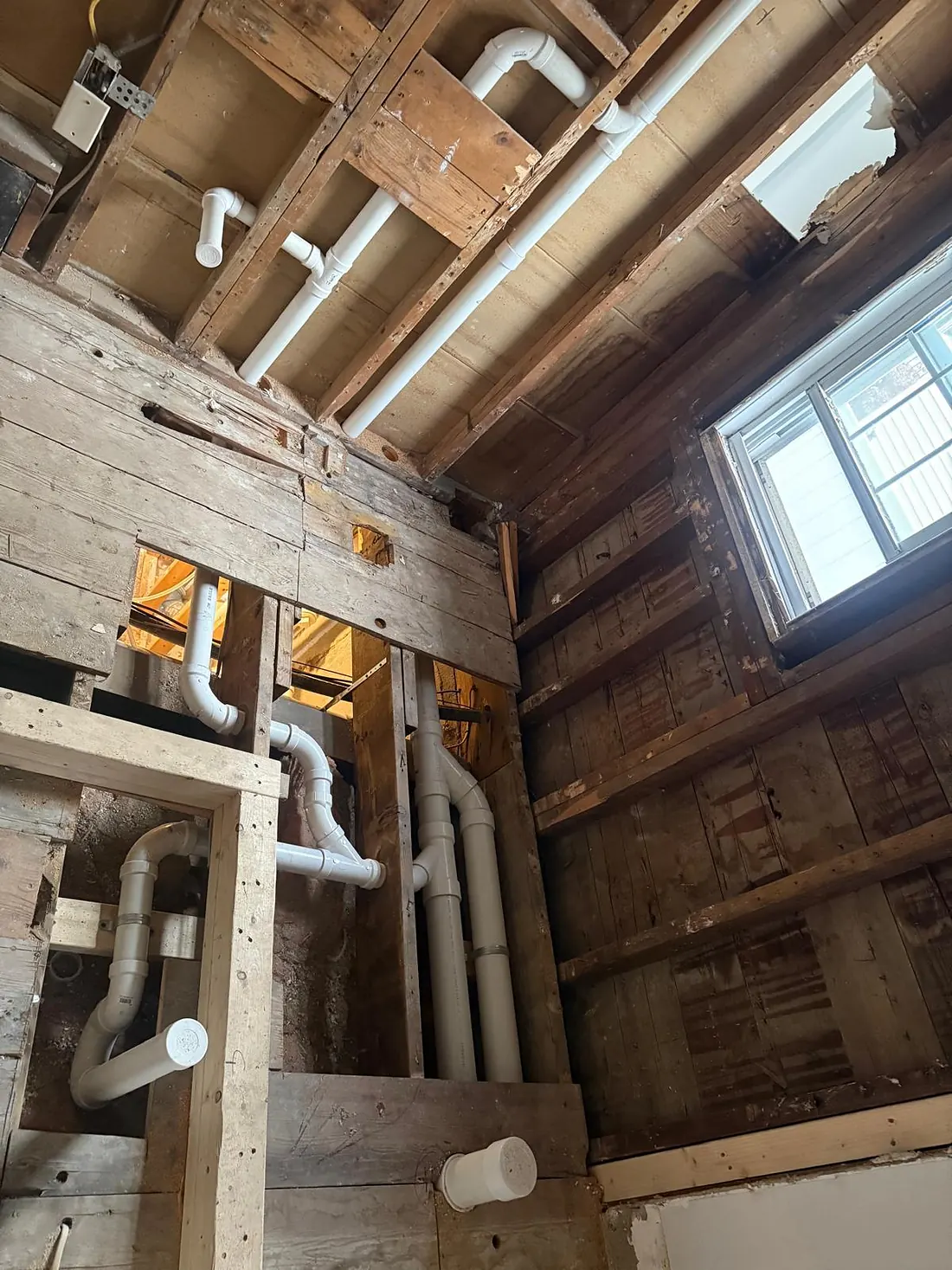
How do plumbers find a hidden water leak in a Vancouver home?
A plumber starts with the water meter and a pressure check to confirm there is a leak, then narrows it down with thermal imaging and specialized listening and moisture tools. Those readings point to the wall, floor or ceiling section where the pipe is failing, so only a small access opening is needed instead of tearing out whole rooms.
A lot of Vancouver houses are older than the pipes people imagine inside them. Character homes in Kitsilano and Mount Pleasant, and the Vancouver Specials built across Sunset, Killarney and Kensington-Cedar Cottage from the 1960s to the 1980s, often still carry original galvanized steel or copper supply lines. Those pipes wear from the inside, and the first sign is rarely a puddle.
Encano Plumbing treats leak detection as two separate jobs. First we find the leak, using thermal imaging and specialized tools to read what is happening behind drywall, under a concrete slab or above a ceiling. Then we open the smallest possible access point and repair it. That keeps patching, flooring work and your bill as small as the problem allows.
We are a family-owned shop dispatched from Richmond. Marpole is just over the Arthur Laing and Oak Street bridges, so most of Vancouver is a short drive away. Call or text (604) 764-2031, any time of day.
Signs of a hidden water leak in your Vancouver home
Water bill higher than usual
A jump with no change in your habits is the most common early sign.
Meter moves with every tap off
If it keeps turning while nothing runs, water is escaping.
Warm or damp spots on the floor
Often a hot water line leaking under the slab.
Stains or bubbling paint on ceilings
Usually below a bathroom, kitchen or the suite upstairs.
Sound of running water
Hissing inside a wall with no fixture on means a pressurized line is leaking.
Musty smell or mould near baseboards
Slow leaks keep framing wet long before water shows.
Soggy lawn that never dries
In dry weather, this can mean the underground service line is leaking.
What our Vancouver leak detection and repair covers
From the first reading to the last patch, this is the work we handle on leak calls across Vancouver.
- Leak location with thermal imaging
- Thermal imaging shows temperature differences behind finished surfaces, which is how hot water leaks and wet insulation show up without opening a wall.
- Slab leak and under-floor leaks
- Leaks under a concrete slab or below a floor are traced to a small area first. Then you choose between a spot repair and rerouting the line.
- Pipe leak repair
- Pinhole leaks in copper, failing fittings, corroded galvanized sections and loose connections are repaired with new pipe and fittings, then pressure-tested before anything is closed up.
- Copper re-piping
- When the pipe itself is worn out, patching one leak just moves the problem down the line. In older Vancouver homes with galvanized or tired copper, re-piping in copper is often the lasting fix.
- Underground water line fixes
- The service line between the street connection and the house can crack, corrode or separate. We locate the leak along the line and repair or replace the damaged section.
How a leak detection visit works
- 01
You call or text
Tell us what you see: a stain, running water, a high bill. If water is pouring in, we help you shut off the main first.
- 02
We confirm and locate
We check the meter and pressure to confirm a leak, then use thermal imaging and specialized tools to pin down where it is.
- 03
Upfront price, smallest opening
You get a flat-rate price before any work starts. We open only the access needed to reach the leak.
- 04
Repair, test and clean up
We fix the pipe, pressure-test the line, and leave the access ready for patching. Our workmanship is covered by a 1-year warranty.
What leak detection and repair costs in Vancouver
Every leak is different, so we do not publish a single price. Travel time from Richmond is quoted before we come out, with a discount on it if you go ahead, and you get an upfront, flat-rate price in writing before any work starts. These are the things that move the number.
| What you pay for | How it is priced | Notes |
|---|---|---|
| Leak detection and locationHow many areas need checking, hot or cold side. | Quoted upfront after the assessment | How many areas need checking, hot or cold side. |
| Pipe leak repair behind a wall or ceilingAccess, pipe material (copper, galvanized, Poly-B) and fittings involved. | Quoted upfront after the assessment | Access, pipe material (copper, galvanized, Poly-B) and fittings involved. |
| Slab or under-floor leakSpot repair versus rerouting the line. | Quoted upfront after the assessment | Spot repair versus rerouting the line. |
| Underground water line repairLine length, depth and what sits above it. | Quoted upfront after the assessment | Line length, depth and what sits above it. |
| Copper re-pipingHouse size, number of fixtures and wall access. | Quoted upfront after the assessment | House size, number of fixtures and wall access. |
Drywall, flooring or tile restoration after the repair is not included unless agreed in your quote. Your exact price is quoted upfront, in writing, before any work starts.
The assessment is free in Richmond. Outside Richmond, travel time is charged, and we quote it before we come out. If you go ahead with the work, you get a discount on that travel time. You always know the price before we go.
Leak detection across Vancouver neighborhoods
Vancouver's housing stock shapes the leaks we see. In Dunbar, Kerrisdale and Kitsilano, older character homes often have galvanized lines that rust from the inside and fail at threaded joints. Vancouver Specials in Sunset, Killarney and Hastings-Sunrise frequently have copper that has thinned over decades, which shows up as pinholes. Homes built roughly from 1985 to 1997 may have Poly-B piping, which has a history of failing at its fittings.
A lot of Vancouver living is stacked: condos, strata townhouses in Riley Park and Mount Pleasant, and houses with a rented suite below. When water comes through your ceiling, the source is usually in the unit above. Take photos and video of the damage right away (your insurer will likely ask for them), stop the water if you can, and tell your strata manager or property manager. We find the source and document the repair for the paperwork.
Neighborhoods we work in
- Marpole
- Kitsilano
- Mount Pleasant
- Kensington-Cedar Cottage
- Dunbar
- Kerrisdale
- Sunset
- Killarney
- Hastings-Sunrise
- Grandview-Woodland
- Riley Park
Cold snaps and the rainy season: roof leak or plumbing leak?
The wet season runs roughly October to March, so a November ceiling stain is easy to blame on the roof. If it grows only during heavy rain, look at the roof first. If it grows on dry days, or the water meter keeps moving with every tap off, it is likely plumbing.
Cold snaps bring freezing nights, and pipes in exterior walls, crawl spaces and unheated garages can split. A frozen pipe often leaks only once it thaws, so if you lose water in a freeze, shut the main off before it warms up.
Encano Plumbing is licensed and insured. Repairs are backed by our 1-year workmanship warranty.
Ask us anything51 reviews on our Google profile, copied word for word.
 Luiz PortellaGoogle review · 7 months ago
Eddie is amazing! Great customer service and attention to details. He helped me with a leaky shower that needed a cartridge replacement and a couple of other minor repairs. 5 stars hands down. I recommend!
 Onilton MacielLocal Guide · 3 months ago
Eddie is amazing. He is professional and quick in resolving the issues. He has very fair prices. Highly recommend!
 Talitha NobregaGoogle review · 7 months ago
Second time using Encano Company, and Ed was amazing once again! He’s reliable, professional, and gets the job done quickly. Really appreciate the great service highly recommend!
 BY KGoogle review · 6 months ago
Really thankful to Ed for replacing our kitchen sink and garbage disposal. The service was fast,very professional and the quality of work was excellent. Highly recommend!
 Makoto TaniguchiGoogle review · 6 months ago
Eddie was friendly, gave me a good quote, came in early and explained the tasks prior to starting and did an excellent job. Highly recommended.
 gustavo de almeida françaGoogle review · 3 months ago
Eddie is super friendly, helpful, and transparent! Always making sure his clients understand what needs to be done and how much it will cost ahead of time.
 Pam AndrewsLocal Guide · 3 months ago
Great service. Eddie is knowledgeable and informative. Arrived very quickly and did an excellent job.
 Larissa RodriguesGoogle review · 6 months ago
Eddie is very responsible! Best plumber in Vancouver area. I called him due to an emergency and he stopped by at the same day. I highly recommend him. 10/10
Leak Detection & Repair questions
Straight answers. If yours is not here, text it to us.
Open now · 24 hours, 7 days
Pipe burst at 2 a.m.? Call or text. We pick up.
Shut the main water valve if you can, then call or text. The Encano team answers 24/7 and tells you what happens next, including the price, before anyone touches a tool.
Get your leak detection & repair price
Tell us what is going on. We reply with next steps and a time, and the price is agreed before any work starts.