Furnace Not Turning On or Blowing Cold Air? What to Check When the First Cold Snap Hits
· By Ed Ferreira
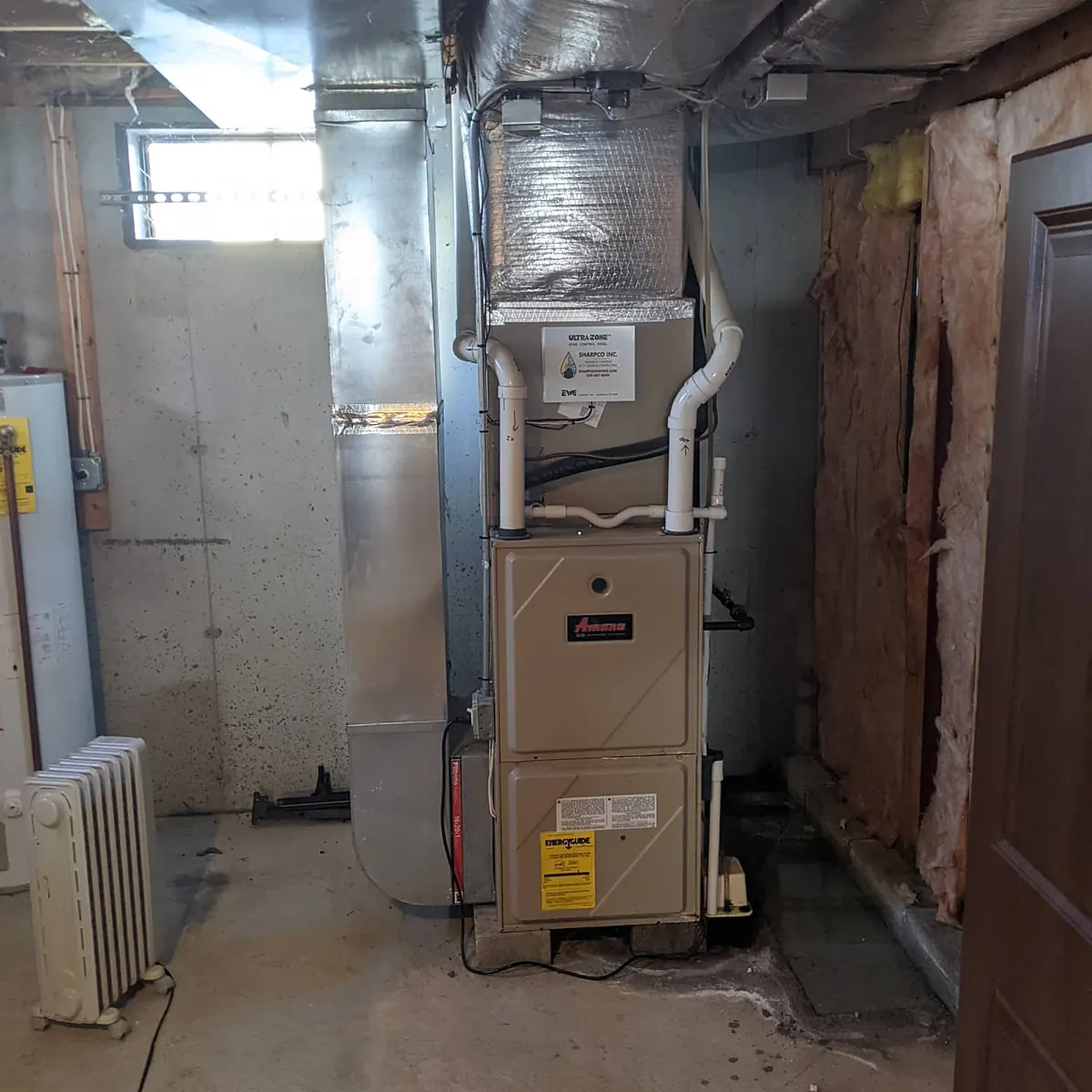
Every fall in Richmond there is a night when the temperature drops, someone turns the thermostat up for the first time in months, and nothing happens. Or the fan comes on and pushes cool air through the vents.
A furnace that sat idle all summer is more likely to show a problem on that first start. Some causes are simple enough to fix in five minutes. Others are a worn part, and a few are safety issues where the right move is to turn the system off and call. This guide goes symptom by symptom so you can tell which one you are dealing with.
First: Is It a Safety Problem?
Before any troubleshooting, rule out the situations where you should not touch anything. If you smell gas (a rotten egg or sulphur smell), leave the house, do not flip switches or use a lighter, and call the FortisBC 24-hour emergency line at 1-800-663-9911 from outside. If a carbon monoxide alarm sounds, or people in the house feel headachy, dizzy or sick when the heat runs, get everyone outside and call for help.
Also stop if you see scorch marks around the burner area, soot, water pooling under the furnace, or hear loud bangs when it tries to light. Turn the heat off at the thermostat and have it inspected. Our carbon monoxide safety guide explains alarm placement and warning signs in more detail.
A faint burning dust smell for the first few minutes of the season is usually normal. Dust settles on the heat exchanger over summer and burns off. If the smell is strong, smells electrical, or lasts longer than an hour or so, shut the furnace off.
Furnace Not Turning On at All: 6 Safe Checks
When nothing happens, no fan, no click, no hum, the cause is often power or control. These checks are safe and do not involve opening the burner compartment or touching the gas line.
1. Thermostat mode and set point. Make sure it is on Heat, not Cool or Off, and set at least two or three degrees above the room temperature.
2. Thermostat batteries and schedule. A blank or dim screen often means dead batteries. Smart thermostats can also be stuck on an away or summer schedule.
3. The breaker. Look in your electrical panel for a breaker labelled furnace that has tripped to the middle position. Switch it fully off, then on. If it trips again, leave it off and call.
4. The service switch. Most furnaces have a switch on or near the unit that looks like an ordinary light switch. It gets bumped off during storage or cleaning more often than you would think.
5. The front panel. Furnaces have a door safety switch that keeps the unit from running when the blower door is not seated. If someone changed the filter recently, push the panel firmly into place.
6. After a power outage. Some furnaces and smart thermostats need a few minutes to reset after power returns. If yours stays dead long after the lights came back, check the breaker and the service switch again.
Furnace Runs but Blows Cold Air
If the fan runs but the air is cool, first check the thermostat fan setting. On, instead of Auto, keeps the blower running between heating cycles, so you feel cooler air on and off. Set it to Auto.
If the air stays cold during a heating call, the burners are probably not lighting or not staying lit. On a modern furnace the usual suspects are a dirty flame sensor, a worn hot surface igniter, a pressure switch that is not closing because of a blocked vent or a cracked hose, or a gas valve problem. Those parts all sit inside the burner compartment, so this is where your checks end and a technician takes over.
High-efficiency furnaces have two white plastic pipes going outside. Go look at where they end. Snow, leaves, a wasp nest or a bird nest in either opening can stop the furnace from lighting. Clearing debris from the outside of the pipes is safe; do not take the pipes apart.
Furnace Starts, Then Shuts Off After a Few Minutes
Short cycling is one of the most common first-cold-snap complaints. The furnace lights, runs briefly, and shuts off, sometimes over and over.
The most frequent homeowner-level cause is a clogged filter. The furnace overheats, a high limit switch trips, and it shuts down to protect itself. Pull the filter and hold it up to the light. If you cannot see through it, replace it. Our guide on how often to service a furnace or boiler covers filter schedules by filter type.
If the filter is clean, likely causes include a dirty flame sensor (the burners light and then go out within seconds), a blocked condensate line or trap on a high-efficiency furnace, restricted venting, or a furnace that is oversized for the house. Short cycling wears a furnace faster, so it is worth fixing.
Read the Blinking Light
Most furnaces built in the last 20 years or so have a small LED on the control board, visible through a sight window in the lower panel. It blinks in a pattern when something is wrong, such as three flashes, pause, three flashes. The legend for those codes is usually printed on a sticker inside the panel door.
Write down the pattern before you turn the power off, because cycling power often clears the code. It can save diagnostic time when you call. If the furnace locks out again after a reset, do not keep resetting it; the safety control is shutting it down for a reason.
When to Stop and Call a Technician
Call when the checks above do not bring the heat back, when the breaker trips again, when the furnace keeps short cycling with a clean filter, or whenever there is a safety sign. In British Columbia, work on gas appliances is regulated by Technical Safety BC and must be done by a licensed gas fitter, with a permit where one is required. That covers the burners, gas valve and venting, so those are not DIY repairs.
Many no-heat calls turn out to be a single worn part, like an igniter or flame sensor, on a furnace that still has years left. Costs vary a lot with the part, the furnace model and when the call happens, so ask for the price before work starts. If the diagnosis turns up a major failure on an older unit, our guide on whether to repair or replace a furnace walks through the decision, and the furnace replacement cost guide covers typical BC price ranges.
The Encano Team handles furnace repair 24/7, with gas work done by a licensed gas fitter and permits pulled where required, and a 1-year workmanship warranty on the repair. Assessments are free in Richmond. If your heat is out in Richmond, Vancouver, Burnaby, Delta, Surrey, New Westminster or White Rock, call or text (604) 764-2031, day or night, or see our emergency service page.
Frequently asked questions
- Why is my furnace not turning on when the thermostat is set to heat?
- The most common causes are dead thermostat batteries, a thermostat set to the wrong mode or schedule, a tripped breaker, the service switch near the furnace turned off, or a front panel that is not fully closed. If those check out, it needs a technician.
- Why is my furnace blowing cold air?
- If the thermostat fan is set to On instead of Auto, the blower runs between heating cycles and moves cool air. If it is on Auto and the air is still cold, the burners are probably not lighting or staying lit. Typical causes are a dirty flame sensor, a failed igniter, a blocked vent pipe or a pressure switch problem.
- Why does my furnace turn on and then shut off after a few minutes?
- A clogged filter is the most common cause, because the furnace overheats and shuts down on a safety limit. If the filter is clean, the issue may be a dirty flame sensor, a blocked condensate line, restricted venting or an oversized furnace.
- Is it normal for a furnace to smell like burning the first time it runs?
- A light burning dust smell for the first few minutes of the heating season is usually normal, because dust that settled over summer burns off. A strong smell, an electrical or plastic smell, or one that lingers for more than an hour or so is not normal. Turn the furnace off and have it checked. A rotten egg smell means gas: leave and call FortisBC.
- Who can repair a gas furnace in BC?
- In British Columbia, work on gas appliances is regulated by Technical Safety BC and must be done by a licensed gas fitter, with a permit where required. Homeowners can safely check the thermostat, breaker, service switch, filter and outside vent openings, nothing beyond that.
Related services
Found this helpful? Make us a preferred source on Google.
Ready for an exact price?
Get a flat price in writing for your home, not a phone guess. The assessment is free in Richmond.