Combi Boiler vs Hot Water Tank: Which Makes Sense for Your Home?
· By Ed Ferreira
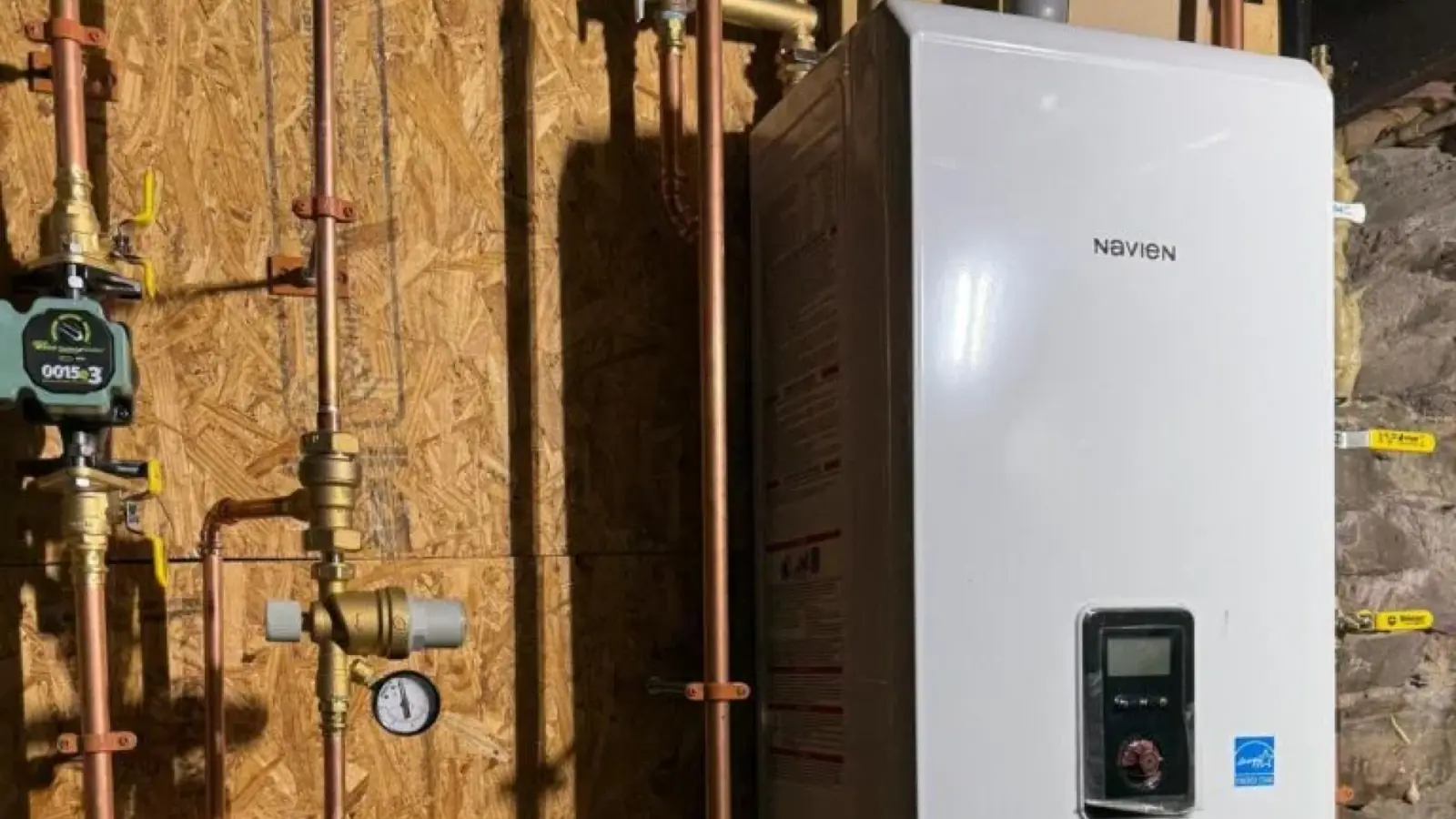
A combi boiler does two jobs in one box: it heats your home through radiators or in-floor tubing, and it heats tap water the moment you open a faucet. No storage tank, no second appliance. That is a big draw in a Metro Vancouver townhouse with a tiny mechanical closet.
But a combi boiler is not the right answer for every house. This guide compares the three common setups and helps you figure out which fits the way your household actually uses hot water.
What Is a Combi Boiler?
A combi (combination) boiler is a wall-hung gas appliance that provides space heating and on-demand domestic hot water from the same burner. When nobody is using water, it heats the water that circulates through your radiators or radiant floor. When you open a hot tap, it switches priority and heats fresh water as it flows through an internal heat exchanger, so you get hot water without keeping a tank full of it.
Most modern units are condensing models, which squeeze extra heat out of the exhaust before it leaves the house. Navien is one brand you will see often in BC searches and showrooms, and several other manufacturers make similar wall-hung combis.
Combi Boiler vs Hot Water Tank: How Do the Three Setups Compare?
There are three common setups: a combi boiler, a heat-only boiler with an indirect tank, and a furnace with a standalone hot water tank. With an indirect tank, the boiler heats the house and also sends hot boiler water through a coil inside an insulated tank, giving you a stored supply ready for several people at once.
The trade is space: an indirect tank takes floor space and adds piping and another component to maintain. In return, it handles peak demand better than most combis, because you draw from stored water instead of relying on how fast the burner can heat water flowing through it.
Many detached houses in Richmond, Surrey and Burnaby have a forced-air gas furnace for heat and a separate gas or electric hot water tank for tap water. The two systems are independent, so one failing does not take out the other.
A combi boiler only makes sense if the house has, or will get, hydronic heating (radiators, baseboard convectors or in-floor tubing). Converting a ducted furnace home to hydronic heat is a much bigger project than swapping an appliance. If you are weighing heating systems from scratch, our boiler vs furnace vs heat pump comparison covers that decision.
Does a Combi Boiler Give You Endless Hot Water?
Yes, in the sense that it never runs out the way a tank does, but it has a flow limit. A combi heats water as it passes through, so it can only deliver a certain number of liters per minute at a comfortable temperature. One long shower is fine. Two showers plus the dishwasher may leave someone with a weaker or cooler stream.
Incoming water temperature matters as well. In winter, the cold water entering your home is colder, so the unit has to work harder to reach the same tap temperature, and flow can drop. Compare hot water output at a realistic temperature rise, not the brochure maximum.
Which Homes Suit a Combi Boiler Best?
A combi is usually a strong fit for condos, townhouses and smaller detached homes with one or two bathrooms, especially where floor space is tight. A household that rarely runs two showers at once will not notice the flow limit.
A large family house with three or more bathrooms, a soaker tub, or teenagers who all shower in the same morning window often does better with stored hot water. That might mean a boiler with an indirect tank, or a properly sized combi with extra storage added. If your home has hydronic heat and you are planning a change, a boiler installation assessment should start with how many fixtures run at the same time, not just the size of the house.
How Much Maintenance Does a Combi Boiler Need?
Plan on an annual service. A technician typically checks combustion, cleans the condensate trap and drain, inspects the venting, checks system pressure and the expansion tank, and confirms the safety controls work. Our guide on how often to service a furnace or boiler explains what a good visit includes.
Scale buildup in the hot water heat exchanger is the classic combi complaint in hard-water regions, and descaling is a routine task there. Metro Vancouver is in a better position: the regional water quality reports show hardness of only about 2 to 22 mg/L (as calcium carbonate) across the main supply sources, which is soft water. Scale is far less of a concern here, though homes on private wells should test their water. A standard tank, by comparison, needs its anode rod checked and occasional flushing to keep sediment down.
What About Venting, Condensate and Gas Work?
Condensing combi boilers usually vent through a sidewall or the roof with plastic vent pipe, and they produce acidic condensate that needs a drain route, often with a neutralizer. Clearance rules can limit where the unit goes in a townhouse or strata building. Strata owners should also check bylaws before changing exterior vents.
In BC, gas work has to be done by a licensed gas fitter working for a contractor licensed by Technical Safety BC, and permits apply. Installing any gas appliance, combi or tank, is not a DIY job. If you ever smell gas, leave the home and call the FortisBC 24-hour emergency line at 1-800-663-9911 from outside.
Is a Combi Boiler Cheaper Than a Hot Water Tank?
Upfront, a standalone hot water tank is the cheaper appliance, and a combi boiler sits in the same broad price territory as a boiler replacement, since it replaces your heating appliance too. Published price guides from Metro Vancouver contractors put boiler replacement from about $5,000, and hot water tank replacement typically around $1,250 to $2,200. For the details, see our boiler replacement cost guide and our hot water tank replacement cost breakdown.
Running costs depend on your current equipment and how your household uses hot water, so be cautious of anyone promising a fixed saving. Rebates change often, so check the current FortisBC and CleanBC Better Homes program pages before you decide. Costs vary with the home, and a final price comes from an in-person estimate.
If you want a second opinion on combi versus tank for your place, Encano Plumbing and Drain, a family-owned plumbing and heating company in Richmond, can look at your setup and give you one flat price in writing before any work starts. Call or text (604) 764-2031 any hour, or request an estimate. The team speaks English, Portuguese and Spanish.
Frequently asked questions
- What is the difference between a combi boiler and a hot water tank?
- A combi boiler heats your home and heats tap water on demand from one wall-hung unit, with no stored water. A hot water tank only heats tap water and keeps a fixed volume ready to use. The tank can run out, while the combi never runs out but has a limit on how much hot water it can deliver at once.
- Can a combi boiler run two showers at the same time?
- Some larger units can, but flow and temperature often drop when two showers run together, especially in winter when incoming water is colder. Check the hot water output rating at a realistic temperature rise. Households with three or more bathrooms often do better with stored hot water.
- Is a combi boiler a good choice for a condo or townhouse?
- Often, yes. It mounts on a wall, frees up the space a tank would take, and suits households that rarely use several hot taps at once. Venting location and strata bylaws can limit options, so confirm both before choosing a unit.
- Does a combi boiler need descaling in Metro Vancouver?
- Much less often than in hard-water areas. Metro Vancouver's water quality reports show very low hardness, which counts as soft water, so scale builds slowly. An annual service is still recommended to check combustion, venting, the condensate drain and system pressure.
- Can I put a combi boiler in a house with a forced-air furnace?
- Not as a simple swap. A combi boiler heats through water-based systems such as radiators or in-floor tubing, so a ducted furnace home would need a hydronic heating system added. For most furnace homes, keeping the furnace and choosing a new water heater is the simpler path.
- Is a Navien combi boiler different from other combi boilers?
- Navien is one common brand, and its combis work on the same principle as other wall-hung combination boilers. Differences between brands come down to output, controls, parts availability and local service support. Compare those, along with sizing for your home, rather than choosing on brand name alone.
Related services
Found this helpful? Make us a preferred source on Google.
Ready for an exact price?
Get a flat price in writing for your home, not a phone guess. The assessment is free in Richmond.